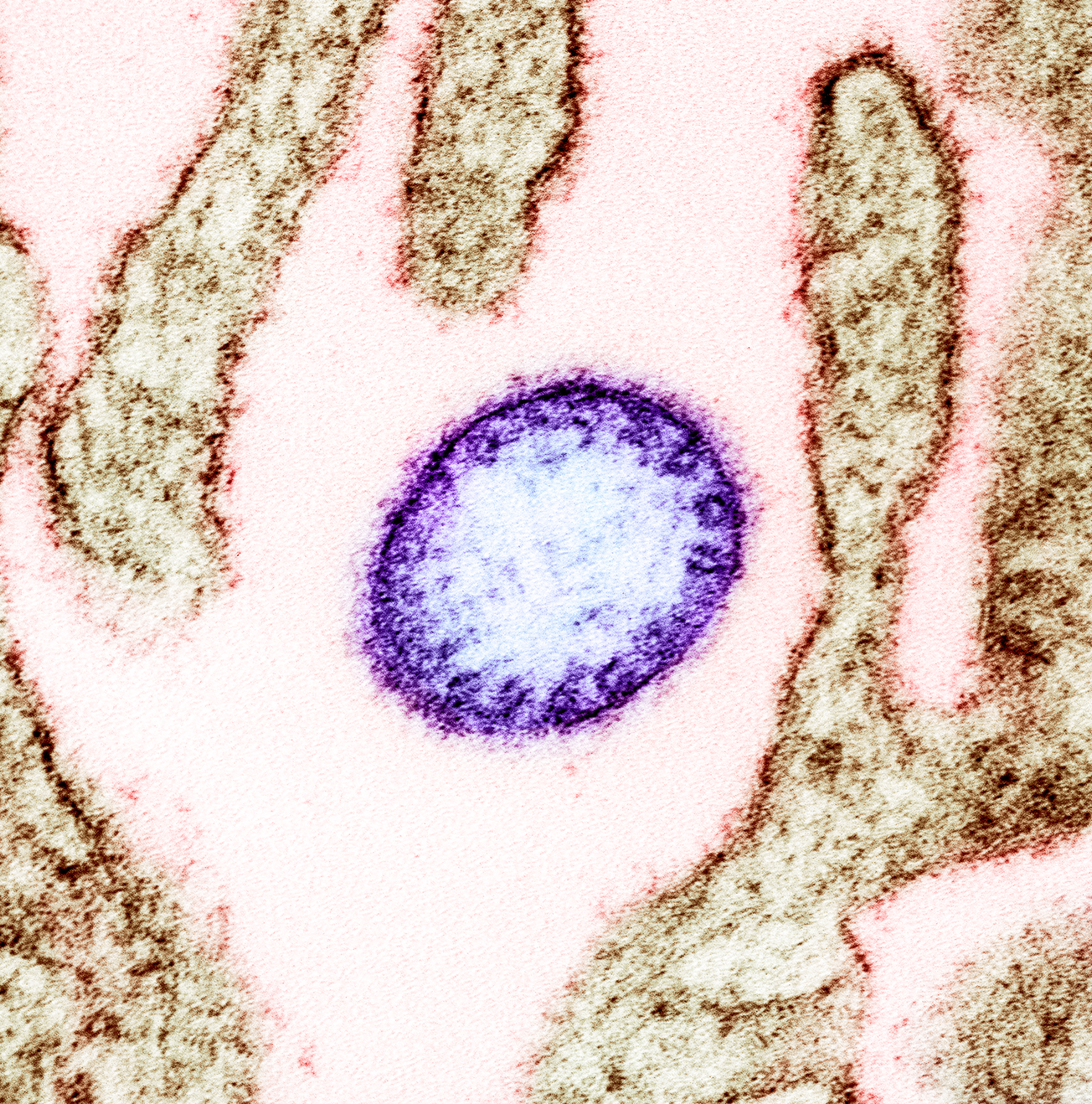
Nipah virus
Sign in to saveNipah virus is a bat-borne, zoonotic virus that causes Nipah virus infection in humans and other animals, a disease with a very high case fatality rate (40–75%). Numerous disease outbreaks caused by the Nipah virus have occurred in India, Malaysia, and Singapore. Nipah virus belongs to the genus Henipavirus along with the Hendra virus, which has also caused disease outbreaks.
OverviewAI-generated
Nipah virus, also identified by the scientific name Henipavirus nipahense, is a species within the genus Henipavirus. The organism is named after the plant Nypa fruticans. It has been the subject of 1,842 PubMed records and is referenced by 267 other encyclopedia articles.
An outbreak of the virus in India has placed many countries in Asia on high alert. The Independent has published information regarding the spread and transmission of the virus.
Synthesized by Vinony from 15 facts across 4 sources: Wikidata, PubMed, Firecrawl, Vinony graph. Generated from structured data (not the Wikipedia text) and checked against those facts — may still contain errors.
Wikipedia views (30d)
14,420 totalvia Wikimedia Pageviews API
Research
1,842 papers- Nipah Virus: A Multidimensional Update.Viruses · 2024
- Nipah virus infection: A review.Epidemiology and infection · 2019
- Nipah virus: pathogenesis, genome, diagnosis, and treatment.Applied microbiology and biotechnology · 2025
- Nipah Virus Infection.Journal of clinical microbiology · 2018
- Molecular Pathogenesis of Nipah Virus.Applied biochemistry and biotechnology · 2023
via PubMed
Described at
.jpeg?trim=0,0,0,0&width=1200&height=800&crop=1200:800)
I’m an infectious disease expert. Here’s what you should know about Nipah virus | The Independent
An outbreak of the deadly Nipah virus in India has put many countries in Asia on high alert
independent.co.uk →Several countries, including Thailand, Malaysia and Singapore, have introduced new screening and testing measures after at least two people died of Nipah virus in the Indian state of West Bengal this month. But what is Nipah virus, and how concerned should we be ? The first is via exposure to bats, and in particular via contact with the saliva, urine or faeces of an infected bat. Infections can also occur from contact with other infected animals, such as pigs in the original outbreak in Malaysia. The second way it can be transferred is by contaminated foods, particularly date palm products. This means consuming date palm juice or sap that is contaminated with the bodily fluids of infected bats. The third is human-to-human transmission. Nipah transmission between humans has been reported via close contact such as caring for a sick person. This can mean, for instance, being infected with bodily secretions contaminated with the virus in households or hospitals. This is thought to be less common than the other transmission pathways. Nipah virus infections happen quickly. The time from infection to symptoms appearing is generally from four days to three weeks. It’s a terrible disease. Around half the people who get severe Nipah virus infection die of it. The symptoms can vary in severity. It can cause pneumonia, just as COVID could. But the illness we worry most about is neurological symptoms; Nipah can cause encephalitis, which is inflammation of the brain. These effects on the brain are why the fatality rate is so high. fever seizures difficulty breathing falling unconscious severe headaches being unable to move a limb jerky movements personality changes, such as suddenly behaving oddly or psychosis. Unusually, some patients who survive the acute phase of a Nipah infection can get relapsed encephalitis many years later, even more than a decade later. This article is republished from The Conversation under a Creative Commons license. Read the original article . The trial found that a single dose of the treatment was well tolerated by patients. So it is still quite a way off being actually available to help people infected with Nipah virus, but there’s hope. This is because it doesn’t transmit efficiently from person to person, and the main way it is transmitted is from food and infected animals. For people living outside of areas where cases are currently being reported, the risk is low. Even in the affected areas, the number of cases is small at this stage, but public health authorities are taking appropriate control measures. If you become unwell after travelling to areas where cases have been reported, you should let your doctor know where and when you travelled. Overall, though, everything needs to be put in context. We hear about new viruses and incidents all the time. Nipah is important for affected countries, but outside of those countries, it is just something we closely monitor and be alert for.
Excerpt from a page describing this subject · 7,618 chars · not written by Vinony
Wikidata facts
- Instance of
- taxon
- Parent taxon
- Henipavirus
- Named after
- Nypa fruticans
- Image
- Henipavirus structure.svg
Show 4 more facts
- taxon name
- Henipavirus nipahense
- taxon rank
- species
- Commons category
- Nipah virus
Sources (1)
via Wikidata · CC0
~20 min read
Encyclopedic overview
Nipah virus (Henipavirus nipahense) is a bat-borne, zoonotic virus that causes Nipah virus infection in humans and other animals, a disease with a very high case fatality rate (40–75%). Numerous disease outbreaks caused by the Nipah virus have occurred in India, Malaysia, and Singapore. Nipah virus belongs to the genus Henipavirus along with the Hendra virus, which has also caused disease outbreaks.
Virology
Excerpted from Wikipedia’s “Nipah virus” article, available under the CC BY-SA 4.0 licence.