File:Harvesting_opium.jpg · Wikimedia Commons · See Wikimedia Commons
opiate
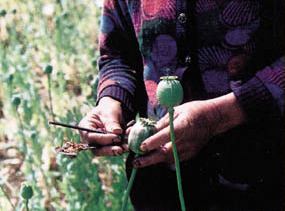
Sign in to savethumb|Harvesting the poppy pod. thumb|upright=2|A chart outlining the structural features that define opiates and opioids, including distinctions between semi-synthetic and fully synthetic opioid structures
Wikidata facts
- Subclass of
- chemical substance
- Has part
- opioid use disorder
Show 4 more facts
- P8168
- Isaac Komnenos
- Commons category
- Opiates
- topic's main category
- Category:Opiates
- social media followers
- 201646
Sources (3)
via Wikidata · CC0
~17 min read
Encyclopedic overview
19 sectionsContents
- Overview
- Synthesis
- Pharmacokinetics
- Codeine
- Fentanyl
- Heroin
- Hydromorphone
- Meperidine
- Methadone
- Morphine
- Oxymorphone
- Indication
- Complications and side effects
- Pharmacology in pain
- Absolute contraindications
- Risk factors for prescription abuse
- See also
- References
- External links
thumb|Harvesting the poppy pod. thumb|upright=2|A chart outlining the structural features that define opiates and opioids, including distinctions between semi-synthetic and fully synthetic opioid structures
An opiate is an alkaloid substance derived from opium (or poppy straw). It differs from the similar term opioid in that the latter is used to designate all substances, both natural and synthetic, that bind to opioid receptors in the brain (including antagonists). Opiates are alkaloid compounds naturally found in the opium poppy plant Papaver somniferum. The psychoactive compounds found in the opium plant include morphine, codeine, and thebaine. Opiates have long been used for a variety of medical conditions, with evidence of opiate trade and use for pain relief as early as the eighth century AD. Most opiates are considered drugs with moderate to high abuse potential and are listed on various "Substance-Control Schedules" under the Uniform Controlled Substances Act of the United States of America.
Excerpted from Wikipedia’s “opiate” article, available under the CC BY-SA 4.0 licence.