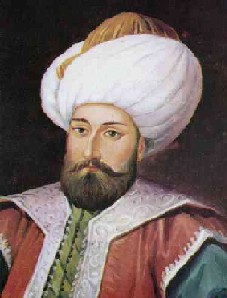
File:Muradhudavendigar.jpg · Wikimedia Commons · See Wikimedia Commons
Ottoman dynasty
Sign in to saveAlso known as House of Osman, Osmanlis
royal family of the Ottoman Empire
The Ottoman dynasty was the royal family that ruled the Ottoman Empire, one of history's largest and longest-lasting empires, which controlled vast territories across Europe, Asia, and Africa for over 600 years. It matters because the Ottoman Empire shaped the political, cultural, and religious landscape of the Mediterranean, Middle East, and Eastern Europe for centuries, and its legacy continues to influence these regions today.
AI-generated from the Wikipedia summary — may contain errors.
Wikidata facts
- Instance of
- dynasty
- Country
- Ottoman Empire
- Founded by
- Osman I
- Follows
- Seljuk dynasty
- Image
- Rukiye Sabiha Sultan wedding.jpg
Show 5 more facts
- Commons category
- House of Osman
- topic's main category
- Category:Ottoman dynasty
- native label
- Osmanlı Hanedanı
- inception
- 1299-00-00
- described by source
- The Nuttall Encyclopædia
via Wikidata · CC0
~14 min read
Encyclopedic overview
The Ottoman dynasty (Turkish: Osmanlı Hanedanı) consisted of the members of the imperial House of Osman (Ottoman Turkish: خاندان آل عثمان, romanized: Ḫānedān-ı Āl-i ʿOsmān), also known as the Ottomans (Turkish: Osmanlılar). According to Ottoman tradition, the family originated from the Kayı tribe branch of the Oghuz Turks, under the leadership of Osman I in northwestern Anatolia in the district of Bilecik, Söğüt. The Ottoman dynasty, named after Osman I, ruled the Ottoman Empire from c. 1299 to 1922.
During much of the Empire's history, the sultan was the absolute regent, head of state, and head of government, though much of the power often shifted to other officials such as the Grand Vizier. During the First (1876–1878) and Second Constitutional Eras (1908–1920) of the late Empire, a shift to a constitutional monarchy was enacted, with the Grand Vizier taking on a prime ministerial role as head of government and heading an elected General Assembly.
Excerpted from Wikipedia’s “Ottoman dynasty” article, available under the CC BY-SA 4.0 licence.
Gallery (12)
Available in 60 languages
- Español
- Français
- Deutsch
- 中文
- 日本語
- Русский
- Português
- Italiano
- العربية
- Afrikaans
- Albanian
- Armenian
- Arpitan
- azb
- Azerbaijani
- Bahasa Indonesia
- Bangla
- Basque
Show 41 more
- Belarusian
- Bulgarian
- Catalan
- Central Kurdish
- Croatian
- Czech
- Esperanto
- Estonian
- Finnish
- Georgian
- Greek
- Hungarian
- Kazakh
- Kurdish
- Kyrgyz
- Latin
- Latvian
- Macedonian
- Malay
- Nederlands
- Norwegian
- Norwegian Nynorsk
- Pashto
- Polski
- Serbian
- Serbian (Latin)
- simple
- Slovak
- Slovenian
- Svenska
- Tiếng Việt
- Türkçe
- Ukrainian
- Urdu
- Uzbek
- Western Frisian
- Western Panjabi
- zh_yue
- فارسی
- ไทย
- 한국어
via Wikidata sitelinks · CC0