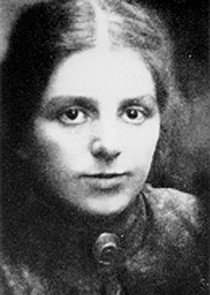
File:Modersohn-Becker_01.jpg · Wikimedia Commons · See Wikimedia Commons
Paula Modersohn-Becker
Sign in to saveAlso known as Paula Modersohn- Becker, Paula Becker, Paula Modersohn Becker, Paula Becker-Modersohn, Paula Modershohn-Becker, Paula Moderson-Becker, Paula Modersohn-Becker (pseudonym), Paula (pseudonym) Modersohn-Becker
German expressionist painter (1876–1907)
OverviewAI-generated
Paula Modersohn-Becker was a German painter, printmaker, and artist associated with the Expressionism movement. Born in Dresden in 1876, she studied at the Académie Julian. She was married to Otto Modersohn and had one child. Her work primarily focused on the portrait genre, and she created 36 known works.
Modersohn-Becker died in Worpswede in 1907 from a pulmonary embolism. Her art is held in the collections of the Städel Museum, the Art Institute of Chicago, the National Gallery of Art, and the Museum of Modern Art. She participated in documenta and Documenta III. She is described in the source Great Women Masters of Art.
Synthesized by Vinony from 28 facts across 3 sources: Wikidata, Firecrawl, Europeana Sparql. Generated from structured data (not the Wikipedia text) and checked against those facts — may still contain errors.
Key facts
- Born
- Minna Hermine Paula Becker , ( 1876-02-08 ) 8 February 1876, Friedrichstadt , German Empire
- Died
- 20 November 1907 (1907-11-20) (aged 31), Worpswede , German Empire
- Occupations
- Artist, painter
- Years active
- 1895–1907
- Known for
- Expressionism
- Notable work
- Reclining Mother and Child Nude (1906), Self-Portrait at 6th Wedding Anniversary (1906)
- Spouse
- Otto Modersohn ( married</span>"}]]}'>m. 1901 )
- Children
- Mathilde Modersohn
via Wikipedia infobox
Described at

Paula Modersohn-Becker — Google Arts & Culture
between Worpswede and Paris
artsandculture.google.com →Paula Modersohn-Becker's life and work moved between two poles: the artists' village Worpswede near Bremen and Paris. At the turn of the century, the French metropolis was a melting pot for a wide variety of artistic trends, from where the groundbreaking movements of modernism began. After months of secluded work in Worpswede Paula Modersohn-Becker was looking for the vibrant life and inspiring art experiences of Paris. Among the German artists, she was one of the first to discover the paintings of Paul Cézanne, Paul Gauguin, Vincent van Gogh and the Nabis group of artists. With a sure sense for the groundbreaking innovations of these painters, she developed her own work continuously. When she died of an embolism on November 20, 1907, at the age of just 31, she was one of the pioneers of modernism in Germany. Moor grave bridge, Paula Modersohn-Becker, c. 1899, From the collection of:Kunsthalle Bremen Twilight landscape with house and branch fork (c. 1900) by Paula Modersohn-Becker Kunsthalle Bremen During her first stay in Paris in 1900 Paula Modersohn-Becker devoted herself to her Paris environment, which she painted from the private vantage point of her lodgings in the Parisian quarter of Montparnasse. The bold construction and rough reduction of the picture elements displayed in these works already indicate the geometrically planned landscapes that Paula Modersohn-Becker was to create in Worpswede after her first stay in Paris. These stand in drastic contrast to the emphatically emotional landscape paintings of the Worpswede artists and attest to the painter’s being deeply influenced by Paul Cézanne, whose art she had already encountered in Paris in 1900. Like Georges Braque and André Derain after her, she adopted Cézanne’s basic concept of emancipation from natural reproduction, translating an impression of nature into a pictorial structure with its own optical autonomy, as in the Twilight Landscape with House and Forked Branch, for example. Haystack in the evening light, Paula Modersohn-Becker, c. 1902, From the collection of:Kunsthalle Bremen Rural road with red house, Paula Modersohn-Becker, c. 1902, From the collection of:Kunsthalle Bremen »I believe that one should not think about nature too much in painting pictures. At least not during the process of conceiving the image« Nearly two-thirds of the more than 400 figural pictures made by Paula Modersohn-Becker portray children, for the most part girls. She painted children of all ages, as well as sibling pairs and, last but not least, portrayals of mothers and children – themes that may also be found in works by Vincent van Gogh, Maurice Denis, and Paul Sérusier, or the young Pablo Picasso. Paula Modersohn-Becker, however, dedicated herself to pictures of children with the utmost intensity. Girl's head in front of a window, Paula Modersohn-Becker, c. 1902, From the collection of:Kunsthalle Bremen »Keep what is deepest in you pure, those things that we have in common with children, and with the birds, and with the flowers«, she advised her friend, the painter Heinrich Vogeler, already in the spring of 1900. Children became her major theme. One reason for this was certainly that she was able to find children as models cheaply among the peasant and working-class families in Worpswede, just as she was able to do later with Italian models at the model market in Paris. But the real reason was her fascination for the world of childhood experience. Infant with the hand of the mother, Paula Modersohn-Becker, c. 1903, From the collection of:Kunsthalle Bremen Children and chickens in front of landscape, Paula Modersohn-Becker, c. 1902, From the collection of:Kunsthalle Bremen Many of her pictures show children in quiet reservation. These portrayals are always compassionate, but never sentimental. Fundamentally, she was always concerned with rendering her models in a clear manner. Standing child turned left in front of landscape, Paula Modersohn-Becker, c. 1901, From
Excerpt from a page describing this subject · 25,891 chars · not written by Vinony
Wikidata facts
- Instance of
- human
- Given name
- Paula
- Family name
- Becker
- Gender
- female
- Citizenship
- German Empire
- Place of birth
- Dresden
- Place of death
- Worpswede
- Spouse
- Otto Modersohn
- Occupation
- artist
- Educated at
- Académie Julian
- Languages spoken
- German
- Native language
- German
- Notable work
- Selfportrait at 6th wedding anniversary
- Participant in
- Documenta III
- Genre
- portrait
- Movement
- Expressionism
- Official website
- www.paula-modersohn-becker.de
- Image
- Paula Modersohn-Becker.jpg
- Number of children
- 1
Show 14 more facts
- Commons category
- Paula Modersohn-Becker
- date of birth
- 1876-02-08
- date of death
- 1907-11-20
- Commons Creator page
- Paula Modersohn-Becker
- Commons gallery
- Paula Modersohn-Becker
- manner of death
- natural causes
- topic's main category
- Category:Paula Modersohn-Becker
- cause of death
- pulmonary embolism
- has works in the collection
- Sprengel Museum
- name in native language
- Paula Modersohn-Becker
- influenced by
- Vincent van Gogh
- birth name
- Paula Becker.
- place of burial
- Worpswede
Sources (7)
via Wikidata · CC0
Works in European collections
36 objects attributed to Paula Modersohn-Becker, held across European museums, libraries & archives · via Europeana
Landscape
Paula: Self-portrait
Still Life with Apples and Green Glass
Still life with water glass, lemons and cider sins
Still Life with Pears, Jug and Blue Glass
Portrait of Rainer Maria Rilke
Still life with goldfish glass
Still Life with Pears
Old peasant woman
Still Life with Jug
Foreground study with Huflattich and Butterfly
Old peasant woman
Still Life with Blue Whitewashed Jug I
Girl with wreath in his hair
Neither peasant child sitting on a chair
Bumla-Bum Lantern
Old peasant woman
Peasant woman with red dress
Farmer
Still Life with Pears and Apples
Mother and child
Foreground study with butterfly
Still Life
Girl with watch weight
Still Life with Apples and Green Glass
Sleeping child
Self-portrait with fireplace branch
Girl with green chain
Self-portrait
Girl with yellow wreath
Self-image front
Self-portrait
Self-portrait
Still Life with Fruit and French White Bread
Self-portrait with white bead necklace
Still Life with Flowers
~26 min read
Encyclopedic overview
Paula Modersohn-Becker (8 February 1876 – 20 November 1907) was a German Expressionist painter and draftswoman of the late 19th and early 20th centuries. She is noted for the many self-portraits, including nudes. She is considered one of the most important representatives of early expressionism, producing more than 700 paintings and over 1000 drawings during her active painting life. She is recognized both as the first known woman painter to paint nude self-portraits, and the first woman to have a museum devoted exclusively to her art (the Paula Modersohn-Becker Museum, founded 1927). Additionally, she is believed to be the first woman artist to depict herself pregnant.
Her career was cut short when she died from postpartum pulmonary embolism at the age of 31.
Excerpted from Wikipedia’s “Paula Modersohn-Becker” article, available under the CC BY-SA 4.0 licence.