File:Treaty_of_Versailles,_English_version.jpg · Wikimedia Commons · See Wikimedia Commons
peace treaty
Sign in to saveAlso known as peace of, peace deal, peace agreement
agreement between two or more hostile parties which formally ends a state of war
A peace treaty is an official agreement between countries or groups that have been fighting each other, used to formally end the war between them. It matters because it provides a clear, legally binding way to stop the conflict and establish the terms for how the former enemies will relate to each other going forward.
AI-generated from the Wikipedia summary — may contain errors.
Wikidata facts
- Subclass of
- treaty
- Image
- Kadesh.jpg
Show 6 more facts
- topic's main category
- Category:Peace treaties
- Commons category
- Peace treaties
- different from
- armistice
- has effect
- peace
- P8168
- Roland Ducke
- has cause
- capitulation
Sources (3)
via Wikidata · CC0
~15 min read
Encyclopedic overview
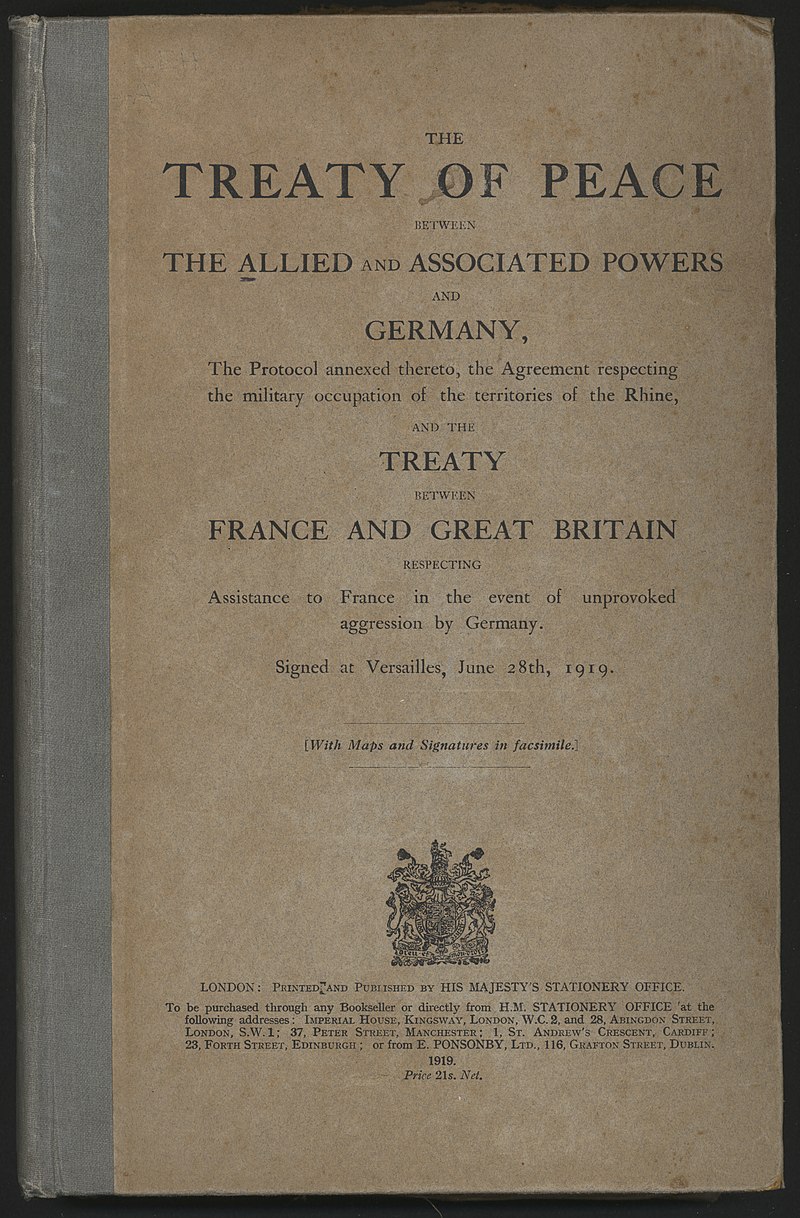
The Treaty of Versailles, signed at the conclusion of World War I
A peace treaty is an agreement between two or more hostile parties, usually countries or governments, which formally ends a state of war between the parties. It is different from an armistice, which is an agreement to stop hostilities; a surrender, in which an army agrees to give up arms; or a ceasefire or truce, in which the parties may agree to temporarily or permanently stop fighting.
Excerpted from Wikipedia’s “peace treaty” article, available under the CC BY-SA 4.0 licence.
Gallery (4)
Available in 51 languages
- Español
- Français
- Deutsch
- 中文
- 日本語
- Русский
- Português
- العربية
- Albanian
- Asturian
- Azerbaijani
- Bahasa Indonesia
- Bangla
- Basque
- Belarusian
- Bulgarian
- Catalan
- Central Kurdish
Show 32 more
via Wikidata sitelinks · CC0