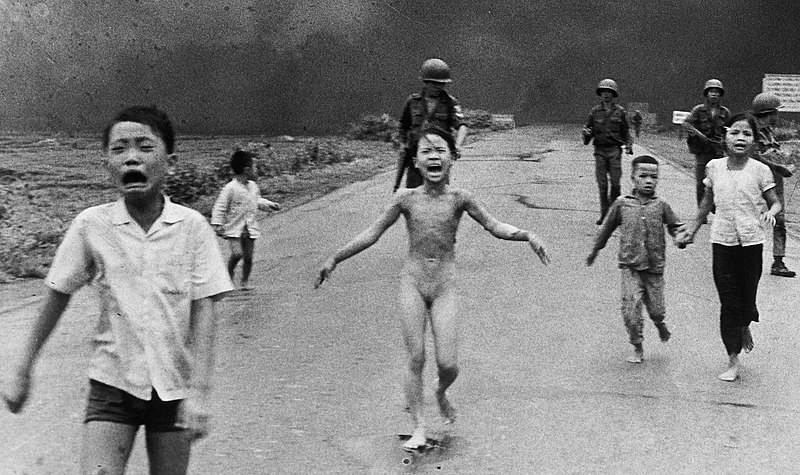
File:The_Terror_of_War.jpg · Wikimedia Commons · See Wikimedia Commons
Phan Thị Kim Phúc
Sign in to saveAlso known as Kim Phuc, Napalm girl, Phan Thi Kim Phuc
Vietnamese–Canadian activist and photographic subject
Film & TV
Known for
- Napalm Girl. The Journey of a Photo — Thi Kim Phuc Phan2023
- Das Mädchen und das Foto2010
- Dutifrí2007
- First Tuesday1983
via TMDB
Key facts
- Born
- Phan Thị Kim Phúc , ( 1963-04-06 ) April 6, 1963 (age 63) , Trảng Bàng , South Vietnam
- Other name
- Kim Phúc
- Citizenship
- South Vietnam (1963–1975) , Vietnam (1975–1997) , Canada (1997–present)
- Alma mater
- University of Havana , Cuba
- Occupations
- Author, UNESCO Goodwill Ambassador
- Known for
- Being "The Girl in the Picture" ( Vietnam War )
- Spouse
- Bui Huy Toan ( married</span>"}]]}'>m. 1992 )
- Awards
- Order of Ontario
via Wikipedia infobox
Wikidata facts
- Instance of
- human
- Gender
- female
- Citizenship
- South Vietnam
- Place of birth
- Trảng Bàng
- Occupation
- writer
- Position held
- UNESCO Goodwill Ambassador
- Educated at
- University of Havana
- Languages spoken
- Spanish
- Religion
- Caodaism
- Award
- Dresden Prize
- Image
- Burgemeester Samkalden verricht opening World Press Photo en reikt prijzen uit, Bestanddeelnr 926-3212.jpg
- Residence
- Toronto
Show 5 more facts
- date of birth
- 1963-07-27
- name in native language
- Phan Thị Kim Phúc
- depicted by
- The Terror of War
- Commons category
- Phan Thi Kim Phuc
- P10632
- Phan Thị Kim Phúc
via Wikidata · CC0
~13 min read
Encyclopedic overview
Phan Thị Kim Phúc OOnt ( Vietnamese: [faːŋ tʰɪ̂ˀ kim fúk͡p̚]; born April 6, 1963), referred to informally as the girl in the picture and the napalm girl, is a South Vietnamese-born Canadian woman best known as the child depicted in the Pulitzer Prize–winning photograph, titled The Terror of War, taken at Trảng Bàng during the Vietnam War on June 8, 1972.
The image shows a nine-year-old Kim Phuc running naked on a road after being severely burned on her back by a South Vietnamese Air Force napalm attack. The image became one of the most iconic and powerful symbols of the war, influencing global public opinion and anti-war movements.
Excerpted from Wikipedia’s “Phan Thị Kim Phúc” article, available under the CC BY-SA 4.0 licence.