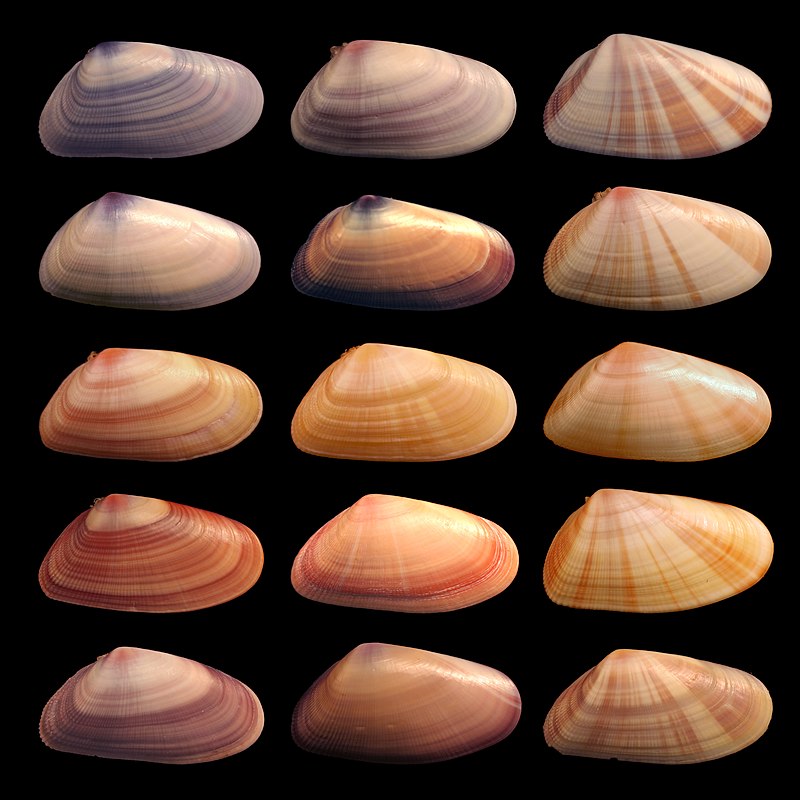
File:Coquina_variation3.jpg · Wikimedia Commons · See Wikimedia Commons
A phenotype is the observable characteristics of an organism—like shell color and patterning in clams or petal color in plants—which result from both its genes and its environment. It matters because the same genetic makeup can produce different phenotypes, meaning that what we see in living things reflects a combination of inherited genes and other factors, not genes alone.
AI-generated from the Wikipedia summary — may contain errors.
Wikidata facts
- Subclass of
- quality
- Part of
- organism
- Has part
- phenotypic trait
Show 8 more facts
- exact match
- purl.obolibrary.org/obo/UPHENO_0001001
- Commons category
- Phenotypes
- opposite of
- genotype
- different from
- phoneme
- manifestation of
- environmental factor
- described by source
- Armenian Soviet Encyclopedia
- NCI Thesaurus ID
- C16977
- has cause
- genotype
via Wikidata · CC0
Article · Deutsch
Der Phänotyp (altgriechisch φαίνω phaíno „ich erscheine“ und τύπος týpos „Gestalt“) oder das Erscheinungsbild ist in der Genetik die Menge aller Merkmale eines Organismus. Er bezieht sich nicht nur auf morphologische, sondern auch auf physiologische Eigenschaften und ggfs. auf Verhaltensmerkmale. Phänotypen und phänotypische Variationen werden durch das Zusammenwirken von Erbanlagen und Umweltfaktoren (Modifikation) bestimmt. Inwieweit der Phänotyp durch Umwelteinflüsse beeinflussbar ist, hängt von der Reaktionsnorm ab. Diese Möglichkeit, auf Umwelteinflüsse zu reagieren, ist durch den Genotyp genetisch festgelegt. Verfahren, mit denen Rückschlüsse vom Erbgut, d. h. der individuellen Desoxyribonukleinsäure (DNS), auf den Phänotyp eines Individuums geschlossen werden, werden DNA-Phänotypisierung genannt.
Abstract from DBpedia / Wikipedia · CC BY-SA
Gallery (24)
Available in 77 languages
- Español
- Français
- Deutsch
- 中文
- 日本語
- Русский
- Português
- Italiano
- العربية
- Afrikaans
- Armenian
- Asturian
- Azerbaijani
- Bahasa Indonesia
- Bangla
- Basque
- Bosnian
- Bulgarian
Show 58 more
- Catalan
- Central Kurdish
- Chuvash
- Croatian
- Czech
- Danish
- Esperanto
- Estonian
- Filipino
- Finnish
- Galician
- Georgian
- Greek
- Haitian Creole
- Hebrew
- Hungarian
- Icelandic
- Ido
- Irish
- Kabyle
- Kara-Kalpak
- Kazakh
- Kurdish
- Kyrgyz
- Latvian
- Low German
- Luxembourgish
- Macedonian
- Malay
- Mongolian
- Nederlands
- Norwegian Nynorsk
- Occitan
- Pashto
- Polski
- Romanian
- Rusyn
- Saterland Frisian
- Scots
- Serbian
- Serbian (Latin)
- simple
- Slovak
- Slovenian
- Svenska
- Tajik
- Tamil
- Tiếng Việt
- Türkçe
- Ukrainian
- Urdu
- Uzbek
- Wu Chinese
- zh_min_nan
- zh_yue
- فارسی
- ไทย
- 한국어
via Wikidata sitelinks · CC0