
File:The_Sculptor_Phidias-Ny_Carlsberg_Glyptotek.jpg · Wikimedia Commons · See Wikimedia Commons
Phidias
Sign in to saveAlso known as The Great Pheidias, Pheidias, Fidias
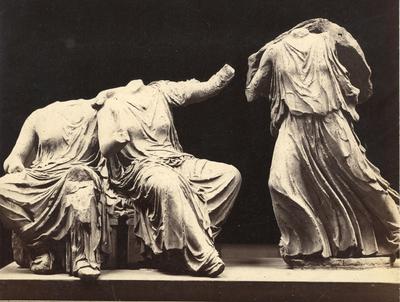
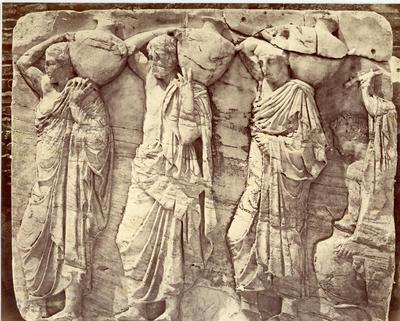
thumb|300px|Phidias Showing the Frieze of the [[Parthenon to his Friends (1868) by Sir Lawrence Alma-Tadema]] Phidias or Pheidias (; , Pheidias; ) was an Ancient Greek sculptor, painter, and architect, active in the 5th century BC. His Statue of Zeus at Olympia was one of the Seven Wonders of the Ancient World. Phidias also designed the statues of the goddess Athena on the Athenian Acropolis, namely the Athena Parthenos inside the Parthenon, and the Athena Promachos, a colossal bronze which stood between it and the Propylaea, a monumental gateway that served as the entrance to the Acropolis in
OverviewAI-generated
Phidias was a male sculptor, architect, and painter from Classical Athens who lived during classical antiquity. He spoke Ancient Greek and is known for his work in the field of art of sculpture. His notable works include the Statue of Zeus at Olympia, Athena Promachos, Lemnian Athena, and Athena Parthenos.
He was a student of Hegias of Athens and Ageladas, and he taught Agoracritus. Phidias died in 430 BCE at either Classical Athens or Olympia. His works are held in the collections of the Acropolis Museum, Museo del Prado, Staatliche Kunstsammlungen Dresden, and Regional Archaeological Museum Antonino Salinas. He is described in sources such as the Brockhaus and Efron Encyclopedic Dictionary, The Nuttall Encyclopædia, and the Encyclopædia Britannica 11th edition.
Synthesized by Vinony from 19 facts across 2 sources: Wikidata, Europeana Sparql. Generated from structured data (not the Wikipedia text) and checked against those facts — may still contain errors.
Key facts
- Artist.name
- Phidias
- Artist.image
- The Sculptor Phidias-Ny Carlsberg Glyptotek.jpg
- Artist.caption
- Bust of Phidias (Roman copy of a 3rd century BC Greek original)
- Artist.birth_date
- c. 480 BC
- Artist.death_date
- c. 430 BC
via Wikipedia infobox
Wikidata facts
- Instance of
- human
- Gender
- male
- Citizenship
- Classical Athens
- Place of birth
- Athens
- Place of death
- Olympia
- Occupation
- painter
- Languages spoken
- Ancient Greek
- Student of
- Ageladas
- Field of work
- art of sculpture
- Image
- The Sculptor Phidias-Ny Carlsberg Glyptotek.jpg
Show 13 more facts
- Commons category
- Phidias
- date of birth
- 0500-00-00
- date of death
- 0430-01-01
- Commons Creator page
- Phidias
- topic's main category
- Category:Phidias
- described by source
- Encyclopædia Britannica 11th edition
- time period
- classical antiquity
- name in native language
- Φειδίας
- student
- Agoracritus
- has works in the collection
- J. Paul Getty Museum
- on focus list of Wikimedia project
- Wikipedia:Vital articles/Level/4
- name
- Phidias
- significant place
- Classical Athens
via Wikidata · CC0
Works in European collections
30 objects attributed to Phidias, held across European museums, libraries & archives · via Europeana



~9 min read
Encyclopedic overview
8 sectionsContents
- Life and work
- Archaeological discovery
- Legacy
- Gallery
- See also
- References
- Sources
- External links
thumb|300px|Phidias Showing the Frieze of the [[Parthenon to his Friends (1868) by Sir Lawrence Alma-Tadema]] Phidias or Pheidias (; , Pheidias; ) was an Ancient Greek sculptor, painter, and architect, active in the 5th century BC. His Statue of Zeus at Olympia was one of the Seven Wonders of the Ancient World. Phidias also designed the statues of the goddess Athena on the Athenian Acropolis, namely the Athena Parthenos inside the Parthenon, and the Athena Promachos, a colossal bronze which stood between it and the Propylaea, a monumental gateway that served as the entrance to the Acropolis in Athens. Phidias was the son of Charmides of Athens. The ancients believed that his masters were Hegias and Ageladas.
Plutarch discusses Phidias's friendship with the Greek statesman Pericles, recording that enemies of Pericles tried to attack him through Phidias – who was accused of stealing gold intended for the Parthenon's statue of Athena, and of impiously portraying himself and Pericles on the shield of the statue. The historical value of this account, as well as the legend about accusations against the 'Periclean circle', is debatable, but Aristophanes mentions an incident with Phidias around that time.
Excerpted from Wikipedia’s “Phidias” article, available under the CC BY-SA 4.0 licence.
Gallery (22)
Available in 70 languages
- Español
- Français
- Deutsch
- 中文
- 日本語
- Русский
- Português
- Italiano
- العربية
- Albanian
- Albanian
- Armenian
- Arpitan
- Asturian
- Azerbaijani
- Bahasa Indonesia
- Bashkir
- Basque
Show 51 more
- Belarusian
- Bosnian
- Breton
- Bulgarian
- Catalan
- Croatian
- Czech
- Danish
- Egyptian Arabic
- Esperanto
- Estonian
- Extremaduran
- Fiji Hindi
- Filipino
- Finnish
- Galician
- Georgian
- Greek
- Hebrew
- Hungarian
- Icelandic
- Interlingua
- Kazakh
- Kyrgyz
- Latin
- Latvian
- Lithuanian
- Macedonian
- Malagasy
- Nederlands
- Norwegian
- Occitan
- Polski
- Romanian
- Serbian
- Serbian (Latin)
- Sicilian
- simple
- Slovak
- Slovenian
- Svenska
- Tamil
- Tiếng Việt
- Türkçe
- Ukrainian
- Uzbek
- Waray
- Wu Chinese
- zh_yue
- فارسی
- 한국어
via Wikidata sitelinks · CC0