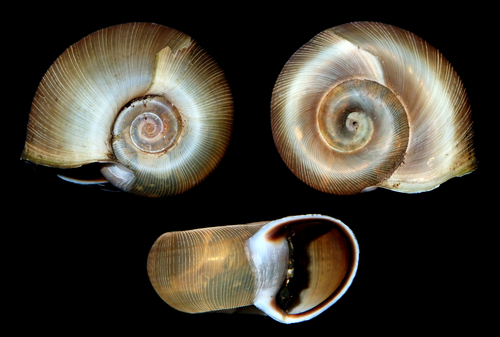
(c) lefua, some rights reserved (CC BY-NC), uploaded by lefua · cc-by-nc
Planorbella
Sign in to savePlanorbella is a genus of freshwater air-breathing snails, aquatic pulmonate gastropod mollusks in the family Planorbidae, the ram's horn snails, or planorbids, which all have sinistral, or left-coiling, shells. The Planorbella genus is not known to be colonial but are very plentiful and occur in large groupings. This genus is commonly found within North America, and is also found within various countries in Europe, including Iceland, Spain, Germany, France, Ukraine, and others. Over time, an increased amount of unintentional releases of the snails has led to Planorbella being found in more no
Species
Marsh Ramshorn
GENUS
- KingdomAnimalia
- PhylumMollusca
- ClassGastropoda
- FamilyPlanorbidae
via GBIF
Museum specimens
- Specimen records
- 1,322
- With media
- 9
- Family
- Planorbidae
- Collections
- SDNHM, UF, CAS
- Recorded in
- United States
Wikidata facts
- Instance of
- taxon
- Parent taxon
- Planorbidae
- Image
- Planorbella trivolvis.jpg
Show 4 more facts
- taxon name
- Planorbella
- taxon rank
- genus
- topic's main category
- Category:Planorbella
- Commons category
- Planorbella
Sources (1)
via Wikidata · CC0
~10 min read
Encyclopedic overview
12 sectionsContents
- Ecology
- ''Planorbella'' and parasite interactions
- Distribution and habitat
- Anatomy and morphology
- Reproduction
- Behaviours
- Predator avoidance
- Heavy metal exposure
- Parasitism
- Taxonomy
- Species
- References
Planorbella is a genus of freshwater air-breathing snails, aquatic pulmonate gastropod mollusks in the family Planorbidae, the ram's horn snails, or planorbids, which all have sinistral, or left-coiling, shells. The Planorbella genus is not known to be colonial but are very plentiful and occur in large groupings. This genus is commonly found within North America, and is also found within various countries in Europe, including Iceland, Spain, Germany, France, Ukraine, and others. Over time, an increased amount of unintentional releases of the snails has led to Planorbella being found in more non-native areas like Siberia. Some of the earliest fossil records date back to the Miocene.
==Ecology== Planorbella are often algae grazers, and in some locations such as oligotrophic sloughs, they may be a dominant element of total ecosystem biomass and hence system integrity. These snails are really important within freshwater ecosystems and are often used within research to study the exposures to toxicants like insecticides and heavy metals. Within freshwater habitats, competition occurs alongside these anthropogenic effects and tadpoles are known for reducing the survival and reproduction of planorbid snails by taking their food source which is periphyton. From competition as well as exposure to pesticides, planorbid snails were unable to produce as many eggs as they would have if they were healthy, which can have an effect on their population levels. One such species, the Magnificent Rams-horn snail (Planorbella magnifica) was classified as endangered in 2023 and has had no specimens in natural habitats since 2004.
Excerpted from Wikipedia’s “Planorbella” article, available under the CC BY-SA 4.0 licence.