Encyclopedia of Life · EOL (see source)
Prionochilus
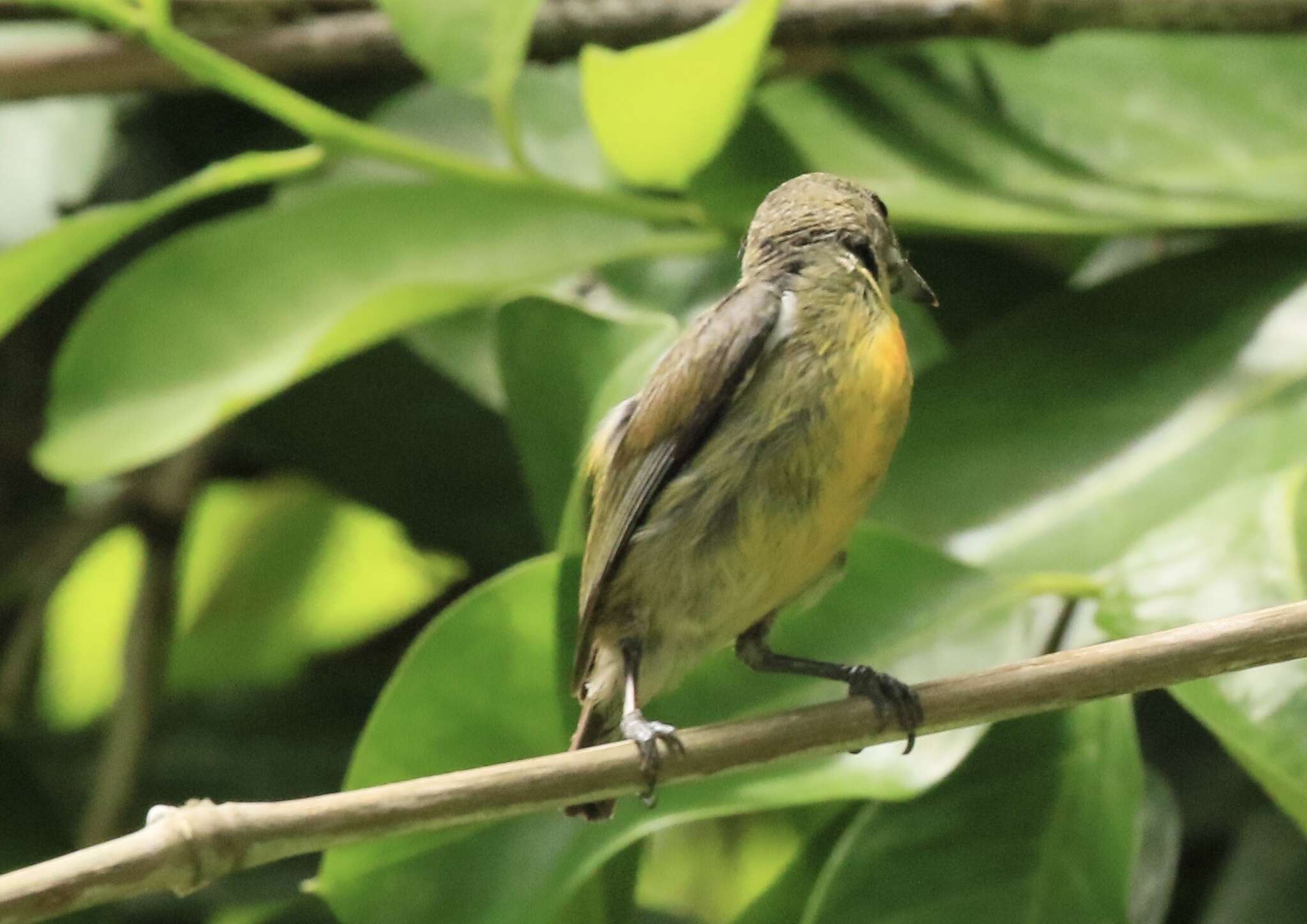
Sign in to savePrionochilus is one of the three genera of flowerpeckers that make up the family Dicaeidae. The genus differs from the genus Dicaeum in having ten long primary feathers in the wing and in the character of its calls. A study comparing the calls of the two genera suggested that Prionochilus is basal to Dicaeum. The genus contains 5 species, in contrast to the 44 species in the genus Dicaeum. They have a more restricted distribution than Dicaeum, occurring in the Philippines, Borneo, Sumatra, Java and the Malay Peninsula.
Species
GENUS
- KingdomAnimalia
- PhylumChordata
- ClassAves
- OrderPasseriformes
- FamilyDicaeidae
Prionochilus es un género de aves paseriformes de la familia Dicaeidae. Es propia de Asia del Sur. Especies El género tiene las siguientes especies:[1][2] Prionochilus maculatus – picaflores moteado. Prionochilus olivaceus – picaflores oliváceo. Prionochilus percussus – picaflores carminoso. Prionochilus plateni – picaflores de Palawan. Prionochilus thoracicus – picaflores pechiescarlata. Prionochilus xanthopygius – picaflores culigualdo. Referencias ↑ «Prionochilus Strickland, 1841». Sistema Integrado de Información Taxonómica. Consultado el 17 de septiembre de 2014. ↑ Bernis, F; De Juana, E; Del Hoyo, J; Fernández-Cruz, M; Ferrer, X; Sáez-Royuela, R; Sargatal, J (2009). «Nombres en castellano de las aves del mundo recomendados por la Sociedad Española de Ornitología (Decimotercera parte: Orden Passeriformes, Familias Remizidae a Laniidae)». Ardeola. Handbook of the Birds of the World (Madrid: SEO/BirdLife) 56 (1): 135-142. ISSN 0570-7358. Consultado el 17 de septiembre de 2014.
via GBIF
Museum specimens
- Specimen records
- 208
- With media
- 59
- Family
- Dicaeidae
- Collections
- WFVZ, CUMV, ROM, CLO, LSUMZ, DMNH
- Recorded in
- Malaysia, Philippines
Wikidata facts
Show 5 more facts
- Commons category
- Prionochilus
- taxon rank
- genus
- topic's main category
- Category:Prionochilus
- taxon name
- Prionochilus
- Commons gallery
- Prionochilus
Sources (1)
via Wikidata · CC0
~2 min read
Encyclopedic overview
2 sectionsContents
- Taxonomy
- References
Prionochilus is one of the three genera of flowerpeckers that make up the family Dicaeidae. The genus differs from the genus Dicaeum in having ten long primary feathers in the wing and in the character of its calls. A study comparing the calls of the two genera suggested that Prionochilus is basal to Dicaeum. The genus contains 5 species, in contrast to the 44 species in the genus Dicaeum. They have a more restricted distribution than Dicaeum, occurring in the Philippines, Borneo, Sumatra, Java and the Malay Peninsula.
==Taxonomy== The genus Prionochilus was introduced in 1841 by the English naturalist Hugh Edwin Strickland. The name is derived from the Ancient Greek prion for saw, and kheilos for lip, referring to the minute serrations along the edge of the bill. The type species was subsequently designated as Pardalotus percussus Temminck, 1826, the crimson-breasted flowerpecker.
Excerpted from Wikipedia’s “Prionochilus” article, available under the CC BY-SA 4.0 licence.