RADARSAT-1
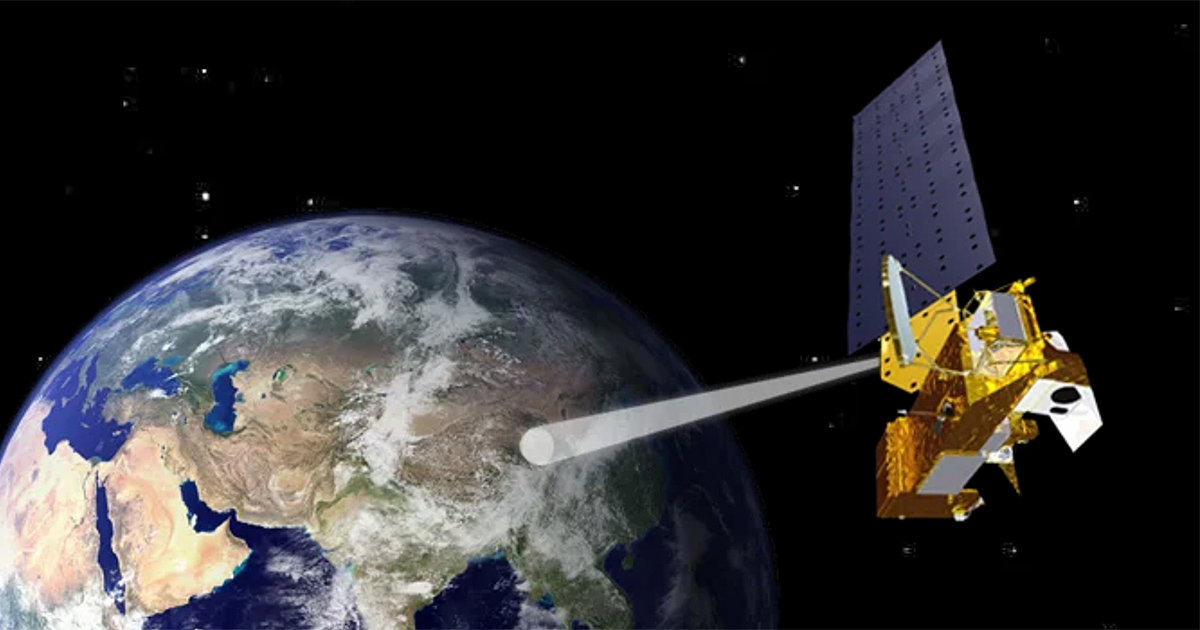
Sign in to saveRADARSAT-1 was Canada's first commercial Earth observation satellite. It utilized synthetic aperture radar (SAR) to obtain images of the Earth's surface to manage natural resources and monitor global climate change. As of March 2013, the satellite was declared non-operational and is no longer collecting data.
Described at
RADARSAT-1 - Lexikon der Fernerkundung
fe-lexikon.info →Kanadischer, inzwischen inaktiver Erdbeobachtungssatellit mit Aufgaben zur physischen Ozeanographie, zur Eis- und Schneebedeckung, zur Beobachtung von Landflächen und zur Unterstützung des nachhaltigen Umgangs mit Ressourcen. Radarsat bewegte sich auf einer sonnensynchronen Umlaufbahn in 798 km Höhe um die Erde bei einer Inklination von 98,6°. Durch die Umlaufbahn von der Morgendämmerung bis zur Abenddämmerung waren die Solarpaneele fast ständig dem Sonnenlicht ausgesetzt, was eine zuverlässige Energieversorgung sicherstellte und eine optimale Anzahl von Beobachtungsmöglichkeiten bot. Aufgrund seiner sonnensynchronen Umlaufbahn überflog er einen bestimmten Ort zur gleichen Ortszeit. Dies minimierte die Auswirkungen tageszeitlicher Schwankungen und war der Schlüssel zur Gewinnung von Daten über einen längeren Zeitraum, wie sie z. B. für die Vorhersage von Ernten benötigt werden. Der Satellit befand sich selten in Finsternis und konnte jederzeit Daten erfassen. Die absteigende Äquatorialüberquerung für eine Umlaufbahn von der Morgendämmerung bis zur Abenddämmerung dauerte 6 Stunden. Seine Umlaufzeit betrug 100,7 min, der Wiederholzyklus 24 Tage. RADARSAT konnte auf jeder 100,7-minütigen Umlaufbahn bis zu 28 Minuten Daten erfassen. Die Daten wurden in Echtzeit an Empfangsstationen am Boden weitergeleitet oder auf dem bordeigenen Aufnahmegerät gespeichert, bis RADARSAT in Reichweite einer Empfangsstation war. In kritischen Situationen konnten die Daten innerhalb von 4 Stunden nach der Erfassung verarbeitet und übermittelt werden. Radarsat arbeitete mit einem aktiven Mikrowelleninstrument, einem C-Band SAR . Dieses schickte gepulste Signale mit Einfallswinkeln zwischen 20 und 60° zur Erde und verarbeitete die reflektierten und dann empfangenen Signale. Die Verarbeitung der Daten erzielte Auflösungen zwischen 30 und 600 m. Das Haupteinsatzgebiet lag in den Polarregionen. Die Anwendungsbereiche umfassten Meereis-Monitoring (tägliche Eiskarten, Schutz der Ölplattformen vor Neufundland), Kartographie, Hochwasserkartierung und Katastrophenmonitoring allgemein, Gletschermonitoring, Waldflächenkartierung, Ölfleckenüberwachung, Aufspüren von möglichen Rohstofflagerstätten, Stadtplanung, Erntevorhersagen, Überwachung von Küstenerosion, Aufspüren von seismologisch oder vulkanologisch bedingten Oberflächendeformationen. RADARSAT-1 stellte im März 2013 nach 17 Jahren Dienst aufgrund eines Defekts seine Arbeit ein. Die Datenkontinuität wird durch den Start von RADARSAT-2 im Dezember 2006 gewährleistet. Seit dem 1. April 2019 stehen Bilder des Satelliten RADARSAT-1 der kanadische Weltraumbehörde CSA zur freien Verfügung. Diese können unter heruntergeladen werden.
Excerpt from a page describing this subject · 5,273 chars · not written by Vinony
Wikidata facts
- Part of
- Radarsat
- Country
- Canada
- Operator
- Canadian Space Agency
- Country of origin
- Canada
- Followed by
- RADARSAT-2
- Mass
- 2750
- Image
- Radarsat-1.gif
- Significant event
- failure
Show 8 more facts
- start point
- Vandenberg Space Launch Complex 2
- UTC date of spacecraft launch
- 1995-11-04
- space launch vehicle
- Delta II
- described at URL
- www.fe-lexikon.info/lexikon/radarsat
- carries scientific instrument
- synthetic aperture radar
- powered by
- spacecraft solar array
- type of orbit
- Sun-synchronous orbit
- service life
- 17.4
via Wikidata · CC0
~5 min read
Encyclopedic overview
8 sectionsContents
- Mission
- History
- Payload
- Orbit
- End of service
- See also
- References
- External links
RADARSAT-1 was Canada's first commercial Earth observation satellite. It utilized synthetic aperture radar (SAR) to obtain images of the Earth's surface to manage natural resources and monitor global climate change. As of March 2013, the satellite was declared non-operational and is no longer collecting data.
== Mission == RADARSAT-1 was launched at 14:22 UTC on 4 November 1995, from Vandenberg Air Force Base in California, into a Sun-synchronous orbit (dawn-dusk) above the Earth with an altitude of and inclination of 98.60°. Developed under the management of the Canadian Space Agency (CSA) in co-operation with Canadian provincial governments and the private sector, it provided images of the Earth for both scientific and marketing purposes. RADARSAT-1's images were useful in many fields, including agriculture, cartography, hydrology, forestry, oceanography, geology, ice and ocean monitoring, arctic surveillance, and detecting ocean oil slicks.
Excerpted from Wikipedia’s “RADARSAT-1” article, available under the CC BY-SA 4.0 licence.