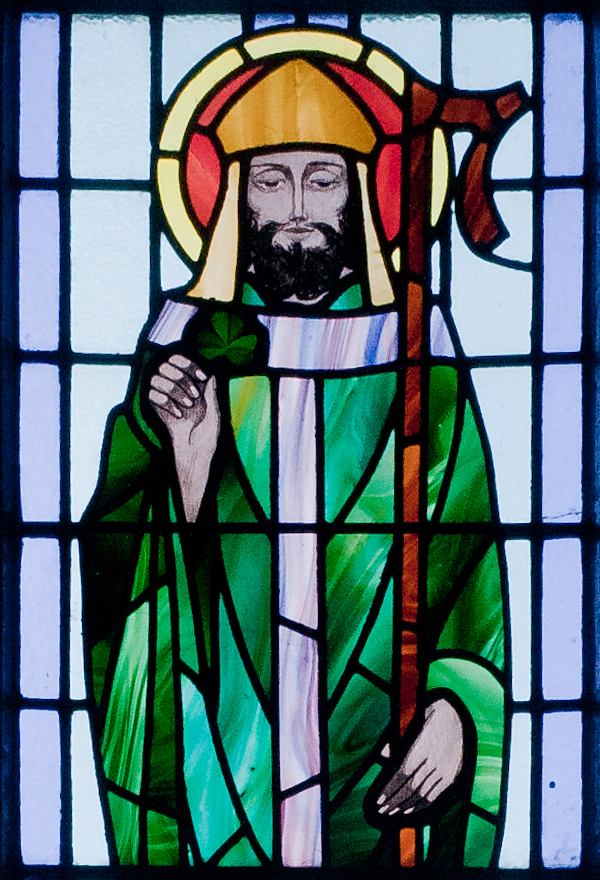
Saint Patrick's Day
Sign in to saveAlso known as Feast of Saint Patrick, St Patrick's Day, St. Patrick's Day
Saint Patrick's Day, or the Feast of Saint Patrick, is a religious and cultural holiday held on 17 March, the traditional death date of Saint Patrick, the foremost patron saint of Ireland.
Saint Patrick's Day is a religious and cultural holiday celebrated on March 17th, marking the traditional date of death of Saint Patrick, the main patron saint of Ireland. The day is observed both as a religious feast and as a cultural celebration, particularly by Irish people and those of Irish descent around the world.
AI-generated from the Wikipedia summary — may contain errors.
Wikipedia views (30d)
31,985 totalvia Wikimedia Pageviews API
Wikidata facts
- Instance of
- event
- Subclass of
- holiday
- Named after
- Saint Patrick
- Religion
- Christianity
- Image
- Kilbennan St. Benin's Church Window St. Patrick Detail 2010 09 16.jpg
Show 8 more facts
- Commons category
- Saint Patrick's Day
- day in year for periodic occurrence
- March 17
- topic's main category
- Category:Saint Patrick's Day
- hashtag
- StPatricksDay
- native label
- Saint Patrick's Day
- operating area
- Lutheranism
- nickname
- (St) Patty's Day
- described at URL
- baike.sogou.com/v63679978.htm
Sources (2)
via Wikidata · CC0
~40 min read
Encyclopedic overview
Saint Patrick's Day, or the Feast of Saint Patrick (Irish: Lá Fhéile Pádraig, lit. 'the Day of the Festival of Patrick'), is a religious and cultural holiday held on 17 March, the traditional death date of Saint Patrick (c. 385 – c. 461), the foremost patron saint of Ireland.
Saint Patrick's Day was made an official Christian feast day in the early 17th century and is observed by the Catholic Church, the Anglican Communion (especially the Church of Ireland), the Eastern Orthodox Church, and the Lutheran Church. The day commemorates Saint Patrick and the arrival of Christianity in Ireland, and, by extension, celebrates the heritage and culture of the Irish in general. Celebrations generally involve public parades and festivals, céilithe, and the wearing of green attire or shamrocks. Christians who belong to liturgical denominations also attend church services. Historically, the Lenten restrictions on fasting and drinking alcohol were lifted for the day, which has encouraged the holiday's tradition of revelry.
Excerpted from Wikipedia’s “Saint Patrick's Day” article, available under the CC BY-SA 4.0 licence.
Gallery (13)
Available in 80 languages
- Español
- Français
- Deutsch
- 中文
- 日本語
- Русский
- Português
- Italiano
- العربية
- हिन्दी
- Afrikaans
- Albanian
- Armenian
- Arpitan
- Bahasa Indonesia
- Basque
- be_x_old
- Belarusian
Show 61 more
- Bikol
- Bosnian
- Breton
- Bulgarian
- Burmese
- Catalan
- Central Kurdish
- Chechen
- Cherokee
- Chuvash
- Croatian
- Czech
- Danish
- Egyptian Arabic
- Esperanto
- Estonian
- Faroese
- Finnish
- Galician
- Greek
- Hebrew
- Hungarian
- Iban
- Icelandic
- Ido
- Irish
- Kazakh
- Latin
- Latvian
- Lithuanian
- Malagasy
- Malay
- Nederlands
- Norwegian
- Polski
- Romanian
- Sardinian
- Scots
- Serbian
- Serbian (Latin)
- simple
- Sindhi
- Slovak
- Slovenian
- Svenska
- Tamil
- Tatar
- Tiếng Việt
- Türkçe
- Ukrainian
- Urdu
- Veps
- Walloon
- Waray
- Western Mari
- Wu Chinese
- zh_min_nan
- zh_yue
- فارسی
- ไทย
- 한국어
via Wikidata sitelinks · CC0