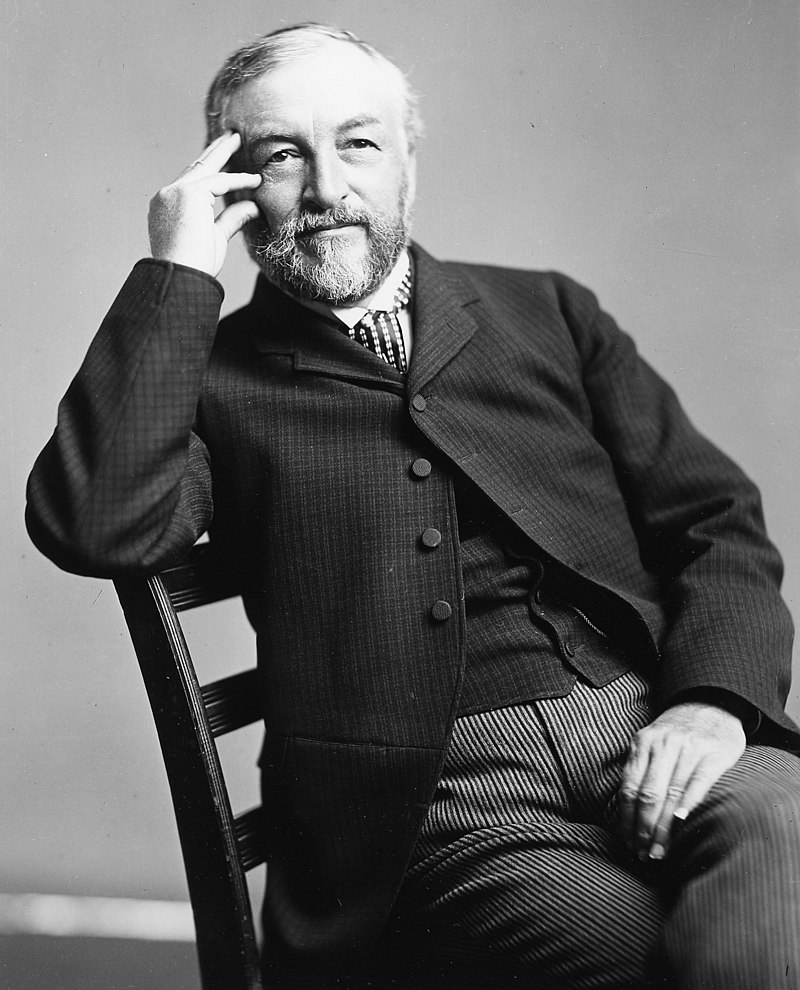
File:Samuel_Pierpont_Langley.jpg · Wikimedia Commons · See Wikimedia Commons
Samuel Langley
Sign in to saveAlso known as Samuel Pierpont Langley
American physicist, pioneer of aviation, and 3rd Secretary of the Smithsonian (1834-1906)
Key facts
- Preceded by
- Spencer Fullerton Baird
- Succeeded by
- Charles Doolittle Walcott
- Born
- ( 1834-08-22 ) August 22, 1834, Roxbury, Massachusetts , U.S.
- Died
- February 27, 1906 (1906-02-27) (aged 71), Aiken, South Carolina , U.S.
- Known for
- solar physics aviation experiments
- Awards
- Rumford Medal (1886) , Henry Draper Medal (1886) , Janssen Medal (1893)
via Wikipedia infobox
Wikidata facts
- Instance of
- human
- Gender
- male
- Citizenship
- United States
- Place of birth
- Roxbury
- Place of death
- Aiken
- Occupation
- aircraft pilot
- Employer
- Smithsonian Institution
- Languages spoken
- English language
- Field of work
- physics
- Image
- Samuel Pierpont Langley.jpg
Show 10 more facts
- Commons Creator page
- Samuel Pierpont Langley
- member of
- Accademia Nazionale dei Lincei
- Commons category
- Samuel Pierpont Langley
- date of birth
- 1834-08-22
- date of death
- 1906-02-27
- name in native language
- Samuel Pierpont Langley
- writing language
- English language
- place of burial
- Forest Hills Cemetery
- contributed to creative work
- Popular Science
- P8168
- 17th Empire Awards
via Wikidata · CC0
~16 min read
Encyclopedic overview
Samuel Pierpont Langley (August 22, 1834 – February 27, 1906) was an American aviation pioneer, astronomer and physicist who invented the bolometer. He was the third secretary of the Smithsonian Institution and a professor of astronomy at the University of Pittsburgh, where he was the director of the Allegheny Observatory.
Life
Excerpted from Wikipedia’s “Samuel Langley” article, available under the CC BY-SA 4.0 licence.