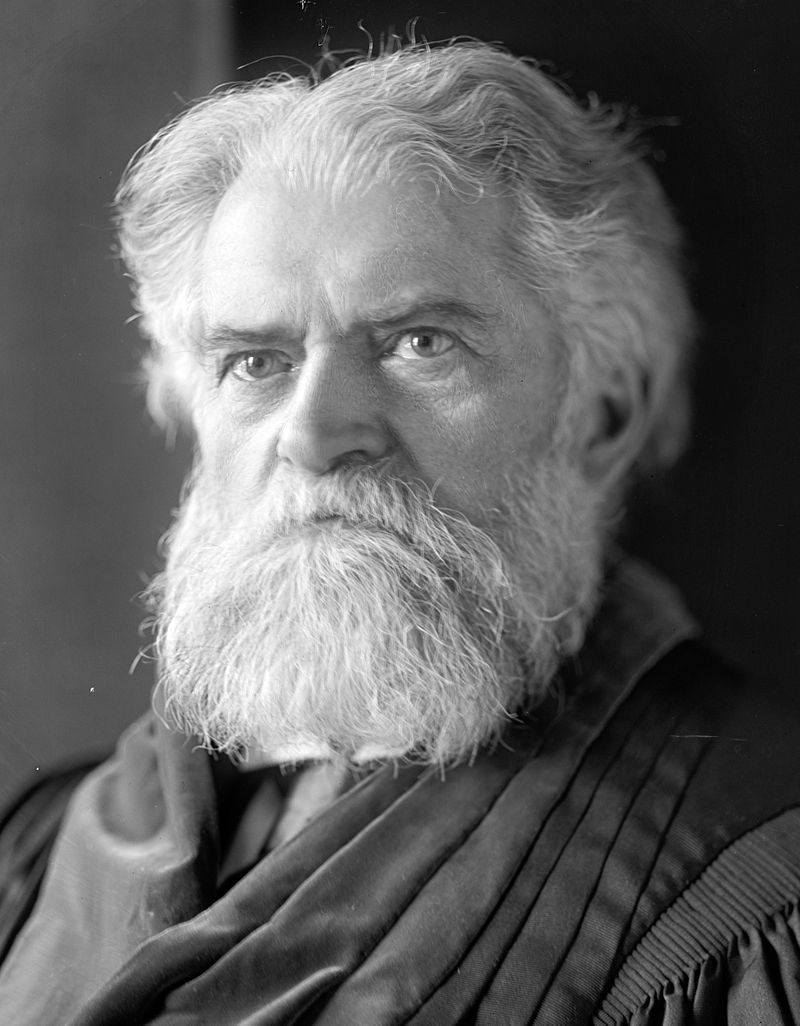
File:Simon_Newcomb_01.jpg · Wikimedia Commons · See Wikimedia Commons
Simon Newcomb
Sign in to saveAmerican astronomer (1835–1909)
Key facts
- Born
- ( 1835-03-12 ) March 12, 1835, Wallace, Nova Scotia , Canada
- Died
- July 11, 1909 (1909-07-11) (aged 74), Washington, D.C. , U.S.
- Citizenship
- American
- Alma mater
- Harvard University ( BS , 1858)
- Spouse
- Mary Caroline Hassler ( married</span>"}]]}'>m. August 4, 1863</span>"}]]}'>1863 )
- Children
- 4, including Anita and Josepha
- Awards
- Copley Medal (1890) , Bruce Medal (1898)
- Fields
- Astronomy , Mathematics
- Academic advisors
- Benjamin Peirce
- Doctoral students
- Henry Ludwell Moore
via Wikipedia infobox
Wikidata facts
- Instance of
- human
- Given name
- Simon
- Gender
- male
- Citizenship
- United States
- Place of birth
- Wallace
- Place of death
- Washington, D.C.
- Child
- Anita Newcomb McGee
- Occupation
- writer
- Position held
- chairperson
- Educated at
- Harvard University
- Languages spoken
- English language
- Doctoral advisor
- Benjamin Peirce
- Doctoral student
- Henry Ludwell Moore
- Field of work
- economics
- Military branch
- United States Navy
- Military rank
- admiral
- Image
- Simon Newcomb 01.jpg
Show 14 more facts
- member of
- Accademia Nazionale dei Lincei
- Commons category
- Simon Newcomb
- date of birth
- 1835-03-12
- date of death
- 1909-07-11
- P8168
- Marie Anne de Mailly
- place of burial
- Arlington National Cemetery
- manner of death
- natural causes
- name in native language
- Simon Newcomb
- cause of death
- cancer
- writing language
- English language
- relative
- Hassler Whitney
- contributed to creative work
- Popular Science
- maintained by WikiProject
- WikiProject Mathematics
- Commons Creator page
- Simon Newcomb
via Wikidata · CC0
Works in European collections
1 object attributed to Simon Newcomb, held across European museums, libraries & archives · via Europeana
~20 min read
Encyclopedic overview
Simon Newcomb (March 12, 1835 – July 11, 1909) was a Canadian–American astronomer, applied mathematician, and autodidactic polymath. He served as Professor of Mathematics in the United States Navy and at Johns Hopkins University. Born in Nova Scotia, at the age of 19 Newcomb left an apprenticeship to join his father in Massachusetts, where the latter was teaching.
Though Newcomb had little conventional schooling, he completed a Bachelor of Science at Harvard in 1858. He later made important contributions to timekeeping, as well as to other fields in applied mathematics, such as economics and statistics. Fluent in several languages, he also wrote and published several popular science books and a science fiction novel.
Excerpted from Wikipedia’s “Simon Newcomb” article, available under the CC BY-SA 4.0 licence.