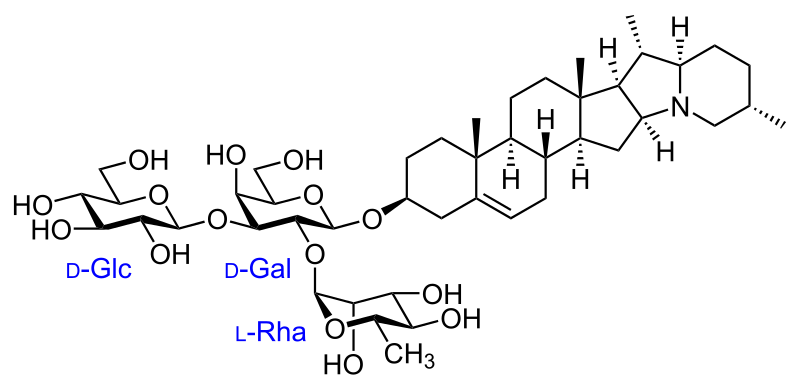
File:Solanine.svg · Wikimedia Commons · See Wikimedia Commons
saponinas
Sign in to saveAlso known as Sapogenins glycosides, saponins, triterpene glycosides
Saponins (Latin sapon, 'soap' + -in, 'one of') are bitter-tasting, usually toxic plant-derived secondary metabolites. They are organic chemicals that become foamy when agitated in water and have high molecular weight. They are present in a wide range of plant species throughout the bark, leaves, stems, roots and flowers but particularly in soapwort (genus Saponaria), a flowering plant, the soapbark tree (Quillaja saponaria), common corn-cockle (Agrostemma githago L.), baby's breath (Gypsophila spp.) and soybeans (Glycine max L.). They are used in soaps, medicines (e.g., drug adjuvants), fire e
Research
33,258 papers- Saponin constituents of Achyranthes root.Journal of natural medicines · 2022
- Saponin monomers: Potential candidates for the treatment of type 2 diabetes mellitus and its complications.Phytotherapy research : PTR · 2024
- An overview of tea saponin as a surfactant in food applications.Critical reviews in food science and nutrition · 2024
- Saponin surfactants used in drug delivery systems: A new application for natural medicine components.International journal of pharmaceutics · 2021
- [Saponin drugs].Dansk tidsskrift for farmaci · 1966
via PubMed
Wikidata facts
Show 2 more facts
- Commons category
- Saponins
- topic's main category
- Category:Saponins
via Wikidata · CC0