
Sierra Leona
Also known as Republic of Sierra Leone, sl, SLE
país de África occidental
AI overview
Sierra Leone is a West African country located on the coast between Guinea and Liberia, with a tropical climate and diverse landscapes ranging from savannas to rainforests. With a population of over 8.4 million people as of 2023, it is centered around its capital and largest city, Freetown.
AI-generated from the Wikipedia summary — may contain errors.
Weather now
cached 6h ago22°overcast clouds
99% 1.3 m/s OpenWeatherMap
7-day forecast
via Open-Meteo
Country
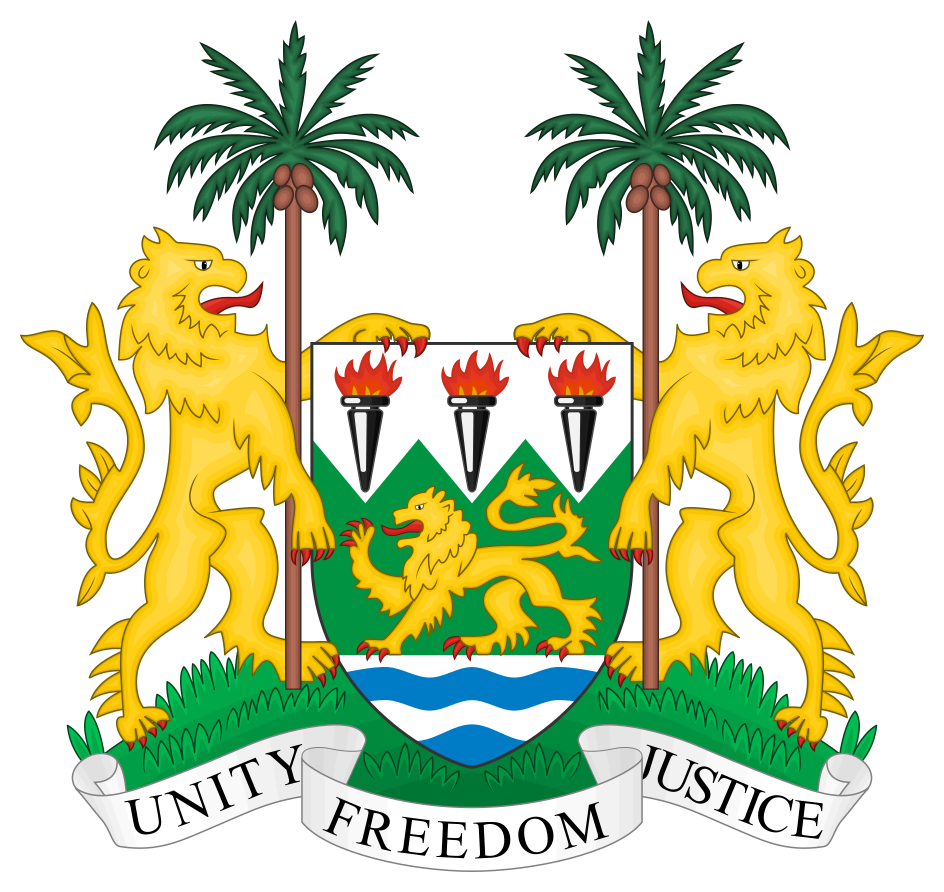
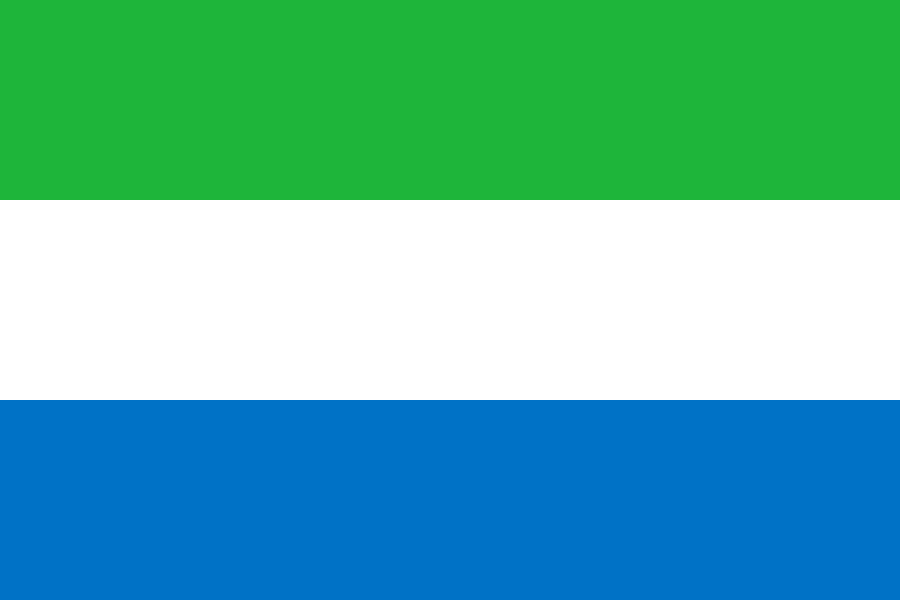
- Capital
- Freetown
- Population
- 9,077,691
- Region
Travel guide
Understand
Sierra Leone was founded as a colony for freed slaves originating in the British Empire.
Sierra Leone achieved its independence from Britain in 1961. Since the end of its civil war in 2002, the government, with considerable international assistance, has made noticeable improvements in the country's infrastructure which should help the tourism sector: most major trunk roads are tarred to a high standard and Bumbuna hydroelectric dam supplies electricity when water levels are high enough (completed in 2009). While the government sector still suffers from chronic shortage of resources, the private sector is booming.
In 2014, the outbreak of Ebola virus, which crossed the border from Guinea threatened to set back the improvements in the countries economy and development. More than a year of development was lost whilst the country focused on the fight against the disease. The country had not recovered fully when it was hit by the global COVID pandemic.
Get in
thumb|375px|A map showing the visa requirements of Sierra Leone, with countries in green having visa-free access thumb|Overloaded car at the border between Sierra Leone and Guinea Yellow Fever vaccination certificates are required for most nationalities. Proof of vaccination might be required to get a visa and is checked at the airport on arrival.
See
thumb|Lumley Beach, Freetown The beaches of the Freetown peninsula are spectacular, and on an average day, deserted. There are at least ten that could be described as world-class.
Bonthe Town, on Sherbro Island, is a former British Colonial Town, with several beautiful stone churches, and a rich culture.
Tiwai Island (in the middle of a river in SE Sierra Leone) is teeming with rare wildlife.
Rural West African villages: experience hospitality and the tranquillity of the bush.
Snorkelling and scuba diving around Banana Island.
The Turtle Islands, difficult to get to, but idyllic.
Outamba-Kilimi National Park is a park consisting of savannas and jungles with diverse wildlife.
Mount Bintumani is the highest mountain in Sierra Leone with excellent views from the summit.
Article · Español
Sierra Leona, oficialmente la República de Sierra Leona (en inglés: Republic of Sierra Leone; en krio: Sa Lon o Sa Lone), es un país de África occidental. Limita al norte con Guinea, al sureste con Liberia y al suroeste con el océano Atlántico. Su nombre es una adaptación de la versión en portugués: Serra Leoa, cuyo significado era "Sierra/Montaña Leona". Durante el siglo XVIII fue un importante centro de tráfico de esclavos. Al igual que su país vecino Liberia,[cita requerida] Sierra Leona fue fundada principalmente para establecer a esclavos liberados. Para eso, el líder abolicionista Granville Sharp compró a los jefes de distintas etnias un territorio de 250 km² (por 60 libras esterlinas) e instaló en él una sociedad de agricultores, organizada sobre bases democráticas y pronto transformada en una empresa colonizadora británica. En los siguientes 50 años, desembarcaron 70 000 esclavos en Freetown a los que se sumó la migración de gentes indígenas desde el interior. Los esclavos liberados fundaron la capital del país, Freetown, en 1791. En 1808, Freetown pasó a ser una colonia de la Corona británica, pasando el resto del país bajo el protectorado británico en 1896. La colonia y el protectorado se unieron para conseguir la independencia en el año 1961.[cita requerida] Los criollos, los británicos y los comerciantes de origen sirio-libanés retuvieron el poder económico, aunque perdieron el político. En 1971 Siaka Stevens del All People's Congress (APC, Congreso de Todo el Pueblo) rompió los últimos lazos con Gran Bretaña, proclamó la República y se convirtió en presidente. Stevens nacionalizó la explotación forestal, dio participación mayoritaria al Estado en la producción de diamantes e integró a Sierra Leona a las asociaciones de productores de hierro y de bauxita, con el fin de obtener mejores precios. En 1978 se introdujo un sistema de partido único mediante un plebiscito. En 1979 comenzó una larga crisis económica en la que se deterioraron las condiciones de vida. En noviembre de 1985 Syaka Stevens entregó el poder a Joseph Momoh, uno de sus ministros, pero eso no significó una modificación en la situación de crisis. En 1987 fue decretado el estado de emergencia económica; se concentraron los derechos de comercialización del oro y los diamantes en manos del Estado, se impuso un recargo de 15 % a las importaciones y se redujeron los salarios públicos. En marzo de 1991 empezaron incursiones de fuerzas rebeldes de Sierra Leona, Burkina Faso y Liberia en el país. En agosto del mismo año se reintrodujo el sistema multipartidista con una nueva Constitución aprobada por referéndum, pero ya en 1992 Valentine Strasser suspendió la nueva Constitución mediante un golpe de Estado. Entre el año 1991 y el año 2002, Sierra Leona sufrió las consecuencias de la devastadora guerra civil. La guerra de poder dejó más de 50 000 personas muertas, gran parte de la infraestructura del país destruida, y más de dos millones de sierraleoneses desplazados como refugiados en países vecinos. En enero de 2002, el presidente de Sierra Leona, Ahmad Tejan Kabbah, cumplió su promesa de campaña al poner fin a la guerra civil, con la ayuda del Gobierno británico, la CEDEAO y las Naciones Unidas. Sierra Leona fue uno de los países asolados por la epidemia de ébola de 2014-2016 junto a Liberia y Guinea, en cuyos países murieron más de 11 300 personas en total.
Gallery (16)
On the map
2 mapped locations
Connections
Categories
1961 establishments in Sierra LeoneCountries and territories where English is an official languageCountries in AfricaCountries in West AfricaEconomic Community of West African StatesLeast developed countriesMember states of the African UnionMember states of the Commonwealth of NationsMember states of the Organisation of Islamic CooperationMember states of the United NationsRepublics in the Commonwealth of Nations