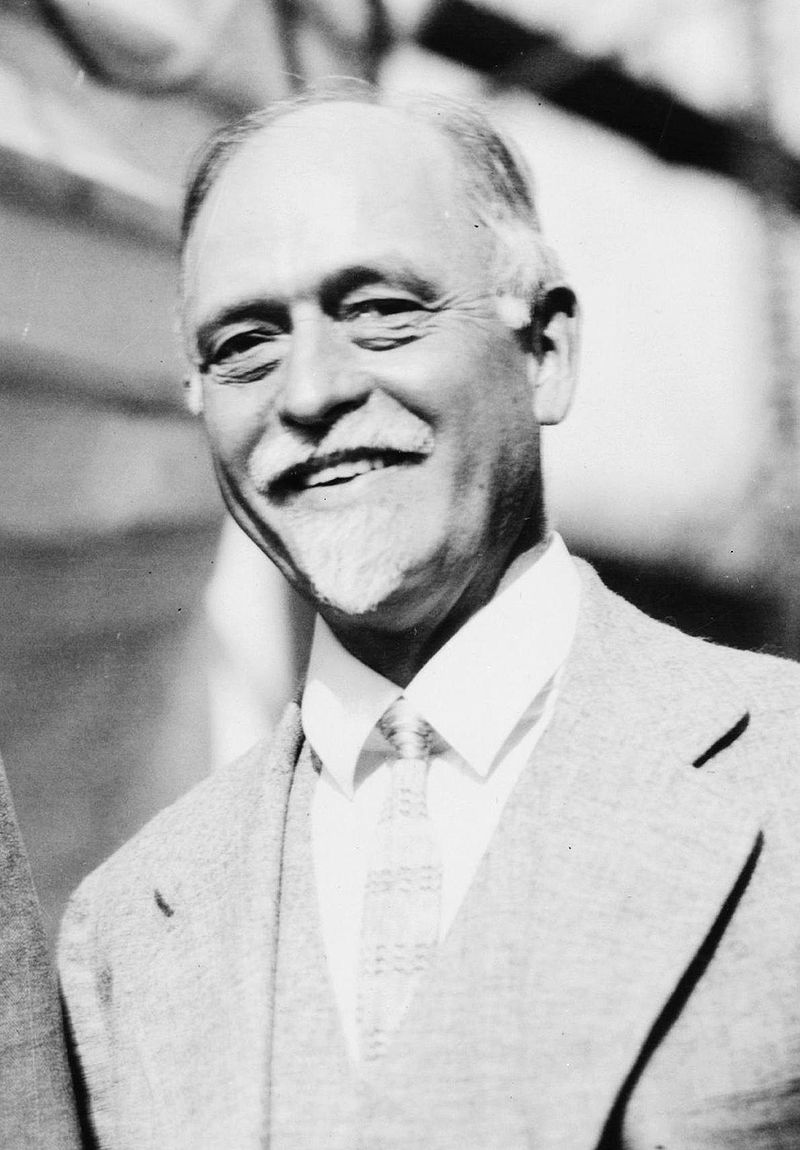
Irving Fisher
American economist and statistician (1867–1947)
Person · Open Library
- Works
- 72
Top works
- Health and efficiency
- America's interest in world peace
- The Making of Index Numbers
- League Or War
- How to Live Long
via Open Library + Wikidata
Listeners · Last.fm
- Listeners
- 1
- Total plays
- 1
<a href="https://www.last.fm/music/Irving+Fisher">Read more on Last.fm</a>
Recent publications · Crossref
5 total works indexed
Article
Irving Fisher (February 27, 1867 – April 29, 1947) was an American economist, statistician, inventor, eugenicist and progressive social campaigner. He was one of the earliest American neoclassical economists, though his later work on debt deflation has been embraced by the post-Keynesian school. Joseph Schumpeter described him as "the greatest economist the United States has ever produced", an assessment later repeated by James Tobin and Milton Friedman.
Fisher made important contributions to utility theory and general equilibrium. He was also a pioneer in the rigorous study of intertemporal choice in markets, which led him to develop a theory of capital and interest rates. His research on the quantity theory of money inaugurated the school of macroeconomic thought known as "monetarism". Fisher was also a pioneer of econometrics, including the development of index numbers. Some concepts named after him include the Fisher equation, the Fisher hypothesis, the international Fisher effect, the Fisher separation theorem and Fisher market.
Gallery (5)
Connections
Categories
1867 births1947 deaths19th-century American economists20th-century American economistsActivists from New York (state)American AtheistsAmerican eugenicistsAmerican segregationistsAmerican statisticiansEconomists from New York (state)Fellows of the Econometric SocietyMary Institute and St. Louis Country Day School alumni