
Sudán del Sur
Also known as Republic of South Sudan, Southern Sudan, ss, SSD
país de África
AI overview
South Sudan is a landlocked country in East Africa bordered by six nations, with the Nile River and its vast swamp system as its dominant geographical feature. It matters as a strategically located nation in Africa with a population of over 12.7 million people and Juba as its capital city.
AI-generated from the Wikipedia summary — may contain errors.
Weather now
cached 5h ago25°overcast clouds
73% 0.8 m/s OpenWeatherMap
7-day forecast
via Open-Meteo
Country
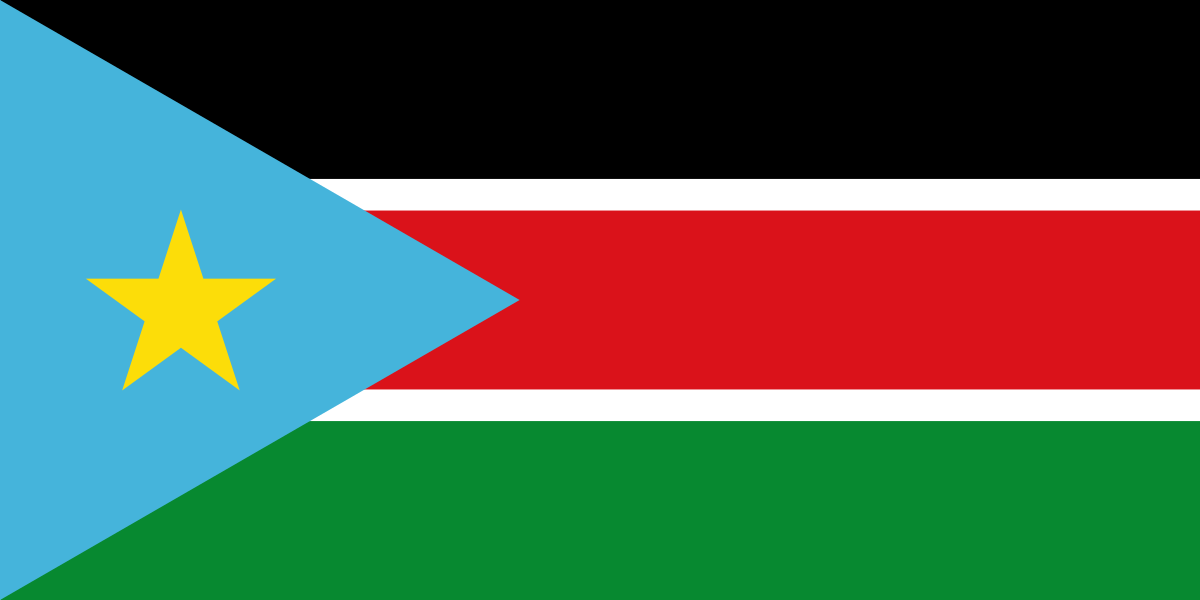
- Capital
- Juba
- Population
- 15,786,898
- Region
Travel guide
Understand
thumbnail|Cattle in South Sudan thumbnail|Soldiers in South Sudan
Get in
thumb|375px|A map showing the visa requirements of South Sudan, with countries in green having visa-free access
Get around
thumb|There is always room on top! Travelling by train towards [[Wau (South Sudan)|Wau.|320px]] <!--
See
East African wildlife in Nimule National Park. Rumbec Freedom Square in Rumbek. White Nile. See the White Nile and the locals taking a drip from any of the restaurants located on its bank like Da Vinci and Afex. Afex. This restaurant has the best view of the iconic sinking ship that every humanitarian has on their Facebook page. Jebel Kujur. Hike up this 684m-high rock and get a good view of the city. However, it is crowded during the weekends. Check the security situation of the area before hiking up.
Do
Safaris to Boma National Park and Nimule National Park. See the parks by 4x4 vehicle or aircraft. See the greatest migration of mammals on the earth.
If you're feeling charitable, visit the Angels of East Africa orphanage (as featured in the film Machine Gun Preacher), also located in Nimule.
Eat
South Sudanese cuisine is mostly based on grains such as maize and sorghum.
The national dish of South Sudan is Kisra, a sorghum pancake.
It is heavily influenced by Arab cuisine.
The following are the most common dishes served:
Kisra. This is the main source of carbohydrate. It looks similar to Ethiopia's injeera but is more fermented, has a stronger sour smell, and has a rougher texture. It's color depends on what grain is used but most are made from sorghum, which gives its deeper brown color. Mandazi. Deep fried square donuts. Wala-wala, millet porridge. Aseeda, sorghum porridge Shaiyyah. Pan fried meat. Mahshi. Similar to the Middle Eastern dolma. Zucchini, tomatoes and bell peppers are stuffed with minced meat, rice, onions etc. in a bed of tomato sauce. Gurassa, yeasted pancake. Kajaik, fish stew. Ful sudani, peanut sweet. Molokhia. Made of Molokhia or Jews mallow leaves cooked in a meat based soup. Tamia, falafel.
Article · Español
Sudán del Sur, oficialmente República de Sudán del Sur (en inglés: Republic of South Sudan) es un país soberano sin litoral ubicado en África Oriental, con capital en la ciudad de Yuba. Sudán del Sur limita con Sudán al norte, Etiopía al este, Kenia, Uganda y la República Democrática del Congo al sur y con la República Centroafricana al oeste. Es hasta la fecha el país con menos IDH del mundo. El territorio que actualmente conforma Sudán del Sur fue parte del Sudán Anglo-Egipcio y después, de la República de Sudán desde su independencia en 1956. Sudán del Sur, habitada por múltiples etnias nilóticas principalmente cristianas y animistas, quedó bajo el dominio del sector norsudanés, de predominancia árabe y musulmana. En septiembre de 1983, el entonces presidente de Sudán, Yaafar Mohammed Numeiri, creó un estado federal que incluía tres estados federados en Sudán del Sur, pero más tarde los disolvió, lo que desdencadenó el inicio de la segunda guerra civil entre las tropas sudanesas y el secesionista Ejército de Liberación del Pueblo de Sudán. El gobierno sudanés permitió la autonomía de la región tras un acuerdo de paz firmado el 9 de enero de 2005 en la ciudad keniana de Naivasha. En virtud de este acuerdo, Sudán del Sur se convirtió en una región autónoma de Sudán con su propio gobierno y una Constitución interina, aprobada el 5 de diciembre de 2005, que definió la celebración de un referendo de independencia entre el 9 y el 15 de enero de 2011. El 7 de febrero de 2011 se hicieron públicos los resultados oficiales, que arrojaron un apoyo del 98,83 % a los partidarios de la independencia, la cual fue proclamada el 9 de julio de 2011. Sudán del Sur se convirtió así en el estado soberano más joven del mundo, condición que aún ostenta en la actualidad.En marzo de 2015, Sudán del Sur ingresó como el miembro 134 del G-77. Sudán del Sur ha sufrido violencia étnica y ha estado en una guerra civil desde 2013; y a partir de 2017, tenía la puntuación más alta en el Índice de Estados Frágiles (antes, el Índice de Estados Fallidos), superando a Somalia.
Abstract from DBpedia / Wikipedia · CC BY-SA
Gallery (16)
On the map
2 mapped locations
Connections
Categories
2011 establishments in South SudanCountries and territories where English is an official languageCountries in AfricaCountries in Central AfricaCountries in East AfricaEast African CommunityFederal republicsLandlocked countriesLeast developed countriesMember states of the African UnionMember states of the United NationsSource attribution