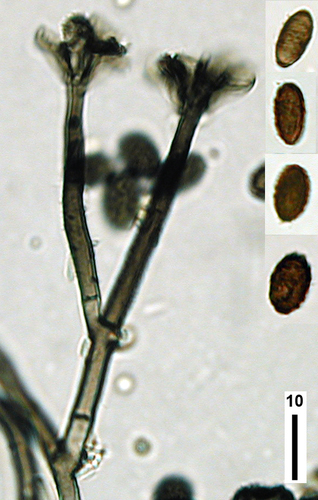
(c) Jerry Cooper, some rights reserved (CC BY), uploaded by Jerry Cooper · cc-by
Stachybotrys
Sign in to saveStachybotrys () is a genus of molds, hyphomycetes or asexually reproducing, filamentous fungi, now placed in the family Stachybotryaceae. The genus was erected by August Carl Joseph Corda in 1837. Historically, it was considered closely related to the genus Memnoniella, because the spores are produced in slimy heads rather than in dry chains. Recently, the synonymy of the two genera is generally accepted. Most Stachybotrys species inhabit materials rich in cellulose. The genus has a widespread distribution and contained about 50 species in 2008. There are 88 records of Stachybotrys on Species
Species
black mold
GENUS
- KingdomFungi
- PhylumAscomycota
- ClassSordariomycetes
- OrderHypocreales
- FamilyStachybotryaceae
via GBIF
Museum specimens
- Specimen records
- 101
- With media
- 13
- Family
- Stachybotryaceae
- Collections
- INECOL
- Recorded in
- Mexico
Research
787 papersvia PubMed
Wikidata facts
- Instance of
- taxon
- Parent taxon
- Stachybotryaceae
- Image
- Stachybotrys Spores.jpg
Show 4 more facts
- taxon name
- Stachybotrys
- taxon rank
- genus
- Commons category
- Stachybotrys
- taxon author citation
- Corda
Sources (2)
via Wikidata · CC0
~7 min read
Encyclopedic overview
8 sectionsContents
- Conidia
- Detection
- Pathogenicity
- Symptoms of ''Stachybotrys'' exposure in humans
- Species
- See also
- References
- External links
Stachybotrys () is a genus of molds, hyphomycetes or asexually reproducing, filamentous fungi, now placed in the family Stachybotryaceae. The genus was erected by August Carl Joseph Corda in 1837. Historically, it was considered closely related to the genus Memnoniella, because the spores are produced in slimy heads rather than in dry chains. Recently, the synonymy of the two genera is generally accepted. Most Stachybotrys species inhabit materials rich in cellulose. The genus has a widespread distribution and contained about 50 species in 2008. There are 88 records of Stachybotrys on Species Fungorum (in 2023), of which 33 species have DNA sequence data in GenBank. Species in the genus are commonly found in soil, plant litter (hay, straw, cereal grains, and decaying plant debris) and air and a few species have been found from damp paper, cotton, linen, cellulose-based building materials water-damaged indoor buildings, and air ducts from both aquatic and terrestrial habitats (Izabel et al. 2010; Lombard et al. 2016; Hyde et al. 2020a).
The name of Stachybotrys is derived from the Greek words σταχυς stakhus (ear of grain, stalk, stick; metaphorically, progeny) and βότρυς botrus (cluster or bunch as in grapes, trusses).
Excerpted from Wikipedia’s “Stachybotrys” article, available under the CC BY-SA 4.0 licence.