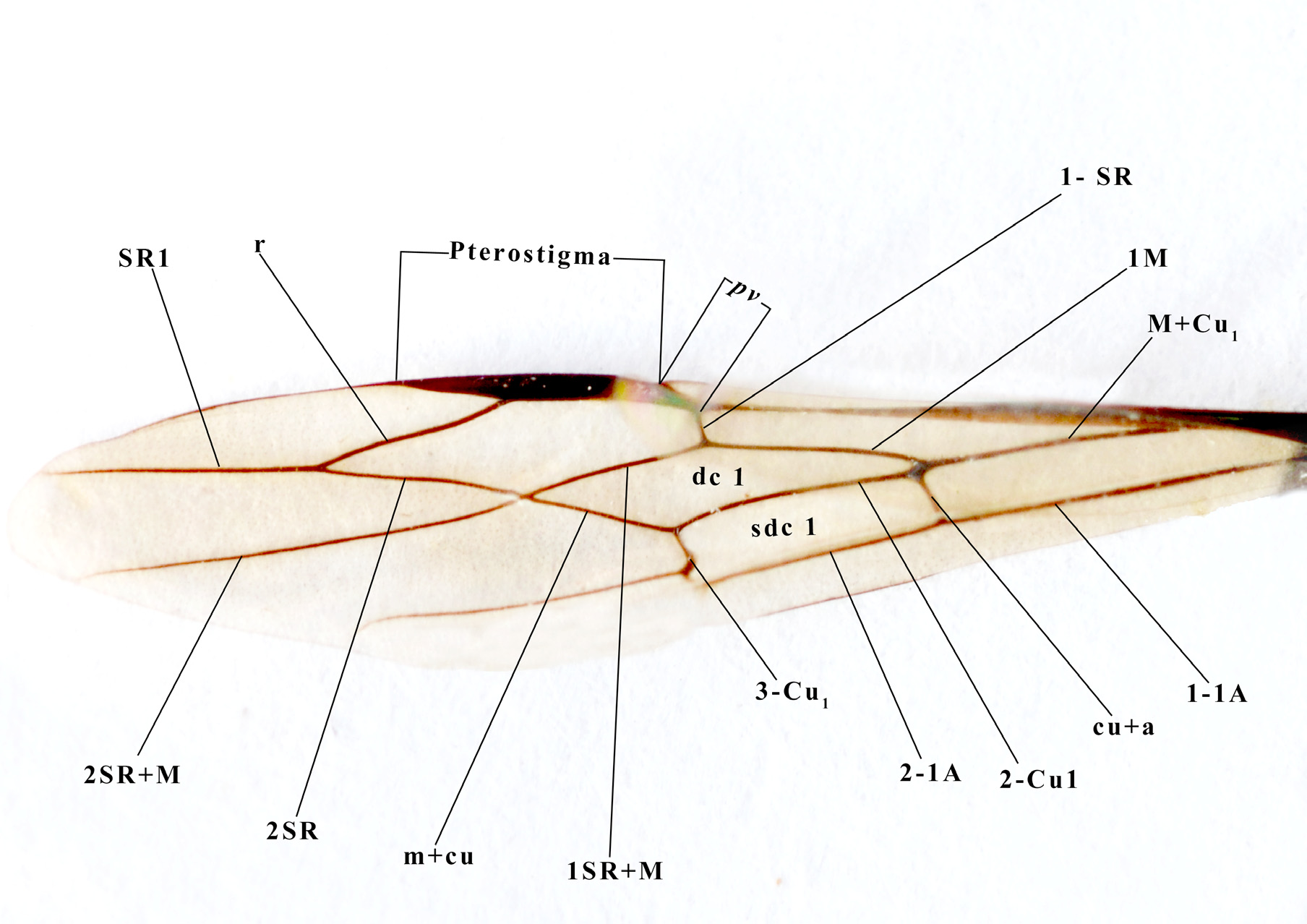
Binoy, C.;Achterberg, C. Van;Kumar, P. Girish;Santhosh, S.;Sheela, S.
Stephanidae
Sign in to saveThe Stephanidae, sometimes called crown wasps, are a family of parasitoid wasps. They are the only living members of the superfamily Stephanoidea. Stephanidae has about 365 living species. The family is considered cosmopolitan in distribution, with the highest species concentrations in subtropical and moderate climate zones. Stephanidae also contain four extinct genera described from both compression fossils and inclusions in amber.
Species
FAMILY
- KingdomAnimalia
- PhylumArthropoda
- ClassInsecta
- OrderHymenoptera
- FamilyStephanidae
via GBIF
Museum specimens
- Specimen records
- 79
- With media
- 6
- Family
- Stephanidae
- Collections
- ASU, UKY-HIC, INHS, TTU, SAM, PSUC
- Recorded in
- United States, Ghana, Peru, South Africa, Australia
Wikidata facts
- Instance of
- taxon
- Image
- Stephanus serrator F (ovipositing).JPG
Show 5 more facts
- Commons category
- Stephanidae
- taxon rank
- family
- taxon name
- Stephanidae
- taxon common name
- Stephanid Wasps
- topic's main category
- Category:Stephanidae
Sources (1)
via Wikidata · CC0
~6 min read
Encyclopedic overview
5 sectionsContents
- Description
- Biology
- Taxonomy and fossil record
- Subfamilies and Tribes
- References
The Stephanidae, sometimes called crown wasps, are a family of parasitoid wasps. They are the only living members of the superfamily Stephanoidea. Stephanidae has about 365 living species. The family is considered cosmopolitan in distribution, with the highest species concentrations in subtropical and moderate climate zones. Stephanidae also contain four extinct genera described from both compression fossils and inclusions in amber.
==Description== Stephanids are noted for their ocellar corona, a semicircular to circular set of projections around the middle ocellus, forming a "crown" on the head. Only stephanids and the similarly old Hymenoptera family Orussidae have ocellar coronae, and it is uncertain if they developed the structure separately or if a common ancestor of both developed it and it was then lost in all but the two families. Weakly developed grooves starting at the base of the antennae and extending past the eyes to the back of the head capsule are present. This feature is seen more developed in hymenopteran families in which the adults emerge from pupal chambers in wood. All genera of Stephanidae have a pronotum that is modified to some extent. They bear highly modified hind legs, with a swollen hind femur that has large teeth on the underside, and the tibiae have a tip end that widens distinctly. The largest species, reaching up to in length, are found in the genus Megischus.
Excerpted from Wikipedia’s “Stephanidae” article, available under the CC BY-SA 4.0 licence.