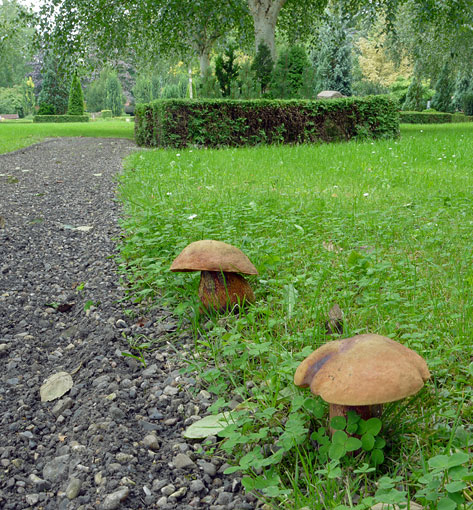
Suillellus luridus
Also known as Boletus luridus, lurid bolete
species of fungus
Species
SPECIES
- KingdomFungi
- PhylumBasidiomycota
- ClassAgaricomycetes
- OrderBoletales
- FamilyBoletaceae
Der Netzstielige Hexen-Röhrling (Suillellus luridus, Syn. Boletus luridus) ist eine Pilzart aus der Familie der Dickröhrlingsverwandten (Boletaceae). Die Art bevorzugt kalkhaltige Böden und kann mit vielen Höheren Pflanzen eine Mykorrhiza bilden.
via GBIF
Wikidata facts
- Image
- 2010-09-13 Boletus luridus Schaeff 104527 crop.jpg
Sources (4)
Article
Suillellus luridus (formerly Boletus luridus), commonly known as the lurid bolete, is a fungus of the family Boletaceae, found in calcareous broadleaved woodlands in Europe. Fruit bodies appear in summer and autumn and may be locally abundant. It is a firm bolete with an olive-brown cap up to 20 cm (8 in) in diameter, with small orange or red pores on the underside (yellow when young). The stout ochre stem reaches 8–14 cm (3–6 in) high and 1–3 cm (0.4–1.2 in) wide, and is patterned with a red network. Like several other red-pored boletes, it stains blue when bruised or cut.
While edible and good when cooked, it can cause gastric upset when eaten raw and can be confused with the poisonous Boletus satanas; as a result, some guidebooks recommend avoiding consumption altogether. When consumed with alcohol, Suillellus luridus has been implicated in causing adverse reactions similar to those caused by the compound coprine, though laboratory testing has not revealed any evidence of coprine in the mushroom.