Category
page 1Heteroptera families
%20nymph.jpg)
Gerridae
thumb|Nymph in Cyprus
thumb|Walking on water surface; the dark blobs are shadows cast by water disturbances around each of the six legs touching the water.

Pentatomidae
Pentatomidae is a family of insects belonging to the order Hemiptera, generally called shield bugs or stink bugs. Pentatomidae is the largest family in the superfamily Pentatomoidea, and contains around 900 genera and over 4700 species. As hemipterans, the pentatomids have piercing sucking mouthparts, and most are phytophagous, including several species which are severe pests on agricultural crops. However, some species, particularly in the subfamily Asopinae, are predatory and may be considered beneficial.

Reduviidae
The Reduviidae is a large cosmopolitan family of the suborder Heteroptera of the order Hemiptera (true bugs). Among the Hemiptera and together with the Nabidae almost all species are terrestrial ambush predators; most other predatory Hemiptera are aquatic. The main examples of non-predatory Reduviidae are some blood-sucking ectoparasites in the subfamily Triatominae, with a few species from South America noted for their ability to transmit Chagas disease. Though spectacular exceptions are known, most members of the family are fairly easily recognizable: they have a relatively narrow neck, stur
%20(5975917188).jpg)
Cimicidae
The Cimicidae are a family of small parasitic bugs that feed exclusively on the blood of warm-blooded animals. They are called cimicids or, loosely, bed bugs, though the latter term properly refers to the most well-known member of the family, Cimex lectularius, the common bed bug, and its tropical relation Cimex hemipterus. The family contains over 100 species. Cimicids appeared in the fossil record in the Cretaceous period. When bats evolved in the Eocene, Cimicids switched hosts and now feed mainly on bats or birds. Members of the group have colonised humans on three occasions.
.jpg)
Miridae
The Miridae are a large and diverse insect family at one time known by the taxonomic synonym Capsidae. Species in the family may be referred to as capsid bugs or "mirid bugs". Common names include plant bugs, leaf bugs, and grass bugs. It is the largest family of true bugs (suborder Heteroptera); it includes over 10,000 known species, and new ones are being described constantly. Most widely known mirids are species that are notorious agricultural pests that pierce plant tissues, feed on the sap, and sometimes transmit viral plant diseases. Some species however, are predatory.

Corixidae
Corixidae is a family of aquatic insects in the order Hemiptera. They are found worldwide in virtually any freshwater habitat and a few species live in saline water. There are about 500 known species worldwide, in 55 genera, including the genus Sigara.

Notonectidae
Notonectidae is a cosmopolitan family of aquatic insects in the order Hemiptera, commonly called backswimmers because they swim "upside down" (inverted). They are all predators and typically range from in length. They are similar in appearance to Corixidae (water boatmen), but can be separated by differences in their dorsal-ventral coloration, front legs, and predatory behavior. Their dorsum is convex, lightly colored without cross striations. Their front tarsi are not scoop-shaped and their hind legs are fringed for swimming. There are about 350 species in two subfamilies: Notonectinae with s
.jpg)
Nepidae
Nepidae is a family of exclusively aquatic Heteropteran insects in the order Hemiptera. They are commonly called water scorpions for their superficial resemblance to scorpions, due to their raptorial forelegs and the presence of a long slender process at the posterior end of the abdomen, resembling a tail. There are 14 genera in the family, in two subfamilies, Nepinae and Ranatrinae. Members of the genus Ranatra, the most widespread and species-rich genus, are sometimes called needle bugs or water stick insects as they are slenderer than Nepa.

Tingidae
The Tingidae, commonly referred to as lace bugs due to their intricate wings, are a family of very small (2-10 mm (0.08-0.39 in)) insects in the order Hemiptera. These insects exist in multiple regions of the world and live on various plants, depending on the species. There are roughly 2,000 described species across the 3 subfamilies which include Cantacaderinae, Tinginae and Vianaidinae.

Scutelleridae
Scutelleridae is a family of true bugs. They are commonly known as jewel (stink) bugs or metallic shield bugs due to their often unique coloration. With the name based on the Asian genus Scutellera, they are also known as shield-backed bugs due to the enlargement of the thoracic scutellum into a continuous shield over the abdomen and wings. This latter characteristic distinguishes them from most other families within Heteroptera, and may lead to misidentification as a beetle rather than a bug. These insects use their piercing-sucking mouthparts to feed on plant juices from a variety of differe
Coreidae
thumb|thumbtime=80|A female Acanthocephala terminalis|leaf-footed bug, family Coreidae and tribe [[Acanthocephalini, deposits an egg before flying off.]]
%2C%20Vohimana%20reserve%2C%20Madagascar%20(13569458513).jpg)
Belostomatidae
Belostomatidae is a family of freshwater hemipteran insects known as giant water bugs or colloquially as toe-biters, Indian toe-biters, electric-light bugs (because they fly to lights in large numbers), alligator ticks, or alligator fleas (in Florida). They are the largest insects in the order Hemiptera. There are about 170 species found in freshwater habitats worldwide, with more than 110 in the Neotropics, more than 20 in Africa, almost as many in the Nearctic, and far fewer elsewhere. These predators are typically encountered in freshwater ponds, marshes and slow-flowing streams. Most speci

Nabidae
left|thumb|Nabis biformis
thumb|Prostemma albimacula
thumb|upright|Himacerus apterus
%20(20030092419).jpg)
Pyrrhocoridae
Pyrrhocoridae is a family of insects with more than 300 species world-wide. Many are red in colour and are known as red bugs, and some species are called cotton stainers because their feeding activities leave an indelible yellow-brownish stain on cotton crops. A common species in parts of Europe is the firebug, and its genus name Pyrrhocoris and the family name are derived from the Greek roots for fire "pyrrho-" and bug "coris". Members of this family are often confused with, but can be quickly separated from, Lygaeidae by the lack of ocelli (simple eyes) on the top of the head.

Acanthosomatidae
thumb|Oncacontias vittatus
thumb|Rhopalimorpha lineolaris juvenile, last instar
Acanthosomatidae is a family of Hemiptera, commonly named shield bugs and sometimes stink bugs. There are currently recognized 200 species in 55 genera, making it one of the least diverse families within Pentatomoidea. The Acanthosomatidae species are found throughout the world, being most abundant in high-latitude temperate regions and in subtropical regions at high altitudes.

Cydnidae
Cydnidae are a family of pentatomoid bugs, known by common names including burrowing bugs or burrower bugs. As the common name would suggest, many members of the group live a subterranean lifestyle, burrowing into soil using their head and forelegs, only emerging to mate and then laying their eggs in soil. Other members of the group are not burrowers, and live above the soil layer, often in close association with plants. Several species are known as agricultural pests.

Anthocoridae
thumb|Amphiareus obscuriceps

Aradidae
Aradidae is a family of true bugs (Heteroptera). Family members are commonly known as flat bugs due to their dorsoventrally flattened bodies. With few exceptions, these cryptic insects are of no economic importance.

Rhopalidae
Rhopalidae, or scentless plant bugs, are a family of true bugs. In older literature, the family is sometimes called "Corizidae". They differ from the related coreids in lacking well-developed scent glands. They are usually light-colored and smaller than coreids. Some are very similar to the orsilline lygaeids, but can be distinguished by the many veins in the membrane of the hemelytra. They live principally on weeds, but a few (including the boxelder bug) are arboreal. All are plant feeders. The type genus for the family is Rhopalus.
Currently, 30 genera and over 240 species of rhopalids are k

Lygaeidae
The Lygaeidae are a family in the Hemiptera (true bugs), with more than 110 genera in four subfamilies. The family is commonly referred to as seed bugs, and less commonly, milkweed bugs, or ground bugs. Many species feed on seeds, some on sap or seed pods, others are omnivores and a few, such as the wekiu bug, are insectivores. Insects in this family are distributed across the world.

Berytidae
Berytidae is a family of the order Hemiptera ("true bugs"), commonly called stilt bugs or thread bugs (not to be confused with the thread-legged bugs, Emesinae). Most berytids are brown to yellow, with species that are plant sap feeders, a few being predaceous. About 200 species are known from all around the world and they are classified into three subfamilies.
.%20Heteroptera.%20Veliidae.%20-%20Flickr%20-%20gailhampshire.jpg)
Veliidae
Veliidae is a family of gregarious predatory insects in the suborder Heteroptera. They are commonly known as riffle bugs, small water striders, or broad-shouldered water striders because the segment immediately behind the head is wider than the rest of the abdomen. Species of the genus Rhagovelia are also referred to as ripple bugs.

Pleidae
Pleidae, the pygmy backswimmers, is a family of aquatic insects in the order Hemiptera (infraorder Nepomorpha, or "true water bugs"). There are 52 species in four genera, distributed across most of the world, except the polar regions and remote oceanic islands.

Hydrometridae
left|thumb|Hydrometra strigosa
Hydrometridae is a family of semiaquatic insects, known as marsh treaders or water measurers. They have a characteristic elongated head and body which makes them resemble a yardstick for measuring the water surface.

Alydidae
Alydidae, commonly known as broad-headed bugs, is a family of true bugs very similar to the closely related Coreidae (leaf-footed bugs and relatives). There are at least 60 genera and 300 species altogether. Distributed in the temperate and warmer regions of the Earth, most are tropical and subtropical animals; for example Europe has a mere 10 species, and only 2 of these occur outside the Mediterranean region.

Naucoridae
thumb|Pelocoris femoratus
Naucoridae is a small family of insects commonly known as the creeping water bugs and saucer bugs. They are similar in appearance and behavior to Belostomatidae (giant water bugs), but considerably smaller, at long. Naucoridae are found around the world, but the greatest diversity is in tropical regions. They inhabit a wide range of freshwater habitats, ranging from still waters like ponds, to flowing rivers and even torrential streams. There are eight subfamilies containing about 400 species in 46 genera. One of these subfamilies is Pelocoris, and the species within

Saldidae
thumb|Chartoscirta cocksii
Plataspidae
Plataspidae (emended by some later authors as "Plataspididae", in violation of ICZN Code Article 29.5) are a family of shield bugs native to the Old World. They are a family of hemipteran insects (true bugs) of the suborder Heteroptera (typical bugs).

Water treader
Mesoveliidae is a family of water treaders in the order Hemiptera. There are about 16 genera and at least 50 described species in Mesoveliidae.
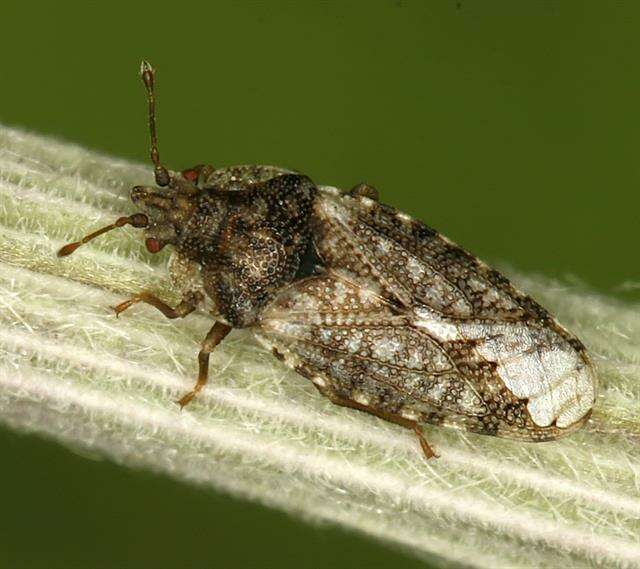
Piesmatidae
Piesmatidae is a small family of true bugs, commonly called ash-grey leaf bugs. The Piesmatidae are distributed mostly in the temperate Northern Hemisphere, with some occurring in Africa, Australia and South America. A common species found throughout the Americas is Piesma cinereum.

Rhyparochromidae
The Rhyparochromidae are a large family of true bugs (order Hemiptera). Many species under Rhyparochromidae are commonly referred to as seed bugs, as are other species within the wider Pentatomomorpha. The family includes two subfamilies, more than 420 genera, and over 2,100 described species.

Geocoridae
Geocoridae is a family of big-eyed bugs in the order Hemiptera. There are more than 290 described species in Geocoridae.
thumb|Ninyas torvus

Gelastocoridae
The Gelastocoridae (toad bugs) is a family of about 100 species of insects in the suborder Heteroptera. These fall into two genera, about 15 species of Gelastocoris from the New World and 85 of Nerthra from the Old World. They are reminiscent of toads both in the warty appearance and hopping movements of some species.

Largidae
Largidae is a family of insects within the order Hemiptera. They are commonly known as bordered plant bugs because many have contrasting coloured edges to their hemelytra. There are fifteen genera and about one hundred species. They are mostly wide-bodied, have no ocelli and have a four-segmented rostrum. The bugs in this family are generally ground-dwelling or they scramble around in plants, bushes and trees. They are phytophagous, feeding on plant juices and seeds.

Enicocephalidae
Enicocephalidae, also called unique-headed bugs and gnat bugs, are a family of around 300 species of the suborder Heteroptera. They are typically long, and found throughout the world. They have an elongated head, constricted in places, hence their head is 'unique'.
left|thumb|Systelloderes maclachlani
They are classified into about 47 genera placed in five subfamilies. The family members can be separated from those of the Aenictopecheidae on the basis of the pronotal division into three lobes (except in the genus Alienates). They also show polymorphism with winged males and wingless or short-w
Malcidae
Malcidae is a family of true bugs in the order Hemiptera. There are at least 4 genera and more than 40 described species in Malcidae.

Leptopodidae
Leptopodidae is a family of spiny-legged bugs in the order Hemiptera. There are about 15 genera and more than 40 described species in Leptopodidae.
Blissidae
The Blissidae are a family in the Hemiptera (true bugs), comprising over 400 species. The group has often been treated as a subfamily of the Lygaeidae but was resurrected as a full family by Thomas Henry (1997).

Ochteridae
thumb|Ochterus marginatus
Idiostolidae
Idiostolidae is a family of true bugs distributed within the southern hemisphere which was formerly placed in the superfamily Lygaeoidea but in 1964 it was placed in the superfamily Idiostoloidea and later included within it as a sister family of the Henicocoridae. It was described in 1962.
Dipsocoridae
Dipsocoridae are a family of heteropteran bugs known as jumping ground bugs. There are about 30 widely distributed species which are placed in three genera. Fossils from Eocene amber have also been placed in the family.
Ceratocombidae
Ceratocombidae is a family of litter bugs in the order Hemiptera. They are closely related to the Dipsocoridae. There are at least 3 genera and 20 described species in Ceratocombidae. The forewing has 2 to 3 large cells and body does not have any strong bristles and there is no central eye bristle. Their diversity is greatest in the Indo-Pacific region.

Tessaratomidae
Tessaratomidae is a family of true bugs. It contains about 240 species of large bugs divided into 3 subfamilies and 56 genera.

Microphysidae
The Microphysidae are a very small family of true bugs, comprising only 5 extant genera.
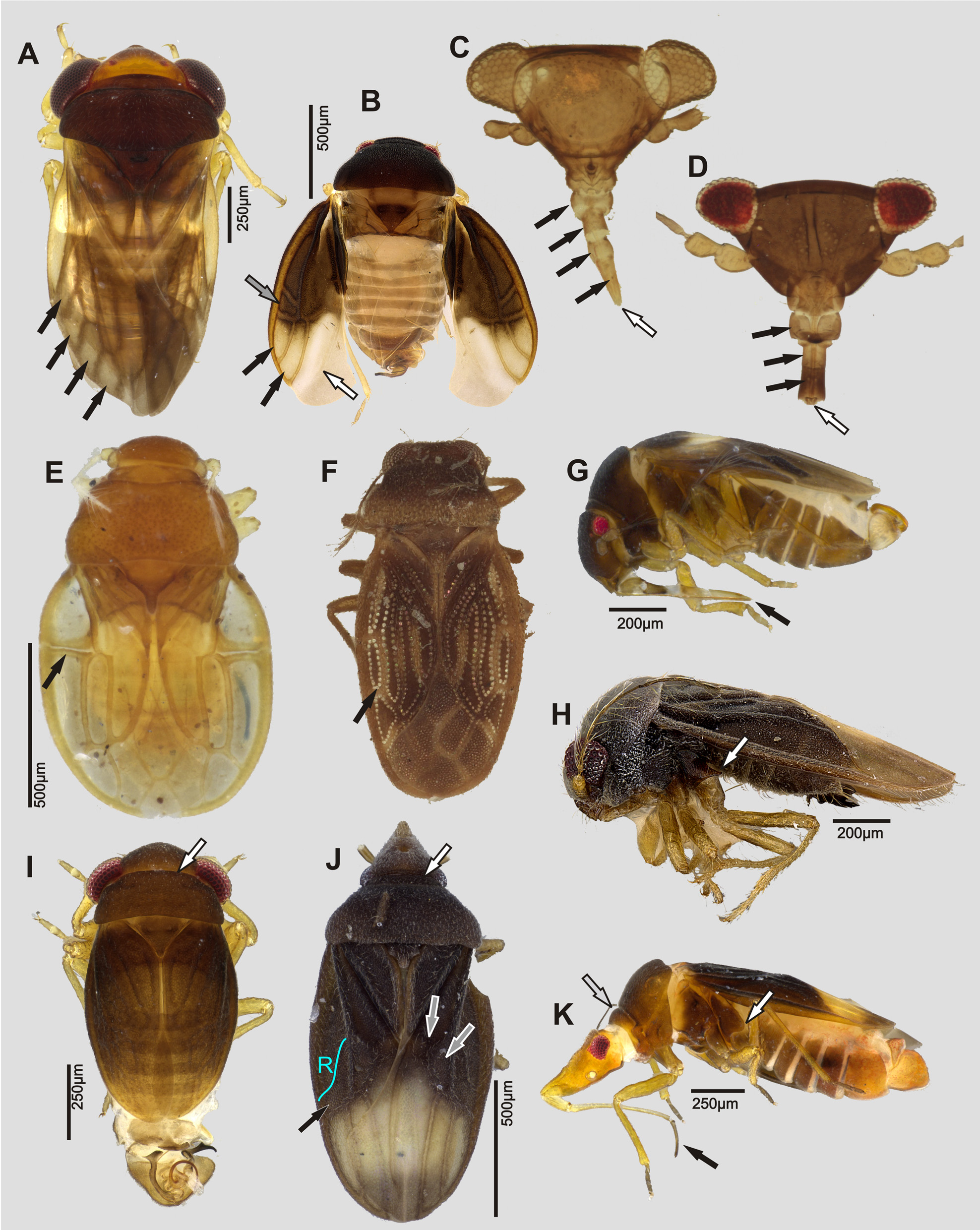
Schizopteridae
Schizopteridae is the largest family in the infraorder Dipsocoromorpha and comprises 56 genera and approximately 255 species. Schizopterids are some of the smallest (0.5–2.0 mm) true bugs. Members of this family can be distinguished by their small size, enlarged forecoxae and varying degree of abdominal and genitalic asymmetry in males. Schizopteridae exhibit a wide range of simple and complex wing venation patterns. The group is currently divided into three subfamilies: Schizopterinae, Ogeriinae and Hypselosomatinae.
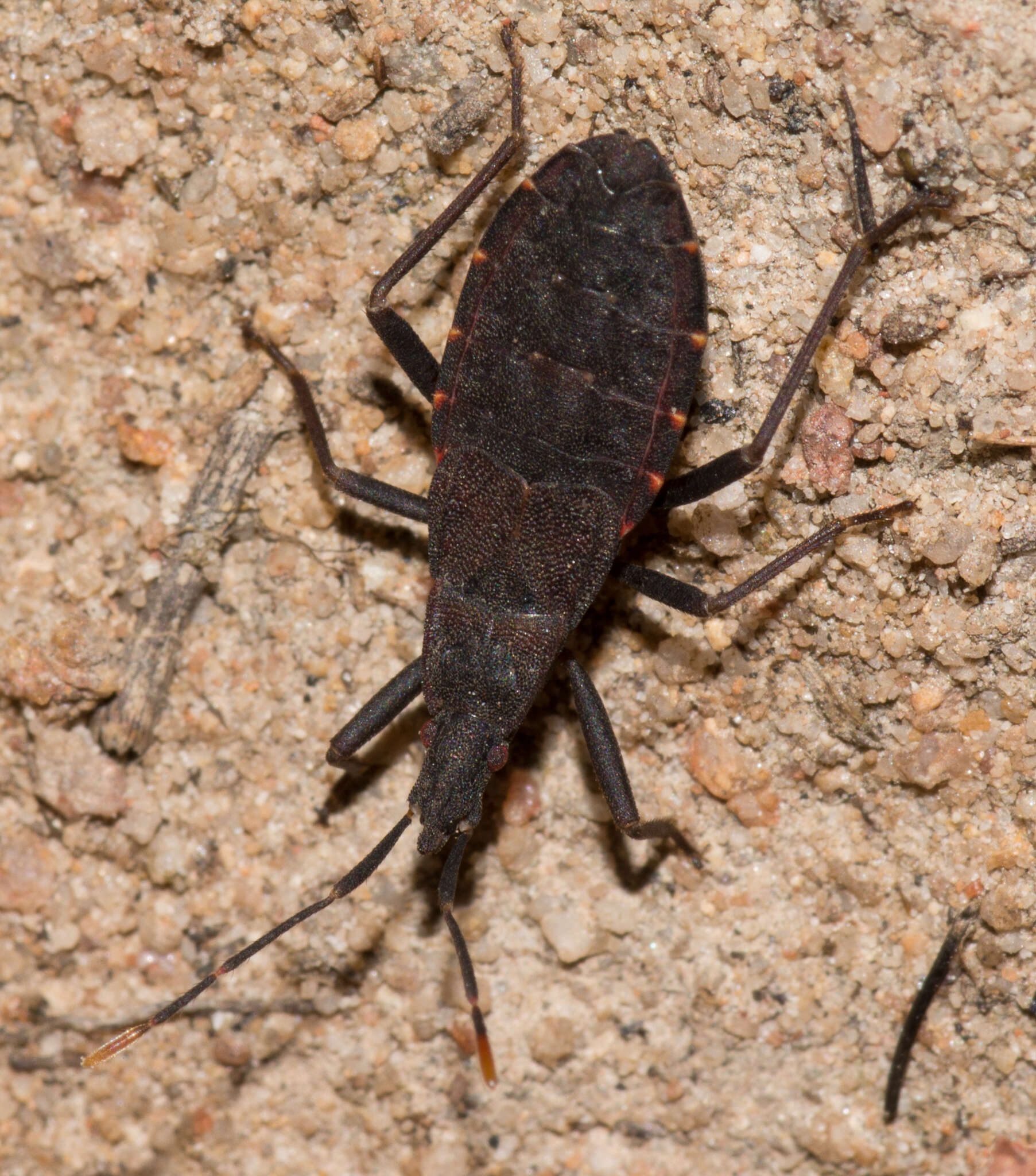
Hyocephalidae
Hyocephalidae are a small family of Heteroptera which are endemic to Australia.

Cymidae
Cymidae is a family of true bugs in the order Hemiptera. There are at least 60 described species in Cymidae.
thumb|Cymus novaezelandiae
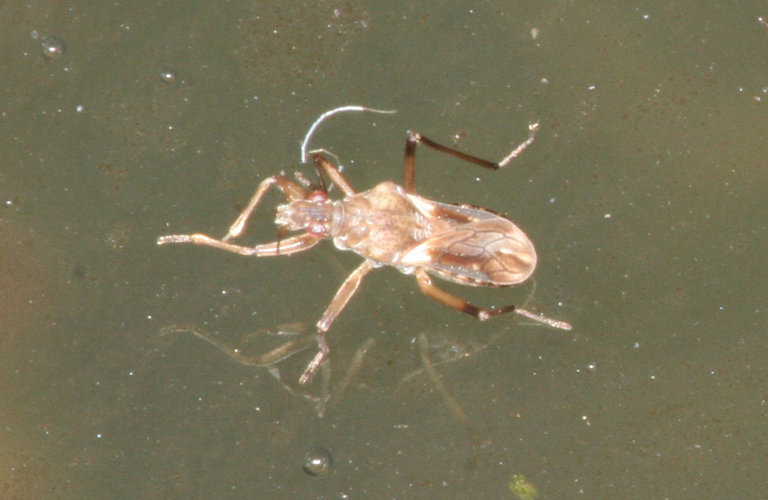
Macroveliidae
Macroveliidae is a family of macroveliid shore bugs in the order Hemiptera. There are at least four genera in Macroveliidae.

Oxycarenidae
Oxycarenidae is a family of true bugs in the order Hemiptera with a world-wide distribution. There are more than 140 described species in Oxycarenidae.
thumb|Oxycarenus modestus

Artheneidae
Artheneidae is a family of true bugs in the order Hemiptera. It was previously classified within the family Lygaeidae. Approximately 7 genera and at least 20 described species belong to the family Artheneidae.
thumb|Chilacis typhae
Ninidae
Ninidae is a family of true bugs in the order Hemiptera. There are about 5 genera and 14 described species in Ninidae.

Aenictopecheidae
Aenictopecheidae is a rare family of insects occurring worldwide but containing only a few species, including a single American species, Boreostolus americanus. This species lives under large, flat stones and sandy substrates along mountain streams in Oregon, Washington, and Colorado. It is 5 mm long and occurs in both the macropterous and brachypterous condition. It is assumed to be predaceous.
Stenocephalidae
REDIRECT Dicranocephalus
Termitaphididae
Termitaphididae, occasionally called termite bugs, is a small tropicopolitan family of true bugs placed in the superfamily Aradoidea. Typically members of Termitaphididae are small, being an average of -, and flattened with laminae extending out from each body segment giving a round scale like appearance. Currently the family contains two genera and twelve known species. Members of Termitaphididae are inquilines lodging in the nests of host species of termite families Termitidae and Rhinotermitidae. Though considered a separate family in Aradoidea it has been suggested by Drs David Grimaldi an

Dinidoridae
Dinidoridae is a small family of hemipteran "true bugs" comprising about sixteen genera and a hundred species the Hemiptera suborder Heteroptera. As a group the family does not have any common name. Until the late 19th century they were generally regarded as a subfamily of Pentatomidae.

Pachygronthidae
Pachygronthidae is a family of true bugs in the order Hemiptera. There are two subfamilies (both erected by Carl Stål) and more than 80 described species in Pachygronthidae.
thumb|Pachygrontha oedancalodes
Heterogastridae
Heterogastridae is a family of lygaeoid bugs consisting of about 20 genera and more than 100 species.
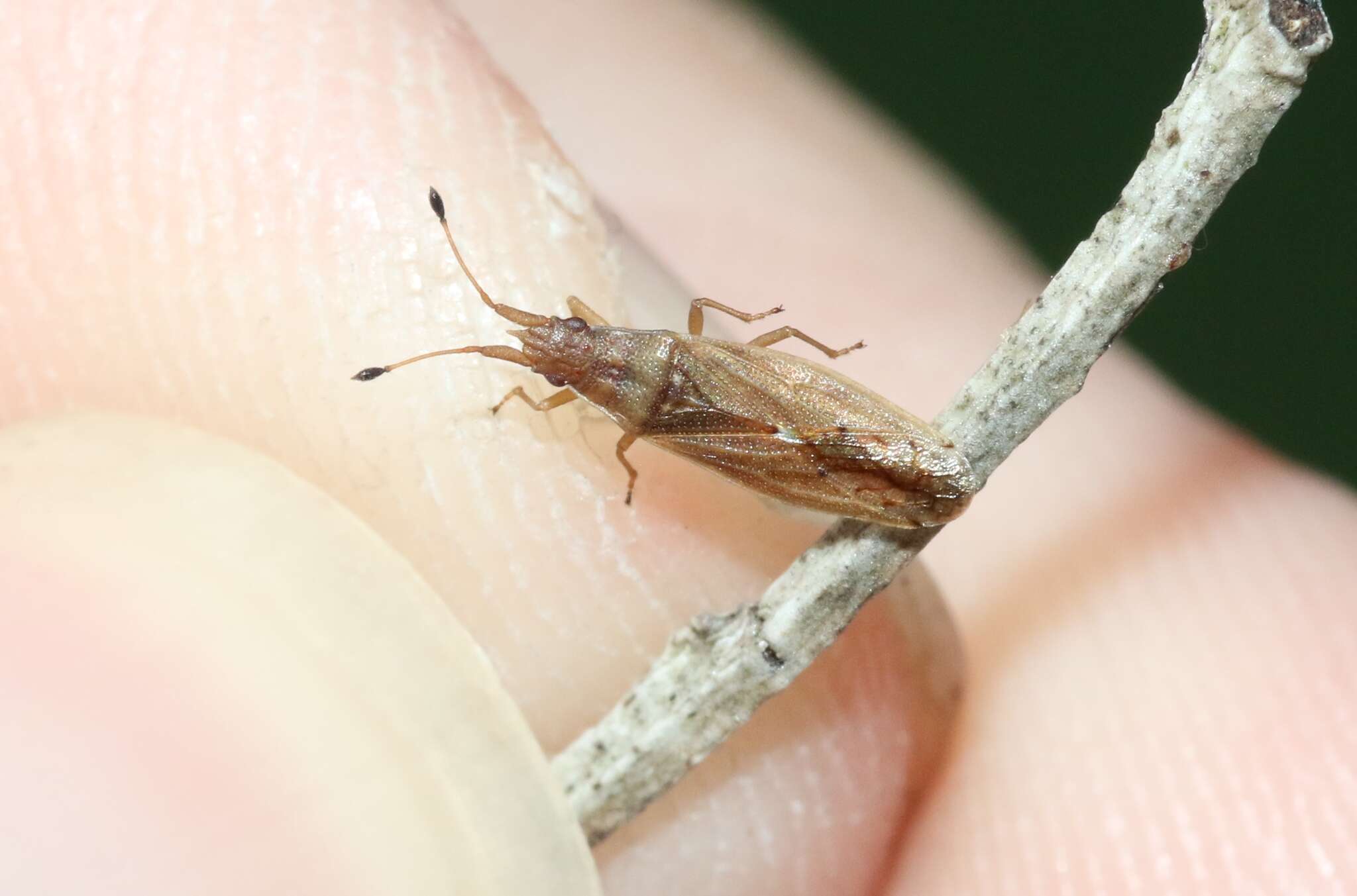
Cryptorhamphidae
Cryptorhamphidae is a family of true bugs in the order Hemiptera. There are at least two genera and four described species in Cryptorhamphidae.
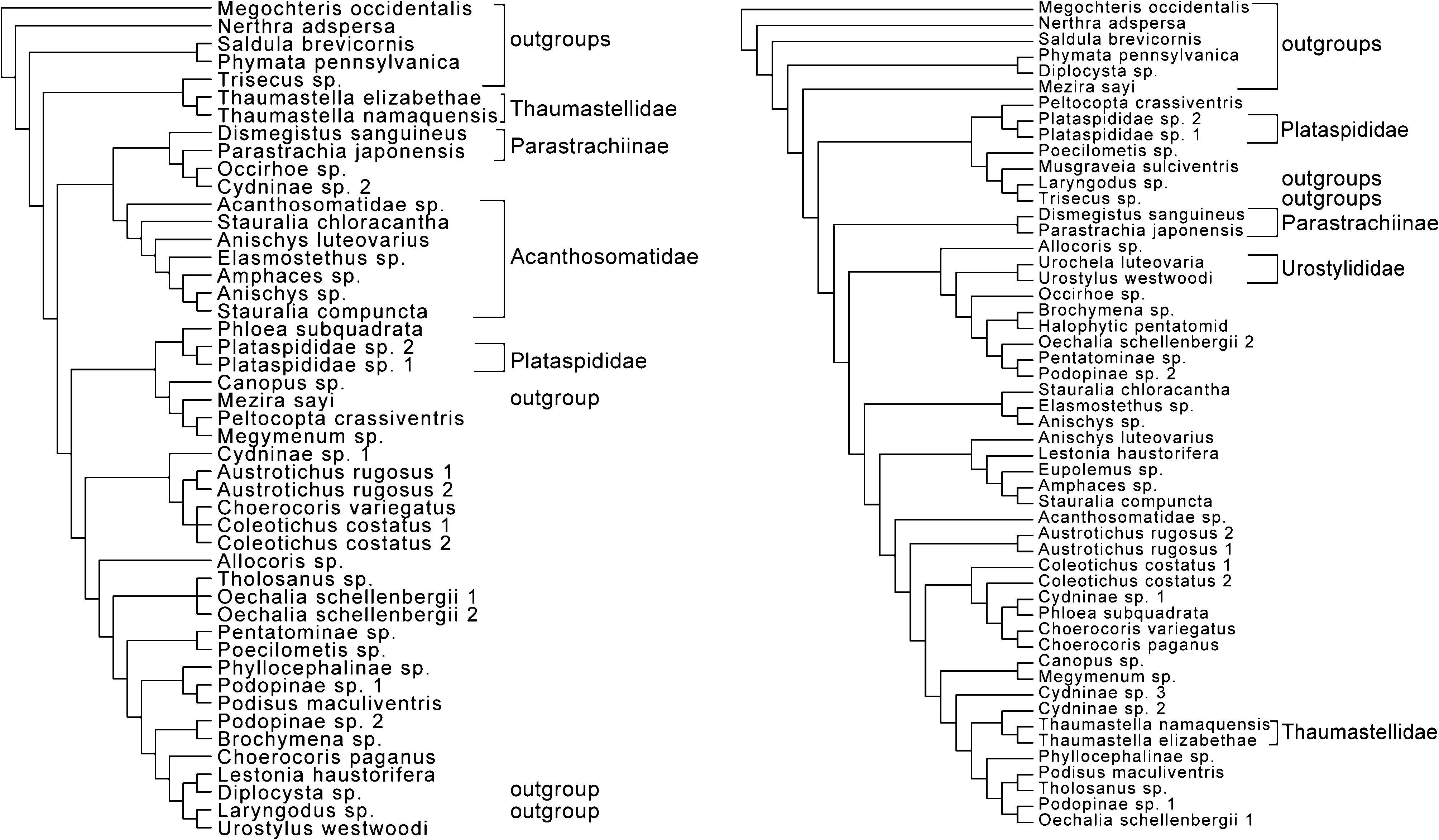
Phloeidae
Phloeidae is a family of true bugs belonging to the order Hemiptera. They are commonly known as Neotropical bark bugs due to their South American distribution, cryptic coloration, and flattened body.
Thaumastocoridae
Thaumastocoridae is a family of true bugs in the order Hemiptera. There are about 9 genera and more than 20 described species in the family Thaumastocoridae.