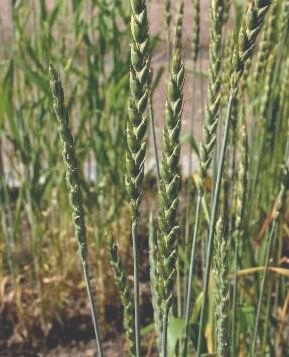
File:Spelt.jpg · Wikimedia Commons · See Wikimedia Commons
Triticum spelta
Sign in to saveAlso known as spelt, hulled wheat, dinkel wheat
Spelt (Triticum spelta), also known as dinkel wheat is a species of wheat. It is a relict crop, eaten in Central Europe and northern Spain. It is high in protein. In Australia it is marketed as a health food.
OverviewAI-generated
*Triticum spelta* L. is a species of wheat within the family Poaceae. It belongs to the genus *Triticum* and is classified under the class Liliopsida and order Poales. Common names for this taxon include spelt, dinkel, Yell, and pšenice špalda. As a cereal, it serves as a source of wheat and Grünkern.
The species has been recorded in the United States, Germany, the Czech Republic, the Netherlands, and France. Historical records indicate it was an important agricultural product in parts of Europe from the Bronze Age to the Middle Ages. It is still cultivated in Central Europe today, where it has reappeared in markets as a health food. The organism is associated with gluten-related disorders.
Synthesized by Vinony from 49 facts across 8 sources: Wikidata, GBIF, Gbif Occ, Encyclopedia of Life, Plants of the World, Openfoodfacts, iDigBio, Vinony graph. Generated from structured data (not the Wikipedia text) and checked against those facts — may still contain errors.
Species
Triticum spelta
SPECIES
- KingdomPlantae
- PhylumTracheophyta
- ClassLiliopsida
- OrderPoales
- FamilyPoaceae
斯佩耳特小麦(學名:Triticum spelta)是一種小麥。它在青铜时代到中世纪时的部分欧洲地区都是重要的农产品。如今在中欧仍有种植,作为一种健康食品重新在市场中出现。
via GBIF · Kew POWO
Museum specimens
- Specimen records
- 242
- With media
- 201
- Family
- Poaceae
- Collections
- DAV, DBG, CDA, MICH, IND, US
- Recorded in
- United States, Germany, Czech Republic, Netherlands, France, Austria, Switzerland, Czechia
Nutrition · Open Food Facts
Typical values per 100 g · averaged across 5 products
- Energy
- 364 kcal
- Fat
- 2.5 g
- — of which saturates
- 0 g
- Carbohydrates
- 67 g
- — of which sugars
- 2.7 g
- Fibre
- 6.8 g
- Protein
- 15 g
- Salt
- 0.05 g
via Open Food Facts · ODbL
Wikidata facts
Show 12 more facts
- taxon name
- Triticum spelta
- taxon rank
- species
- Commons category
- Triticum aestivum subsp. spelta
- this taxon is source of
- Grünkern
- Commons gallery
- Triticum spelta
- taxon common name
- escanda (var. fisga)
- has effect
- gluten-related disorder
- sequenced genome URL
- plants.ensembl.org/Triticum_spelta
- on focus list of Wikimedia project
- Wikipedia:Vital articles/Level/4
- short name
- T. spelta
- taxon author citation
- L.
via Wikidata · CC0
~6 min read
Encyclopedic overview
10 sectionsContents
- Description
- Confusion with other wheats
- Evolution
- Hybridisation and polyploidy
- History of cultivation
- Nutrition
- Products
- See also
- References
- External links
Spelt (Triticum spelta), also known as dinkel wheat is a species of wheat. It is a relict crop, eaten in Central Europe and northern Spain. It is high in protein. In Australia it is marketed as a health food.
Spelt was cultivated from the Neolithic period onward. It was a staple food in parts of Europe from the Bronze Age to the Middle Ages. It is used in baking, and is made into bread, pasta, and beer.
Excerpted from Wikipedia’s “Triticum spelta” article, available under the CC BY-SA 4.0 licence.
Gallery (12)
Available in 64 languages
- Español
- Français
- Deutsch
- 中文
- 日本語
- Русский
- Português
- Italiano
- العربية
- Albanian
- Asturian
- Bahasa Indonesia
- Basque
- Breton
- Bulgarian
- Catalan
- Cebuano
- Croatian
Show 45 more
- Czech
- dag
- Danish
- Egyptian Arabic
- Erzya
- Esperanto
- Estonian
- Finnish
- Galician
- Greek
- Hebrew
- Hungarian
- Icelandic
- Ido
- Latin
- Latvian
- Lithuanian
- Lombard
- Luxembourgish
- Macedonian
- Malay
- nds_nl
- Nederlands
- Norwegian
- Norwegian Nynorsk
- Occitan
- Piedmontese
- Polski
- Romanian
- Scots
- Serbian
- simple
- Slovenian
- Svenska
- Tamil
- Tatar
- Tiếng Việt
- Türkçe
- Ukrainian
- Upper Sorbian
- Walloon
- Waray
- zh_yue
- فارسی
- 한국어
via Wikidata sitelinks · CC0