tumba francesa
Sign in to savemusic genre and type of dance
Described at
La Tumba Francesa - UNESCO Intangible Cultural Heritage
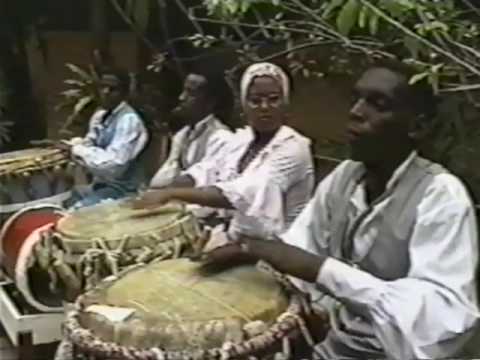
ich.unesco.org →Tumba Francesa performances generally open with a solo in Spanish or French patois by a lead singer, the composé. Following the composé’s cue, the catá, a large wooden idiophone, bursts into a pulsating beat enhanced by three drums known as tumbas. These hand-played instruments, similar to modern conga drums, are crafted from a single piece of hollowed wood and decorated with carved and painted motifs. The dances are performed under the direction of the Mayor de Plaza. The predominately female chorus singers and dancers wear long colonial-era dresses with West African kerchiefs and brandish colourful scarves. The singers keep rhythm with metal rattles or chachás. Performances consisting of a series of 30- minute songs and dances generally last well into the night. Today, only two of the many dance styles associated with Tumba Francesa are still regularly performed: the masón, a light parody of French ballroom dances; and the yubá, an improvised dance accompanied by rousing drum rhythms. The popularity of Tumba Francesa reached its peak at the end of the nineteenth century. Nowadays, three community ensembles continue to keep the traditions of the Tumba Francesa alive.
Excerpt from a page describing this subject · 7,861 chars · not written by Vinony
Wikidata facts
- Subclass of
- music of Cuba
- Country of origin
- Cuba
- Image
- Guantánamo CF9A1071.jpg
Show 2 more facts
- described at URL
- ich.unesco.org/es/RL/00052
- intangible cultural heritage status
- Masterpieces of the Oral and Intangible Heritage of Humanity
via Wikidata · CC0
Available in 18 languages
- Español
- Français
- Português
- Italiano
- Akan
- Assamese
- dag
- Esperanto
- Frafra
- Haitian Creole
- Hausa
- Macedonian
- Mossi
- Nederlands
- Papiamento
- Serbian
- Türkçe
via Wikidata sitelinks · CC0