Encyclopedia of Life · EOL (see source)
OverviewAI-generated
Varroa destructor is a species of mite belonging to the family Varroidae. It is classified within the kingdom Animalia, phylum Arthropoda, class Arachnida, and order Mesostigmata. The species was described by Anderson & Trueman in 2001 and is distinct from Varroa jacobsoni. Its common names include 蜜蜂蟹蟎, kleštík zhoubný, and 꿀벌응애.
This organism has a length of 1.1 and a width of 1.6. It serves as a host for the Deformed wing virus and is a contributing factor to colony collapse disorder. The mite afflicts Apis, with specific hosts including Apis mellifera and Apis cerana. It causes the condition known as varroosis.
Records of Varroa destructor have been documented in the United States, Brazil, the United Kingdom, China, and Japan.
Synthesized by Vinony from 31 facts across 5 sources: Wikidata, GBIF, Gbif Occ, iDigBio, Vinony graph. Generated from structured data (not the Wikipedia text) and checked against those facts — may still contain errors.
Species
SPECIES
- KingdomAnimalia
- PhylumArthropoda
- ClassArachnida
- OrderMesostigmata
- FamilyVarroidae
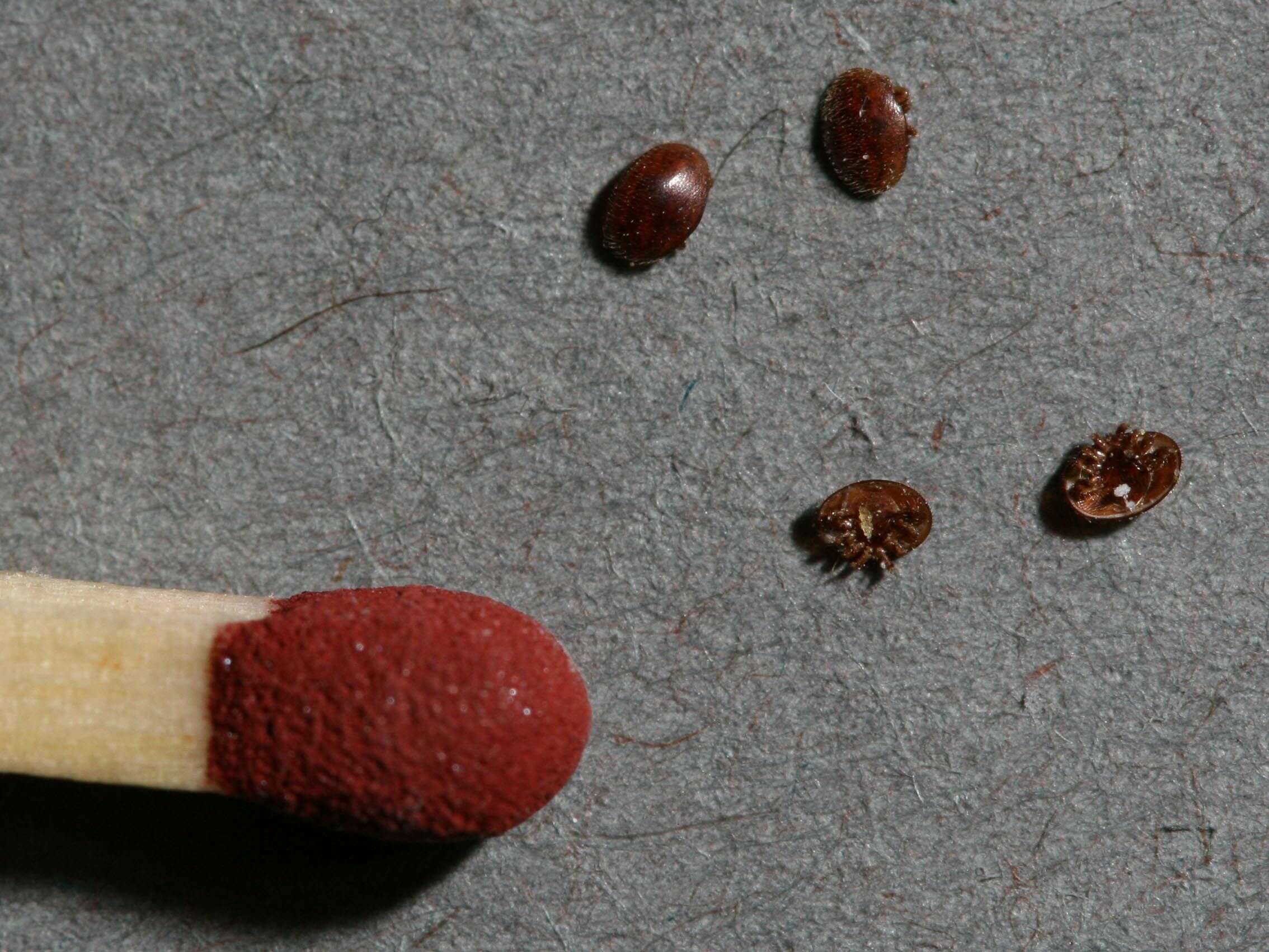
Die Varroamilbe (Varroa destructor) ist eine (als adultes Weibchen) ca. 1,1 Millimeter lange und 1,6 Millimeter breite Milbe aus der Familie Varroidae, die als Parasit an Honigbienen (Apis mellifera und Apis cerana) lebt. Die Milbe entwickelt und vermehrt sich in der verdeckelten Brut im Bienenstock. Der Befall von Bienenvölkern durch die Milbenart wird als Varroose (alter Name: Varroatose) bezeichnet. Varroa destructor gilt als der bedeutsamste Bienenschädling weltweit. In Österreich ist die Tierseuche Varroose anzeigepflichtig, in der Schweiz unter Gr. 4 Zu überwachende Seuchen (Meldepflicht) eingestuft. In Deutschland ist sie in der Bienenseuchen-Verordnung zwar geregelt, aufgrund ihrer Ubiquität wird aber von einer Anzeige- oder Meldepflicht abgesehen.
via GBIF
Museum specimens
- Specimen records
- 49
- With media
- 15
- Family
- Varroidae
- Collections
- UAM, DMNS, PSUC, OHIO STATE UNIVERSITY ACAROLOGY LABORATORY, COLUMBUS, OH (OSAL), SAMA
- Recorded in
- United States, Brazil, United Kingdom, China, Japan, South Africa, South Korea, Germany
Wikidata facts
Show 13 more facts
- Commons category
- Varroa destructor
- taxon rank
- species
- taxon name
- Varroa destructor
- taxon common name
- 꿀벌응애
- has effect
- varroosis
- sequenced genome URL
- metazoa.ensembl.org/Varroa_destructor_gca002443255
- short name
- V. destructor
- has host
- Apis
- natural reservoir of
- Deformed wing virus
- contributing factor of
- colony collapse disorder
- afflicts
- Apis
- different from
- Varroa jacobsoni
- taxon author citation
- Anderson & Trueman, 2001
via Wikidata · CC0
Article · Español
Varroa destructor es un ácaro parásito externo que ataca y se alimenta de las abejas Apis cerana y Apis mellifera. La enfermedad causada por los ácaros se llama varroasis y es la principal enfermedad que actualmente afecta las abejas, está extendida por la mayor parte de las zonas apícolas del mundo. La varroa era sólo un parásito habitual de la abeja asiática (Apis cerana). A mediados del siglo XX, en el este de Rusia, las abejas habitualmente usadas en la apicultura (Apis mellifera) llevadas a esta zona, entraron en contacto con las asiáticas y el parásito pasó de unas a otras. Los enjambres infectados, al trasladarse, extendieron la varroa a gran parte del mundo, a excepción de Australia. Varroa destructor sólo se puede reproducir en las colonias de abejas. Ataca el cuerpo de la abeja y la debilitan al chuparle la hemolinfa. En este proceso el ácaro extiende a la abeja virus ARN como es el virus de deformación de las alas. Una infestación significativa lleva a la muerte de toda la colonia de abejas, esto ocurre normalmente de finales de otoño hasta principios de primavera. La varroa es el parásito de más importancia económica en la apicultura. Puede contribuir al llamado "problema de colapso de colonias" que amenaza a las colmenas de toda Norteamérica y Europa.
Abstract from DBpedia / Wikipedia · CC BY-SA