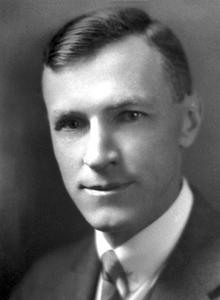
File:William_P_Murphy.jpg · Wikimedia Commons · See Wikimedia Commons
William P. Murphy was an American scientist who lived from 1892 to 1987 and made important contributions to medical research. He is best known for his work on pernicious anemia, which earned him the Nobel Prize in Physiology or Medicine in 1934.
AI-generated from the Wikipedia summary — may contain errors.
Person · Open Library
- Works
- 4
Top works
- Politics and Policies in Upper Guinea Coast Societies
- Politics and Policies in Upper Guinea Coast Societies
- Conflict and Harmony
- The triumph of nationalism
via Open Library + Wikidata
Nobel Prize
- The Nobel Prize in Physiology or Medicine1934
“for their discoveries concerning liver therapy in cases of anaemia”
Shared · 1/3 portion
Wikidata facts
- Instance of
- human
- Given name
- William
- Family name
- Murphy
- Gender
- male
- Citizenship
- United States
- Place of birth
- Stoughton
- Place of death
- Brookline
- Occupation
- physician
- Educated at
- Harvard University
- Employer
- Harvard University
- Languages spoken
- English language
- Image
- William P Murphy.jpg
Show 7 more facts
- Commons category
- William P. Murphy
- date of birth
- 1892-02-06
- date of death
- 1987-10-09
- nominated for
- Nobel Prize in Physiology or Medicine
- name in native language
- William Parry Murphy
- different from
- William Murphy
Sources (8)
via Wikidata · CC0
~3 min read
Encyclopedic overview
William Parry Murphy Sr. (February 6, 1892 – October 9, 1987) was an American physician who shared the Nobel Prize in Physiology or Medicine in 1934 with George Richards Minot and George Hoyt Whipple for their combined work in devising and treating macrocytic anemia (specifically, pernicious anemia).
Early life
Excerpted from Wikipedia’s “William P. Murphy” article, available under the CC BY-SA 4.0 licence.