厦门市
Also known as Amoy, Siamen, Hsiamen, Aimoey, Xia-men, Hiamen
中國福建省的副省級市
AI overview
Xiamen is a major city in southeastern China's Fujian Province, located across the Taiwan Strait, with a population of over 5 million people spread across six districts. The city has grown from its original island location into a large urbanized region that matters as a significant economic and geographic center in southeastern China.
AI-generated from the Wikipedia summary — may contain errors.
Weather now
cached 10h ago30°broken clouds
70% 7.3 m/s OpenWeatherMap
7-day forecast
via Open-Meteo
Place details
- Locality
- 厦门市
- Region
- 福建省
- Country
- 中国
- Population
- 4,617,251
- Timezone
Travel guide
Understand
The core of the city is on Xiamen Island. The mainland suburbs Jimei, Tong'an, Xiang'an, and Haicang, as well as the small island of Gulangyu, are separate, but all these areas are administered as parts of Xiamen.
Until 1840, Western "barbarians" were only allowed to conduct trade in Guangzhou under strict restrictions. After China's defeat in the First Opium War, the British seized Hong Kong, and China was forced to open five treaty ports: Guangzhou, Xiamen, Fuzhou, Ningbo, and Shanghai. Gulangyu became a concession administered by foreign powers, hosting consulates and luxurious residences. Today, Gulangyu is just a five-minute ferry ride from the main urban area and remains a picturesque and peaceful (car-free) destination.
During the early days of Cold War, Xiamen was a battlefront between the Communists and Nationalists — propaganda broadcast, frogman infiltration, as well as shelling across Xiamen and the neighbouring island of Kinmen were the norm. The giant slogan that promotes Mainland China's "One Country, Two Systems" policy towards reunification (in contrast of the opposing slogan on Kinmen that advocates the Three Principles of the People) is a remanent from that period of prolonged conflict.
In 1980, Xiamen became one of China’s first Special Economic Zones, aimed at encouraging development and opening up the country. Since then, Xiamen has flourished. It has received more Taiwanese investment than any other Chinese city, partly because both southern Fujian a…
Get in
Xiamen has a major airport and good road and rail connections; it is easily reached from anywhere in China and many places beyond.
Get around
Local public transit is easiest to pay for with the Xiamen public transit mini-app on Alipay or WeChat.
If you are planning on staying in Xiamen for a significant amount of time, you can also get an eKatong (e卡通) stored value card. It can be used in different forms of public transport not only in Xiamen, but also in the neighbouring cities of Quanzhou and Zhangzhou.
The local bus system is very good, but the normal bus routes are listed in Chinese and do not have English on the signs. Signs in the BRT and Metro are bilingual in Chinese and English, while announcements are trilingual in Mandarin, Minnan and English. thumb|BRT on bus-only elevated roads thumb|Metro lines in Xiamen Taxis are cheap, starting at ¥8 (plus ¥3 fuel tax – so ¥11) for the first 3 km. After the first 3 km, the meter charge will go up based on distance. Although the meter may read with a decimal, most taxi drivers will round up. On the other hand, as anywhere in China, tipping is not expected.
Article · 中文
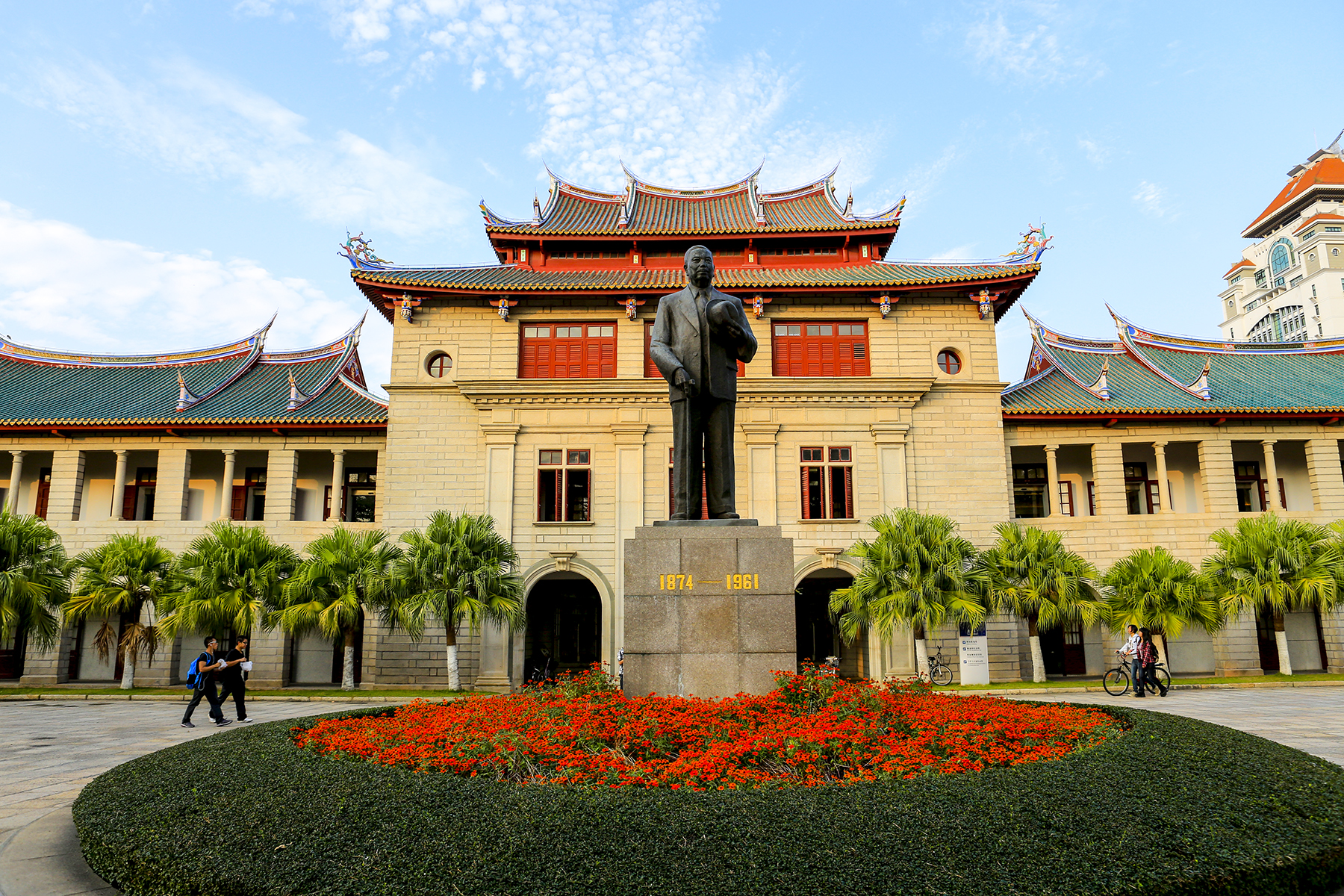
廈門市(闽南语:Ē-mn̂g;英語:Xiamen或Amoy),別稱鷺島,簡稱廈或鷺,是中國東南沿海的重要海港和閩南金三角的中心城市。廈門位於福建省東南部、臺灣海峽西岸中部,是中國最早對外開放的四個經濟特區之一、是計劃單列市以及副省級城市。廈門市與泉州市、漳州市接壤,與中華民國福建省金門縣隔海對望,是由廈門島、離島鼓浪嶼、北岸集美半島和杏林半島、西岸海滄半島、東岸翔安半島、大嶝島、小嶝島、內陸同安和九龍江組成的海灣型城市,也是中國著名僑鄉,總面積1700.61平方千米,常住人口為528萬。 廈門的主要產業包括交通運輸和倉儲郵政業、信息傳輸和信息技術、商貿服務業、會展旅遊業、金融業、機械製造、航空維修和電子產品製造。廈門為全世界最大的LED芯片生產封裝基地之一,並且擁有全世界最大的大型客車生產基地與全亞洲最大的航空維修基地之一。此外,廈門為兩岸新興產業和現代服務業合作示範區、東南國際航運中心、兩岸貿易中心和兩岸區域性金融服務中心。廈門港為中國第7大、世界第13大集裝箱港口,廈門高崎國際機場為中國第6大出入境空港。廈門是著名的休閒度假旅遊城市,有「城在海上,海在城中」的美譽,有鼓浪嶼、萬石植物園、環島路、集美學村、南普陀、廈門大學等著名旅遊景點。
Abstract from DBpedia / Wikipedia · CC BY-SA
Gallery (52)
On the map
3 mapped locations