Category
page 1Agaricaceae

Macrolepiota procera
species of fungus

Coprinus comatus
species of fungus

Agaricaceae
The Agaricaceae are a family of basidiomycete fungi and include the genus Agaricus, as well as basidiomycetes previously classified in the families Tulostomataceae, Lepiotaceae, and Lycoperdaceae.

Chlorophyllum rhacodes
species of fungi in the genus Chlorophyllum
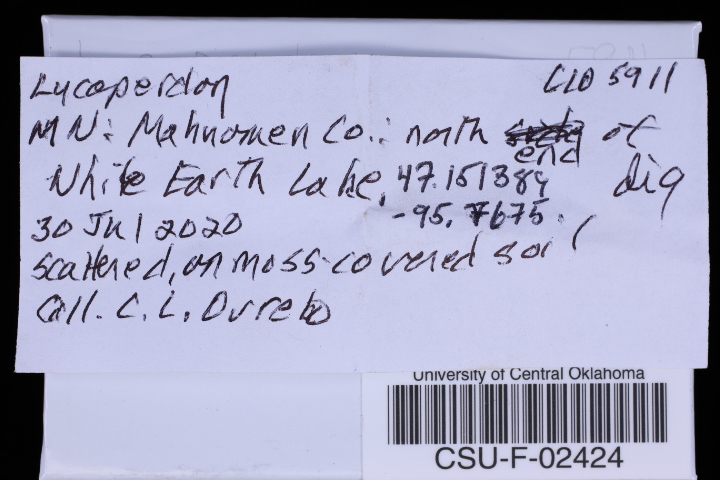
Lycoperdon
Lycoperdon is a genus of puffball mushrooms. The genus has a widespread distribution and contains about 50 species. In general, it contains the smaller species such as the pear-shaped puffball and the gem-studded puffball. It was formerly classified within the now-obsolete order Lycoperdales, as the type genus which, following a restructuring of fungal taxonomy brought about by molecular phylogeny, has been split. Lycoperdon is now placed in the family Agaricaceae of the order Agaricales.

Coprinus
thumb|234px|Cross-section of a Coprinus mushroom gill, showing basidia (magnified 400×)

Echinoderma asperum
species of fungus
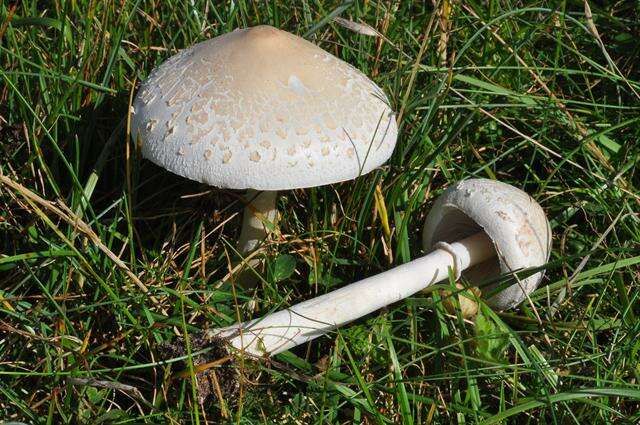
Macrolepiota
Macrolepiota is a genus of white spored, gilled mushrooms of the family Agaricaceae. The best-known member is the parasol mushroom (M. procera). The widespread genus contains about 40 species.

Macrolepiota mastoidea
species of fungus

Macrolepiota excoriata
species of fungus
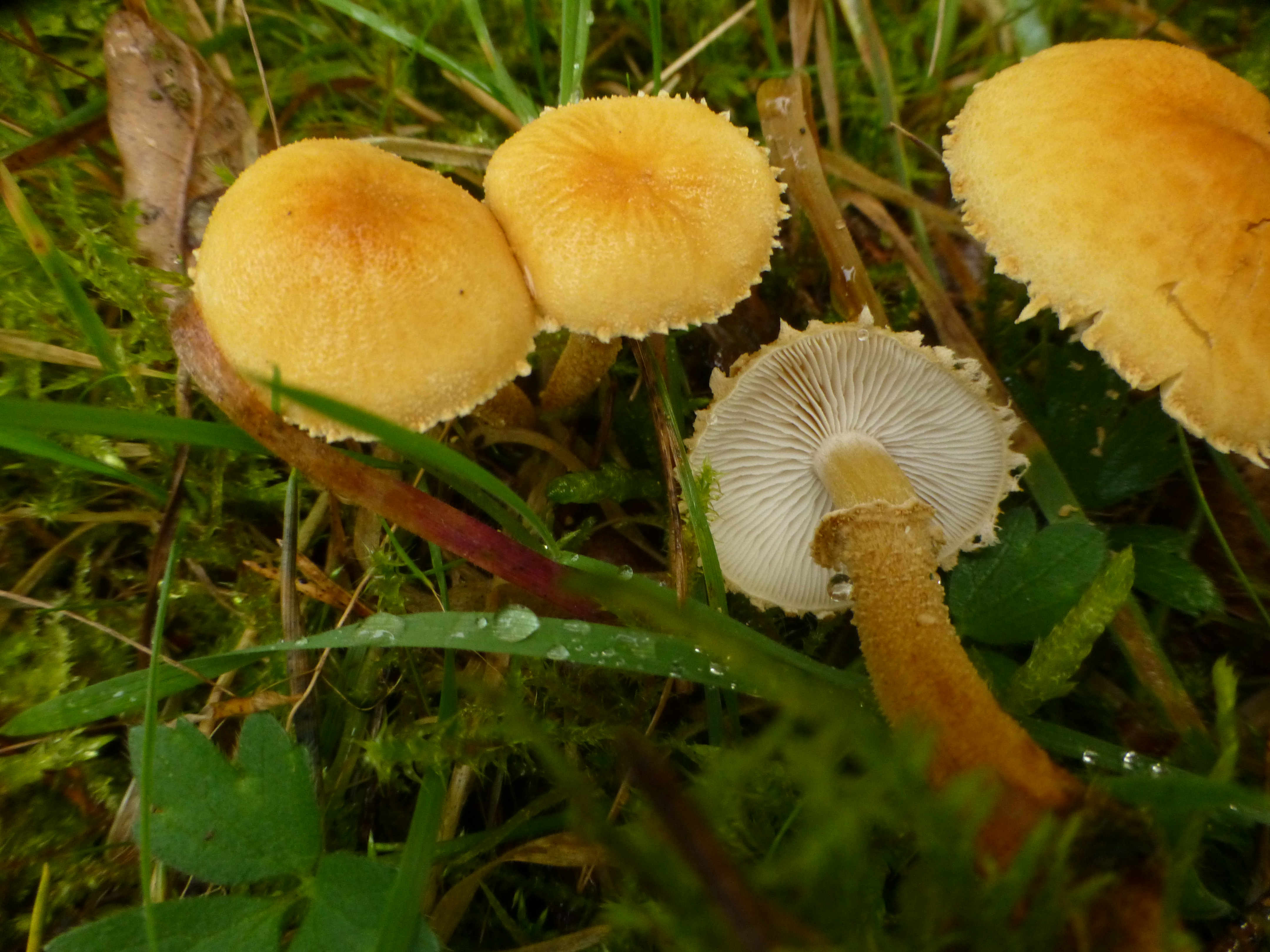
Cystoderma amianthinum
species of fungus

Bovista plumbea
species of fungus

Chlorophyllum molybdites
species of fungus

Bovista
Bovista is a genus of fungi commonly known as the true puffballs. It was formerly classified within the now-obsolete order Lycoperdales, which, following a restructuring of fungal taxonomy brought about by molecular phylogeny, has been split; the species of Bovista are now placed in the family Agaricaceae of the order Agaricales. Bovista species have a collectively widespread distribution, and are found largely in temperate regions of the world. Various species have historically been used in homeopathic preparations.
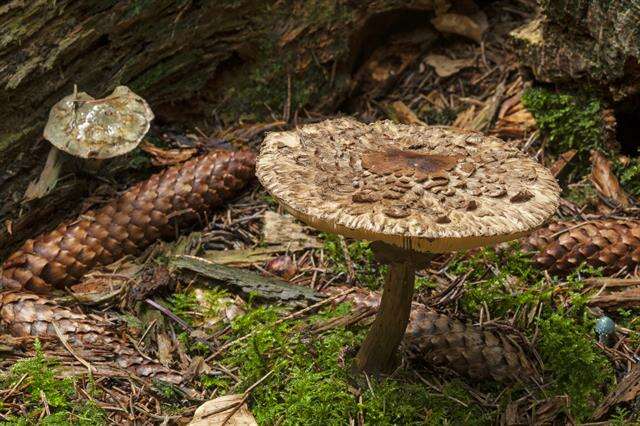
Chlorophyllum
Chlorophyllum is a genus of large toadstools that are similar in appearance to the true parasol mushroom (Macrolepiota). The genus Chlorophyllum was originally created in 1898, a time when spore color was the deciding factor for differentiating genera. It was termed in order to describe the poisonous green-spored C. molybdites which shared many characteristics of the mushrooms within the genus Lepiota but lacked the all-important white spores. The name derives from Greek Chloro meaning green and phyllo meaning leaf (or gill in this case). It remained as a monotypic genus until recently wh

Calvatia
Calvatia is a genus of puffball mushrooms that includes the giant puffball C. gigantea. It was formerly classified within the now-obsolete order Lycoperdales, which, following a restructuring of fungal taxonomy brought about by molecular phylogeny, has been split; the puffballs, Calvatia spp. are now placed in the family Lycoperdaceae of the order Agaricales.
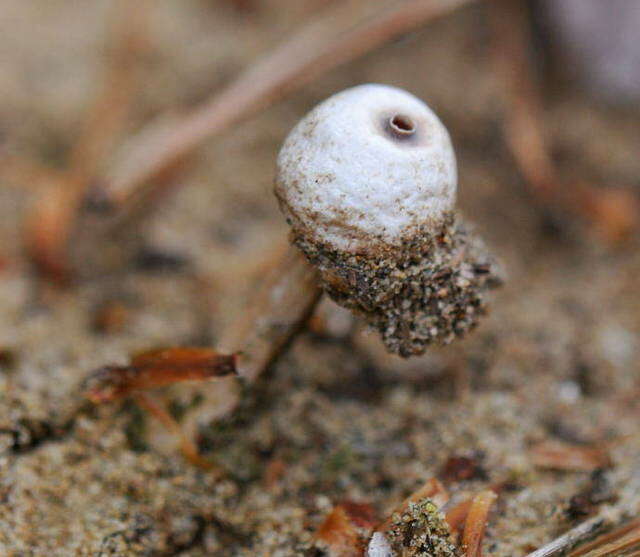
Tulostoma
Tulostoma is a genus of fungi in the family Agaricaceae. Species in the genus are commonly known as stalkballs, or stalked puffballs. Fossils of Tulostoma have been reported from 12 million year old rocks in central England and 13.5 million year old coals from Slovakia.

Leucocoprinus
Leucocoprinus is a genus of fungi in the family Agaricaceae. The best-known member is the distinctive yellow mushroom Leucocoprinus birnbaumii, which is found in plant pots and greenhouses worldwide. The type species is Leucocoprinus cepistipes. The genus has a widespread distribution and since many members of the Leucoagaricus genus were transferred to Leucocoprinus in 2024 it contains over 240 recognised species. Prior to this reclassification species described as Leucocoprinus often tended to be found in tropical regions whereas many species described as Leucoagaricus were found in temperat

Cystoderma
Cystoderma is a genus of fungi in the family Agaricaceae or Cystodermataceae. Its family position is in doubt and the family "Cystodermataceae" and tribe "Cystodermateae" have been proposed to include this group following recent molecular work.

Cystoderma carcharias
species of fungus
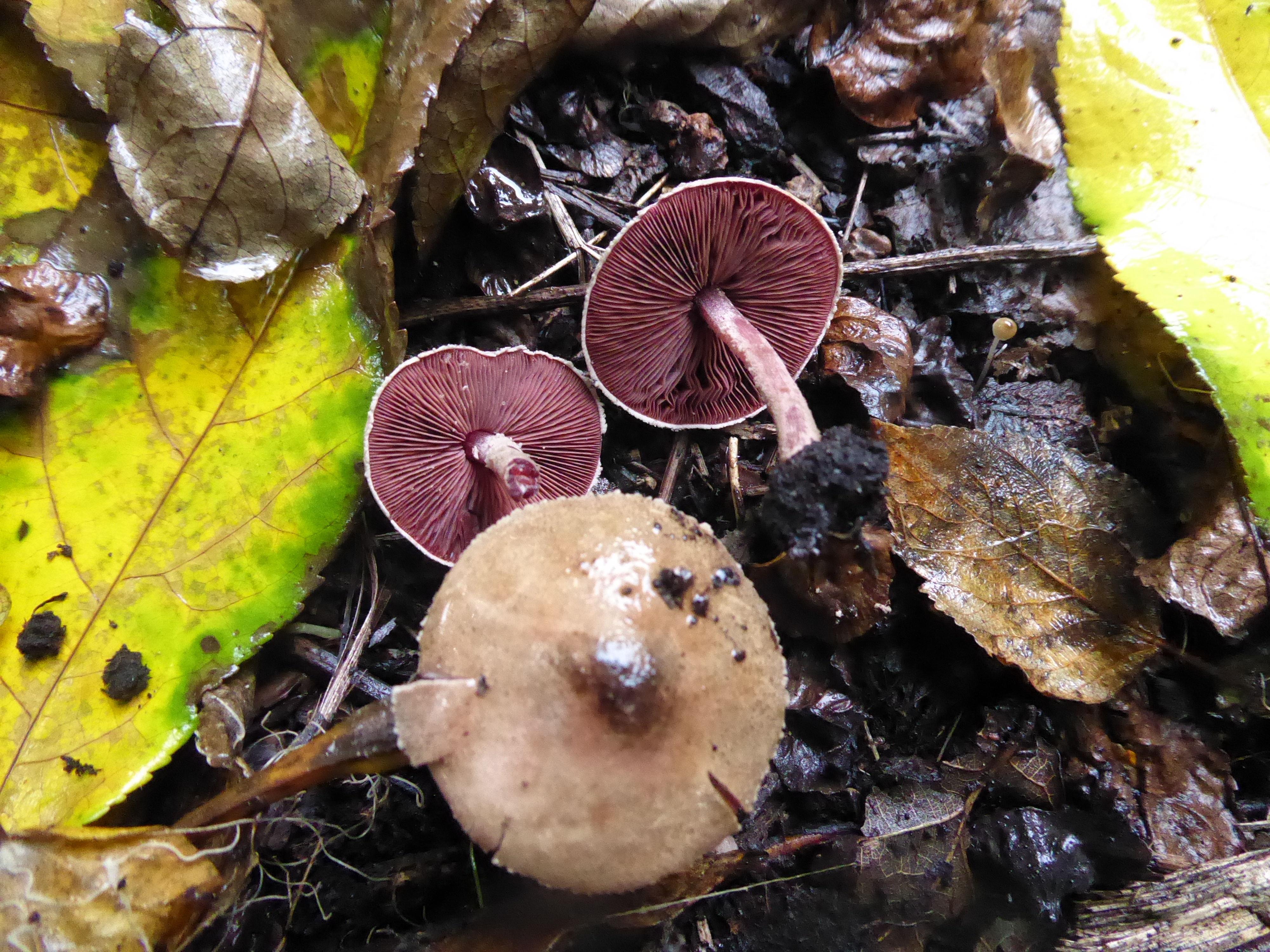
Melanophyllum haematospermum
species of fungus

Cystolepiota
Cystolepiota is a genus of mushroom-forming fungi in the family Agaricaceae.

Battarrea phalloides
species of fungus

Bovista nigrescens
species of fungus

Cystodermella cinnabarina
species of fungus
Melanophyllum
Melanophyllum is a genus of fungi in the family Agaricaceae. The widespread genus contains four species.
Chamaemyces
Chamaemyces is a genus of fungi in the family Agaricaceae. It was circumscribed by mycologist Franklin Sumner Earle in 1906.
Nidularia
Nidularia is a genus of nine species of fungi in the family Agaricaceae. Their fruit bodies resemble tiny egg-filled bird nests. The name comes from the Latin meaning nest. The related genus Mycocalia was segregated from Nidularia in 1961 based on differences in the microscopic structure of the peridium.
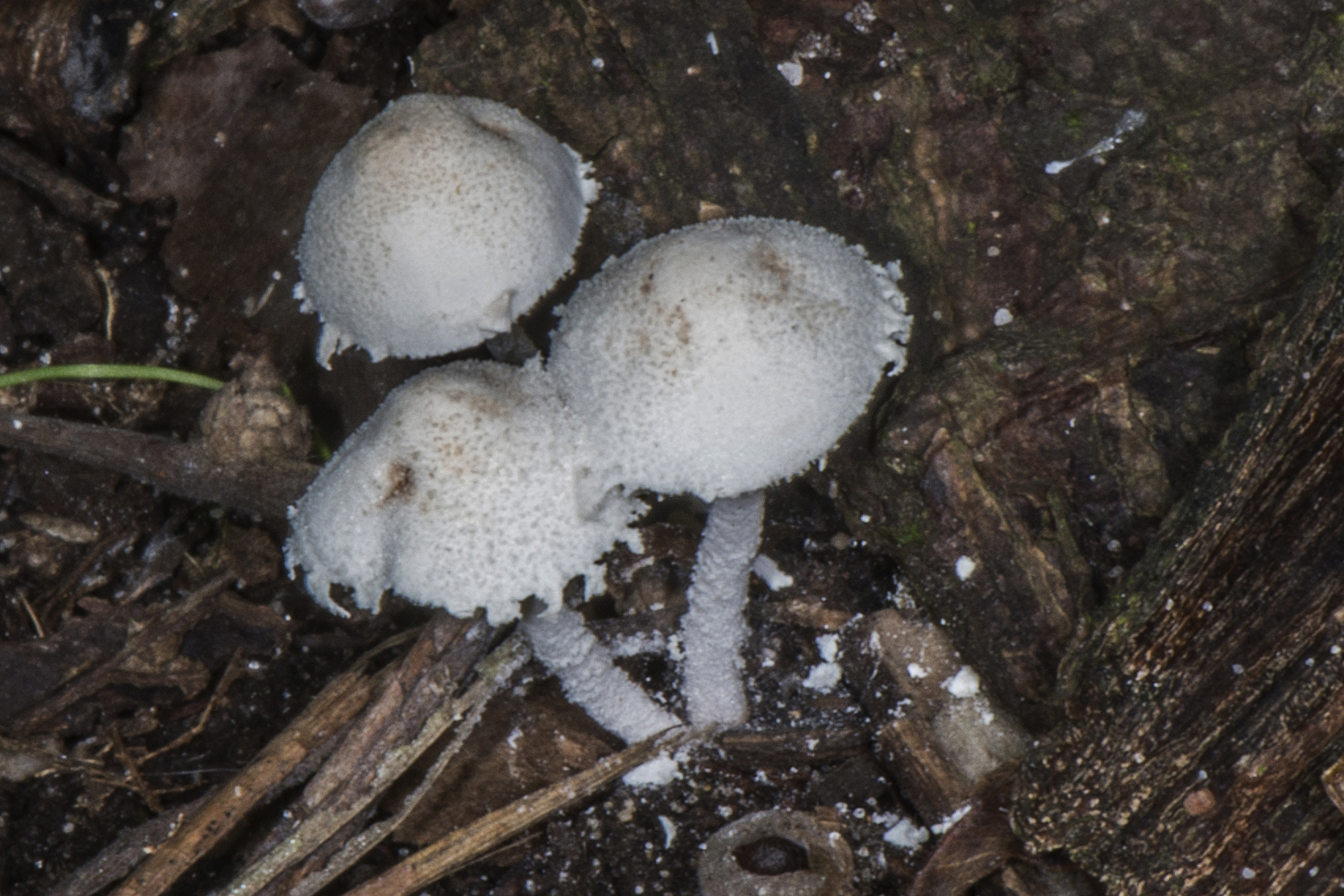
Cystolepiota seminuda
species of fungus

Coprinus sterquilinus
species of fungus

Podaxis pistillaris
species of fungus
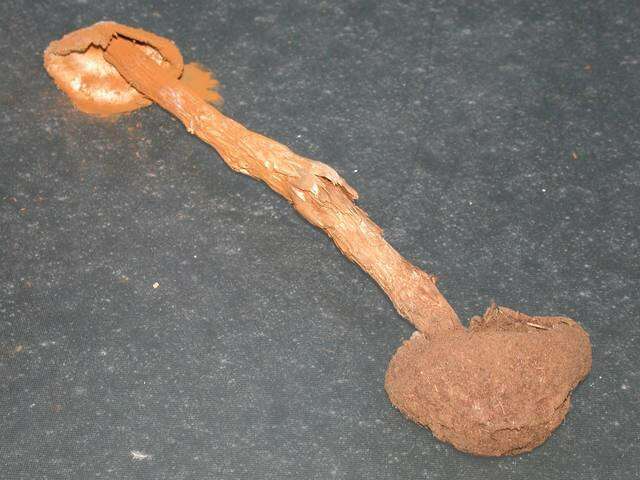
Battarrea
Battarrea is a genus of mushroom-producing fungi. The genus used to be classified in the family Tulostomaceae until molecular phylogenetics revealed its affinity to the Agaricaceae. Species of Battarrea have a peridium (spore sac) that rests atop an elongated, hollow stipe with a surface that tends to become torn into fibrous scales. Inside the peridium, the gleba consists of spherical, warted spores, and a capillitium of simple or branched hyphal threads that have spiral or angular thickenings. The genus is named after Italian priest and mycologist Giovanni Antonio Battarra.

Cystodermella granulosa
species of fungus
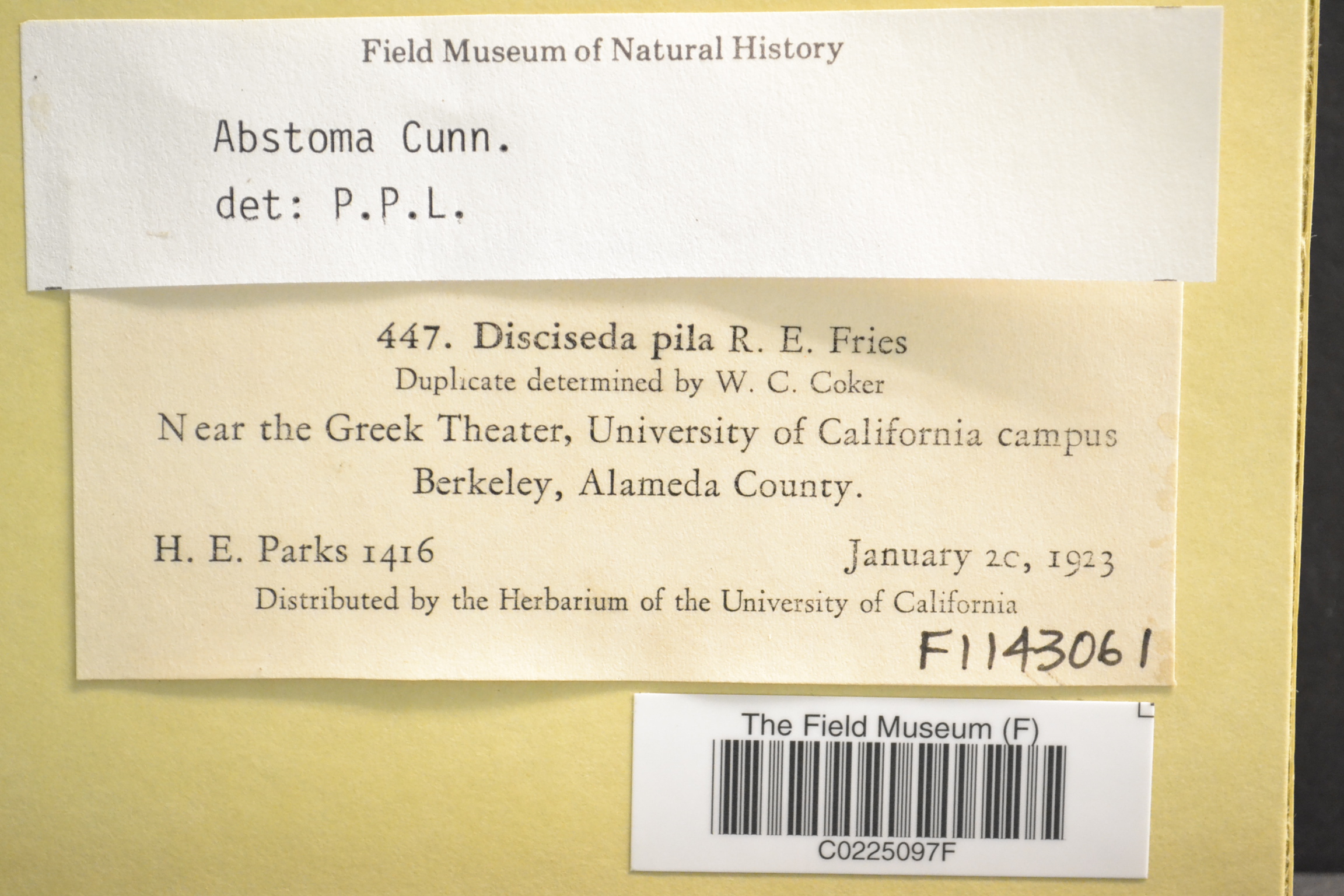
Abstoma
Abstoma is a genus of gasteroid fungi in the family Agaricaceae. The type species,
A. purpureum, was described from New Zealand by mycologist Gordon Herriot Cunningham in 1926. Wright and colleagues transferred A. stuckertii (originally Bovista stuckertii Speg.) to the genus in 1990, but Moreno et al. proposed a new combination Disciseda stuckertii in 2007. A. fimbrialis was described from Baja California, Mexico, in 1992. Abstoma townei| is found in western and southwest USA and in west Argentina, while A. reticulatum occurs in Australia and the western and southwestern USA.
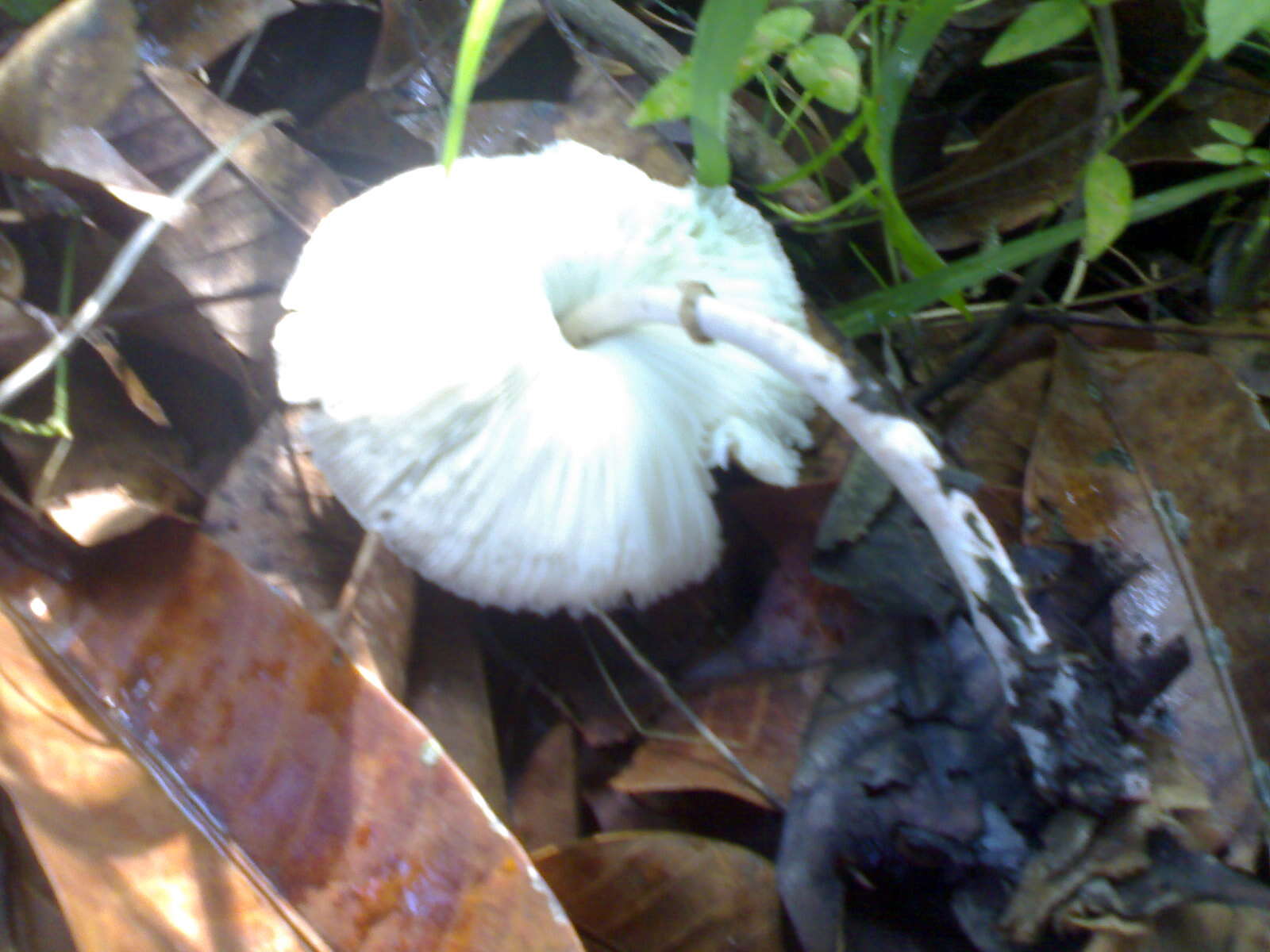
Termitomyces albuminosus
species of fungus

Echinoderma
Echinoderma is a genus of fungi in the family Agaricaceae. Its members were for a long time considered to belong to genus Lepiota and the group was then circumscribed by French mycologist Marcel Bon in 1981 as a subgenus of Cystolepiota before he raised it to generic status in 1991.

Disciseda
Disciseda is a genus of gasteroid fungi in the family Agaricaceae. It is a widely distributed genus that is prevalent in arid zones. Disciseda was circumscribed by mycologist Vassiliĭ Matveievitch Czernajew in 1845.
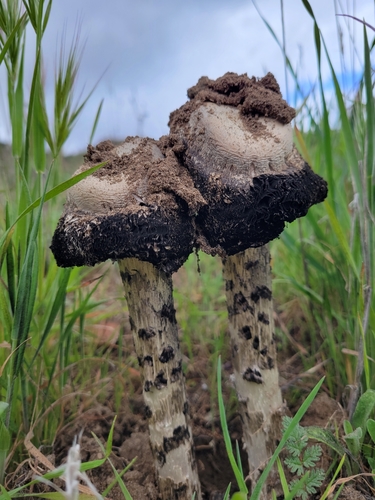
Montagnea
Montagnea is a genus of fungi in the family Agaricaceae. The genus has a widespread distribution in subtropical dry areas, and contains six species. Montagnea was circumscribed by Swedish mycologist Elias Magnus Fries in 1836.

Melanophyllum eyrei
species of fungus
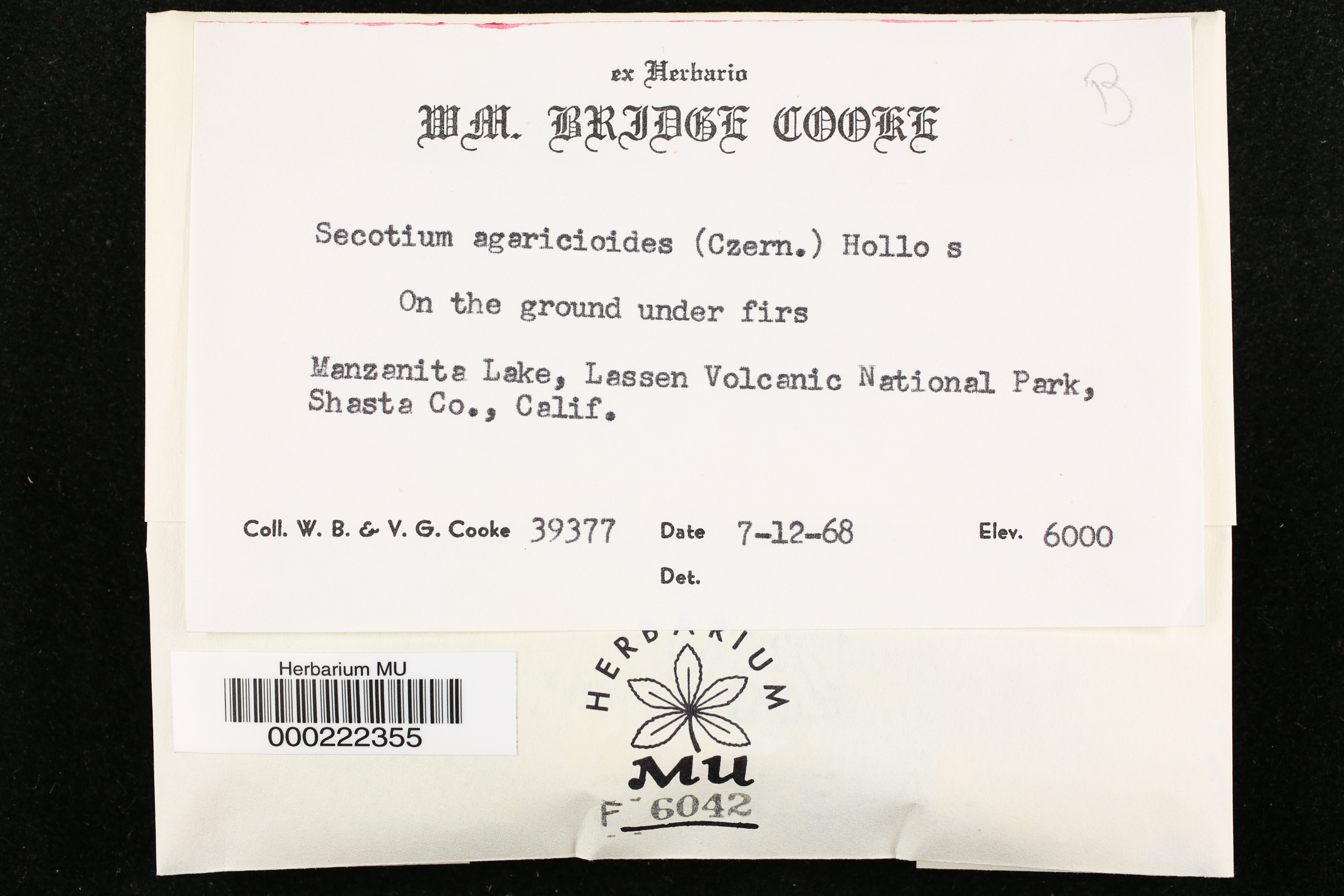
Secotium
Secotium is a genus of fungi in the family Agaricaceae. The members of this genus are closely related to ordinary Agaricus mushrooms, but do not open out in the usual way; this has given rise to the term "secotioid" for such mushrooms in general. They are thought to form an evolutionary link between agarics and gasteroid fungi (whose spores are enclosed in a pouch-like structure). Secotium is a widespread genus, with species that are predominantly found in warm and arid regions.
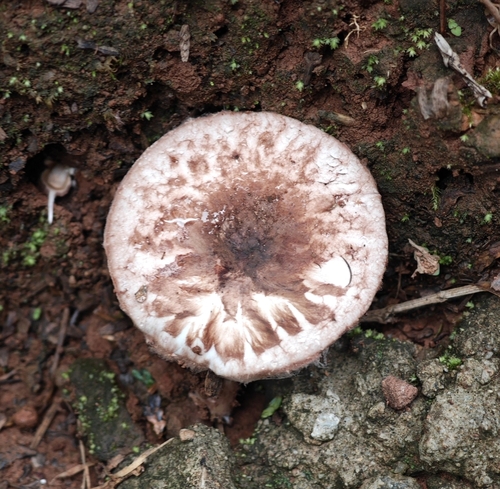
Hymenagaricus
Hymenagaricus is a genus of fungi in the family Agaricaceae. The widespread genus contains species found largely in tropical regions. Hymenagaricus was circumscribedby Belgian mycologist Paul Heinemann in 1981.

Calvatia cyathiformis
species of fungus
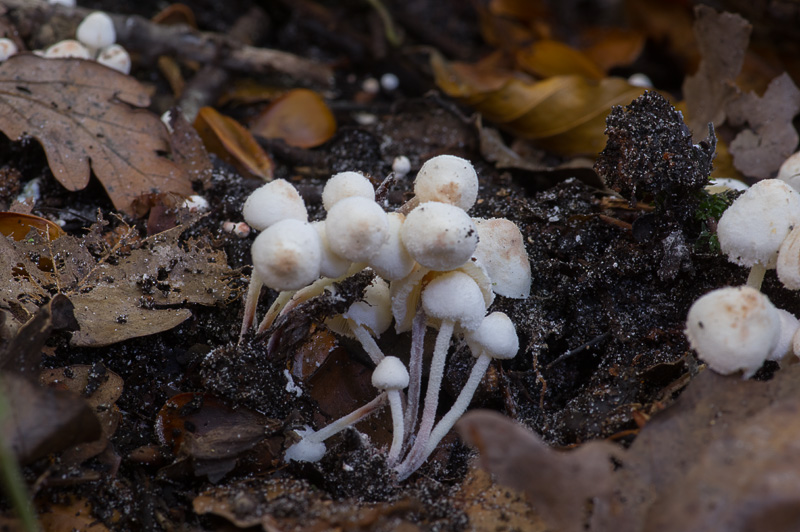
Cystolepiota bucknallii
species of fungus
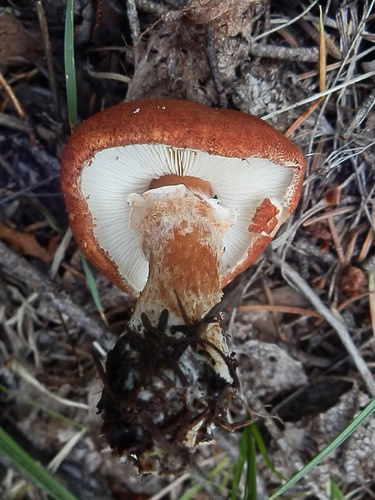
Cystodermella
Cystodermella is a genus of fungi in the family Agaricaceae. The genus comprises about 12 species, noted for producing agaric fruit bodies, bearing a cap, white gills and stipe with a fine, ephemeral ring. The genus was devised by Harri Harmaja in 2002, dividing the older genus Cystoderma into three independent genera: Cystoderma, Ripartitella and Cystodermella largely on the basis of microscopic differences. Cystodermella species bear non-amyloid spores and sometimes cystidia. The spores, in contrast to Ripartitella are not echinulate.
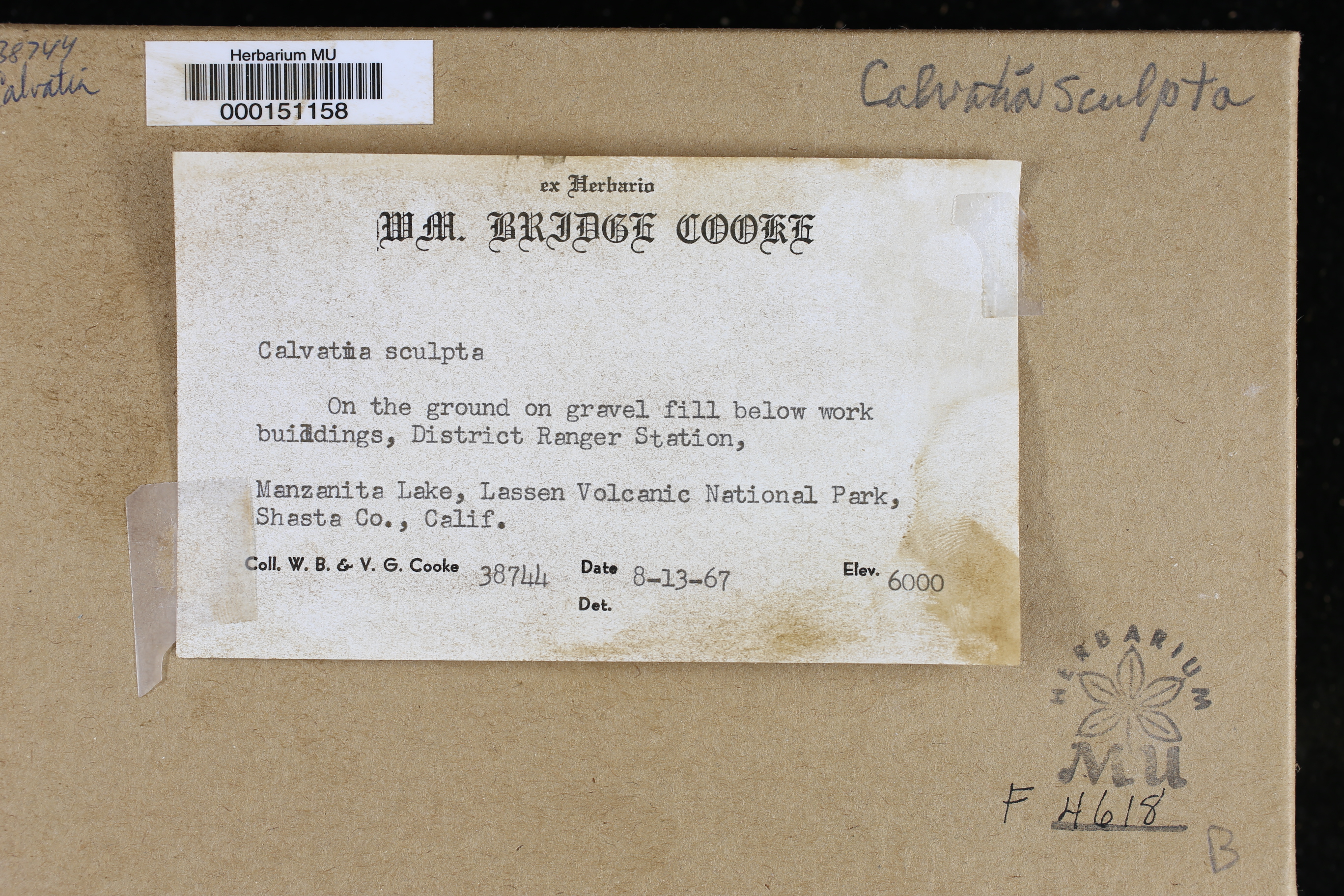
Calvatia sculpta
species of fungus
Macrolepiota clelandii
species of fungus
Verrucospora
Verrucospora is a genus of fungi in the family Agaricaceae.
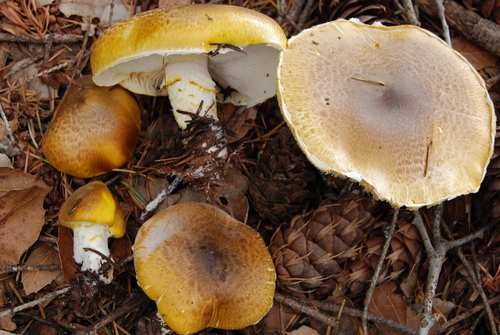
Floccularia
Floccularia is a genus of fungi in the order Agaricales. There are four recognized species in the genus, which have a widespread distribution, especially in northern temperate regions. Two former species are now classified as a Cercopemyces and an Amanita (or more specifically an Aspidella, Amanitaceae). Floccularia was circumscribed by Czech mycologist Zdeněk Pouzar in 1957.
Montagnea arenaria
species of fungus

Mycenastrum
Mycenastrum is a fungal genus in the family Agaricaceae. The genus is monotypic, containing one widely distributed species, Mycenastrum corium, known by various common names: the giant pasture puffball, leathery puffball, or tough puffball.
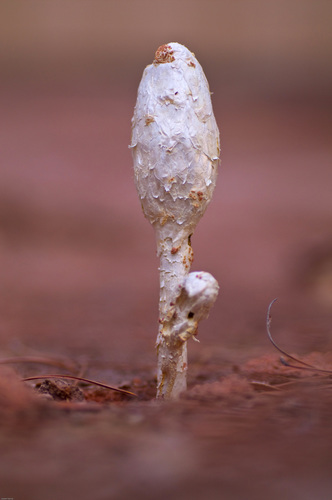
Podaxis
Podaxis is a genus of secotioid fungi in the family Agaricaceae. Species, which have the appearance of a "stalked-puffball", have a worldwide distribution, and tend to be found growing solitary or scattered on sandy soils, especially in arid regions. Although close to 50 species have been described, it has been argued that many of them may represent extremes in the natural range of variations found in Podaxis pistillaris.
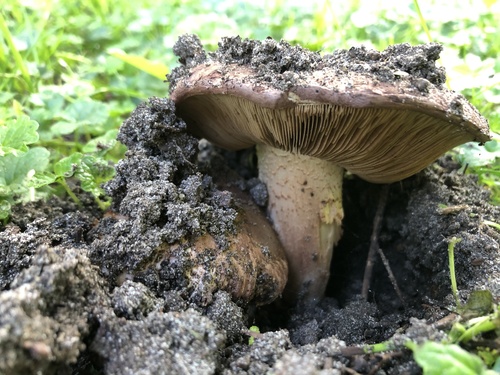
Allopsalliota
Allopsalliota is a fungal genus in the family Agaricaceae. A monotypic genus, it consists of the single species Allopsalliota geesterani, found in the Netherlands. The specific epithet honors Dutch mycologist Rudolph Arnold Maas Geesteranus. Allopsalliota was circumscribed in 1998 to contain what was then known as Agaricus geesterani, a species first described in 1986 by Cornelis Bas and Paul Heinemann.

Gyrophragmium
Gyrophragmium is a genus of fungi in the family Agaricaceae. The genus was circumscribed by French botanist Camille Montagne in 1843.
Barcheria
Barcheria is a fungal genus in the family Agaricaceae. This is a monotypic genus, containing the single sequestrate (having underground fruiting bodies) species Barcheria willisiana, found in western Australia.
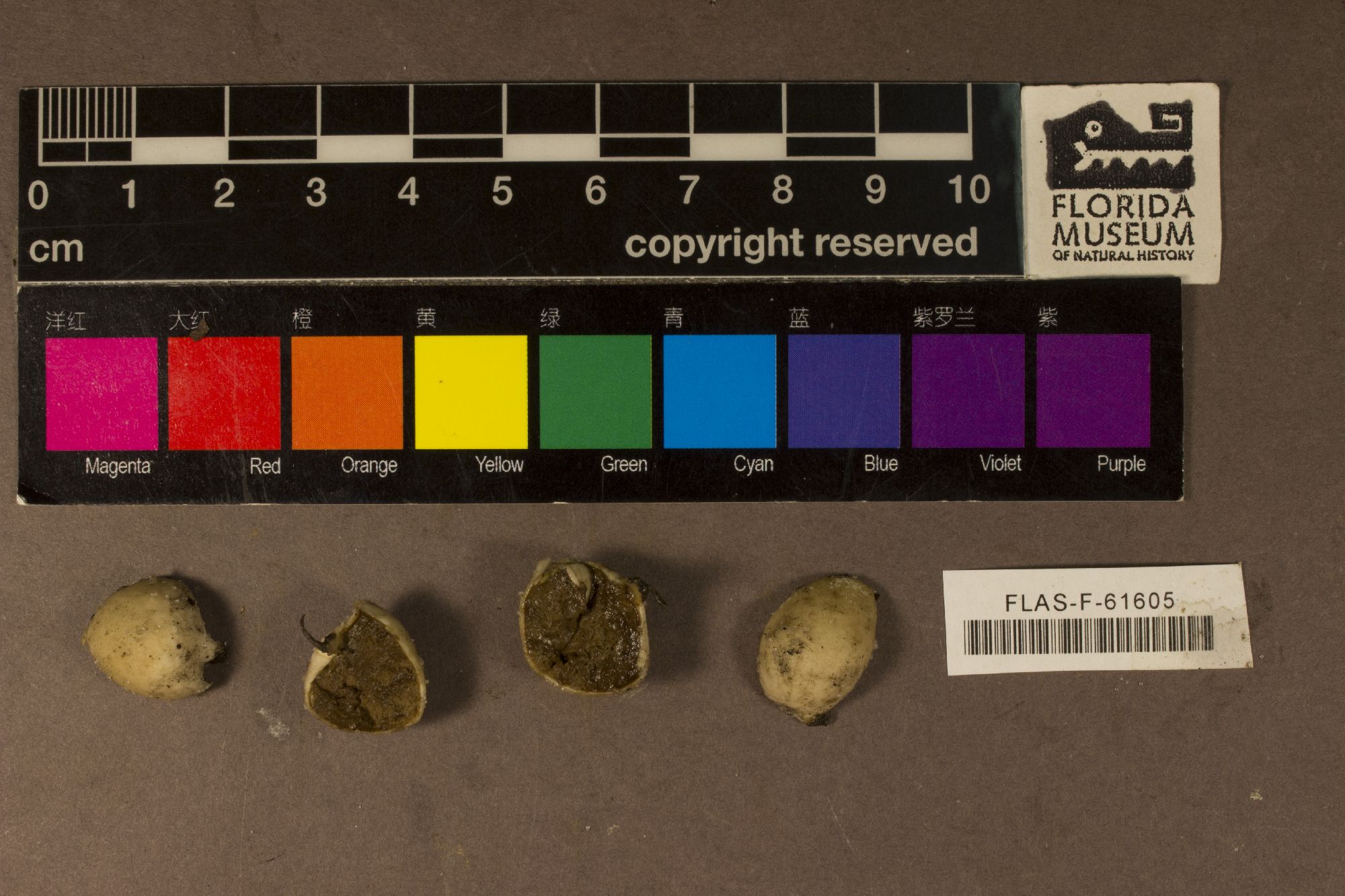
Holocotylon
Holocotylon is a genus of fungi in the family Agaricaceae. It was circumscribed by American mycologist Curtis Gates Lloyd in 1906 with H. brandegeeanum as the type species.
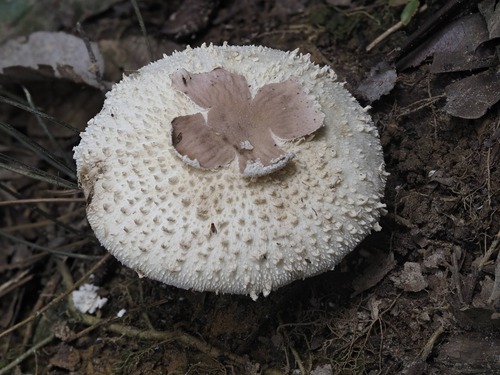
Clarkeinda
Clarkeinda is a genus of fungi in the family Agaricaceae. According to the Dictionary of the Fungi, the widespread genus contains five species. Species in this genus, especially Clarkeinda trachodes, are only distributed in south Asia and southeast Asia.
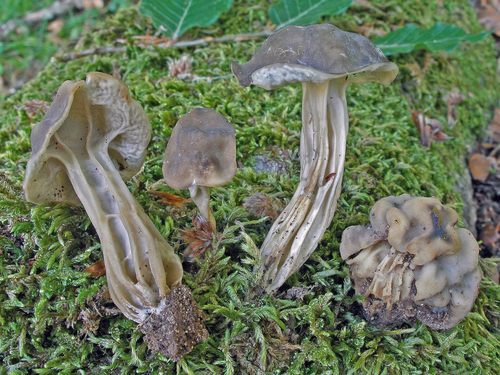
Queletia
Queletia is a genus of fungi in the family Agaricaceae. The genus was circumscribed by Elias Magnus Fries in 1872. Fruit bodies of Queletia species are sequestrate with a thin outer skin (peridium) and a harder inner skin that breaks into small pieces with age. The genus is named after French mycologist Lucien Quélet (1832–1899).
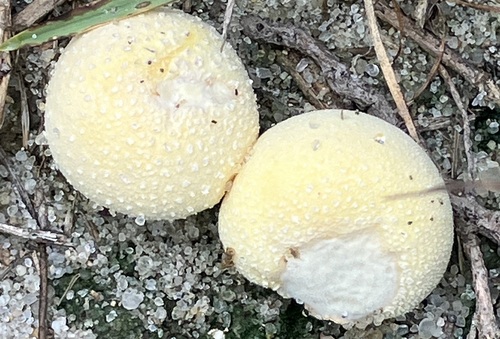
Arachnion
Arachnion is a genus of gasteroid fungi in the family Agaricaceae.
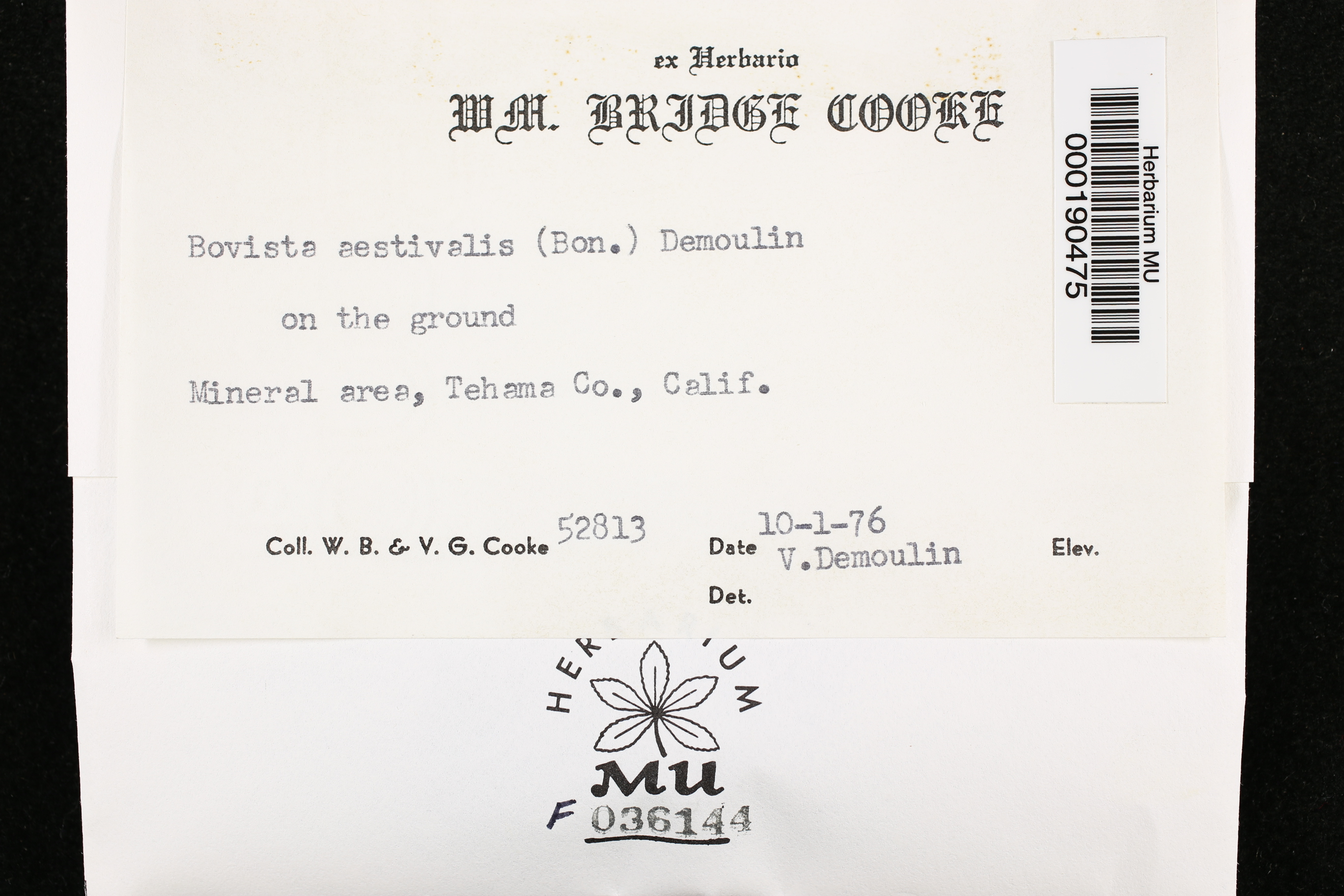
Bovista aestivalis
species of fungus
Gastropila
Gastropila is a genus of fungi in the family Agaricaceae. The genus, described in 1973, contains four puffball-like species distributed in the Americas.