Category
page 1Aluminium minerals

ruby
thumb|upright=1.25|The main ruby-producing countries

sapphire
thumb|upright=1.25|Main sapphire-producing countries

topaz
Topaz is a silicate mineral made of aluminum and fluorine with the chemical formula AlSiO(F, OH). It is used as a gemstone in jewelry and other adornments. Common topaz in its natural state is colorless, though trace element impurities can make it pale blue or golden-brown to yellow-orange. Topaz is often treated with heat or radiation to make it a deep blue, reddish-orange, pale green, pink, or purple.

turquoise
Turquoise is an opaque, blue-to-green mineral that is a hydrous phosphate of copper and aluminium, with the chemical formula . It is rare and valuable in finer grades and has been prized as a gemstone for millennia due to its hue.

bauxite
thumb|Reddish-brown bauxite
thumb|Bauxite with Penny (United States coin)|US penny for comparison
thumb|QEMSCAN mineral maps of bauxite ore-forming [[pisoliths]]

corundum
Corundum is a crystalline form of aluminium oxide () typically containing traces of iron, titanium, vanadium, and chromium. It is a rock-forming mineral. It is a naturally transparent material, but can have different colors depending on the presence of transition metal impurities in its crystalline structure. Corundum has two primary gem varieties: ruby and sapphire. Rubies are red due to the presence of chromium, and sapphires exhibit a range of colors depending on what transition metal is present. A rare type of sapphire, padparadscha sapphire, is pink-orange.

tourmalines
thumb|upright=1.3|Main tourmaline producing countries

kaolinite
Kaolinite ( ; also called kaolin) is a clay mineral, with the chemical composition Al2Si2O5(OH)4. It is a layered silicate mineral, with one "tetrahedral" sheet of silicate tetrahedra () linked to one "octahedral" sheet of aluminate octahedrons () through oxygen atoms on one side, and another such sheet through hydrogen bonds on the other side.

spinel
thumb|Polyhedral representation of spinel MgAl2O4
Spinel () is the magnesium/aluminium member of the larger spinel group of minerals. It has the formula in the cubic crystal system. Its name comes from the Latin word , a diminutive form of spine, in reference to its pointed crystals.

laterite
thumb|upright|Traditional laterite temple in Kerala
thumb|upright|alt=This monument is constructed of laterite brickstones. It commemorates Buchanan who first described laterite at this site.|Monument of laterite brickstones at Angadipuram, [[Kerala, India, which commemorates where laterite was first described and discussed by Buchanan-Hamilton in 1807]]

orthoclase
Orthoclase, or orthoclase feldspar (endmember formula KAlSi3O8), is an important tectosilicate mineral which forms igneous rock. The name is from the Ancient Greek for "straight fracture", because its two cleavage planes are at right angles to each other. It is a type of alkali feldspar, also known as potassium feldspar or K-spar. The gem known as moonstone (see below) is largely composed of orthoclase.

andalusite
Andalusite is an aluminium nesosilicate mineral with the chemical formula Al2SiO5. This mineral was called andalousite by Delamétherie, who thought it came from Andalusia, Spain. It soon became clear that it was a locality error, and that the specimens studied were actually from El Cardoso de la Sierra, in the Spanish province of Guadalajara, not Andalusia.
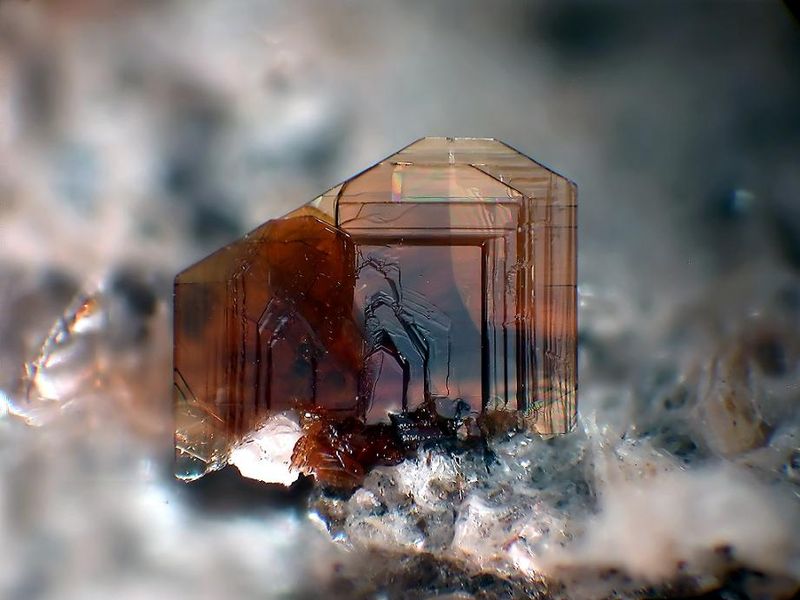
biotite series
Biotite is a common group of phyllosilicate minerals within the mica group, with the approximate chemical formula . It is primarily a solid-solution series between the iron-endmember annite, and the magnesium-endmember phlogopite; more aluminous end-members include siderophyllite and eastonite. Biotite was regarded as a mineral species by the International Mineralogical Association until 1998, when its status was changed to a mineral group. The term biotite is still used to describe unanalysed dark micas in the field. Biotite was named by J.F.L. Hausmann in 1847 in honor of the French physicis

muscovite

albite
Albite is a plagioclase feldspar mineral. It is the sodium endmember of the plagioclase solid solution series. It represents a plagioclase with less than 10% anorthite content. The pure albite endmember has the formula . It is a tectosilicate. Its color is usually pure white, hence its name from Latin, . It is a common constituent in felsic rocks.

chrysoberyl
thumb|Main chrysoberyl producing countries

cryolite
Cryolite (Na3AlF6, sodium hexafluoroaluminate) is a rare mineral identified with the once-large deposit at Ivittuut on the southwest coast of Greenland, mined commercially until 1987.

kyanite
Kyanite is a typically blue aluminosilicate mineral, found in aluminium-rich metamorphic pegmatites and sedimentary rock. It is the high pressure polymorph of andalusite and sillimanite, and the presence of kyanite in metamorphic rocks generally indicates metamorphism deep in the Earth's crust. Kyanite is also known as disthene or cyanite.

bentonite
upright=1.3|thumb|Bentonite layers from an ancient deposit of weathering|weathered [[volcanic ash tuff in Wyoming]]
thumb|Gray shale and bentonites (Benton Shale; Colorado Springs, Colorado)

anorthite
Anorthite (2Si2O8. Anorthite is found in igneous rocks.

plagioclase
thumb|Plagioclase displaying cleavage (crystal)|cleavage (unknown scale)
thumb|In volcanic rocks, [[fine-grained plagioclase can display a "microlitic" texture of many small crystals.]]

vermiculite
Vermiculite is a hydrous phyllosilicate mineral which undergoes significant expansion when heated. Exfoliation occurs when the mineral is heated sufficiently; commercial furnaces can routinely produce this effect. Vermiculite forms by the weathering or hydrothermal alteration of biotite or phlogopite.
Large commercial vermiculite mines exist in the United States, Russia, South Africa, China, and Brazil.

epidote
Epidote is a calcium aluminium iron sorosilicate mineral.
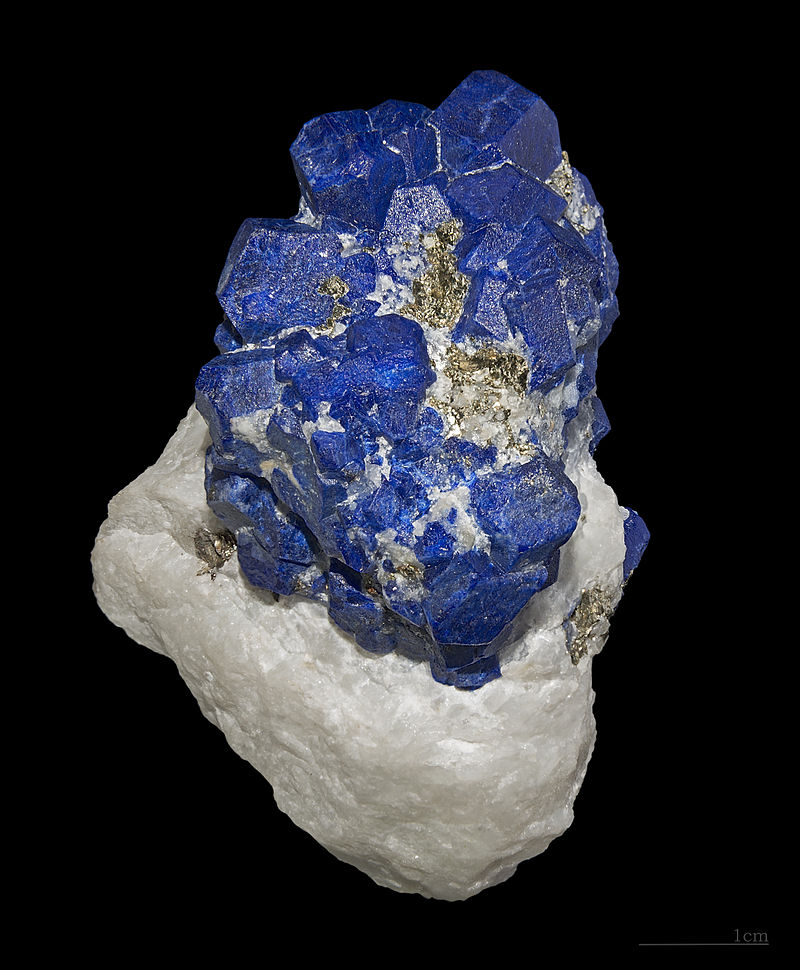
lazurite
Lazurite, old name Azure spar is a tectosilicate mineral with sulfate, sulfur and chloride with formula . It is a feldspathoid and a member of the sodalite group. Lazurite crystallizes in the isometric system although well‐formed crystals are rare. It is usually massive and forms the bulk of the gemstone lapis lazuli.

jadeite
Jadeite is a pyroxene mineral with composition NaAlSi2O6. It is hard (Mohs hardness of about 6.5 to 7.0), very tough, and dense, with a specific gravity of about 3.4. It is found in a wide range of colors, but is most often found in shades of green or white. Jadeite is formed only in the subduction zones of continental margins, where rock undergoes metamorphism at high pressure but relatively low temperature.

hornblende
Hornblende is a complex inosilicate series of minerals. It is not a recognized mineral in its own right, but the name is used as a general or field term, to refer to a dark amphibole. Hornblende minerals are common in igneous and metamorphic rocks.
spodumene
Spodumene is a pyroxene mineral consisting of lithium aluminium inosilicate, LiAl(SiO3)2, and is a commercially important source of lithium. It occurs as colorless to yellowish, purplish, or lilac kunzite (see below), or alternatively yellowish-green or emerald-green hiddenite; it takes the form of prismatic crystals, often of great size. Single crystals of in size are reported from the Black Hills of South Dakota, United States.

nepheline
Nepheline (), also called nephelite, is a rock-forming mineral in the feldspathoid groupa silica-undersaturated aluminosilicate (Na3KAl4Si4O16) that occurs in intrusive and volcanic rocks with low silica, and in their associated pegmatites. It is used in glass and ceramic manufacturing and other industries, and has been investigated as an ore of aluminium.
lepidolite
Lepidolite is the common name for a lilac-gray or rose-colored series of minerals in the mica group. The mineralogical name for this series is the polylithionite-trilithionite series. Lepidolite has a chemical formula of . It is the most abundant lithium-bearing mineral and is a secondary source of this metal. It is also the major source of the alkali metal rubidium, which substitutes (as in all minerals) for potassium.

gibbsite
thumb|right|Ball-and-stick model of the part of the [[crystal structure of gibbsite]]
Gibbsite, Al(OH)3, is one of the mineral forms of aluminium hydroxide. It is often designated as γ-Al(OH)3 (but sometimes as α-Al(OH)3). It is also sometimes called hydrargillite (or hydrargyllite).
%20-%20Alchuri%2C%20Shigar%20Valley%2C%20Gilgit-Baltistan%2C%20Pakistan.jpg)
vesuvianite
Vesuvianite, also known as idocrase, is a green, brown, yellow, or blue silicate mineral. Vesuvianite occurs as tetragonal crystals in skarn deposits and limestones that have been subjected to contact metamorphism. It was first discovered within included blocks or adjacent to lavas on Mount Vesuvius, hence its name. Attractive-looking crystals are sometimes cut as gemstones. Localities which have yielded fine crystallized specimens include Mount Vesuvius and the Ala Valley near Turin, Piedmont.
glauconite
Glauconite is an iron potassium phyllosilicate (mica group) mineral of characteristic green color which is very friable and has very low weathering resistance.

alunite
Alunite is a hydroxylated aluminium potassium sulfate mineral, formula KAl3(SO4)2(OH)6. It was first observed in the 15th century at Tolfa, near Rome, where it was mined for the manufacture of alum. First called aluminilite by J.C. Delamétherie in 1797, this name was contracted by François Beudant three decades later to alunite.
left|thumb|Alunite from Slovakia
Alunite crystals morphologically are rhombohedra with interfacial angles of 90° 50', causing them to resemble cubes. Crystal symmetry is trigonal. Minute glistening crystals have also been found loose in cavities in altered rhyolite. Al
sillimanite
Sillimanite or fibrolite is an aluminosilicate mineral with the chemical formula Al2SiO5. Sillimanite is named after the American chemist Benjamin Silliman (1779–1864). It was first described in 1824 for an occurrence in Chester, Connecticut.

sodalite
Sodalite ( ) is a tectosilicate mineral with the formula , with royal blue varieties widely used as an ornamental gemstone. Although massive sodalite samples are opaque, crystals are usually transparent to translucent. Sodalite is a member of the sodalite group with hauyne, nosean, lazurite and tugtupite.

microcline
Microcline (KAlSi3O8) is an important igneous rock-forming tectosilicate mineral. It is a potassium-rich alkali feldspar. It is common in granite and pegmatites. Microcline forms during slow cooling of orthoclase. Sanidine is a polymorph of alkali feldspar stable at yet higher temperature. Microcline has cross-hatch twinning that forms as a result of the transformation of monoclinic orthoclase into triclinic microcline.
zoisite
Zoisite, first known as saualpite, after its type locality, is a calcium aluminum hydroxy sorosilicate belonging to the epidote group of minerals. Its chemical formula is Ca2Al3(SiO4)(Si2O7)O(OH).

pyrope
thumb|Pyrope garnet in eclogite - Shibino, Ural Mountains, Russia.
The mineral pyrope is a member of the garnet group. Pyrope is the only member of the garnet family to always display red colouration in natural samples, and it is from this characteristic that it gets its name: from the Greek words for fire and eye. Despite being less common than most garnets, it is a widely used gemstone with numerous alternative names, some of which are misnomers. Chrome pyrope, and Bohemian garnet are two alternative names, the usage of the latter being discouraged by the Gemological Institute of America. Mi

cordierite
Cordierite (mineralogy) or iolite (gemology) is a magnesium iron aluminium cyclosilicate. Iron is almost always present, and a solid solution exists between Mg-rich cordierite and Fe-rich sekaninaite with a series formula: to . A high-temperature polymorph exists, indialite, which is isostructural with beryl and has a random distribution of Al in the rings. Cordierite is also synthesized and used in high temperature applications such as catalytic converters and pizza stones.
analcime
Analcime (; ) or analcite is a white, gray, or colorless tectosilicate mineral. Analcime consists of hydrated sodium aluminium silicate in cubic crystalline form. Its chemical formula is NaAlSi2O6 · H2O. Minor amounts of potassium and calcium substitute for sodium. A silver-bearing synthetic variety also exists (Ag-analcite).

grossular
Grossular is a calcium-aluminium species of the garnet group of minerals. It has the chemical formula of Ca3Al2(SiO4)3 but the calcium may, in part, be replaced by ferrous iron and the aluminium by ferric iron. The name grossular is derived from the botanical name for the gooseberry, grossularia, in reference to the green garnet of this composition that is found in Siberia. Other shades include cinnamon brown (cinnamon stone variety), red, and yellow. Grossular is a gemstone.

staurolite
Staurolite is a reddish brown to black, mostly opaque, nesosilicate mineral with a white streak. It crystallizes in the monoclinic crystal system, has a Mohs hardness of 7 to 7.5 and the chemical formula: Fe2+2Al9O6(SiO4)4(O,OH)2. Magnesium, zinc and manganese substitute in the iron site and trivalent iron can substitute for aluminium.
leucite
Leucite (from the Greek word leukos meaning white) is a rock-forming mineral of the feldspathoid group, silica-undersaturated and composed of potassium and aluminium tectosilicate KAlSi2O6. Crystals have the form of cubic icositetrahedra but, as first observed by Sir David Brewster in 1821, they are not optically isotropic, and are therefore pseudo-cubic. Goniometric measurements made by Gerhard vom Rath in 1873 led him to refer the crystals to the tetragonal system. Optical investigations have since proved the crystals to be still more complex in character, and to consist of several orthorhom
emery
metamorphic rock
böhmite
Boehmite or böhmite is an aluminium oxide hydroxide (γ-AlO(OH)) mineral, a component of the aluminium ore bauxite. It is dimorphous with diaspore. It crystallizes in the orthorhombic dipyramidal system and is typically massive in habit. It is white with tints of yellow, green, brown or red due to impurities. It has a vitreous to pearly luster, a Mohs hardness of 3 to 3.5 and a specific gravity of 3.00 to 3.07. It is colorless in thin section, optically biaxial positive with refractive indices of nα = 1.644 – 1.648, nβ = 1.654 – 1.657 and nγ = 1.661 – 1.668.
diaspore
Diaspore ()also called diasporite, empholite, kayserite, or tanatariteis an aluminium hydroxide oxide mineral, α-AlO(OH), crystallizing in the orthorhombic system and isomorphous with goethite. It occurs sometimes as flattened crystals, but usually as lamellar or scaly masses, the flattened surface being a direction of perfect cleavage on which the lustre is markedly pearly in character. It is colorless or greyish-white, yellowish, sometimes violet in color, and varies from translucent to transparent. It may be readily distinguished from other colorless transparent minerals with a perfect clea
allanite group
Allanite (also called orthite) is a sorosilicate group of minerals within the broader epidote group that contain a significant amount of rare-earth elements. The mineral occurs mainly in metamorphosed clay-rich sediments and felsic igneous rocks. It has the general formula A2M3Si3O12[OH], where the A sites can contain large cations such as Ca2+, Sr2+, and rare-earth elements, and the M sites admit Al3+, Fe3+, Mn3+, Fe2+, or Mg2+ among others. However, a large amount of additional elements, including Th, U, Be, Zr, P, Ba, Cr and others may be present in the mineral. The International Mineralogi
axinite
Axinite is a brown to violet-brown, or reddish-brown bladed group of minerals composed of calcium aluminium boro-silicate, . Axinite is pyroelectric and piezoelectric.
spessartine
Spessartine is a nesosilicate, manganese aluminium garnet species, Mn2+3Al2(SiO4)3. This mineral is sometimes mistakenly referred to as spessartite.

glaucophane
Glaucophane is a mineral and a mineral group belonging to the sodic amphibole supergroup of the double chain inosilicates, with the chemical formula Na2(Mg3Al2)Si8O22(OH)2.
sanidine
Sanidine is the high temperature form of potassium feldspar with a general formula K(AlSi3O8). Sanidine is found most typically in felsic volcanic rocks such as obsidian, rhyolite and trachyte. Sanidine crystallizes in the monoclinic crystal system. Orthoclase is a monoclinic polymorph stable at lower temperatures. At yet lower temperatures, microcline, a triclinic polymorph of potassium feldspar, is stable.

illite
thumb|Structure of illite mica – USGS
oligoclase
Oligoclase is a rock-forming mineral belonging to the plagioclase feldspars. In chemical composition and in its crystallographic and physical characters it is intermediate between albite (NaAlSi3O8) and anorthite (CaAl2Si2O8). The albite:anorthite molar ratio of oligoclase ranges from 90:10 to 70:30.
prehnite
Prehnite is an inosilicate of calcium and aluminium with the formula: Ca2Al(AlSi3O10)(OH)2 with limited Fe3+ substitutes for aluminium in the structure. Prehnite crystallizes in the orthorhombic crystal system, and most often forms as stalactitic, botryoidal, reniform or globular aggregates, with only just the crests of small crystals showing any faces, which are almost always curved or composite. Very rarely will it form distinct, well-individualized crystals showing a square-like cross-section, including those found at the Jeffrey Mine in Asbestos, Quebec, Canada. Prehnite is brittle with an
pyrophyllite
Pyrophyllite is a phyllosilicate mineral composed of aluminium silicate hydroxide: Al2Si4O10(OH)2. It occurs in two forms (habits): crystalline folia and compact masses; distinct crystals are not known.

haüyne
Hauyne or haüyne, also called hauynite or haüynite ( ), old name Azure spar, is a rare tectosilicate sulfate mineral with endmember formula . As much as 5 wt % may be present, and also and Cl. It is a feldspathoid and a member of the sodalite group. Hauyne was first described in 1807 from samples discovered in Vesuvian lavas in Monte Somma, Italy, and was named in 1807 by Brunn-Neergard for the French crystallographer René Just Haüy (1743–1822). It is sometimes used as a gemstone.
stilbite
Stilbite is the name of a series of tectosilicate minerals of the zeolite group. Prior to 1997, stilbite was recognized as a mineral species, but a reclassification in 1997 by the International Mineralogical Association changed it to a series name, with the mineral species being named:
chabazite
Chabazite () is a tectosilicate mineral series in the zeolite group, closely related to gmelinite, with the chemical formula , where M is one or more metal cations. Recognized minerals in the series include Chabazite-Ca, Chabazite-K, Chabazite-Na, and Chabazite-Sr, depending on the prominence of the indicated cation.

halloysite
Halloysite is an aluminosilicate clay mineral with the empirical formula Al2Si2O5(OH)4. Its main constituents are oxygen (55.78%), silicon (21.76%), aluminium (20.90%), and hydrogen (1.56%). It is a member of the kaolinite group. Halloysite typically forms by hydrothermal alteration of alumino-silicate minerals. It can occur intermixed with dickite, kaolinite, montmorillonite and other clay minerals. X-ray diffraction studies are required for positive identification. It was first described in 1826, and subsequently named after, the Belgian geologist Omalius d'Halloy.

amblygonite
Amblygonite () is a fluorophosphate mineral, , composed of lithium, sodium, aluminium, phosphate, fluoride and hydroxide. The mineral occurs in pegmatite deposits and is easily mistaken for albite and other feldspars. Its density, cleavage and flame test for lithium are diagnostic. Amblygonite forms a series with montebrasite, the low fluorine endmember. Geologic occurrence is in granite pegmatites, high-temperature tin veins, and greisens. Amblygonite occurs with spodumene, apatite, lepidolite, tourmaline, and other lithium-bearing minerals in pegmatite veins. It contains about 10% lithium, a