Category
page 1Angelic visionaries

Jesus

Muhammad
Muhammad (8 June 632 CE) was an Arab religious, military and political leader, as well as the founder of Islam. According to Islam, he was the final prophet of God who was divinely inspired to preach and confirm the monotheistic teachings of Adam, Noah, Abraham, Moses, Jesus, and other prophets in Islam. He is believed by Muslims to be the Seal of the Prophets, and along with the Quran, his teachings and normative examples form the basis for Islamic religious belief.

Thomas Aquinas
Italian Dominican friar, philosopher, Catholic priest, and Doctor of the Church (1225–1274)

Moses
In Abrahamic religions, Moses was the Hebrew prophet who led the Israelites out of slavery in the Exodus from Egypt. He is considered the most important prophet in Judaism and Samaritanism, and one of the most important prophets in Christianity, Islam, the Baháʼí Faith, and other Abrahamic religions. According to the Abrahamic scriptures, God dictated the Mosaic Law to Moses, which he wrote down and which formed part of the Torah.

Abraham
Abraham (originally Abram) is the common Hebrew patriarch of the Abrahamic religions, including Judaism, Christianity, and Islam. In Judaism, he is the founding father who began the covenantal relationship between the Jewish people and God; in Christianity, he is the spiritual progenitor of all believers, whether Jewish or non-Jewish; and in Islam, he is a link in the chain of Islamic prophets that begins with Adam and culminates in Muhammad. Abraham is also revered in other Abrahamic religions such as the Baháʼí Faith and the Druze faith.

Joan of Arc
French folk heroine (1412–1431), military leader who crowned Charles VII and Roman Catholic saint, canonized 500 years after her death

Mary
mother of Jesus Christ

Hafez
Hafez Shirazi (1325–1390) was a Persian lyric poet whose collected works are regarded by many Iranians as one of the highest pinnacles of Persian literature. His works are often found in the homes of Persian speakers, who learn his poems by heart and use them as everyday proverbs and sayings. His life and poems have become the subjects of much analysis, commentary, and interpretation, influencing post-14th century Persian writing more than any other Persian author.

William Blake
English poet and artist (1757–1827)

Constantine the Great
Roman emperor from 306 to 337 and first to convert to Christianity (272–337)

Francis of Assisi
Italian Catholic saint, friar, deacon and preacher and founder of the Franciscan Order (1181/2–1226)

David
David (; , "beloved one") was, originally, leader of the Tribe of Judah who became the first king of the united Kingdom of Israel according to the Hebrew Bible and Old Testament.

Leo XIII
Pope of the Catholic Church from 1878 to 1903 (1810–1903)
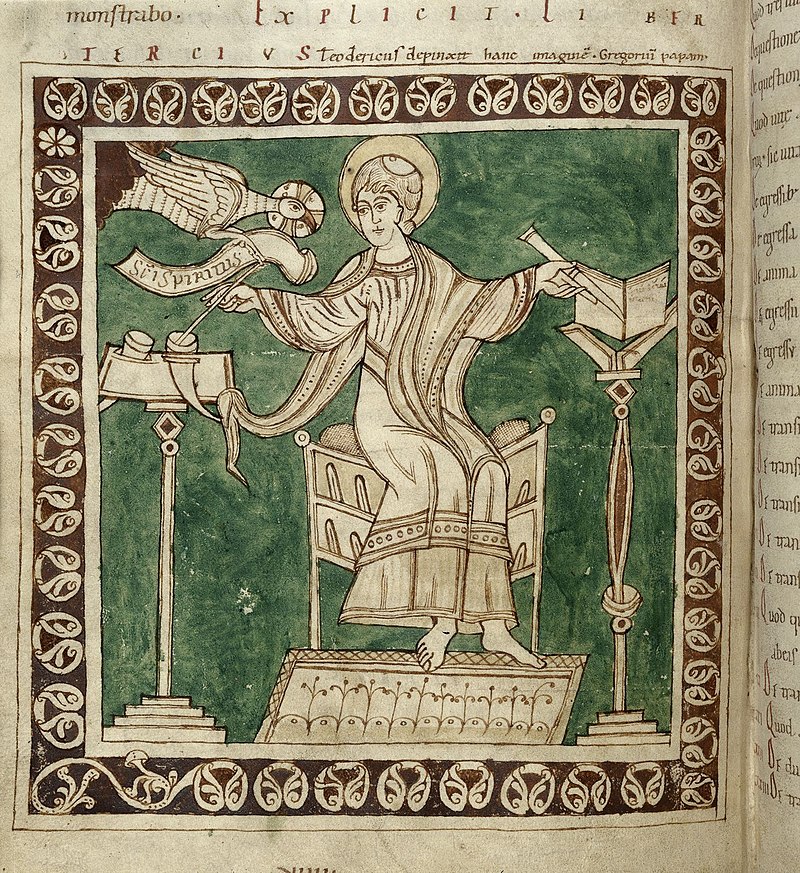
Gregory I
64th Bishop of Rome, Head of the Roman Catholic Church from 590 to 604

Hildegard of Bingen
German Benedictine abbess, polymath, mystic and Doctor of Church (1098–1179)

Joseph Smith
founder of the Latter Day Saint movement and prophet (1805–1844)

Jacob
Jacob, later given the name Israel, is a Hebrew patriarch of the Abrahamic religions. He first appears in the Torah, where he is described in the Book of Genesis as a son of Isaac and Rebecca. Accordingly, alongside his older fraternal twin brother Esau, Jacob's paternal grandparents are Abraham and Sarah and his maternal grandfather is Bethuel, whose wife is not mentioned. He is said to have bought Esau's birthright and, with his mother's help, deceived his aging father to bless him instead of Esau. Then, following a severe drought in his homeland Canaan, Jacob and his descendants migrated to

Teresa of Ávila
Roman Catholic saint (1515-1582)

Aisha

Mary Magdalene
follower of Jesus (-100)
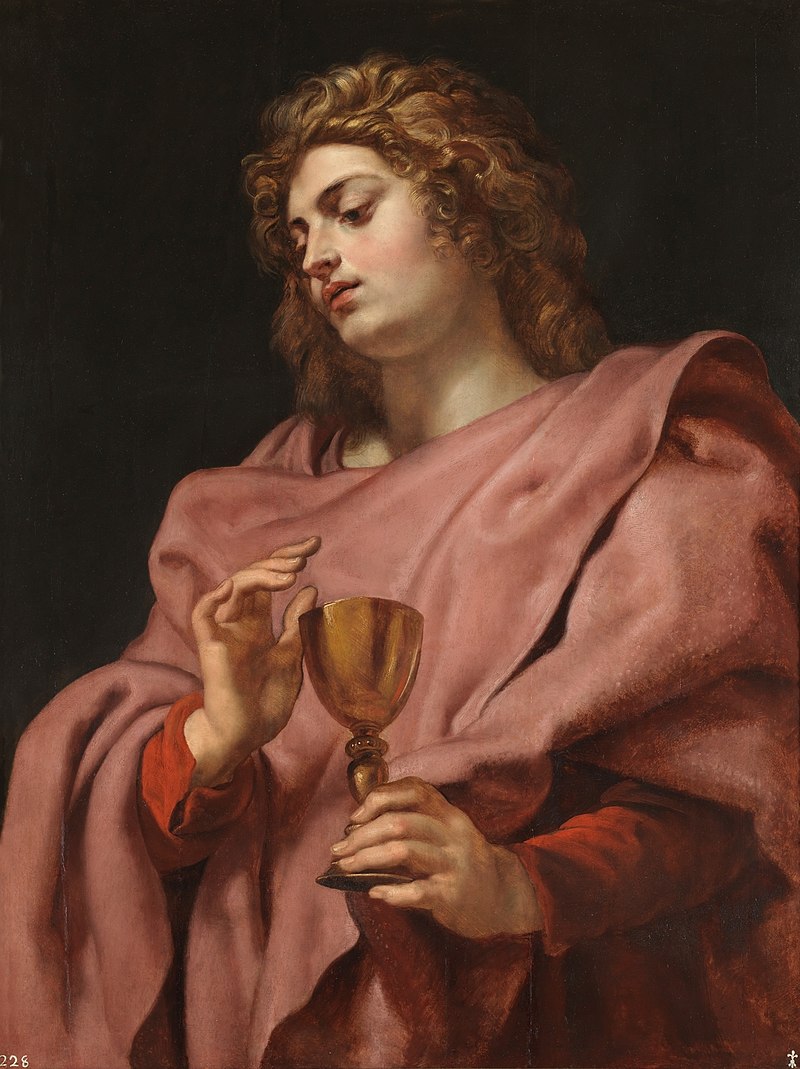
John the Apostle
apostle of Jesus; son of Zebedee and Salome, brother of James; traditionally identified with John the Evangelist, John of Patmos, and the Beloved Disciple

Elijah
Elijah ( or ; or ) was a prophet and miracle worker who lived in the northern kingdom of Israel during the reign of King Ahab (9th century BC), according to the Books of Kings in the Hebrew Bible.

Joseph
Christian saint; husband of Mary and father of Jesus

St. James the Elder
one of the Twelve Apostles of Jesus

Emmanuel Swedenborg
Swedish 18th century scientist and theologian (1688-1772)

Sarah
Sarah (originally Sarai) is a biblical matriarch, prophet, and major figure in Abrahamic religions. While different Abrahamic faiths portray her differently, Judaism, Christianity, and Islam all depict her character similarly, as that of a pious woman, renowned for her hospitality and beauty, the wife of Abraham, and the mother of Isaac. Sarah has her feast day on 1 September in the Catholic Church, 19 August in the Coptic Orthodox Church, 20 January in the LCMS, and 12 and 20 December in the Eastern Orthodox Church.

Isaiah
Isaiah ( or ; , Yəšaʿyāhū, "Yahweh is salvation"; also known as Isaias or Esaias from ) was the 8th-century BC Israelite prophet after whom the Book of Isaiah is named.

Daniel
biblical figure associated to the Book of Daniel

Anthony the Great
Egyptian Christian monk, hermit, and saint (died 356)

Lot
Biblical and Quranic figure who had incestual daughters

Saint Anne
mother of Virgin Mary in Christian and Islamic traditions; unnamed in the New Testament or Quran

Hagar
According to the Book of Genesis, Hagar is an Egyptian slave, a handmaiden of Sarah (then known as Sarai), whom Sarah gave to her own husband Abram (later renamed Abraham) as a wife to bear him a child. Abraham's firstborn son through Hagar, Ishmael, became the progenitor of the Ishmaelites, generally taken to be the Arabs. Various commentators have connected her to the Hagrites (sons of Agar), perhaps claiming her as their eponymous ancestor. Hagar is alluded to, although not named, in the Quran, and Islam considers her Abraham's second wife.

Ezekiel
thumb|''Ezekiel's Vision (Raphael)|Ezekiel's Vision'' by [[Raphael, ]]
Ezekiel, also spelled Ezechiel (; ; ), was an Israelite priest. The Book of Ezekiel, relating his visions and acts, is named after him.

Zechariah
father of John the Baptist; New Testament biblical character

Ezra
Ezra (fl. fifth or fourth century BCE) is the main character of the Book of Ezra. According to the Hebrew Bible, he was an important Jewish scribe (sofer) and priest (kohen) in the early Second Temple period. In the Greek Septuagint, the name is rendered as ' (), from which the Latin name Esdras comes. His name is probably a shortened Aramaic translation of the Hebrew name ('), meaning "Yah helps".
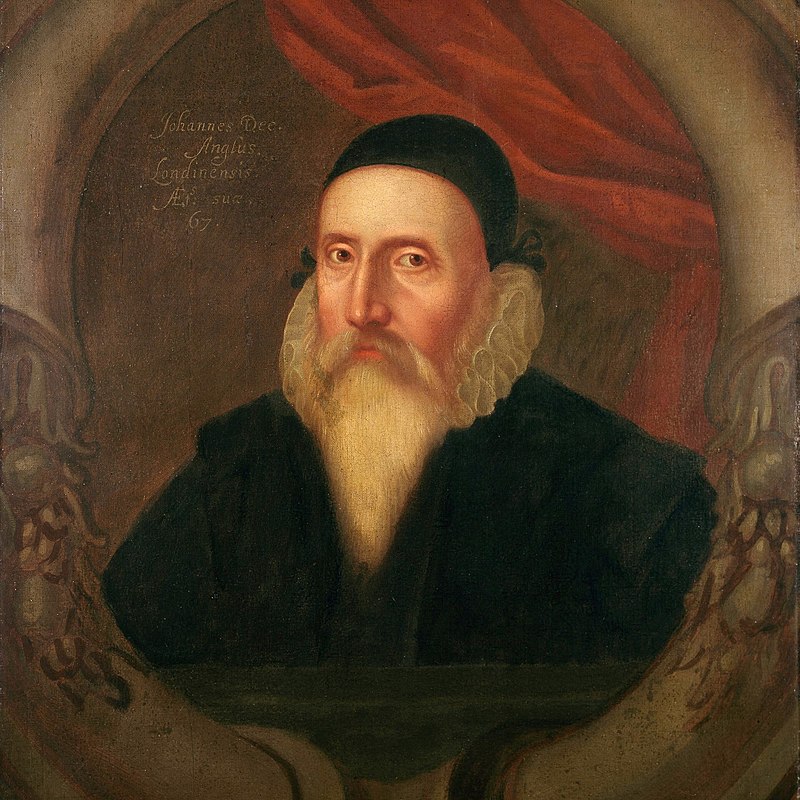
John Dee
16th-century English mathematician, astrologer, and alchemist

Idris
prophet

Mirza Ghulam Ahmad
Indian religious leader (1835–1908)

Padre Pio
Italian saint, priest, stigmatist and mystic

Ellen G. White
American author, co-founder of the Seventh-day Adventist Church (1827–1915)

Columba
Columba () or Colmcille (7 December 521 – 9 June 597 AD) was an Irish abbot and missionary evangelist credited with spreading Christianity in what is today Scotland at the start of the Hiberno-Scottish mission. He founded the important abbey on Iona, which became a dominant religious and political institution in the region for centuries. He is the patron saint of Derry. He was highly regarded by both the Gaels of Dál Riata and the Picts, and is remembered today as a Catholic saint and one of the Twelve Apostles of Ireland.

Joachim
Joachim was, according to Christian Sacred tradition, the husband of Saint Anne, the father of Mary and grandfather of Jesus. The story of Joachim and Anne first appears in the Gospel of James, part of the New Testament apocrypha. His feast day is 26 July, a date shared with Saint Anne.

Habakkuk
Habakkuk, or Habacuc, who was active around 612 BC, was a prophet whose oracles and prayer are recorded in the Book of Habakkuk, the eighth of the collected twelve minor prophets in the Hebrew Bible. He is revered by Jews, Christians, and Muslims.

Chaka Khan
American singer (born 1953)

Genevieve of Paris
Genevieve (; ; and Genofeva; 419/422 AD – 502/512 AD) was a consecrated virgin, and is one of the two patron saints of Paris in the Catholic Church and Eastern Orthodox Church. Her feast day is on 3 January.

Ladislaus I of Hungary
King of Hungary from 1077 to 1095

Aloysius Gonzaga
Italian aristocrat and Jesuit seminarian and saint

Zechariah
biblical prophet

Meher Baba
Indian spiritual master (1894–1969)

Hamza ibn ‘Abd al-Muttalib
Muhammad's companion and uncle (c. 568–625)

Edgar Cayce
purported clairvoyant healer and psychic (1877–1945)

Gideon
Gideon (; ) also named Jerubbaal ( ) and Jerubbesheth (| ) was an Israelite shopeṭ ("judge"), military leader, and prophet whose calling and victory over the Midianites is described in Judges 6–8 in the Hebrew Bible.
Luqman
Luqman (; also known as Luqman al-Hakim, meaning Luqman the Wise) was a legendary sage and hero in pre-Islamic Arab tradition. The 31st surah (chapter) of the Qur'an, Luqman, is named after him and depicts him as a monotheist and a father giving pious advice to his son. Subsequently, a large number of proverbs were attributed to Luqman, and at some point in the medieval era he was identified as a writer of fables. Many fables and biographical details which in Europe were connected with Aesop were transferred to Luqman. There are many stories about Luqman in Persian, Arabic and Turkish literatu

Sergius of Radonezh
Russian saint (1314-1392)

Balaam
thumb|upright=1.4|Balaam and the angel, painting from Gustav Jäger (painter)|Gustav Jaeger, 1836
Balaam (; ; ), son of Beor, was, according to the Bible, a gentile prophet and diviner who lived in Pethor, a place identified with the ancient city of Pitru, thought to have been located between the region of Iraq and northern Syria in what is now southeastern Turkey. According to chapters 22–24 of the Book of Numbers, he was hired by King Balak of Moab to curse Israel, but instead he blessed the Israelites, as dictated by God. Subsequently, the plan to entice the Israelites into idol worshi

Corneliu Zelea Codreanu
Romanian politician (1899-1938)

Vitus
3rd or 4th-century Sicilian saint
Sister Lúcia
Portuguese nun, one of the three children who have witnessed Marian apparitions in Fátima, Portugal, in 1917

Saint Rosalia
Italian saint of Palermo, honored for divine intermediation during the plague there
Peter Faber
Jesuit priest and evangelist