Category
page 1Archaeological sites in Peru

Machu Picchu
15th-century Inca citadel in the Peruvian Andes and UNESCO World Heritage Site

Cusco
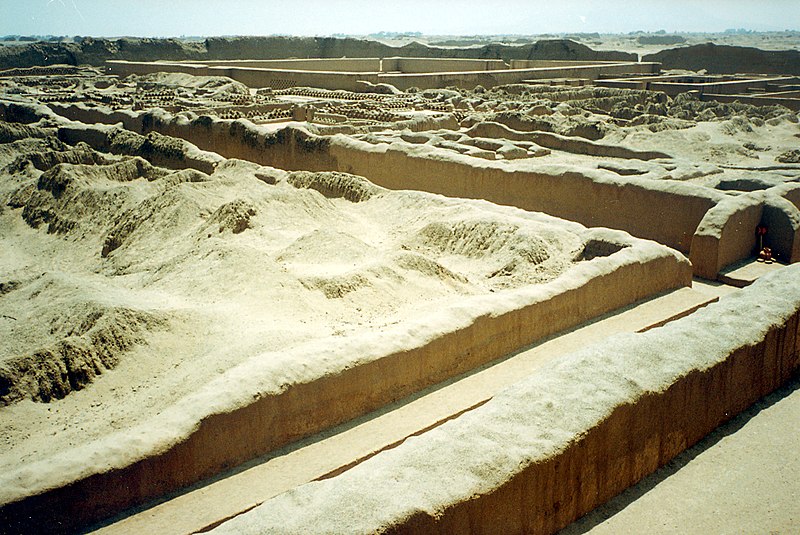
Chan Chan
Archaeological site in Peru
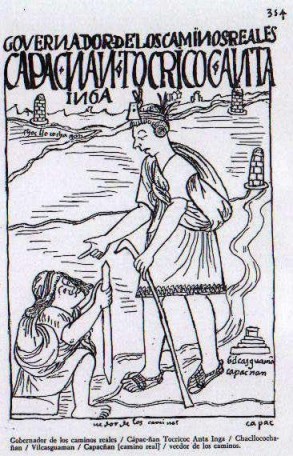
Inca road system
transportation system of the Inca empire

Caral
The Sacred City of Caral-Supe, or simply Caral, is an archaeological site in Peru where the remains of the main city of the Caral civilization are found. It is located in the Supe District of Peru, near the current town of Caral, north of Lima, from the coast and 350 meters above sea level. It is attributed an antiquity of 5,000 years and it is considered the oldest city in the Americas and one of the oldest in the world. No other site has been found with such a diversity of monumental buildings or different ceremonial and administrative functions in the Americas as early as Caral. It has been

Nazca
Nazca (; sometimes spelled Nasca; possibly from ) is a city and system of valleys on the southern coast of Peru. The city of Nazca is the largest in the Nazca Province. The name is derived from the Nazca culture, which flourished in the area between 100 BC and AD 800. This culture was responsible for the Nazca Lines and the ceremonial city of Cahuachi. They also constructed additional underground aqueducts, named puquios, in a regional system that still functions today. The first puquios are believed to have been built by the preceding Paracas culture.
Chavin de Huantar
archaeological site in Peru

Ollantaytambo
Ollantaytambo () is a town and an Inca archaeological site in southern Peru some by road northwest of the city of Cusco. It is located at an altitude of above sea level in the district of Ollantaytambo, province of Urubamba, Cusco region. During the Inca Empire, Ollantaytambo in the Sacred Valley of the Incas was the royal estate of Emperor Pachacuti, after the mid-15th century. He built a town and a ceremonial center there. At the time of the Spanish conquest of Peru, it served as a stronghold for Manco Inca Yupanqui, leader of the Inca resistance. It is now an important tourist attraction on

Saqsaywaman
thumb|right|Sideways view of the walls of Sacsayhuamán showing the details of the stonework and the angle of the walls.
thumbnail|Muyuq Marka
thumb|Close up of stone wall
Vilcabamba
the capital of the Neo-Inca State
Sacred Valley
cultural region of Peru
Huayna Picchu
mountain in Peru

Coricancha
thumb|Depiction of Pachacuti worshipping [[Inti (the Sun god) at Coricancha, in the 17th century second chronicles of Martín de Murúa]]
The Coricancha (, ) was the most important temple in the Inca Empire, and was described by early Spanish colonialists. It is located in Cusco, Peru, which was the capital of the empire.
Chankillo
Chankillo is an ancient monumental complex in the Peruvian coastal desert, found in the Casma-Sechin basin in the Áncash Department of Peru. The ruins include the hilltop Chankillo fort, the nearby Thirteen Towers solar observatory, and residential and gathering areas. The Thirteen Towers have been interpreted as an astronomical observatory built in the third century BC. The culture that produced Chankillo is called the Casma/Sechin culture or the Sechin Complex. The site was awarded UNESCO World Heritage status in July 2021.

Písac
Písac or Pisac (possibly from Quechua for Nothoprocta, also spelled ''p'isaqa'') is a Peruvian town in the Sacred Valley of the Incas. It is situated on the Urubamba River. Pisac is most known for its Incan ruins and large market which attracts heavy tourist traffic from nearby Cusco.

Kuelap
Kuélap or Cuélap is a walled settlement located in the mountains near the towns of María and Tingo, in the southern part of the region of Amazonas, Peru. It was built by the Chachapoyas culture in the 6th century AD on a ridge overlooking the Utcubamba Valley.

Choquequirao
Choquequirao is a 16th-century Incan site in the Cusco Region of southern Peru. Often called the "sister city" of Machu Picchu due to its similar structure and architecture, the site consists of an extensive complex of buildings and agricultural terraces built around the Sunch'u Pata, the truncated hill top, on a steep mountainside overlooking the Apurímac River. The ruins are situated in the Santa Teresa district (La Convención province) at an elevation of 3,050 metres (10,010 ft) in the rugged Vilcabamba mountain range. The site overlooks the Apurimac River canyon that has an elevation of .
.jpg)
Túcume
Túcume is a pre-Hispanic site in Peru, south of the La Leche River on a plain around La Raya Mountain. It covers an area of over and encompassing 26 major pyramids and mounds. The area is referred to as "Pirámides de Túcume" (en: pyramids of Túcume) or Purgatorio (purgatory) by local people.
thumb|left|The Túcume mounds
Paracas Candelabra
cultural heritage site in Peru
Inca architecture
pre-Columbian architecture in South America
Tambomachay
Tambomachay (possibly from Quechua tampu inn, guest house, ''mach'ay cave, or machay drunkenness, to get drunk or "spindle with thread") is an archaeological site associated with the Inca Empire, located near Cusco, Peru. An alternate Spanish name is El Baño del Inca'' ("the bath of the Inca").

Cahuachi
thumb|800px|center|Adobe pyramids at Cahuachi
Cahuachi, in Peru, was a major ceremonial center of the Nazca culture, based from about in the coastal area of Peru's central Andes. It overlooked some of the Nazca lines. The Italian archaeologist Giuseppe Orefici excavated at the site for the past few decades. The site contains over 40 mounds topped with adobe structures. The huge architectural complex covers (1.5 km²) at 365 meters above sea level. The American archeologist Helaine Silverman has also conducted long term, multi-stage research and written about the full context of N
Puka Pukara
cultural heritage site in Peru
Moray
Archaeological site in Peru, Place of the Incas
Huaca de la Luna
archaeological site in Peru
Sara Sara
volcano in Peru

Kotosh
Kotosh is an archaeological site near the town of Huánuco, Peru, consisting of a series of buildings comprising six periods of continuous occupation.
Patallaqta
Patallacta (possibly from Quechua pata elevated place / above, at the top / edge, bank (of a river), shore, llaqta place (village, town, city, country, nation), "settlement on a platform" pronounced "pahta-yakta"), Llactapata or '''Q'ente Marka' (possibly from Quechua q'inti hummingbird, marka'' village, "hummingbird village") is an archaeological site in Peru located in the Cusco Region, Urubamba Province, Machupicchu District. It is situated southeast of the site Machu Picchu, at the confluence of the rivers Cusichaca and Vilcanota on a mountain named Patallacta.
Toquepala Caves
cave
Q'inqu
'''Q'enqo, Qenko, Kenko, or Quenco' (all from Quechua for "zig-zag") is an archaeological site in the Sacred Valley of Peru located in the Cusco Region, Cusco Province, Cusco District, about 6 km north east of Cusco. The site was declared a Cultural Heritage (Patrimonio Cultural)'' of the Cusco Region by the National Institute of Culture.
Guitarrero Cave
cave
Sarcophagi of Karajía
cultural heritage site in Peru

Sillustani
Sillustani is a pre-Inca cemetery on the shores of Lake Umayo near Puno in Peru. The tombs, which are built above ground in tower-like structures called chullpas, are the vestiges of the Qulla people, most likely a Puquina-speaking people, conquered by the Inca Empire in the 15th century.

Tipón
Tipón is a sprawling early fifteenth-century Inca archaeological site that is situated between and above sea level, located southeast of Cusco near the village of Tipón.
It consists of several ruins enclosed by a powerful defensive wall about long. The most renowned (and easily accessible) part of the park is the group of precise and right angled monumental terraces irrigated by a network of water canals fed by a monumental fountain channeling water from a natural spring. The site includes ancient residential areas and a remarkable amount of petroglyphs in its upper part.
thumb|400px|Tipón sk

Vilcashuamán
Vilcashuamán or Vilcasguaman (from Quechua Willka Waman, "sacred hawk") is the capital of Vilcas Huamán Province, Ayacucho region, Peru. It is located at an altitude of 3,490 m on the eastern slopes of the Andes. It is located on an ancient archaeological site.
Wiñay Wayna
cultural heritage site in Peru
Huaca Rajada
archaeological site in northern Peru
Huaycán de Pariachi
archaeological site in Ate, Peru
Huaca del Sol
protected area
Inca Trail to Machu Picchu
Ancient trail in Peru
Tambo Colorado
archaeological site
Kuntur Wasi
cultural heritage site in Peru

Puquios
thumb|250px|right|The technology of the Qanats of Iran is similar to that used for the puquios of Peru.
thumb|right|250px|The Cantalloc Aqueducts|Cantalloc puquios near Nazca, Peru. The cork-screwing funnels are for access to the underground aqueduct.
thumb|250px|right|An aqueduct emerges from an underground or gallery puquios into a trench which supplies water for irrigation and domestic uses.
thumb|right|250px|Except for river valleys where irrigation is possible, the desert of the Nazca Region is barren. The Pan American Highway is in the distance.
Puquios (from Quechua pukyu meaning sou

Puruchuco
450px|thumb|right|Image of Puruchuco archaeological site.
Puruchuco is an archaeological site in Peru that was an administrative center of the Inca period (1438–1533), located in the Ate District, in Lima.
El Paraíso
cultural heritage site in Peru
Toro Muerto
archaeological site in Peru

Vitcos
Vitcos was a residence of Inca nobles and a ceremonial center of the Neo-Inca State (1537–1572). The archaeological site of ancient Vitcos, called Rosaspata, is in the Vilcabamba District of La Convención Province, Cusco Region in Peru. The ruins are on a ridge overlooking the confluence of two small rivers and the village of Pucyura. The Incas had occupied Vilcabamba, the region in which Vitcos is located, about AD 1450, establishing major centers at Machu Picchu, Choquequirao, Vitcos, and Vilcabamba. Vitcos was often the residence of the rulers of the Neo-Inca state until the Spanish conques
Cerro Sechín
cultural heritage site in Peru
Chauchilla Cemetery
cultural heritage site in Peru

Piquillacta
thumb|250px|right|A street of Pikillaqta
Pikillaqta (Quechua piki flea, llaqta a place (village, town, community, country, nation), "flea place", also spelled Piki Llacta, Pikillacta, Piquillacta, Piquillaqta) is a large Wari culture archaeological site east of Cusco in the Quispicanchi Province.
San Lorenzo Island
island in Peru
Gran Pajáten
archaeological site in Peru
Pikimachay
'''Piki Mach'ay' (Quechua piki flea, mach'ay cave, "flea cave", also spelled Pikimachay, Piquimachay, where machay'' means "drunkenness", "to get drunk" or "a spindle packed with thread") is an archaeological site in the Ayacucho Valley of Peru. Radiocarbon dating from this cave indicates a human presence ranging from 22,200 to 14,700 years ago, but this evidence has been disputed and a more conservative date of 12,000 years BCE seems possible.
Huaca Prieta
archaeological site
Ventanillas de Otuzco
cultural heritage site in Peru
El Brujo
archaeological complex near Trujillo, Peru
list of archaeological sites in Peru
Wikimedia list article
Huaca Pucllana
archaeological site
Nanchoc District
district in Cajamarca, Peru

Raqch'i
'''Raqch'i''' (Quechua) is an Inca archaeological site in Peru located in the Cusco Region, Canchis Province, San Pedro District, near the populated place Raqch'i. It is 3480 meters above sea level and 110 kilometers from the city of Cuzco. It also known as the Temple of Wiracocha, one of its constituents. Both lie along the Vilcanota River. The site has experienced a recent increase in tourism in recent years, with 83,334 visitors to the site in 2006, up from 8,183 in 2000 and 452 in 1996.