
Cahuachi
Sign in to saveAlso known as Cahuachi archaeological site
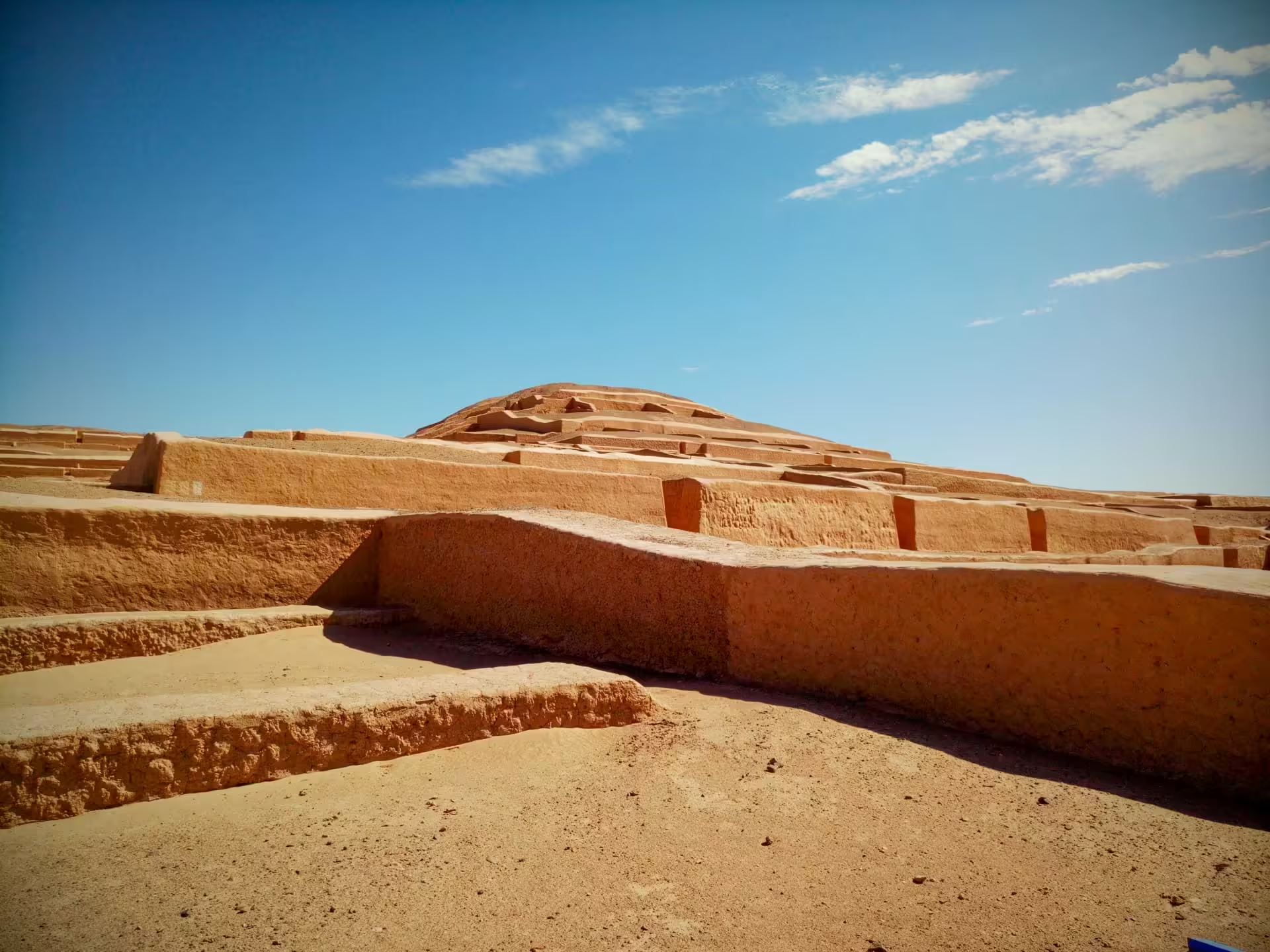
thumb|800px|center|Adobe pyramids at Cahuachi Cahuachi, in Peru, was a major ceremonial center of the Nazca culture, based from about in the coastal area of Peru's central Andes. It overlooked some of the Nazca lines. The Italian archaeologist Giuseppe Orefici excavated at the site for the past few decades. The site contains over 40 mounds topped with adobe structures. The huge architectural complex covers (1.5 km²) at 365 meters above sea level. The American archeologist Helaine Silverman has also conducted long term, multi-stage research and written about the full context of N
Described at
Cahuachi - Peru - PlaceMania
Pútnické miesto Nazca s rozlohou 370 hektárov je obľúbenou zastávkou archeológov a lúpežníkov.
placemania.sk →Taliansky archeológ Giuseppe Orefici viedol vykopávky a výskum tejto lokality niekoľko desaťročí a americká archeologička Helaine Silvermanová túto lokalitu v priebehu rokov tiež dôkladne preskúmala. Ich zistenia podporili teórie, že táto oblasť nebola rušným hlavným mestom štátu Nazca, ako sa doteraz predpokladalo, ale miestom, kde sa ľudia zhromažďovali na modlitby. Tieto zdanlivo obyčajné ruiny, ktoré stále prinášajú múmie, artefakty, šperky a neoceniteľné informácie o civilizácii spred 1500 rokov, sú fascinujúcim miestom na prehliadku v Peru a poskytujú okno do mystickej minulosti, ktorá sa stále objavuje. Zakladateľ projektu PlaceMania.sk a zodpovedá za jeho obsah, technické fungovanie a dlhodobý rozvoj. Cestovné zápisky na webe vychádzajú z vlastnej skúsenosti z ciest; faktografické záznamy o miestach vznikajú kombináciou verejných zdrojov, automatizovaného spracovania dát a redakčného overovania. Zameriava sa na netradičné lokality, ich historický a geografický kontext a menej známe súvislosti. Things to do near Cahuachi, Archaeological Site of Cahuachi, Cahuachi Hacienda, Hacienda Cahuachi, Archeologické nálezisko, La Yapana, Nasca, Ica, Republic of Peru, Piruw, Peru, PE, PER, 5VJJ+FQ2 Piramide Mayor, La Yapana 11400, Peru, Ciudad Perdida de Cahuachi, La Yapana, Peru. Find tours, guided tours, local activities, attractions, tickets, excursions, sightseeing, day trips and travel experiences nearby. Coordinates: -14.8179006, -75.116357. Táto galéria sôch pod šírym nebom je modernou poctou kultúre a histórii And. Na výstavbu časti tohto cintorína z 19. storočia bol použitý materiál z kláštora zničeného delostreleckou paľbou. Táto železná budova v Amazónii má údajne spoločného architekta s Eiffelovou vežou. Pozrite si ďalšie zaujímave miesta vo svete, ktoré stoja za naplánovanie ďalšej cesty. Starobylá opevnená mohyla, ktorá vznikla v priebehu tisícročí z osád postavených jedna na druhej. Jeden z prvých pomníkov Bogdana Bogdanovića je venovaný pamiatke tých, ktorí zahynuli počas ľudovo-oslobodzovacieho boja v Macedónsku. Táto mohyla je údajne miestom posledného odpočinku prvého ruského vikingského vládcu Olega Novogrodského. Chcete vidieť ďalšie úchvatné miesta ako Cahuachi? Nájdeš ich u nás na mape. Objav s nami ďalšie úžasné miesta na zemi.
Excerpt from a page describing this subject · 16,071 chars · not written by Vinony
Wikidata facts
- Instance of
- archaeological site
- Country
- Peru
- Located in
- Nasca Province
- Location
- Nazca District
- Image
- Cahuachi 14.jpg
Show 2 more facts
- Commons category
- Cahuachi
- described at URL
- www.placemania.sk/svetova-zaujimavost/cahuachi
Sources (2)
via Wikidata · CC0
~46 min read
Encyclopedic overview
23 sectionsContents
- Geographic and environmental overview
- History of research at Cahuachi
- Chronology and Nasca style pottery
- Agriculture and economy
- Agriculture – edible food materials present
- Agriculture – ritual food materials present
- Economy – trade
- Economy: Craft specialization and production
- Economy – textiles
- Economy – pottery
- Architecture and artifacts
- Nasca cult society and Cahuachi
- Religion and ideology
- Death
- Burials
- Trophy heads
- Warfare and violence
- Nasca iconography
- Decline of Cahuachi
- Notes
- Citations
- Sources
- Further reading
thumb|800px|center|Adobe pyramids at Cahuachi Cahuachi, in Peru, was a major ceremonial center of the Nazca culture, based from about in the coastal area of Peru's central Andes. It overlooked some of the Nazca lines. The Italian archaeologist Giuseppe Orefici excavated at the site for the past few decades. The site contains over 40 mounds topped with adobe structures. The huge architectural complex covers (1.5 km²) at 365 meters above sea level. The American archeologist Helaine Silverman has also conducted long term, multi-stage research and written about the full context of Nazca society at Cahuachi, published in a lengthy study in 1993.
Scholars once thought the site was the capital of the Nazca state but have determined that the permanent population was quite small. They believe that it was a pilgrimage center, whose population increased greatly preceding and during major ceremonial events. New research has suggested that 40 of the mounds were natural hills modified to appear as artificial constructions. Support for the pilgrimage theory comes from archaeological evidence of sparse population at Cahuachi, the spatial patterning of the site, and ethnographic evidence from the Virgin of Yauca pilgrimage in the nearby Ica Valley.
Excerpted from Wikipedia’s “Cahuachi” article, available under the CC BY-SA 4.0 licence.
Gallery (2)
On the map
3 mapped locations
Available in 18 languages
- Español
- Français
- Deutsch
- 日本語
- Русский
- Português
- Italiano
- Belarusian
- Catalan
- Egyptian Arabic
- Georgian
- Lithuanian
- Macedonian
- Occitan
- Polski
- Quechua
- Ukrainian
via Wikidata sitelinks · CC0