Category
page 1Arecaceae genera

Phoenix
genus of plants

Elaeis
Elaeis () is a genus of palms, called oil palms, containing two species, native to Africa and the Americas. They are used in commercial agriculture in the production of palm oil.

Washingtonia
Washingtonia is a monotypic genus of monoecious palms, native to the southwestern United States (in Arizona, California, and Nevada) and northwest Mexico (in Baja California, Baja California Sur, and Sonora). Commonly known as the desert fan palm, the genus was named in honor of George Washington, the first U.S. President, by the German botanist Hermann Wendland in 1879. The genus is among the most recognizable and widely cultivated palms worldwide.

Trachycarpus
Trachycarpus, is a genus of ten species of palms native to Asia, from the Himalaya east to eastern China. They are fan palms (subfamily Coryphoideae), with the leaves with a bare petiole terminating in a rounded fan of numerous leaflets. The leaf bases produce persistent fibres that often give the trunk a characteristic hairy appearance. All species are dioecious, with male and female flowers produced on separate plants although female plants will sometimes produce male flowers, allowing occasional self-pollination.

Areca
Areca is a genus of 51 species of palms in the family Arecaceae, found in humid tropical forests from the islands of the Philippines and Malaysia, India, and across Southeast Asia to Melanesia. The generic name Areca is derived from a name used locally on the Malabar Coast of India.

Sabal
Sabal is a genus of New World palms (or fan-palms). Currently, there are 17 recognized species of Sabal, including one hybrid species.

Calamus
genus of palms

Corypha
Corypha or the gebang palm, buri palm or talipot palm is a genus of palms (family Arecaceae), native to India, Malaysia, Indonesia, the Philippines, New Guinea and northeastern Australia (Cape York Peninsula, Queensland). They are fan palms (subfamily Coryphoideae), and the leaves have a long petiole terminating in a rounded fan of numerous leaflets.
Arenga
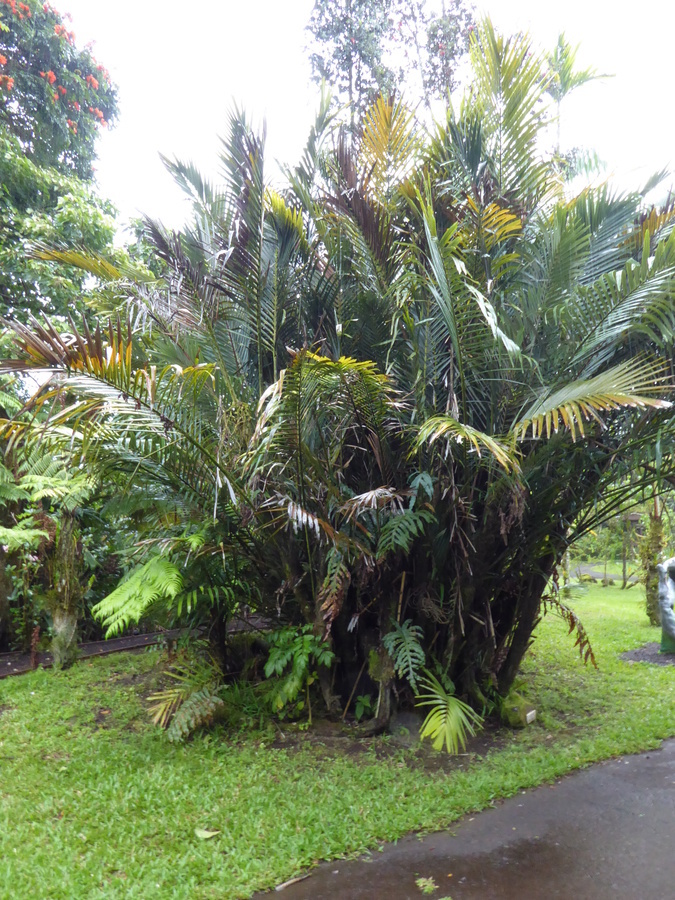
Arenga is a genus of palms, native to Southeast Asia, southern China, New Guinea, and northern Australia. They are small to medium-sized palms, growing to 2–20 m tall, with pinnate leaves 2–12 m long. Arenga palms can grow in areas with little sunlight and relatively infertile soil.

Borassus
Borassus (palmyra palm) is a genus of five species of fan palms, native to tropical regions of Africa, Asia, and Papua New Guinea.
Hyphaene
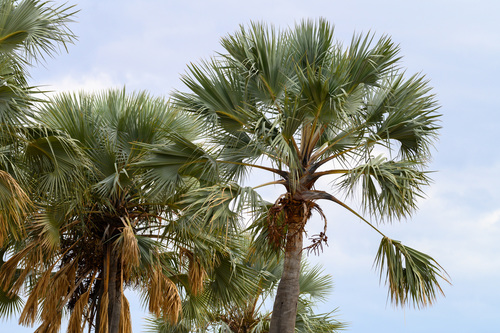
Hyphaene is a genus of palms native to Africa, Madagascar, the Middle East, and the Indian subcontinent.

Caryota
thumb|x300px|Caryota mitis
Caryota is a genus of palm trees. They are often known as fishtail palms because of the shape of their leaves.

Roystonea
Roystonea is a genus of eleven species of monoecious palms, native to the Neotropics, in the Caribbean, the adjacent coasts of Florida in the United States, Mexico, Central America and northern South America. Commonly known as the royal palms, the genus was named after Roy Stone, a U.S. Army engineer. It contains some of the most recognizable and commonly cultivated palms of tropical and subtropical regions.

Livistona
thumb|Livistona nitida, the Carnarvon fan palm, as seen from the Amphitheatre in [[Carnarvon National Park, Australia.]]

Rhapis
Rhapis is a genus of about 10 species of small palms native to southeastern Asia from southern Japan and southern China south to Sumatra. The species are commonly known as lady palms.
They are fan palms (subfamily Coryphoideae), with the leaves with a bare petiole terminating in a rounded fan of numerous leaflets. The plants have thin stems growing to 3–4 m tall, branching at the base, forming clumps and are dioecious, with male and female flowers produced on separate plants.
{| class="wikitable"
! Image !! Species !! Distribution
|-
| || Rhapis cochinchinensis (Lour.) Mart. || Thailand; Laos

Metroxylon
Metroxylon is a genus of monoecious flowering plants in the Arecaceae (palm) family, and commonly called the sago palms consisting of seven species. They are native to Western Samoa, New Guinea, the Solomon Islands, the Moluccas, the Carolines and Fiji in a variety of habitats, and cultivated westward to Thailand and Malaya.
Chamaedorea
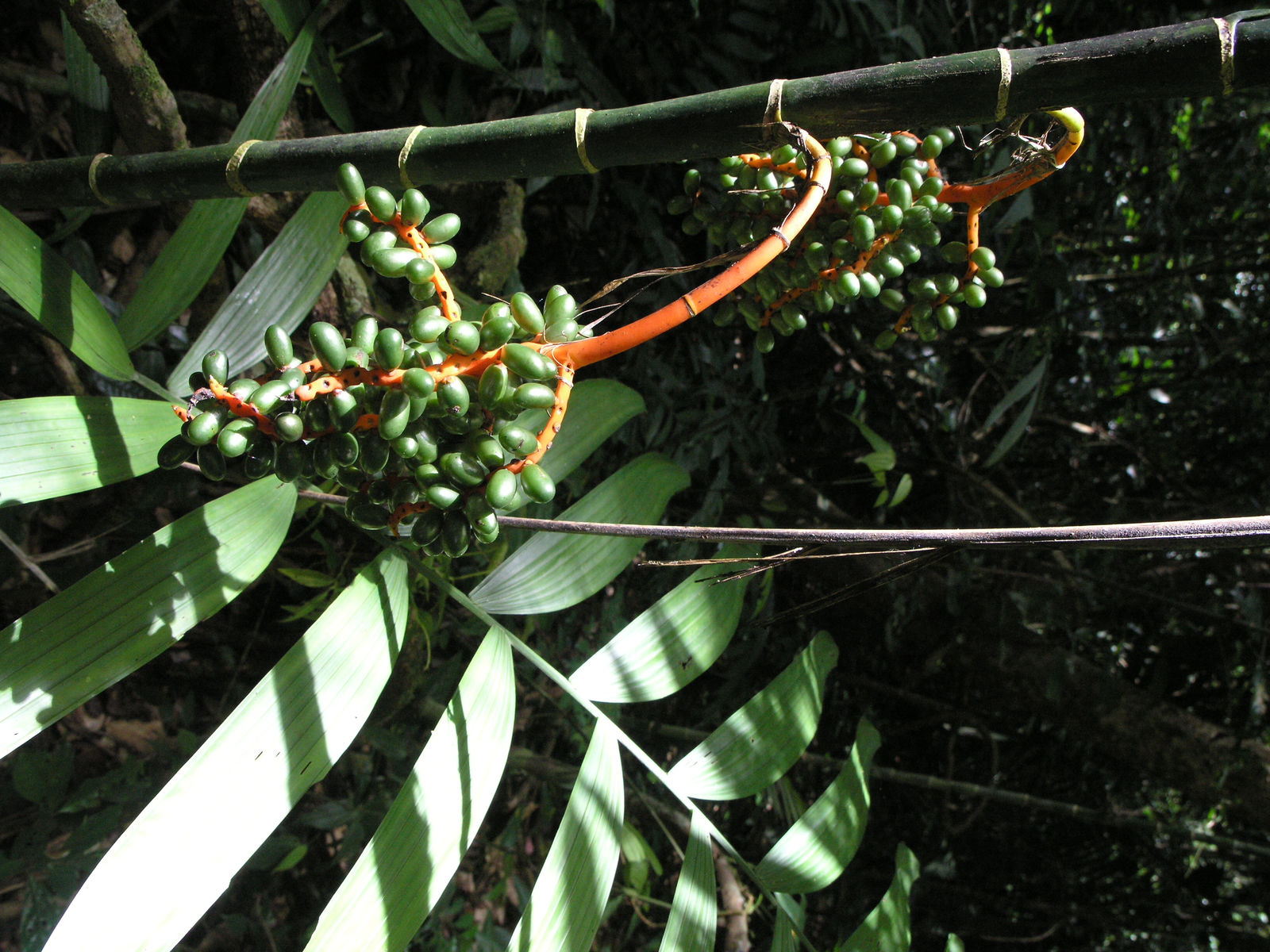
Chamaedorea is a genus of 107 species of palms, native to subtropical and tropical regions of the Americas. They are small palms, growing to tall with slender, cane-like stems, growing in the understory in rainforests, and often spreading by means of underground runners, forming clonal colonies. The leaves are pinnate (rarely entire), with one to numerous leaflets. The flowers are produced in inflorescences; they are dioecious, with male and female flowers on separate plants. The fruit is an orange or red drupe 0.5–2 cm diameter. Perhaps the best-known species is Chamaedorea elegans (nean

Butia
Butia is a genus of palms in the family Arecaceae, native to the South American countries of Brazil, Paraguay, Uruguay and Argentina. Many species produce edible fruits, which are sometimes used to make alcoholic beverages and other foods. The name is derived from a Brazilian vernacular word for members of the genus.

Euterpe
genus of plants
Attalea
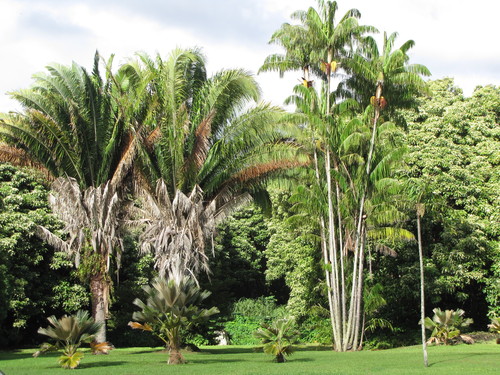
genus of plants in the family Arecaceae

Archontophoenix
Archontophoenix is a plant genus comprising six palm species that are native to New South Wales and Queensland in eastern Australia. They are tall, slender and unbranched. Relationships between Archontophoenix and the other genera of subtribe Archontophoenicinae, including the New Caledonia endemic Actinokentia, Chambeyronia and Kentiopsis are unresolved.
%20(14329134127).jpg)
Ceroxylon
Ceroxylon is a genus of flowering plants in the family Arecaceae, native to the Andes in Venezuela, Colombia, Ecuador, Peru, and Bolivia, known as Andean wax palms.
.jpg)
Mauritia
Mauritia is a genus of fan palms which is native to northern South America and to the Island of Trinidad in the Caribbean. Only two species are currently accepted.
{| class="wikitable"
|-
! Image !!Fruit !! Scientific name !! Distribution
|-
|120px||120px||Mauritia flexuosa||widely distributed across northern South America as far south as Bolivia, extending north to Trinidad
|-
|120px || ||Mauritia carana||Amazon regions of Brazil, Venezuela, Peru, and Colombia.
|-
|}
Howea
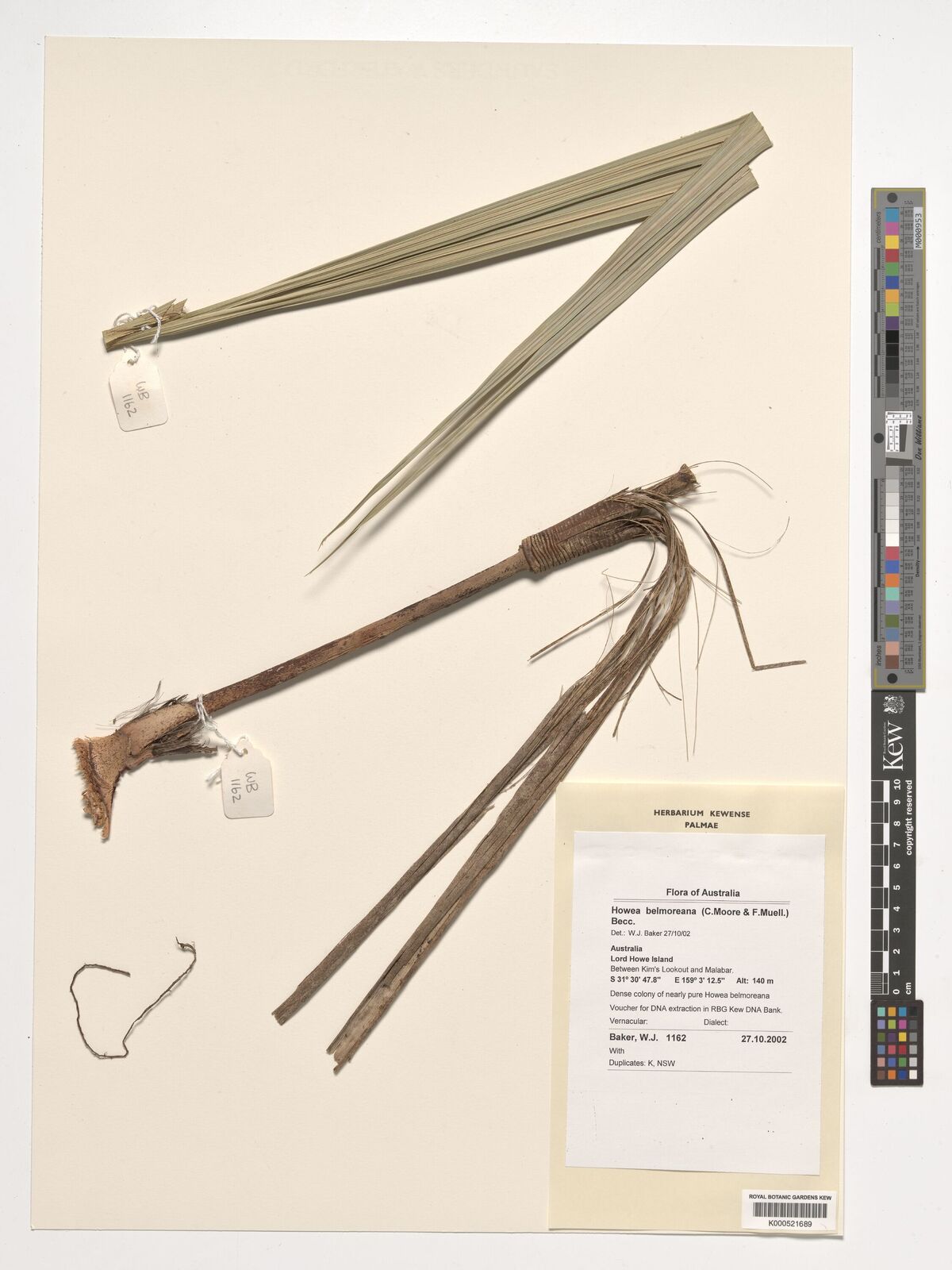
Howea is a genus of two palms, H. belmoreana and H. forsteriana, both endemic to Lord Howe Island, Australia. H. forsteriana in particular is commonly grown as an indoor plant in the Northern Hemisphere, and the two species form the mainstay of the island's palm seed industry and more importantly its trade in newly germinated seedlings. The palms are also cultivated on Norfolk Island, where seeds are produced for export.

Phytelephas
Phytelephas is a genus containing six known species of dioecious palms (family Arecaceae), occurring from southern Panama along the Andes to Ecuador, Bolivia, Colombia, northwestern Brazil, and Peru. They are commonly known as ivory palms, ivory-nut palms or tagua palms (); the scientific name Phytelephas means "plant ivory" or more literally, "plant elephant". This and the first two of the common names refer to the very hard white endosperm of their seeds (tagua nuts or jarina seeds), which resembles elephant ivory.

Bactris
Bactris is a genus of spiny palms which are native to Mexico, South and Central America and the Caribbean. Most species are small trees about tall, but some are large trees while others are shrubs with subterranean stems. They have simple or pinnately compound leaves and yellow, orange, red or purple-black fruit. The genus is most closely related to several other spiny palms—Acrocomia, Aiphanes, Astrocaryum and Desmoncus. The fruit of several species is edible, most notably B. gasipaes, while others are used medicinally or for construction.

Latania
Latania, commonly known as latan palm or latania palm, is a genus of flowering plant in the palm tree family, native to the Mascarene Islands in the western Indian Ocean.

Copernicia
Copernicia is a genus of palms native to South America and the Greater Antilles. Of the known species and nothospecies (hybrids), 22 of the 27 are endemic to Cuba. They are fan palms (Arecaceae tribe Corypheae), with the leaves with a bare petiole terminating in a rounded fan of numerous leaflets. The species are small to medium-sized trees growing to 5–30 m tall, typically occurring close to streams and rivers in savanna habitats. The genus is named after the astronomer Nicolaus Copernicus. In some of the species, the leaves are coated with a thin layer of wax, known as carnauba wax.

Dypsis
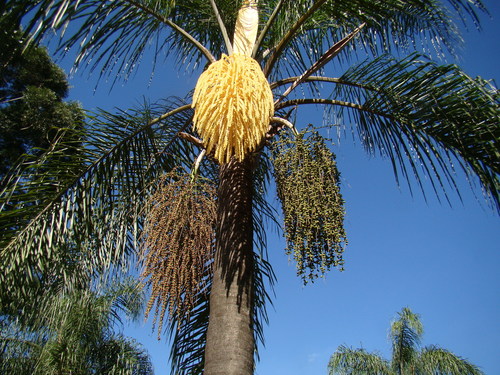
Dypsis is a genus of flowering plants in the family Arecaceae. They are slender, evergreen palms with yellow flowers carried in panicles amongst the pinnate leaves. Many Dypsis species have aerial branching (above the main trunk), a rare growth habit among palms. Some have marcescent leaves that remain attached after death and trap litter for nutrients. Several species previously placed here have been returned to the restored genera Chrysalidocarpus (including the type species Chrysalidocarpus lutescens) and Vonitra.
Syagrus
genus of plants

Salacca
Salacca is a genus of about 20 species of palms native to Southeast Asia and the eastern Himalayas. They are dioecious (with the exception of Salak Bali) and pollinated by Curculionidae beetles.
.JPG)
Pritchardia
thumb|Pritchardia limahuliensis
right|240px|thumb|Pritchardia palms
.jpg)
Acrocomia
Acrocomia is a genus of palms which is native to the Neotropics, ranging from Mexico in the north, through Central America and the Caribbean, and through South America south to Argentina.

Acanthophoenix
Acanthophoenix is a genus of flowering plants in the palm family from the Mascarene Islands in the Indian Ocean, where they are commonly called palmiste rouge. A genus long in flux, three species are currently recognized, though unsustainable levels of harvesting for their edible palm hearts have brought them all to near extinction in habitat. They are closely related to the Tectiphiala and Deckenia genera, differing in the shape of the staminate flower. The name combines the Greek words for "thorn" and "date palm".

Licuala
thumb|Licuala ramsayi
Marojejya
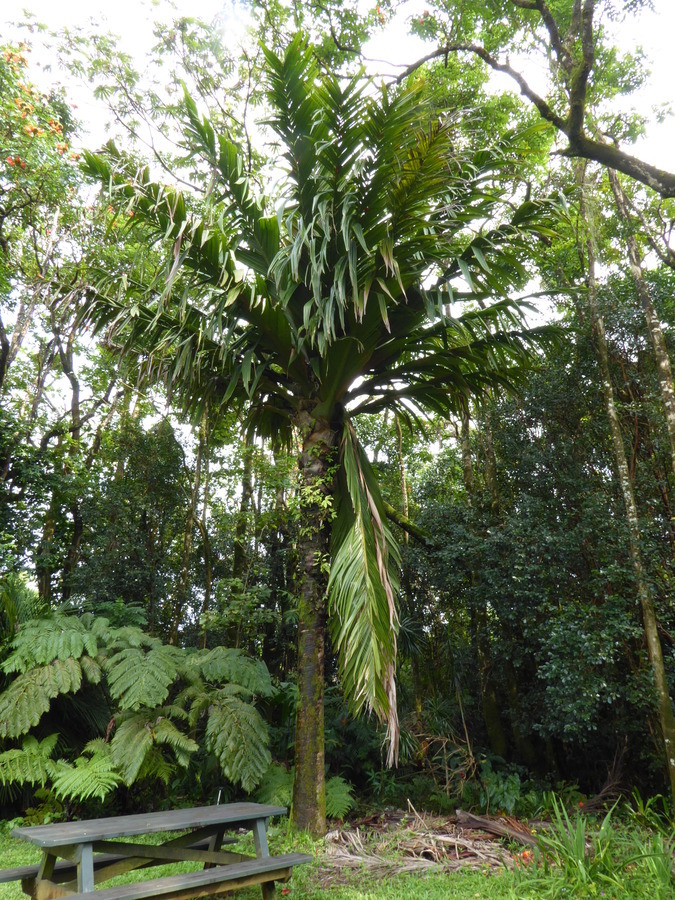
Marojejya is a genus of flowering plant in the family Arecaceae. It contains the following two species, both endemic to Madagascar:
Marojejya darianii J.Dransf. & N.W.Uhl
Marojejya insignis Humbert

Eugeissona
Eugeissona is a clustering genus of flowering plant in the palm family native to Borneo, Thailand and Malaysia. The six monoecious species provide a wide range of local uses and are commonly called bertam or wild Bornean sago. The genus is the sole representative of the Eugeissoninae having very few obvious relatives; the hermaphrodite and staminate flowers are also found in Metroxylon, however the other specialized characteristics are unique suggesting an early split and differentiation from other members of the Calameae. Fossilized pollen belonging to these plants has been recovered in the l

Johannesteijsmannia
thumb|Johannesteijsmannia altifrons
thumb|Johannesteijsmannia magnifica
Hyophorbe
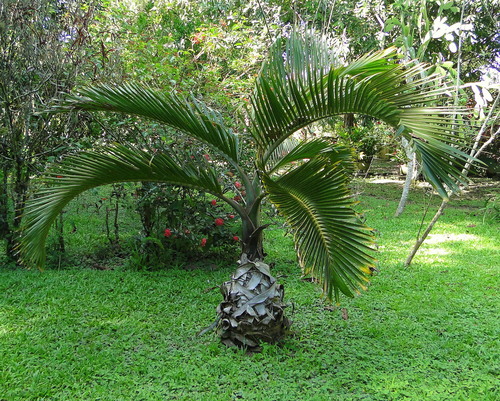
Hyophorbe is a genus of five known species of flowering plants in the family Arecaceae, native to the Mascarene Islands in the Indian Ocean. All five species can attain heights of over 6 meters, and two of the species develop swollen trunks that have made them popular as ornamentals, but all of them are endangered in the wild.

Coccothrinax
Coccothrinax is a genus of palms in the family Arecaceae. There are more than 50 species described in the genus, plus many synonyms and subspecies. A new species (Coccothrinax spirituana) was described as recently as 2017. Many Coccothrinax produce thatch. In Spanish-speaking countries, guano is a common name applied to Coccothrinax palms. The species are native throughout the Caribbean, the Bahamas, extreme southern Florida and southeastern Mexico, but most of the species are known only from Cuba.

Plectocomia
Plectocomia is a genus of flowering plant in the family Arecaceae native to China, the Himalayas, and Southeast Asia. Plants are dioecious, with male and female flowers produced on separate individuals.

Aiphanes
Aiphanes is a genus of spiny palms which is native to tropical regions of South and Central America and the Caribbean. There are about 26 species in the genus (see below), ranging in size from understorey shrubs with subterranean stems to subcanopy trees as tall as . Most have pinnately compound leaves (leaves which are divided into leaflets arranged feather-like, in pairs along a central axis); one species has entire leaves. Stems, leaves and sometimes even the fruit are covered with spines. Plants flower repeatedly over the course of their lifespan and have separate male and female flowers,
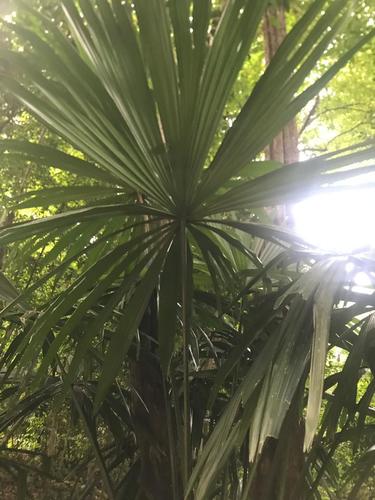
Borassodendron
Borassodendron is a genus of flowering plant in the family Arecaceae. It contains two species, native to Southeast Asia.

Brahea
Brahea is a genus of palms in the family Arecaceae. They are commonly referred to as hesper palms and are endemic to Mexico and Central America. All Hesper Palms have large, fan-shaped leaves.
The generic name honours Danish astronomer Tycho Brahe (1546-1601).

Masoala
Masoala is a genus of flowering plant in the family Arecaceae. It contains the following species, both endemic to Madagascar:
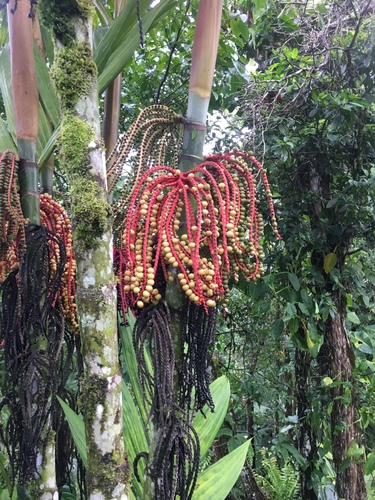
Pinanga
Pinanga is a genus of flowering plant of the palm family in the subtribe Arecinae. It is native to eastern and southern Asia (India, China, Indo-China, Malesia) across to New Guinea.

Parajubaea
Parajubaea is a genus of flowering plant in the family Arecaceae.
Balaka
genus of plants

Trithrinax
Trithrinax is a genus of flowering plants in the subfamily Coryphoideae of the family Arecaceae. The name is derived from ancient Greek, where tri means three, and thrinax trident. It was named in 1837 by Carl Friedrich Philipp von Martius, a German botanist and explorer.
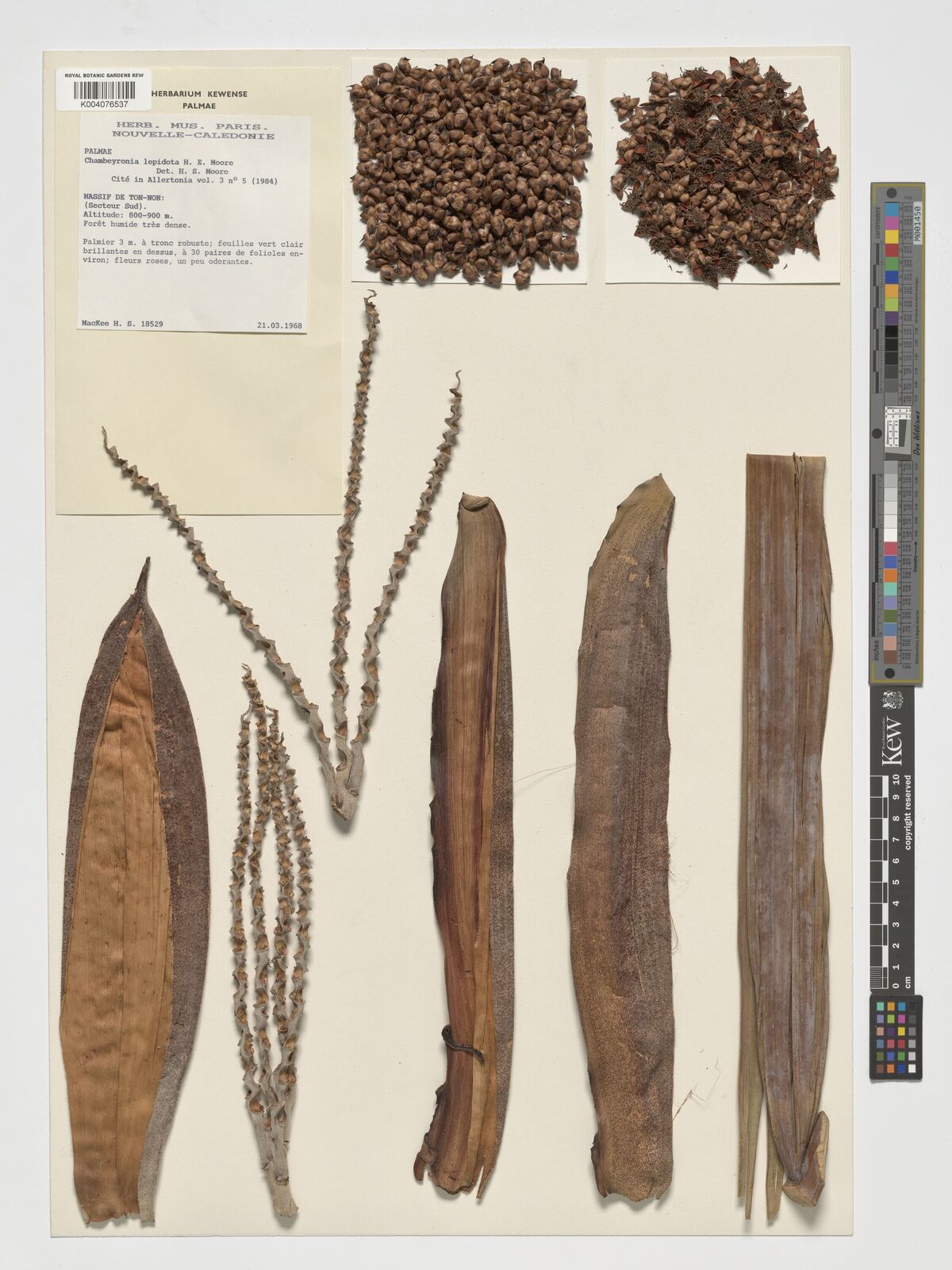
Chambeyronia
Chambeyronia is a genus of flowering plants in the family Arecaceae.
It contains nine species, all endemic to New Caledonia:

Thrinax
Thrinax is a genus in the palm family, native to the Caribbean. It is closely related to the genera Coccothrinax, Hemithrinax and Zombia. Flowers are small, bisexual and are borne on small stalks.

Astrocaryum
thumb|Astrocaryum sciophilum (MHNT)

Asterogyne
Asterogyne is a genus of flowering plant in the family Arecaceae native to Central America and northern South America, with three of the five known species endemic to Venezuela.

Korthalsia
Korthalsia is a clustering genus of flowering plant in the palm family Arecaceae spread throughout Southeast Asia. It is a highly specialized rattan with some species known to have an intimate relationship with ants, hence the common name ant rattan. High-climbing and armed with spines, the genus is named for the Dutch botanist Pieter Willem Korthals who first collected them in Indonesia.

Chuniophoenix
Chuniophoenix is a genus of palm tree named after Chun Woon-Young, then director of the Botanical Institute, Sun Yat Sen University, Guangzhou. It contains three known species, native to southern China and Vietnam. Chuniophoenix is a member of tribe Chuniophoeniceae, a small group of palms that exhibit great morphological diversity and interesting biogeography. The tribe includes four genera: Chuniophoenix with 3 species in China and Vietnam, Kerriodoxa (monotypic) in Peninsular Malaysia and Thailand, Nannorrhops (monotypic) from Arabia to Afghanistan, and Tahina (monotypic) in Madagascar.

Allagoptera
Allagoptera is a monoecious genus of flowering plant in the palm family found in South America consisting of 5 accepted species. Compared to other genera within the Cocoseae Allagoptera is described as particularly specialized. The genus name is a Greek combination of "change" and "feather", describing the full leaf; it was formerly named Diplothemium.

Pseudophoenix
Pseudophoenix is a genus of palms which is native to the wider Caribbean. Three species of the four species are endemic to Hispaniola, while the fourth, P. sargentii, is widely distributed in the northern Caribbean (Greater Antilles, Windward Islands, Bahamas), Florida, and the Yucatán Peninsula (Belize and southeastern Mexico).

Cyrtostachys
thumb|250px|right|Young Cyrtostachys renda

Beccariophoenix
Beccariophoenix is a genus of three species of Arecaceae (palms), native to Madagascar. The genus is closely related to the Cocos, or coconut genus, and notably Beccariophoenix alfredii is similar in appearance to the coconut palm. It was named after Odoardo Beccari (1843-1920).
Mauritiella
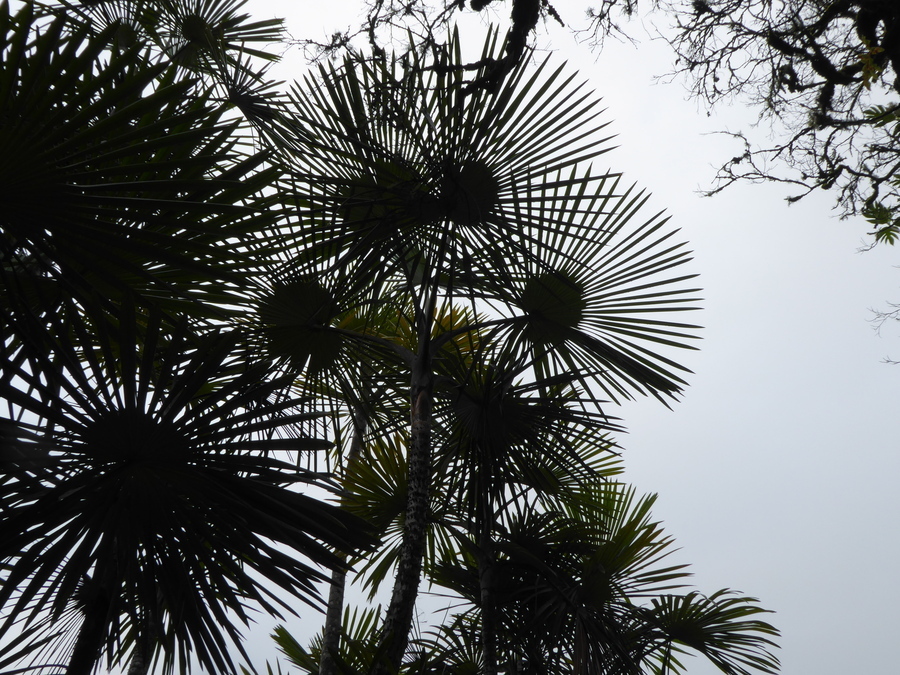
Mauritiella is a dioecious genus of flowering plant in the palm family found in South America where it is commonly called buriti. It is named after the similar and closely related genus Mauritia.