Category
page 2Arecaceae genera

Geonoma
thumb|Geonoma stricta stricta - MHNT

Ravenea
Ravenea is a genus of 20 known species of palms, all native to Madagascar and the Comoros. It is not to be confused with Ravenala, a genus of superficially palm-like plants also from Madagascar.
Mauritiella
Mauritiella is a dioecious genus of flowering plant in the palm family found in South America where it is commonly called buriti. It is named after the similar and closely related genus Mauritia.
Hemithrinax
Hemithrinax is a genus of palms that is endemic to eastern Cuba. It comprises three species and one variety and was previously included within the genus Thrinax.
Eremospatha
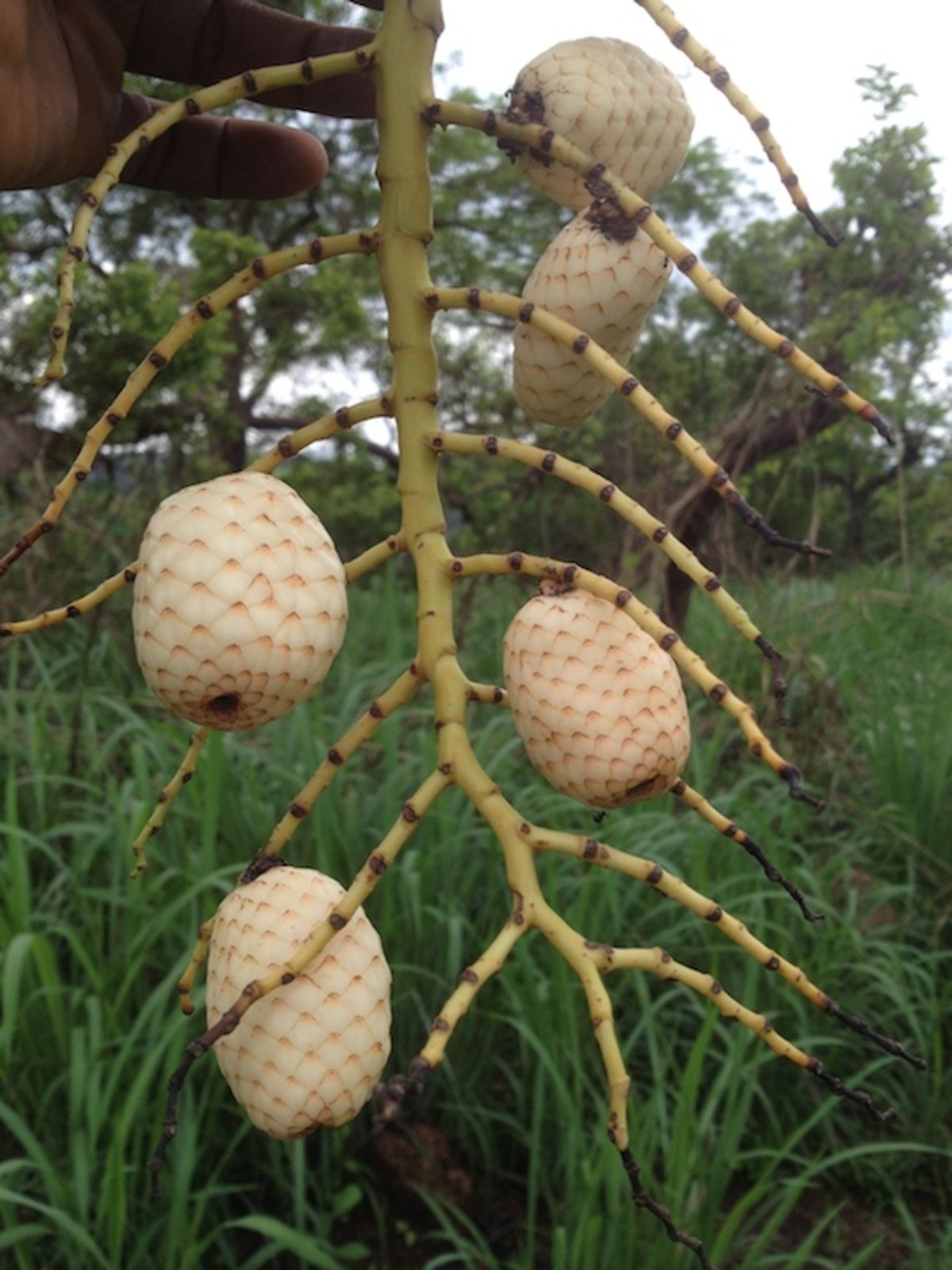
Eremospatha is a genus of climbing flowering plants in the palm family found in tropical Africa. These rattans are uncommon in cultivation and poorly understood by taxonomists. Closely related to Laccosperma, they are differentiated by the near complete absence of bracts and bracteoles. The name is from Greek meaning 'without a spathe'.
Clinostigma
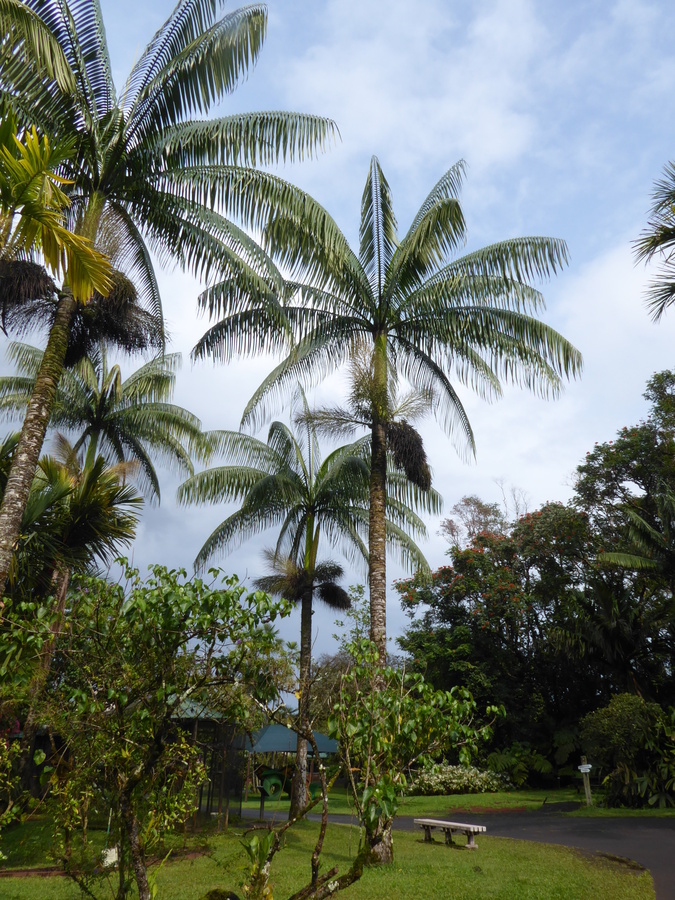
Clinostigma is a genus of flowering plants in the Arecaceae (palm) family. It is native to various islands in the western Pacific.
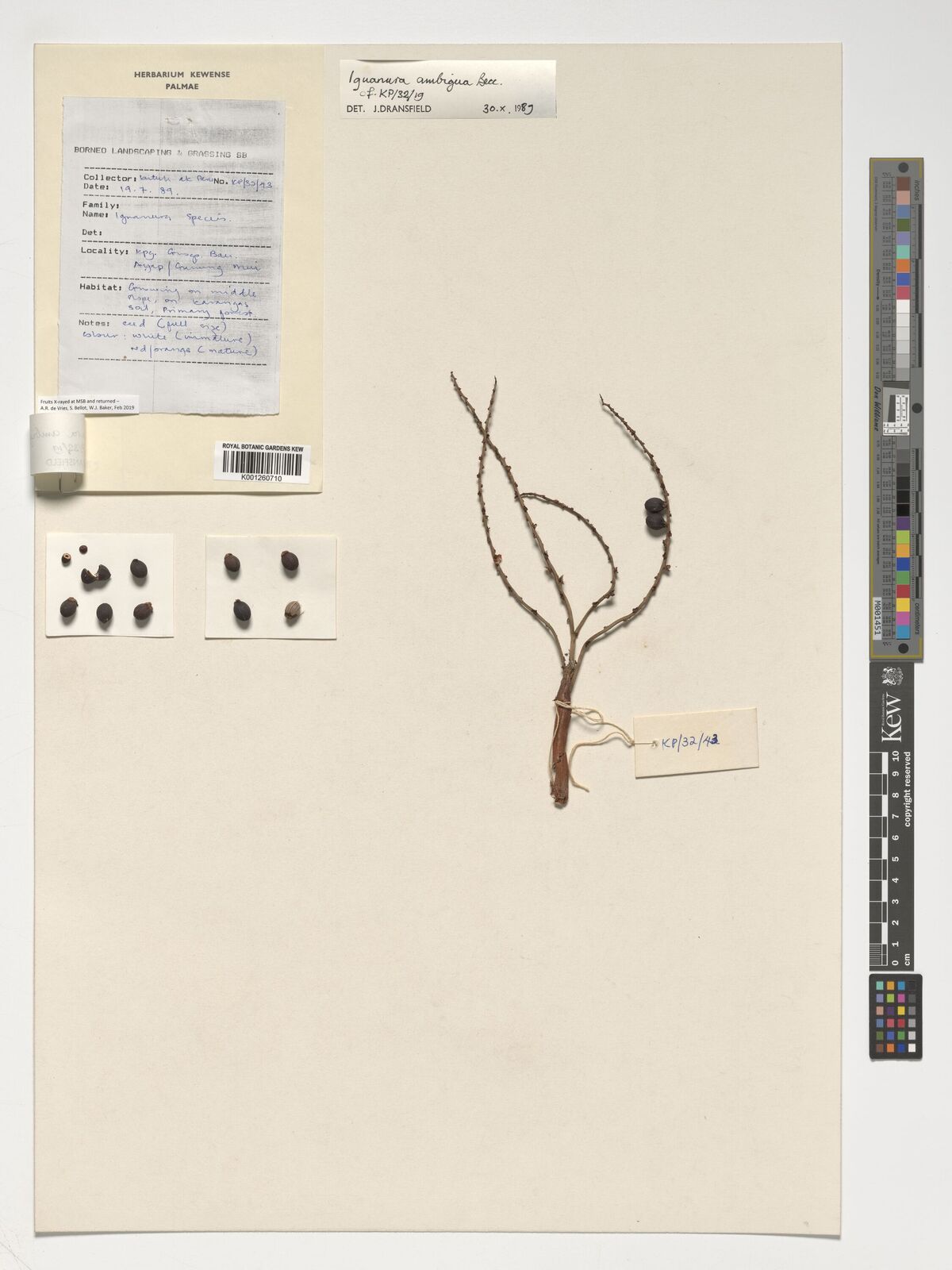
Iguanura
Iguanura is a genus of monoecious flowering plants in the palm family from Southeast Asia, commonly called pinang. Closely related to the Heterospathe palms, they are noted for producing a wide variety of fruit forms. Its name combines the Spanish word for "lizard" with the Greek word for "tail".

Guihaia
Guihaia is a genus of three species of dioecious palms found in China and Vietnam. Perhaps its most distinctive characteristic is that it is the only palm with palmate leaves that has reduplicate (A-shaped) leaf folds. All other palmate leaves have induplicate (V-shaped) leaf folds. Guihaia lancifolia has undivided leaves.

Wallichia
Wallichia is a genus of eight species of flowering plant in the family Arecaceae. In 2016, it was proposed that its species should be included within the genus Arenga, but this was not accepted by Plants of the World Online.
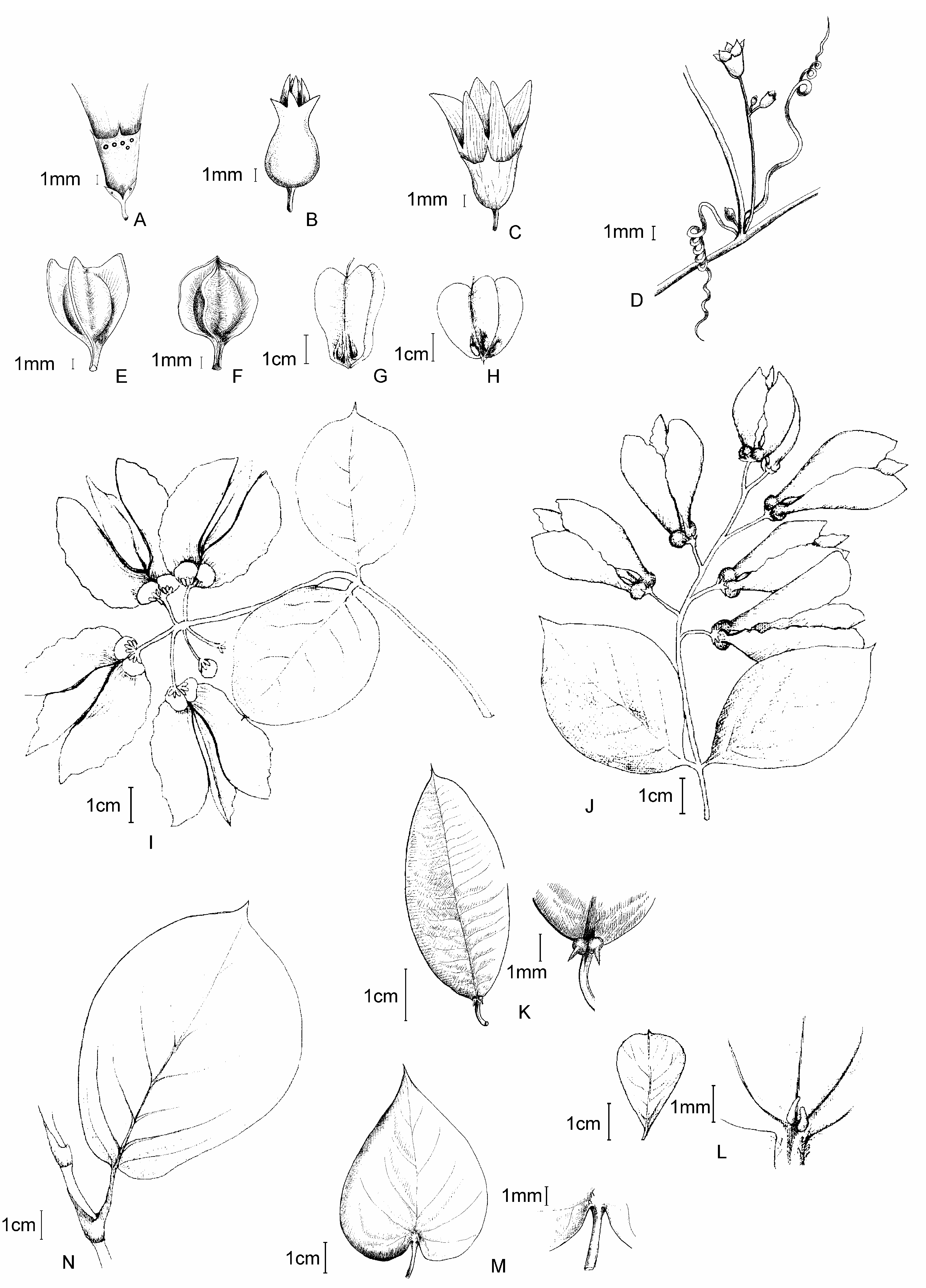
Pigafetta
Pigafetta is a genus of two palm species in the family Arecaceae.

Orania
genus of plants
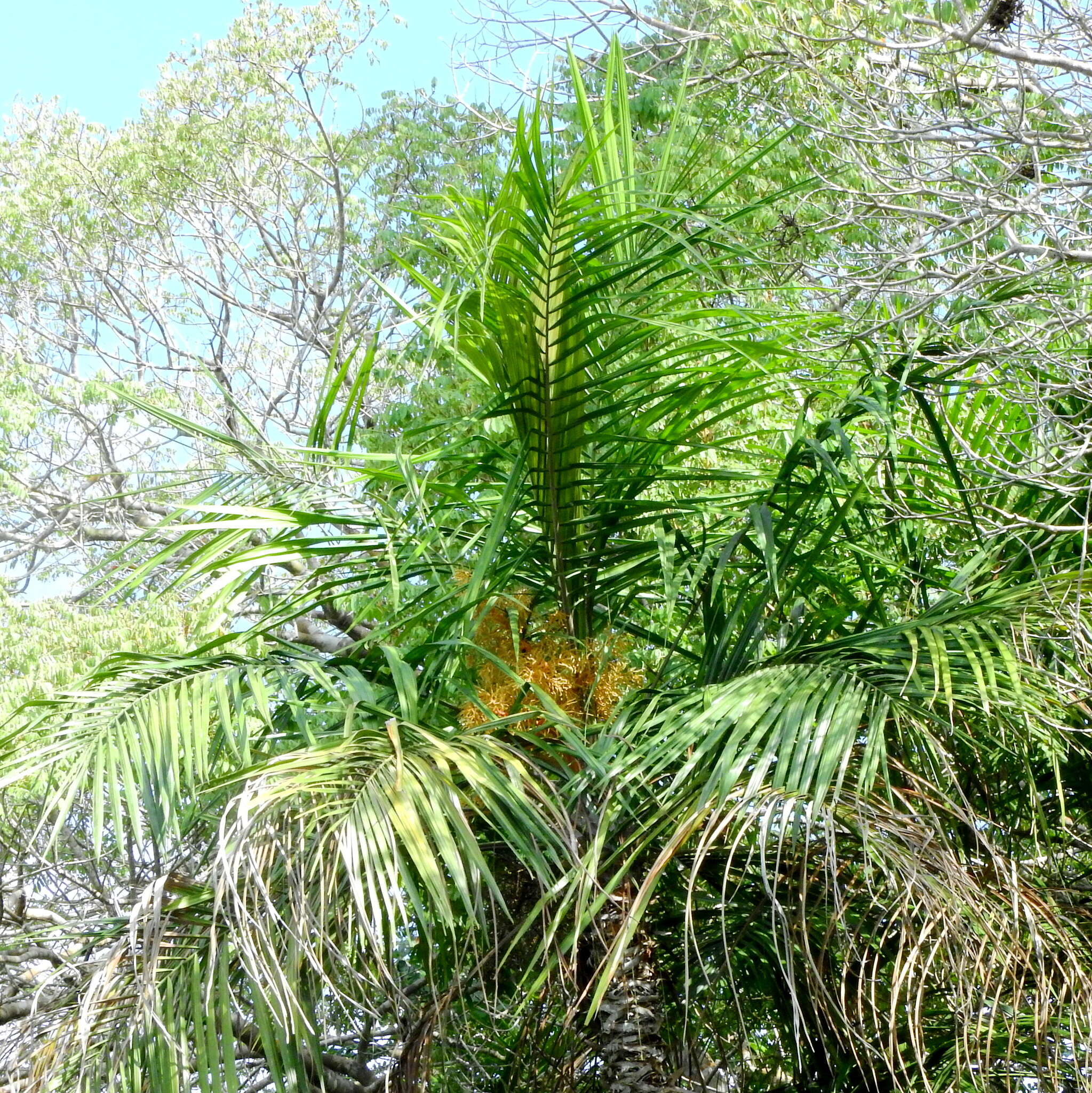
Leopoldinia
Leopoldinia is a mostly monoecious genus of flowering plant in the palm family from northern South America (Colombia, Venezuela, northwestern Brazil), where they are known as jará palm or pissava palm. The two known species are commercially important, especially L. piassaba, which yields sustenance and construction material. The genus is named for Maria Leopoldina, archduchess of Austria, and Brazilian empress.
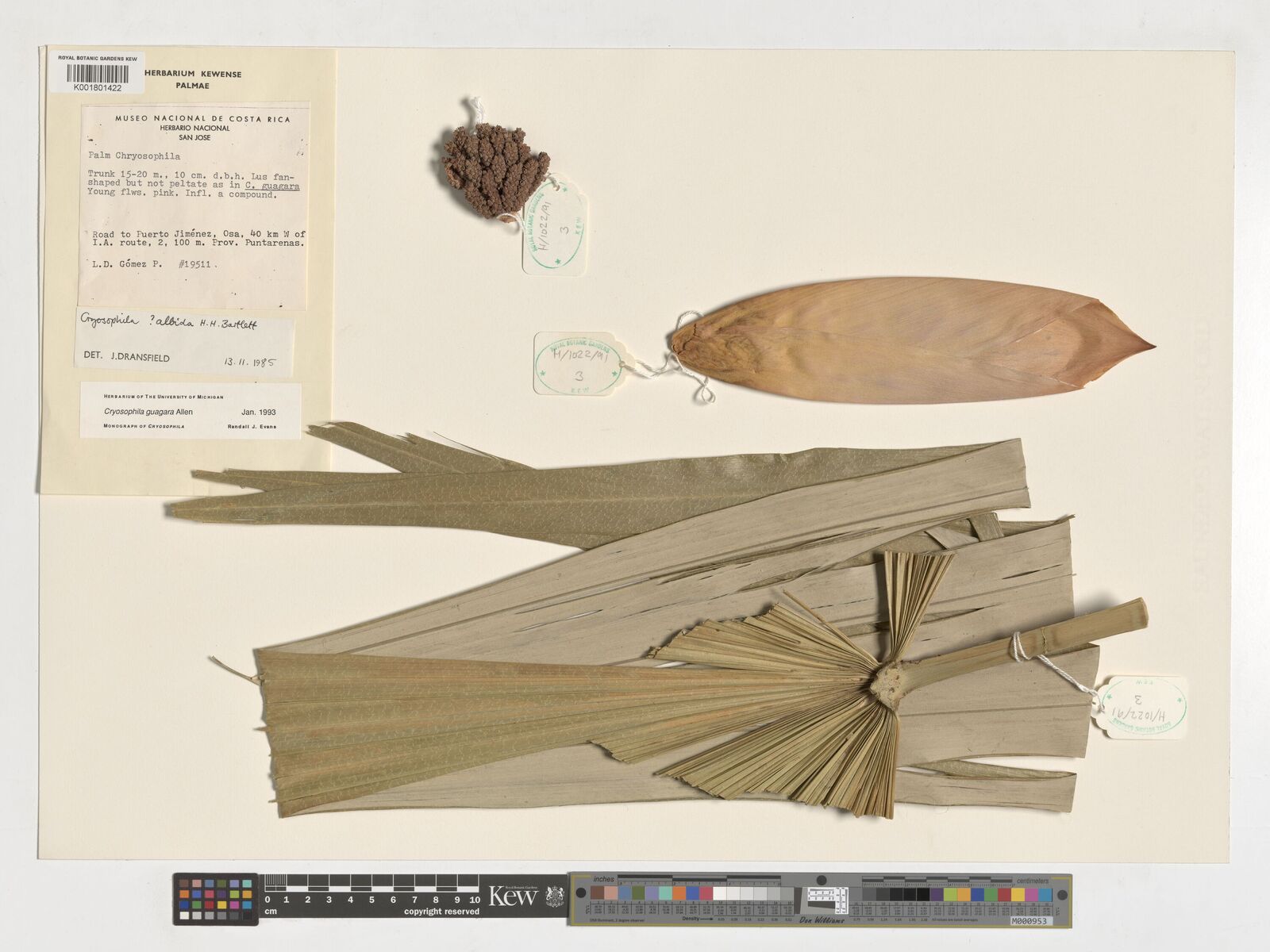
Cryosophila
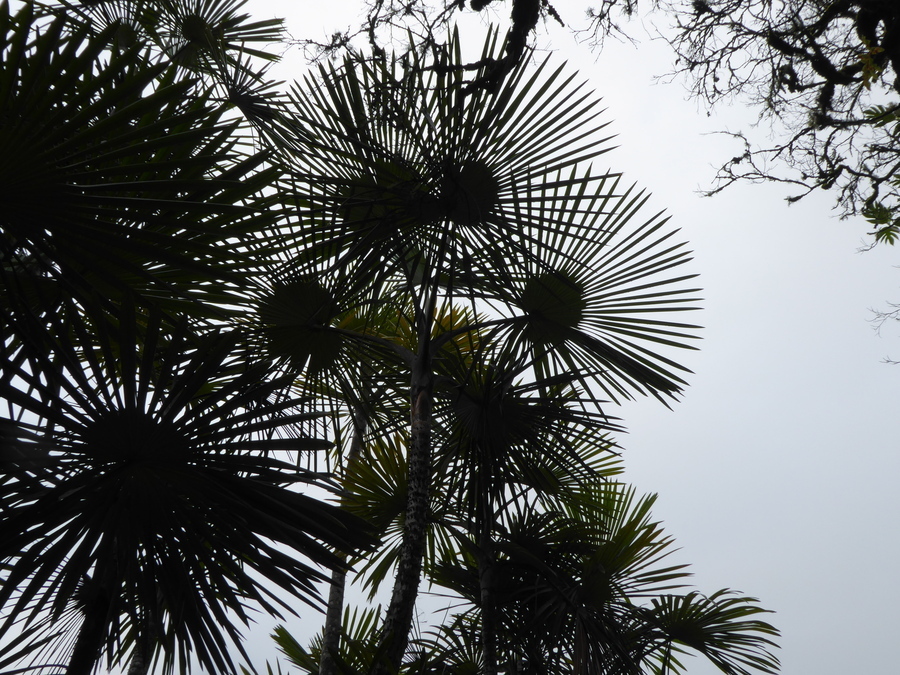
Cryosophila is a genus of medium-sized fan palms that range from central Mexico to northern Colombia. Species in the genus can be readily distinguished from related genera by their distinctive downward-pointing spines on the stem, which are actually modified roots. They are known as the "root spine palms".
Brassiophoenix
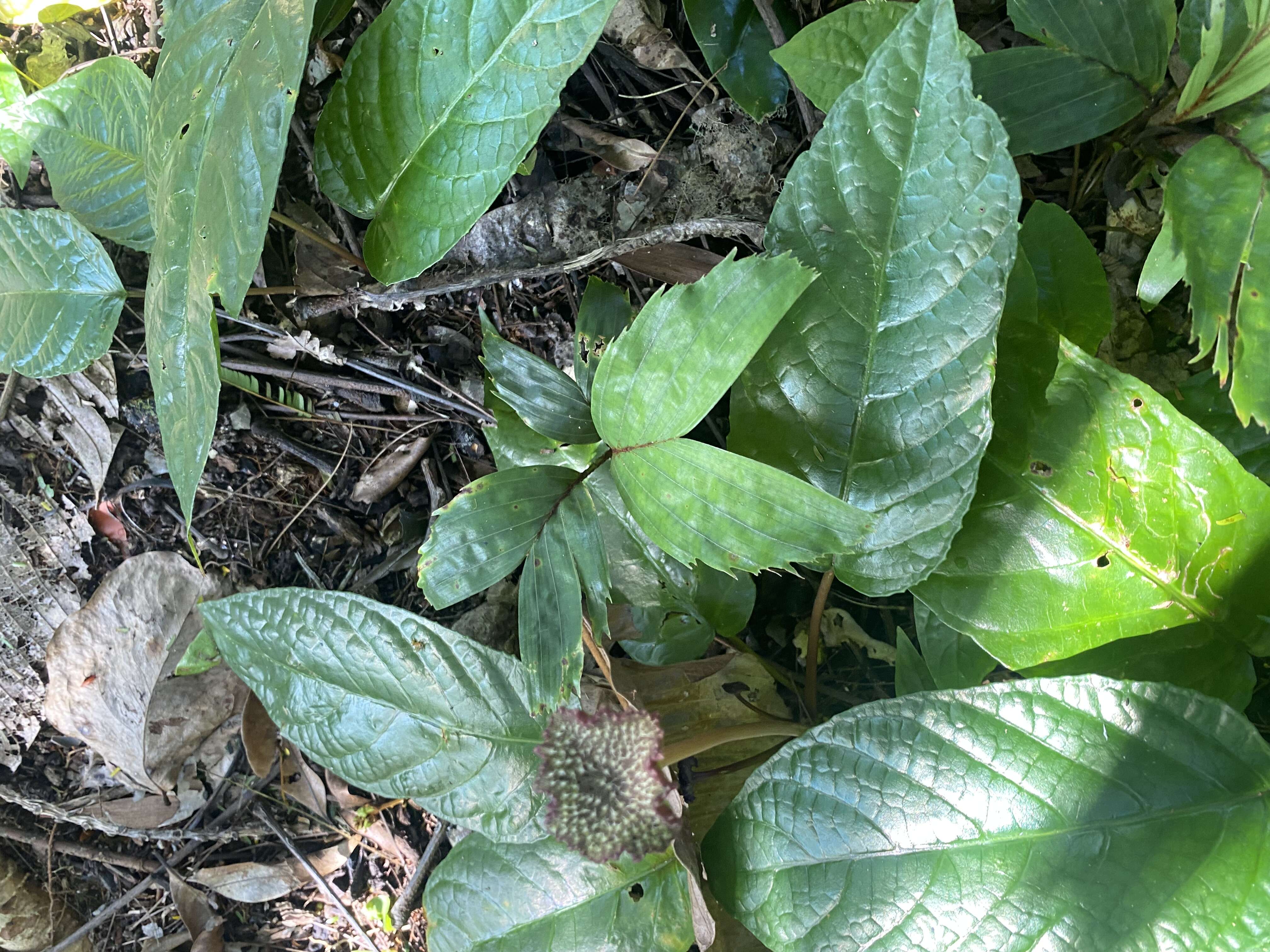
Brassiophoenix is a genus of monoecious flowering plants in the palm family found in Papua New Guinea. Of the two similar species, one is more common in cultivation and was mistakenly identified as Brassiophoenix schumannii. In 1999, Zona and Estig showed that the commonly cultivated species was instead the type species Brassiophoenix drymophoeoides. The two species are distinguished by their separated geographical locations and minor differences in fruit form. The genus name is a combination of the surname Brass, honoring the first collector L.J. Brass, and Phoenix, another palm genus.
Prestoea
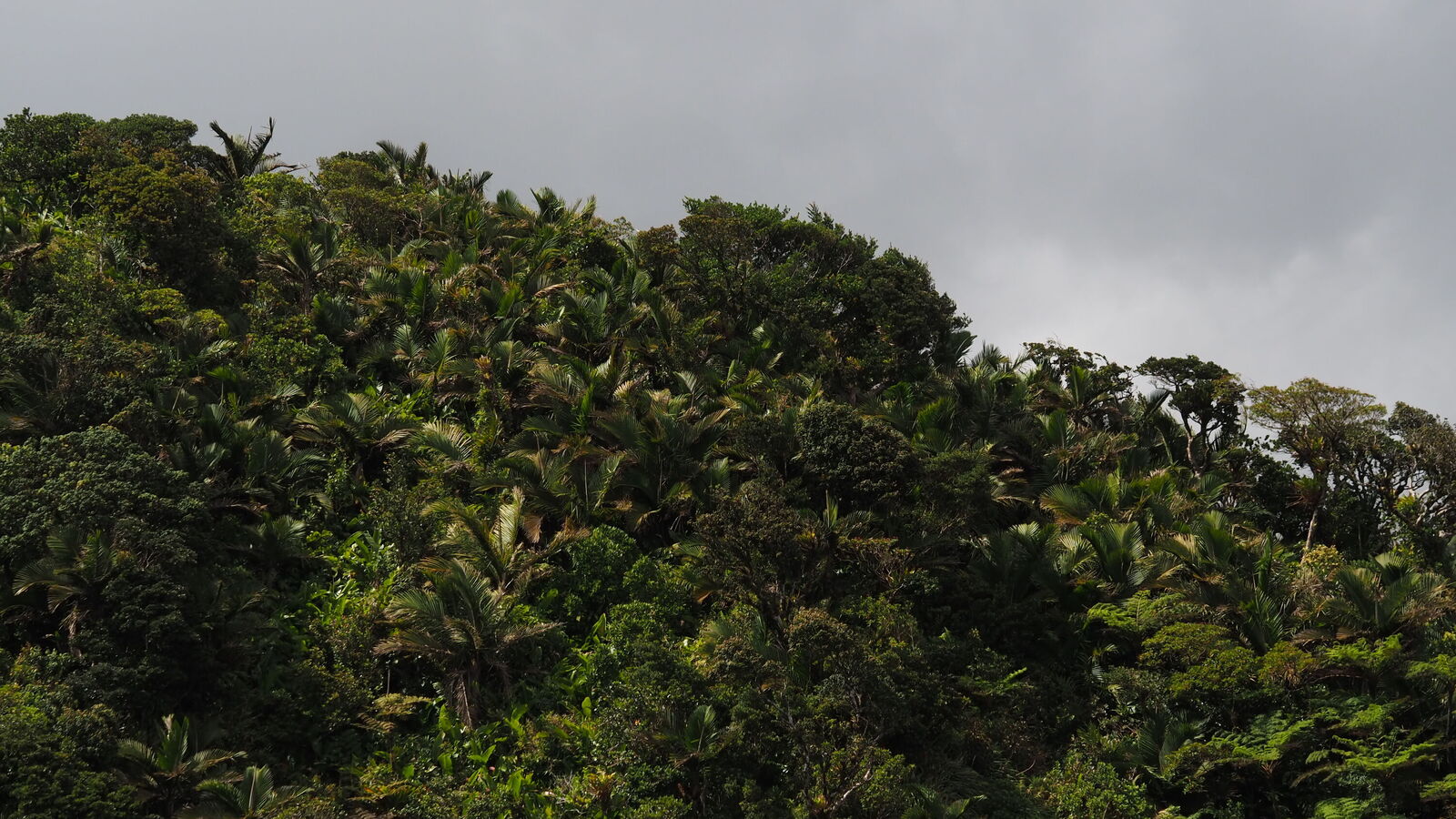
Prestoea is a genus of palms native to the Caribbean, Central and South America. Its range extends from Nicaragua and the Greater Antilles in the north to Brazil and Bolivia in the south.
==Species==
Prestoea acuminata (Willd.) H.E.Moore - Central America (Costa Rica, Nicaragua, Panama), West Indies, northwestern South America (Colombia, Venezuela, Ecuador, Peru, Bolivia)
Prestoea carderi (W.Bull) Hook.f. - Colombia, Venezuela, Ecuador, Peru
Prestoea decurrens H.E.Moore - Costa Rica, Nicaragua, Panama, Colombia, Ecuador
Prestoea ensiformis (Ruiz & Pav.) H.E.Moore - Costa Rica, Peru, Panama
Wettinia
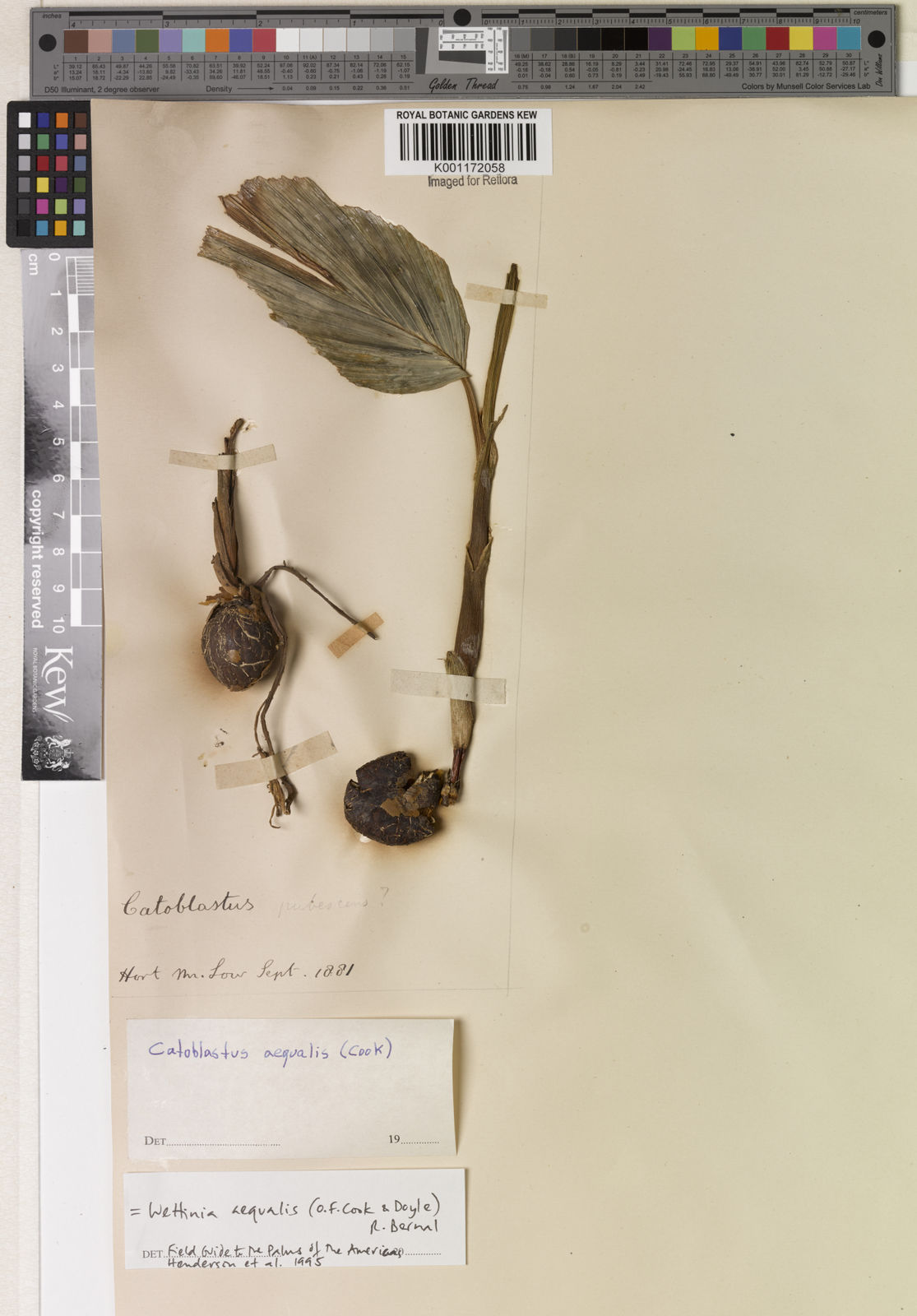
Wettinia is a genus of flowering plants in the palm family Arecaceae. The genus, established in 1837, contains some 20 species, but more seem to await discovery considering that 4 species—W. aequatorialis, W. lanata, W. minima and W. panamensis—were described as late as 1995. The genus is broadly divided into two groups. One group has the fruits tightly packed, while the other, formerly classified as genus Catoblastus, has fruits scattered along the inflorescence branches. It is not known whether these groups are both monophyletic. The genus is named after Frederick Augustus II of Saxony, of t
list of Arecaceae genera
Wikimedia list article
Bentinckia
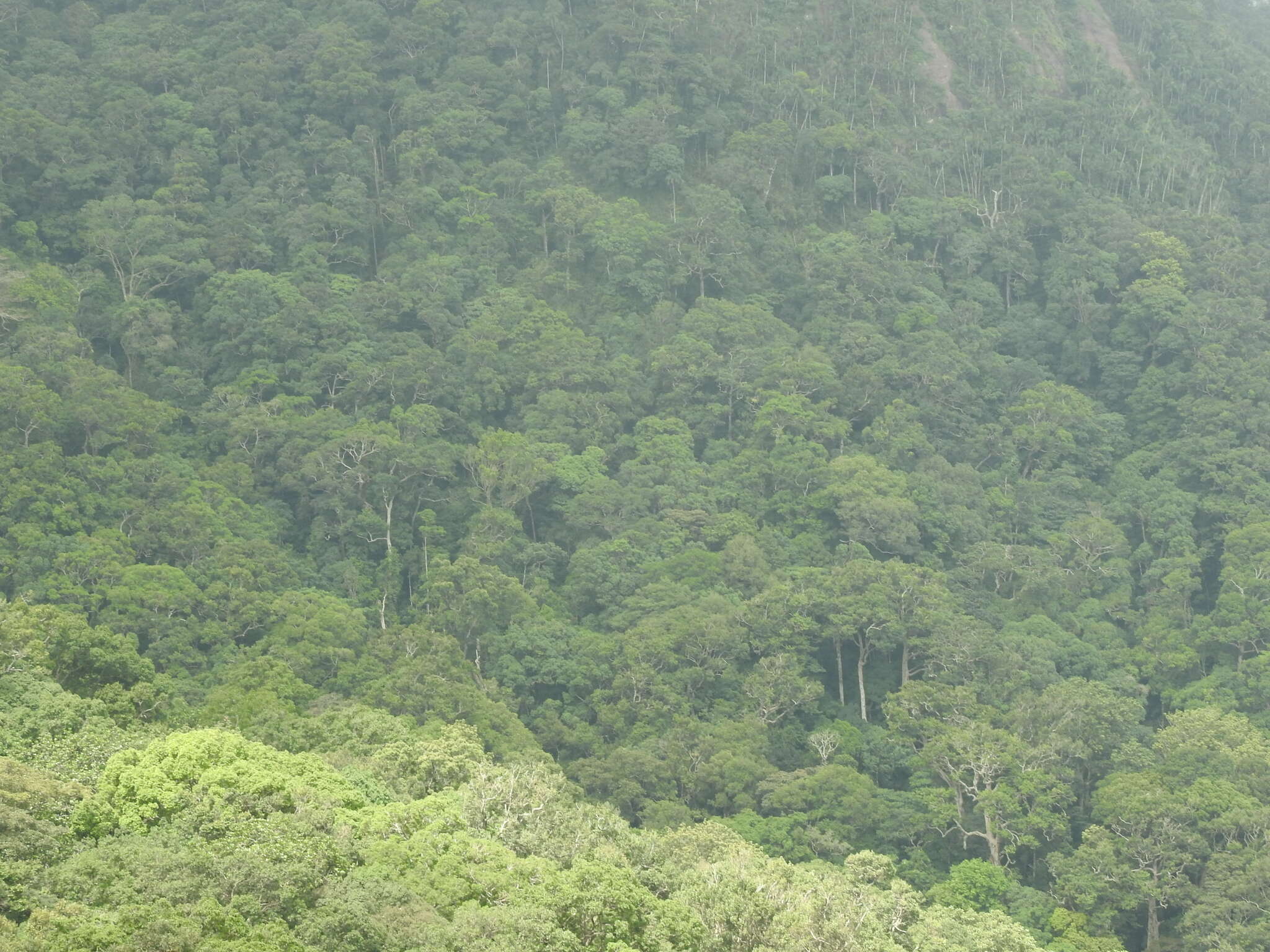
Bentinckia is a genus of palms in the family Arecaceae. The genus is named after William Henry Cavendish-Bentinck a colonial governor general of British India. There are two species of palms in this genus. namely Bentinckia condapanna and Bentinckia nicobarica.

Oenocarpus
thumb|Oenocarpus mapora
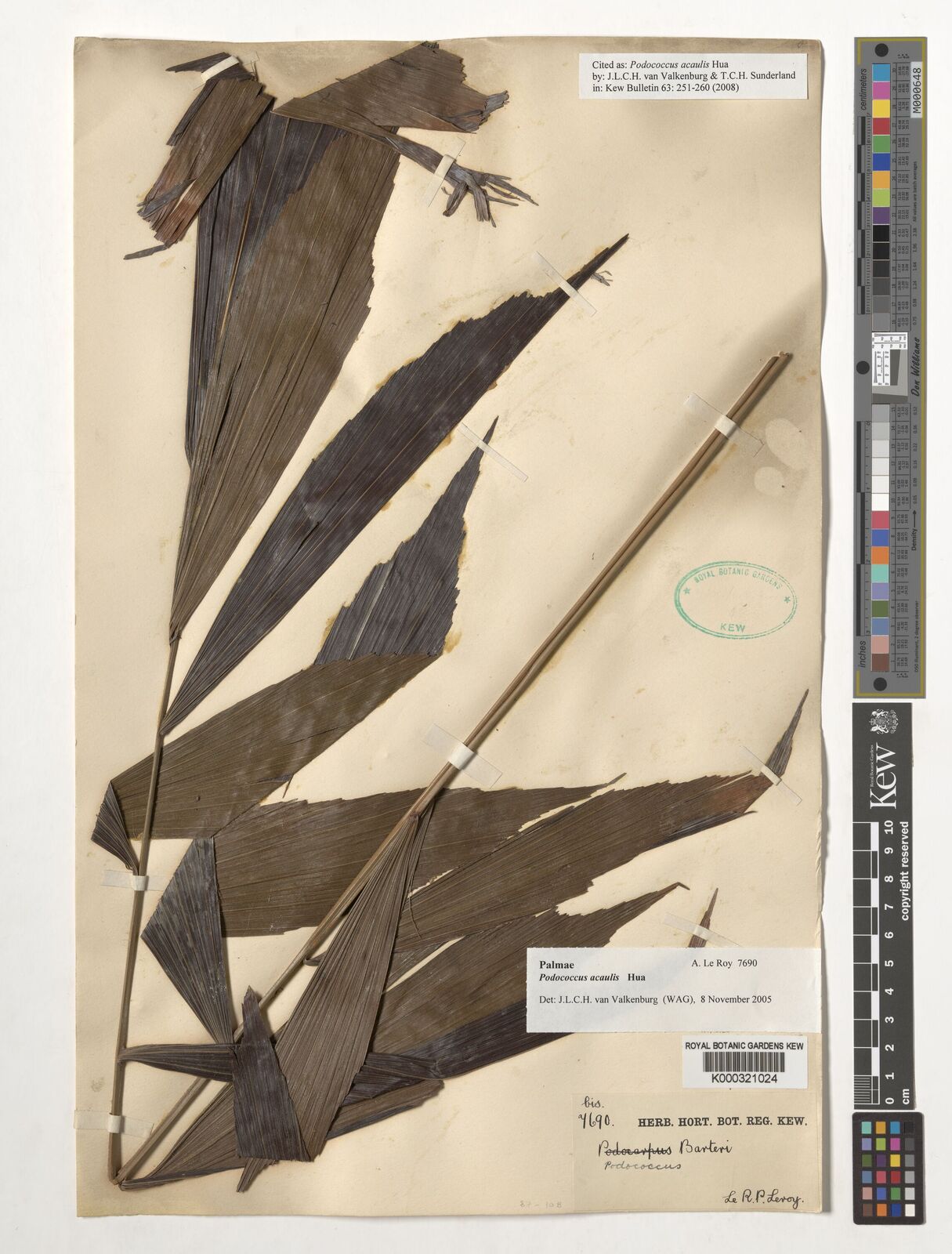
Podococcus
Podococcus is a genus of palms found in tropical Africa. It includes two recognized species:
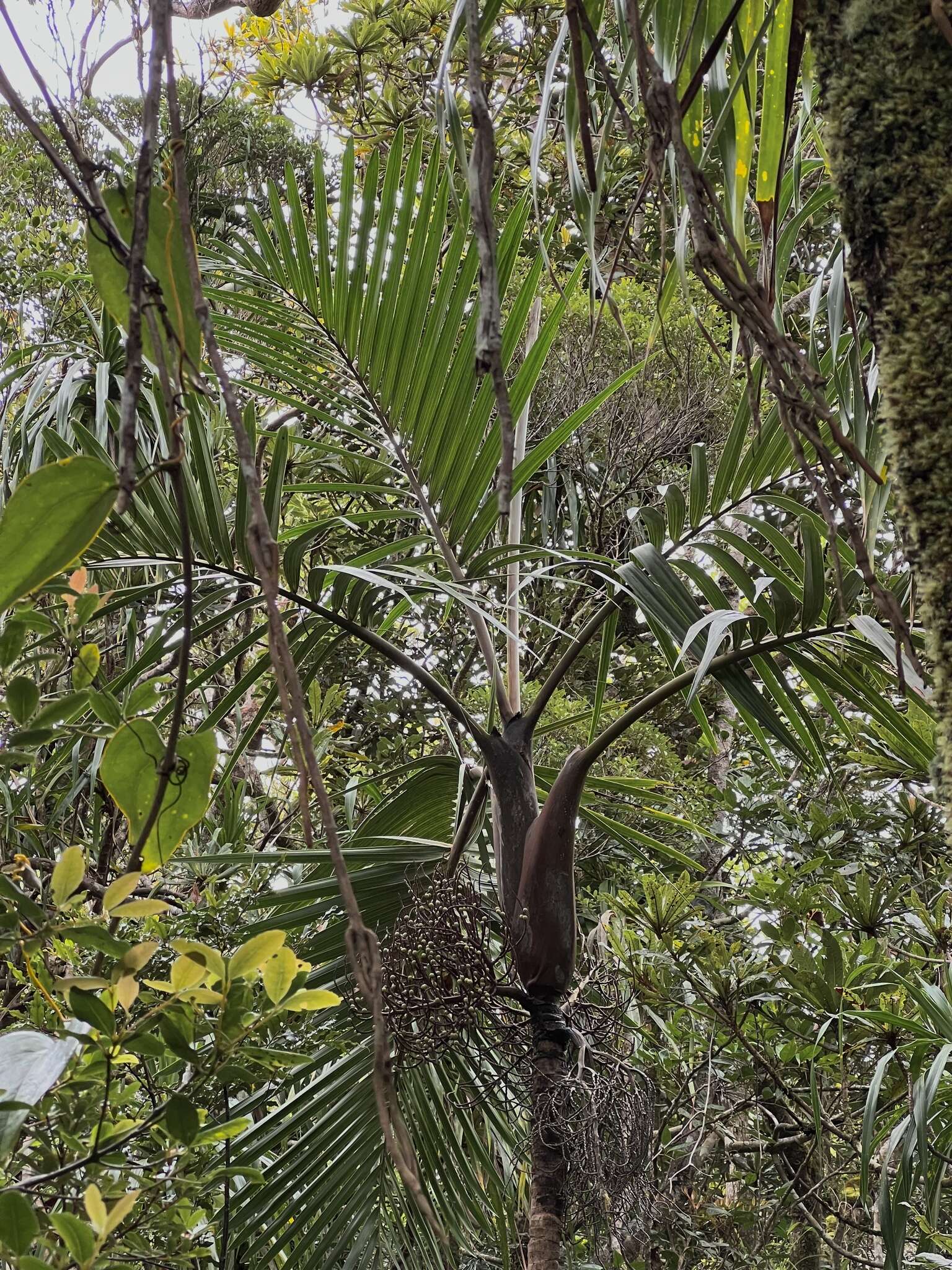
Clinosperma bractealis
Clinosperma is a palm tree genus in the family Arecaceae.

Rhopaloblaste
Rhopaloblaste is a genus of flowering plant in the family Arecaceae, native to New Guinea, Melanesia and Southeast Asia.

Rhopalostylis
Rhopalostylis is a genus of two species of palms native to the South Pacific. Both are smooth-trunked, with regular ringed scars from fallen leaves. The leaves are 3–5 m in length, and the leaf bases encircle the trunk.
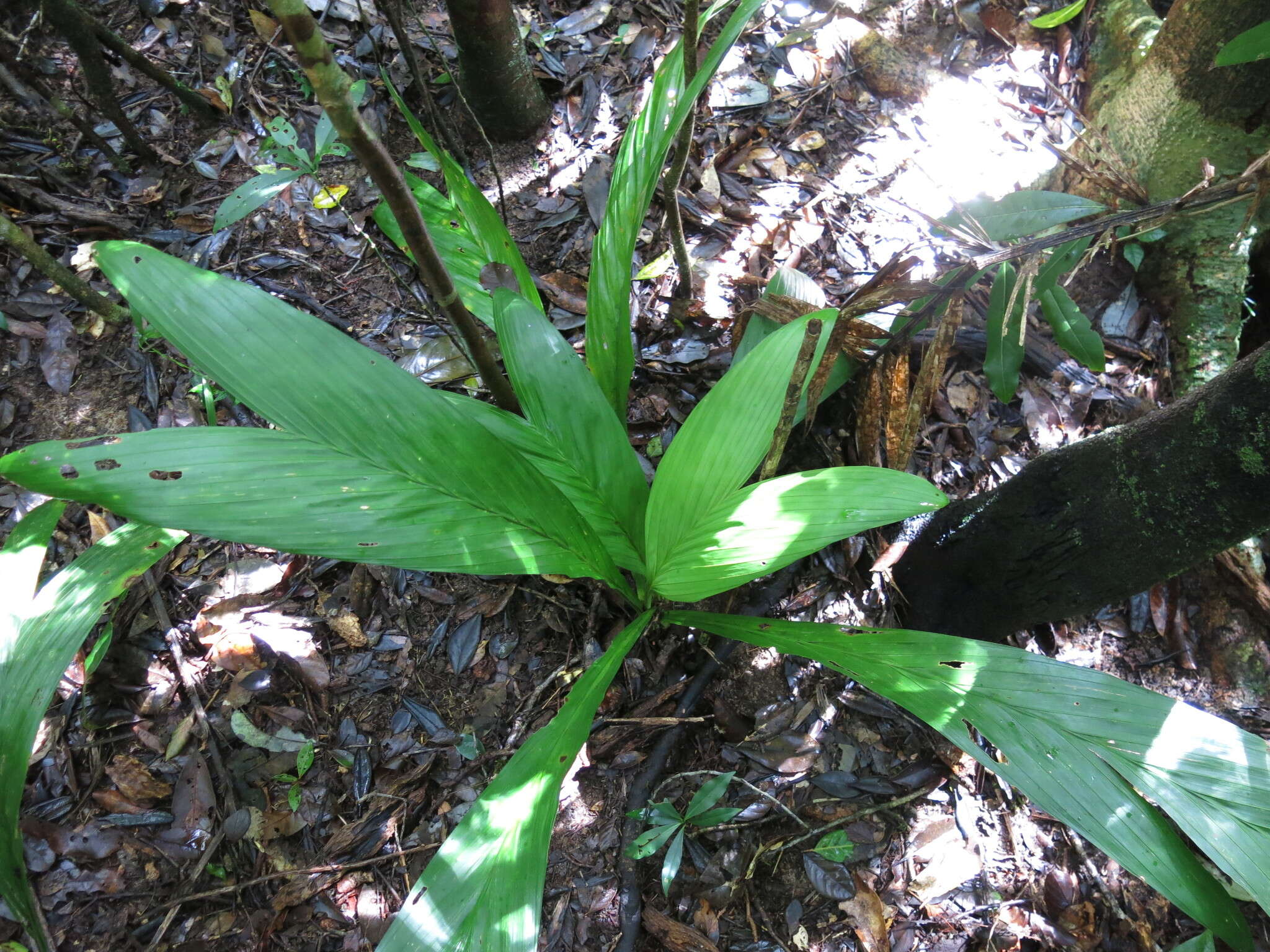
Linospadix
Linospadix is a genus of flowering plant in the family Arecaceae. It is native to New Guinea and Australia.

Hyospathe
Hyospathe is a genus of flowering plant in the family Arecaceae, native to South America and Central America. It contains the following species:
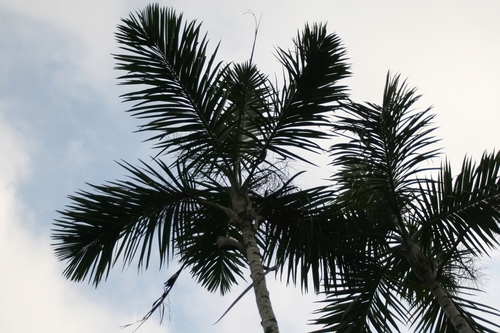
Gaussia
genus of plants

Colpothrinax
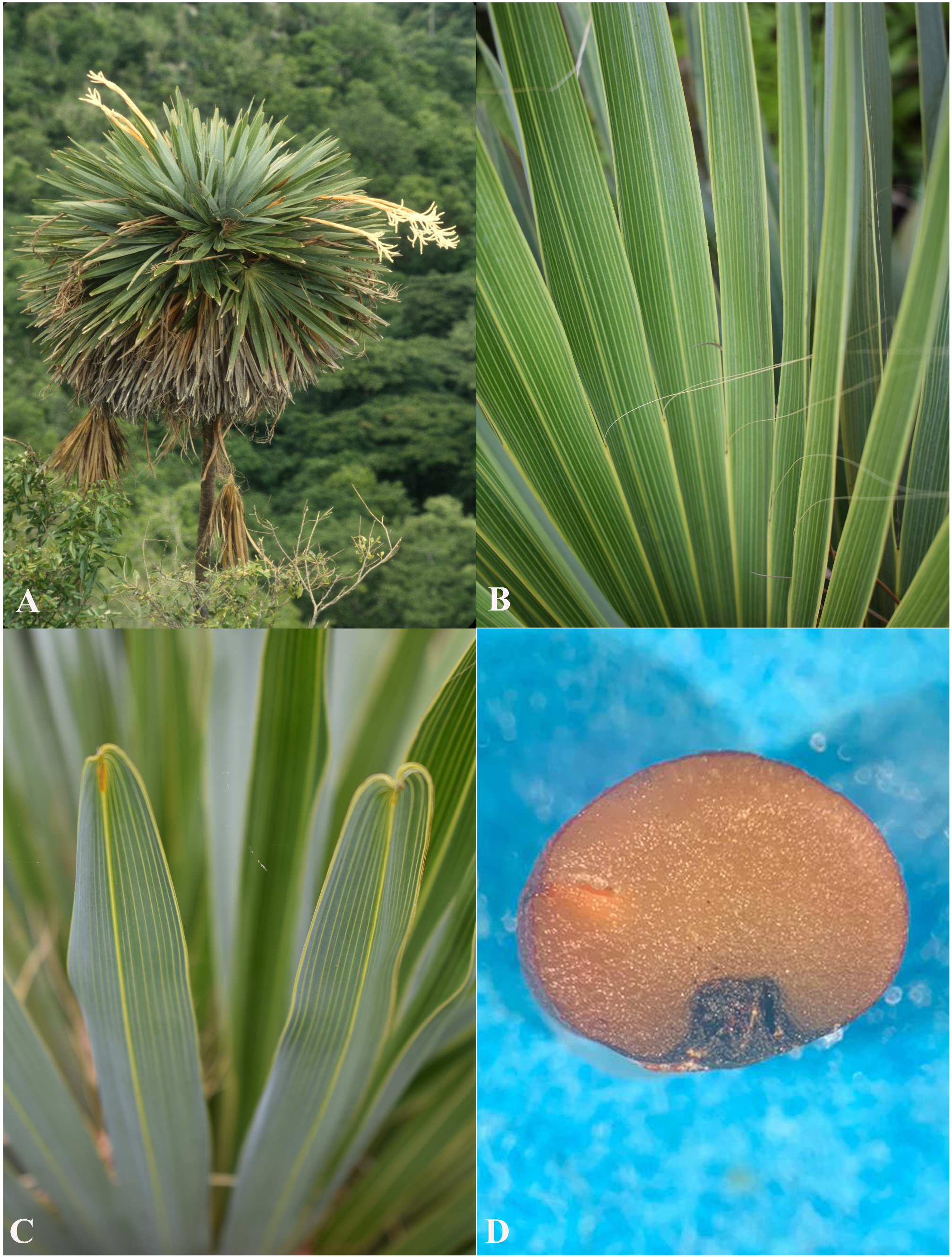
Colpothrinax is a genus of palms native to Central America and the Caribbean. It is a member of the subfamily Coryphoideae, tribe Trachycarpeae, although its placement within the subtribe is uncertain based on plastid DNA.
==Species==
{| class="wikitable"
|-
! Image !! Scientific name !! Distribution
|-
|||Colpothrinax aphanopetala ||from southeast Nicaragua to Panama
|-
| ||Colpothrinax cookii ||from Belize to Honduras
|-
| 120px||Colpothrinax wrightii || endemic to southwest Cuba including the Isle of Youth.
|-
|}
==References==
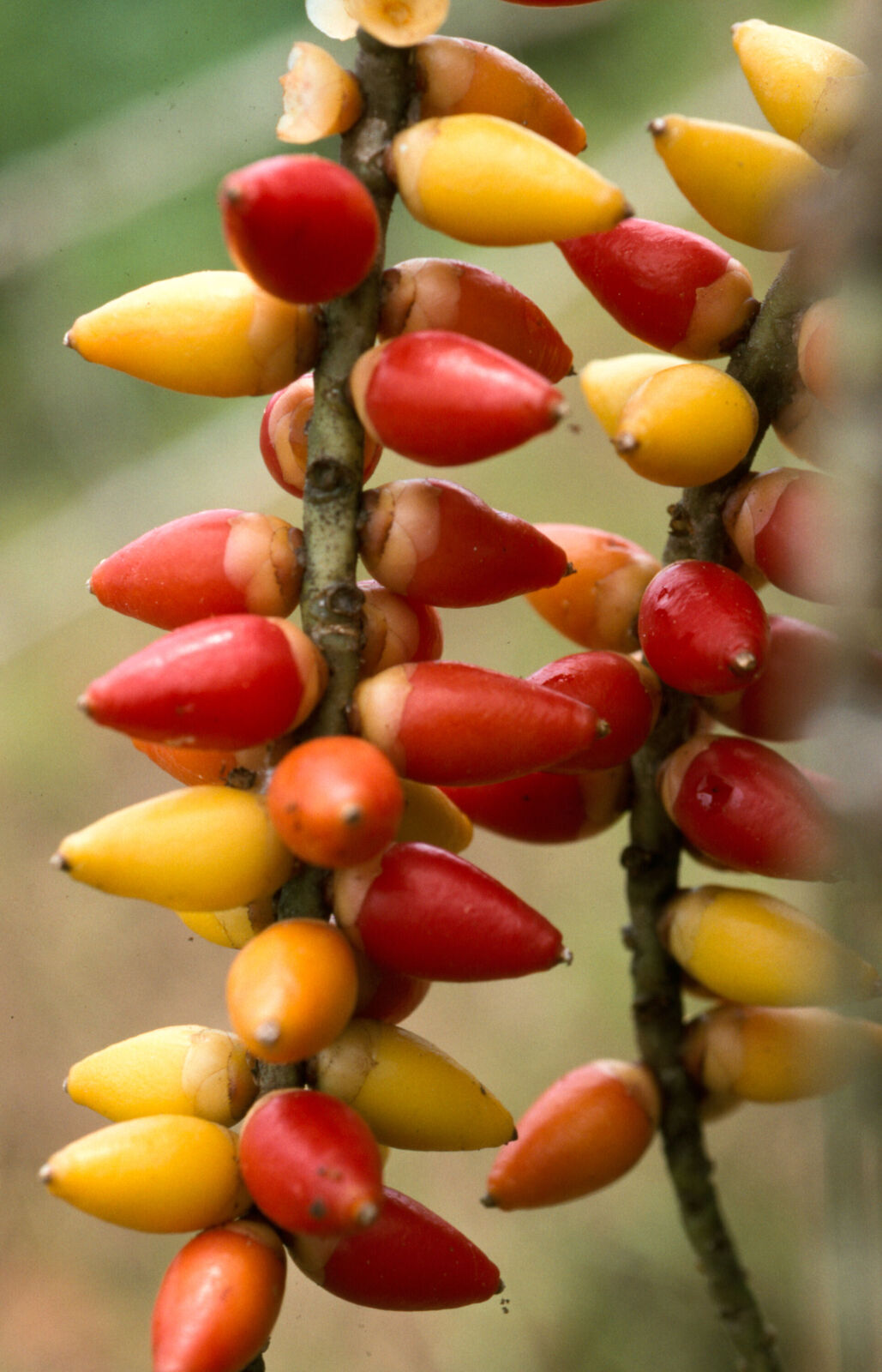
Drymophloeus
Drymophloeus is a genus of flowering plant in the family Arecaceae. It is native to New Guinea and nearby islands in Samoa and Maluku.
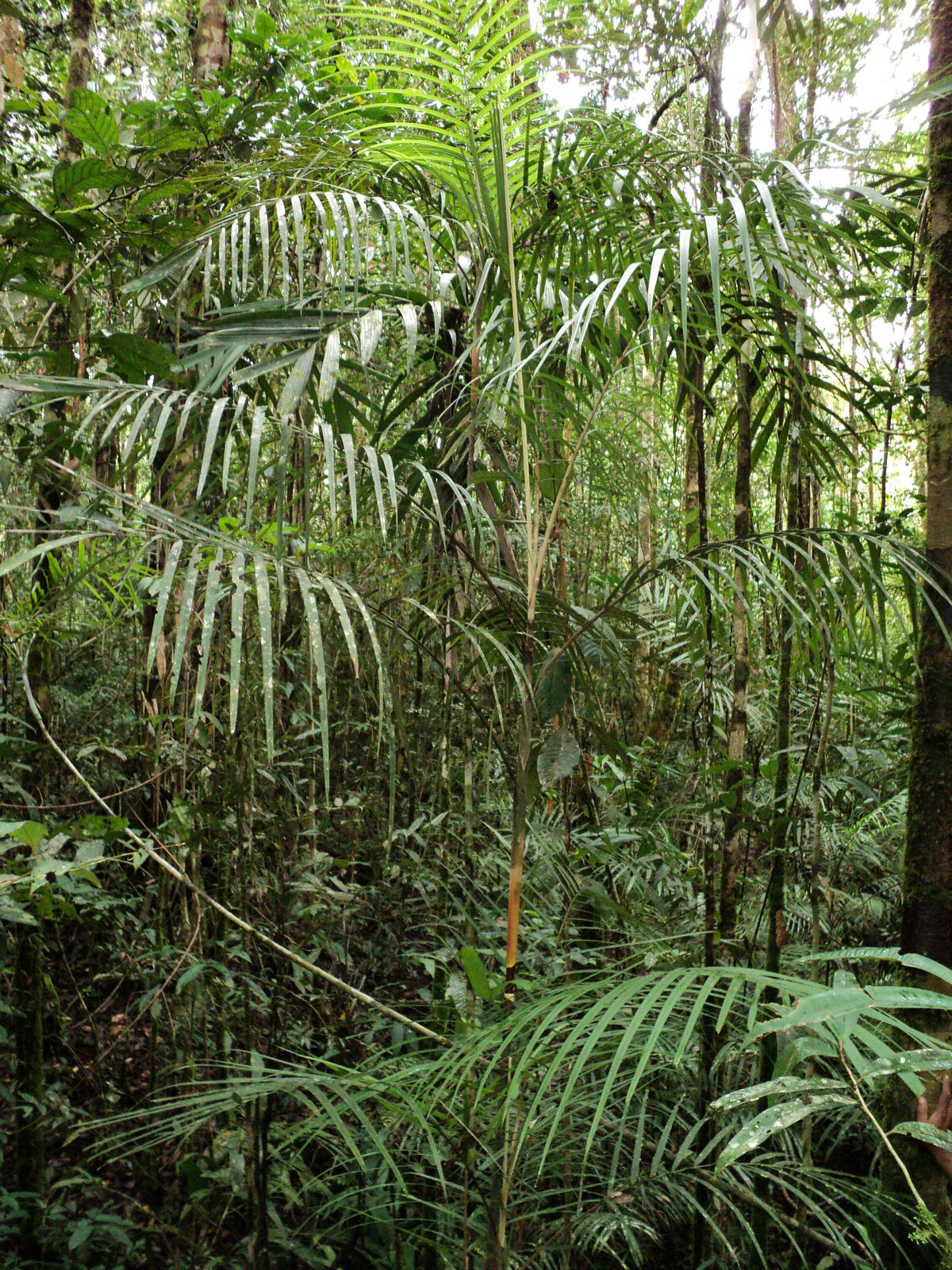
Hydriastele
Hydriastele is a diverse and widespread genus of flowering plant in the palm family found throughout northern Australia, Melanesia, Polynesia, and Southeast Asia. It consisted of just nine species until 2004, when molecular research, supported by morphologic similarities, led taxonomists to include the members of the Gulubia, Gronophyllum, and Siphokentia genera. About 40 species are now recognized.

Maxburretia
Maxburretia is a genus of three rare species of palms found in southern Thailand and Peninsular Malaysia. The genus is named in honor of Max Burret, (1883–1964) a German botanist.
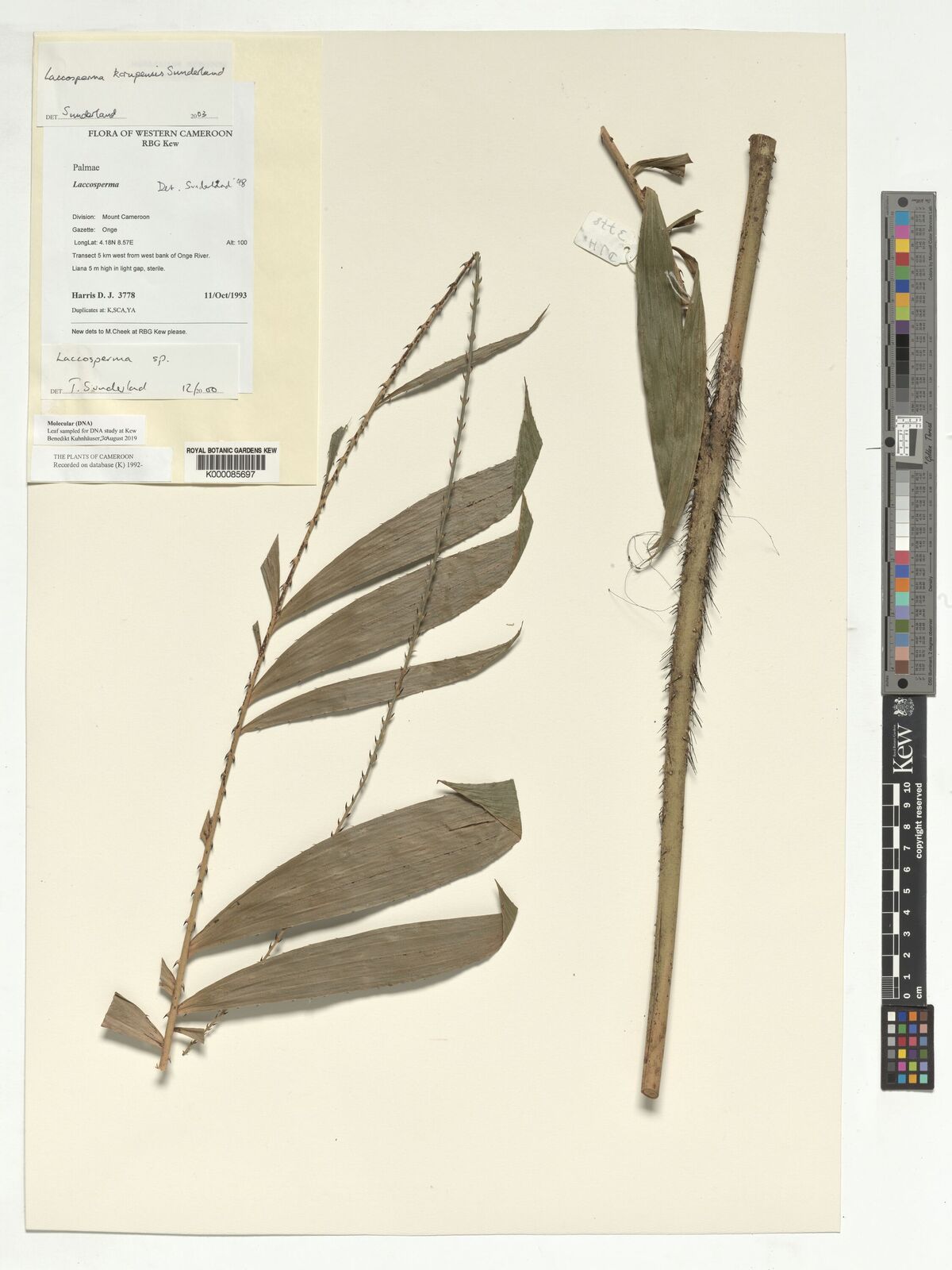
Laccosperma
Laccosperma is a clustering genus of flowering plant in the Palm family (Arecaceae or palmae) found in tropical Africa. Poorly studied and rarely cultivated, they are closely related to the genus Eremospatha and with it form a tribe in the subfamily Calameae characterized by dyads of hermaphrodite flowers. The genus name combines the Greek words for "reservoir" and "seed".
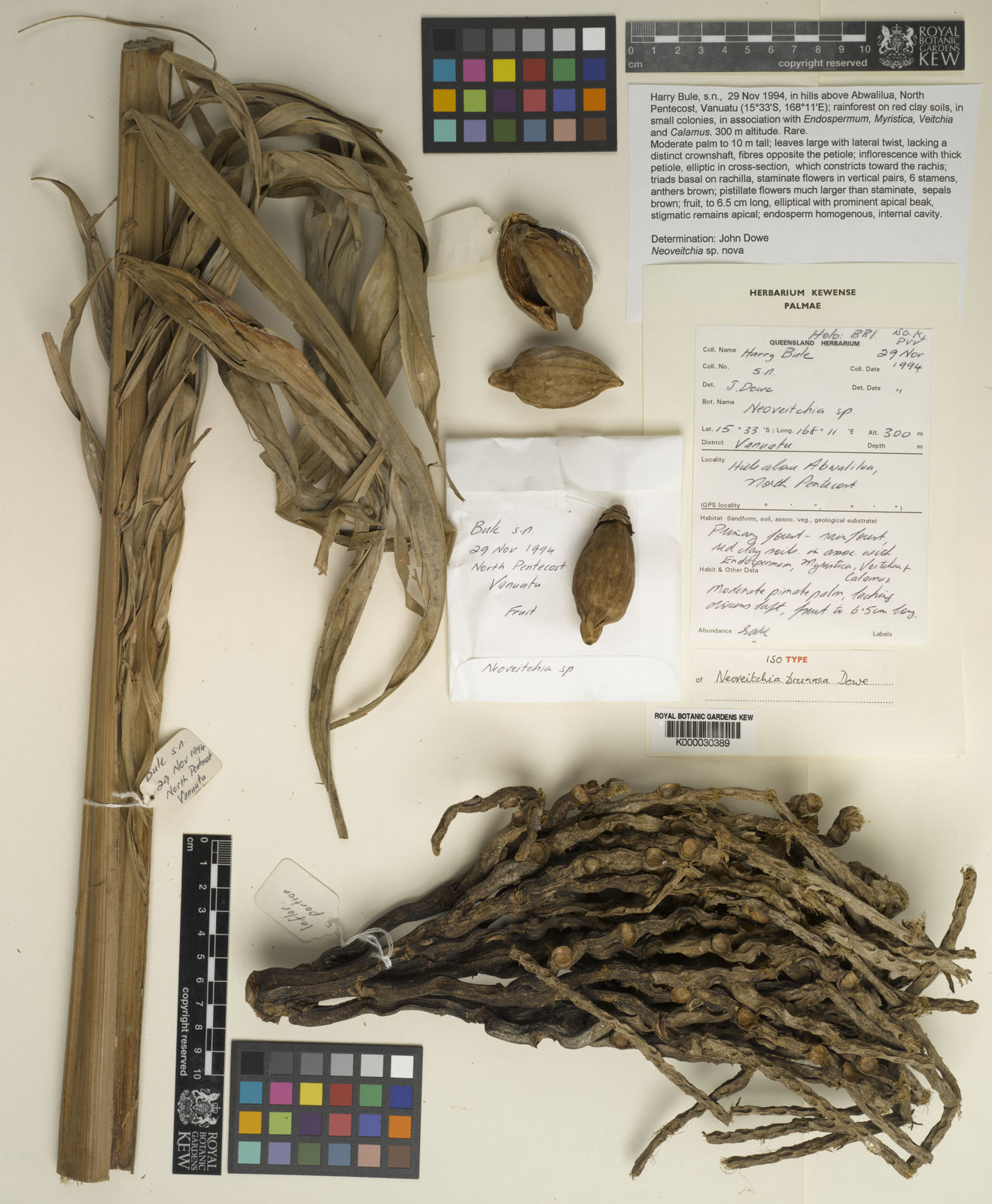
Neoveitchia
Neoveitchia is a genus of palm trees. It contains two known species, native to certain islands in the western Pacific:
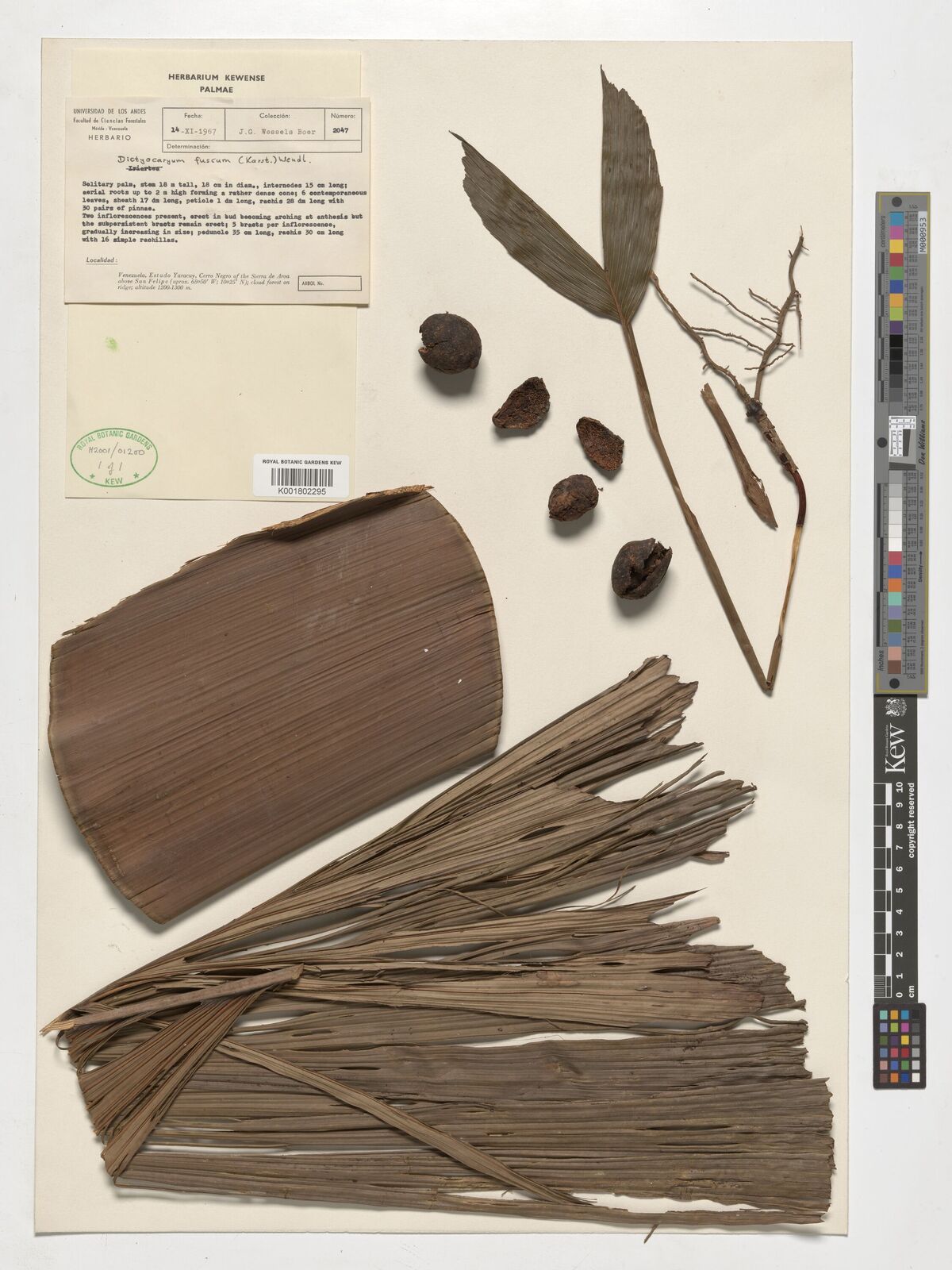
Dictyocaryum
Dictyocaryum is a genus of monoecious flowering plants in the palm family found in South America. It is closely related to the genus Iriartea; they are commonly called araque or palma real. As many as eleven species have been described but this number is reduced to three in most current accounts. The genus name translates from two Greek words meaning "net" and "nut", describing the thick network of raphe fibers around the seed.
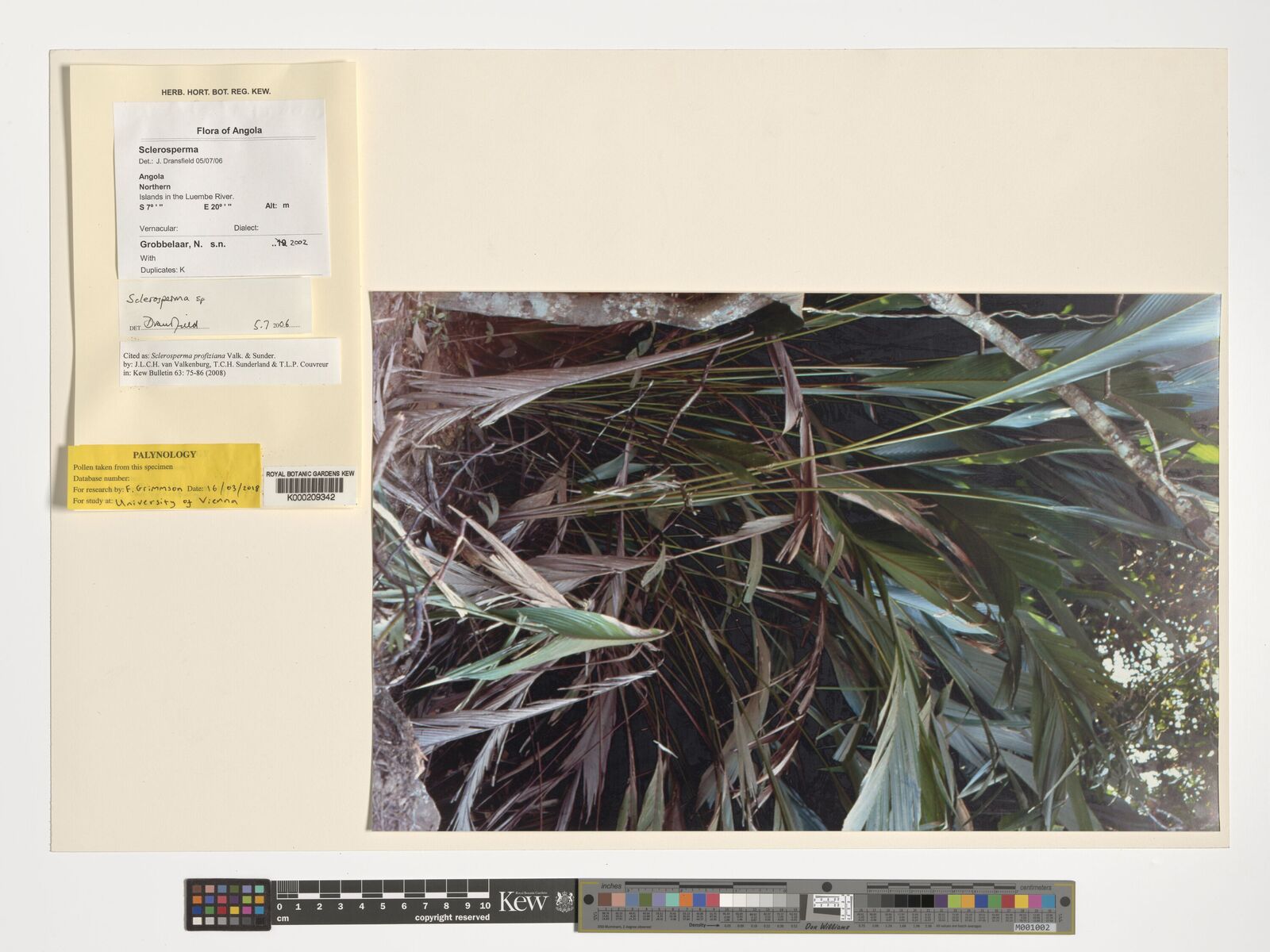
Sclerosperma
Sclerosperma is a monoecious genus of flowering plant in the palm family found in Africa where three species are known. Having no obvious relatives, it does resemble the Madagascar native Marojejya though a detailed study of Madagascar's palms is required to determine if any true relationship exists. The lack of relatives, and its interesting qualities, indicate, at one time, the existence of a diverse African palm flora. The name is from two Greek words meaning "hard" and "seed".
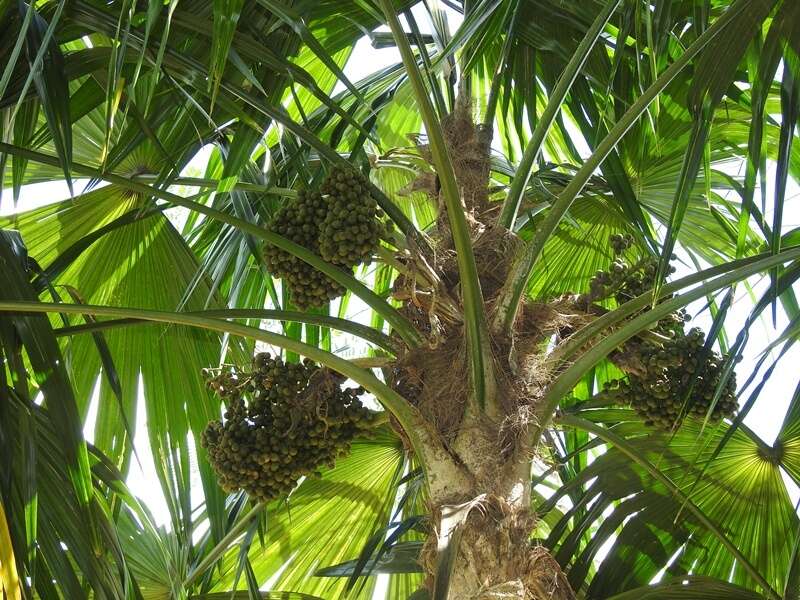
Chelyocarpus
Chelyocarpus is a genus of small to medium-sized fan palms which are native to northwestern South America. Some are upright trees, while others creep along the ground. Species are used for thatch, to weave hats, stuff pillows and as a source of salt.
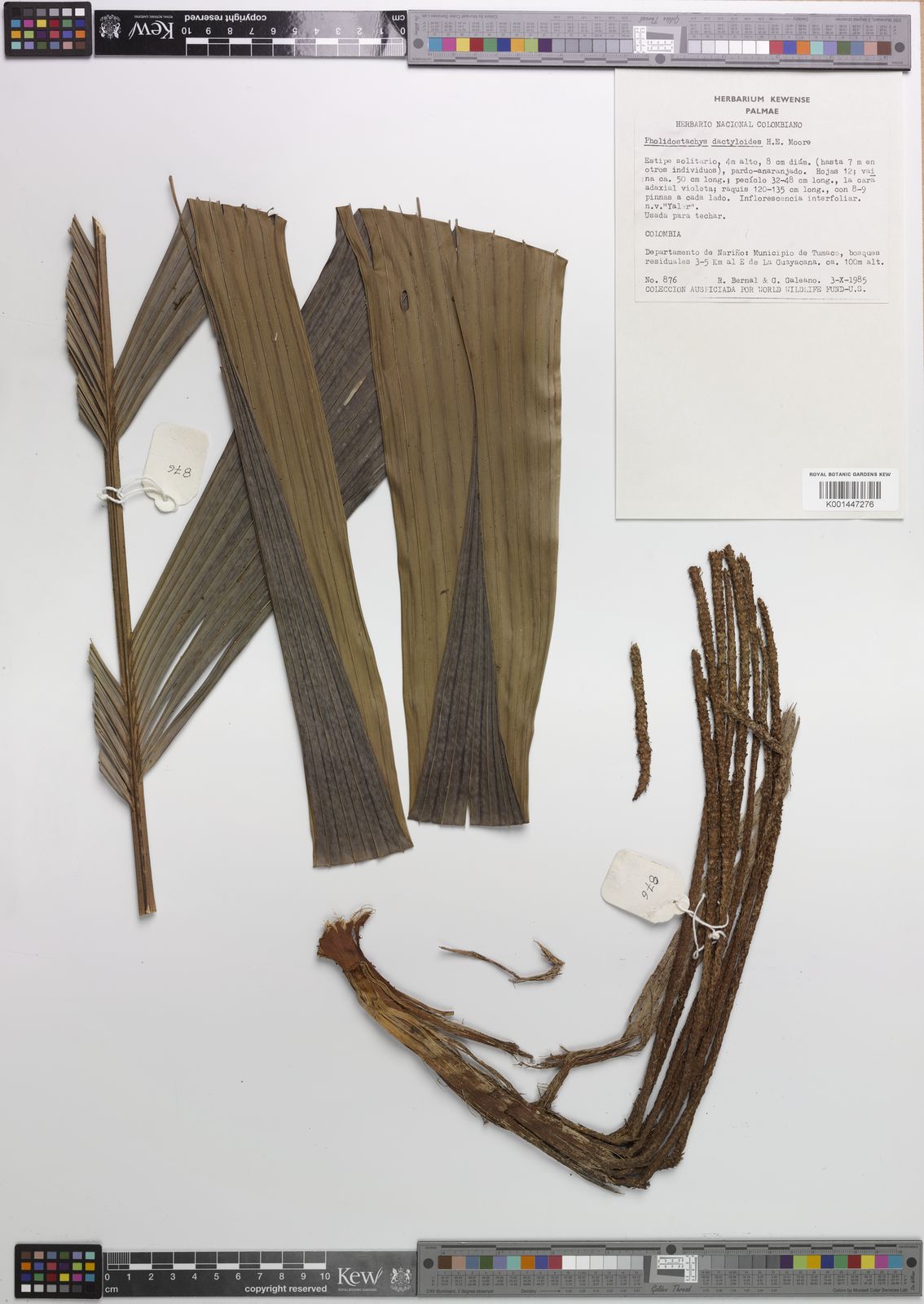
Pholidostachys
Pholidostachys is a genus of palms found in Central America and northwestern South America (northwestern Brazil, Colombia, Ecuador, Peru).
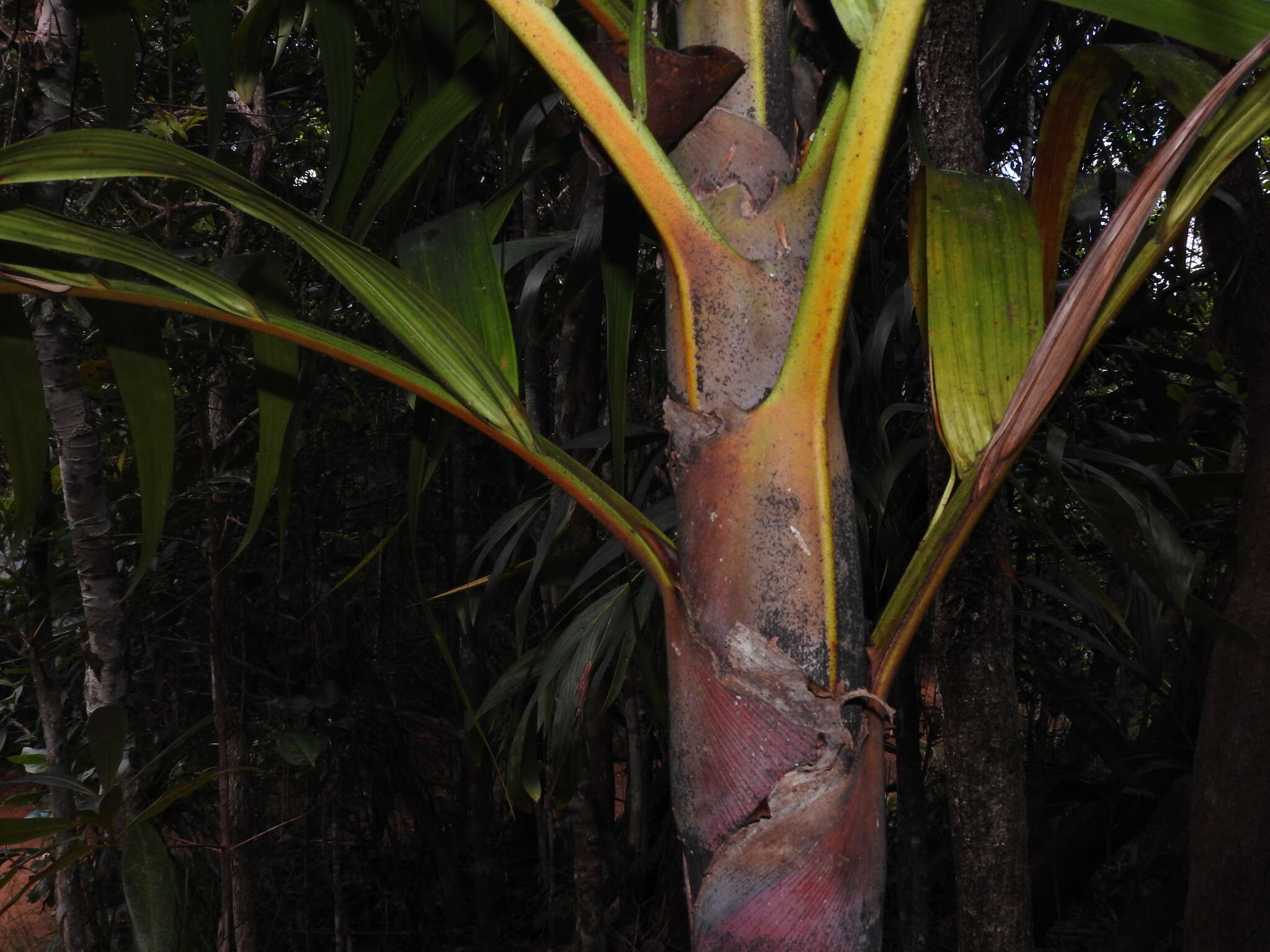
Basselinia
Basselinia is a genus of flowering plant in the family Arecaceae. The entire genus is endemic to the Island of New Caledonia in the Pacific. In some (but not all) molecular phylogenetic analyses, Hedyscepe from Lord Howe Island is nested in Basselinia.
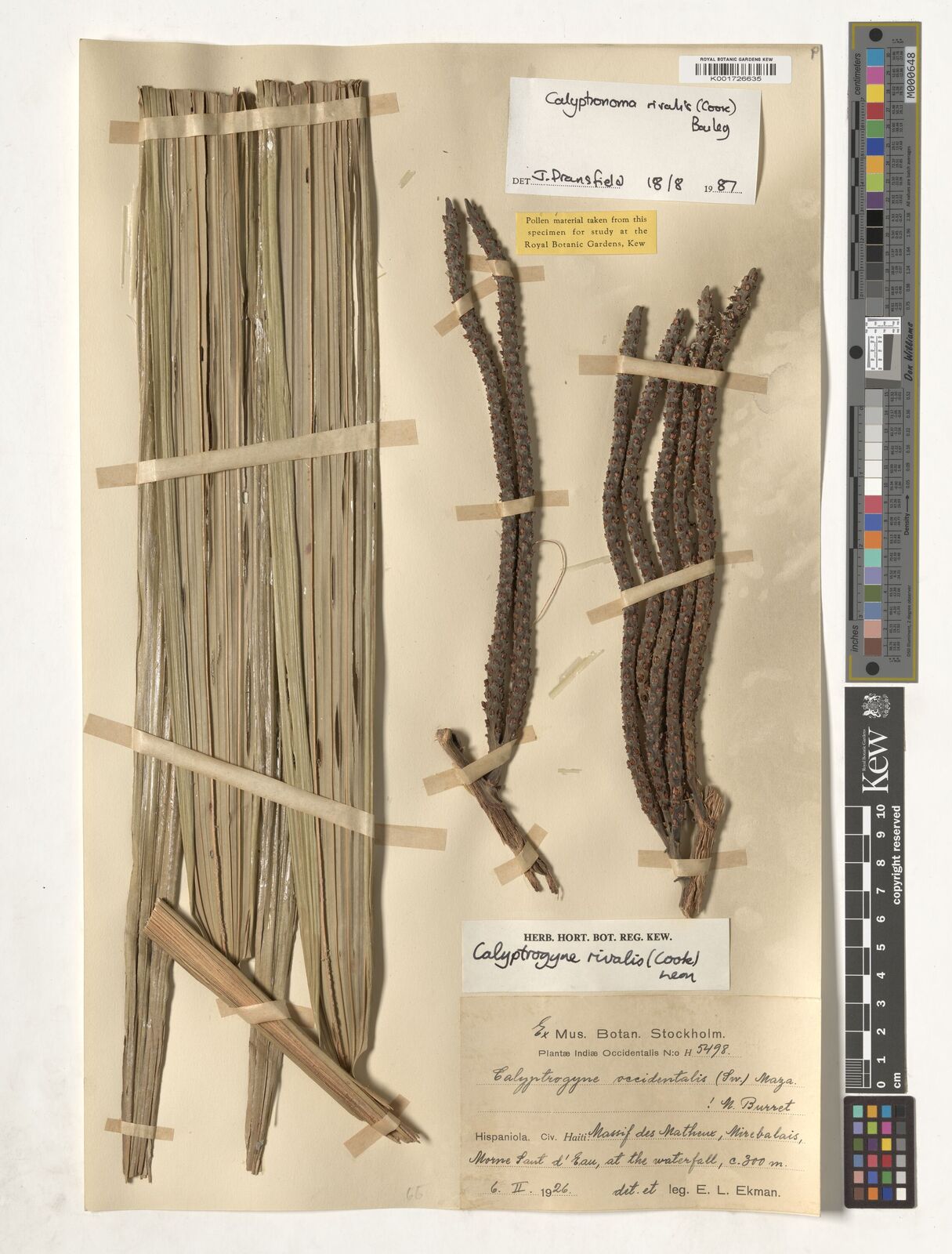
Calyptronoma
Calyptronoma is a genus in the palm family, native to the Greater Antilles. They have pinnately compound leaves with short petioles. The name was coined by August Grisebach who first described the genus in his 1846 Flora of the British West Indian Islands.
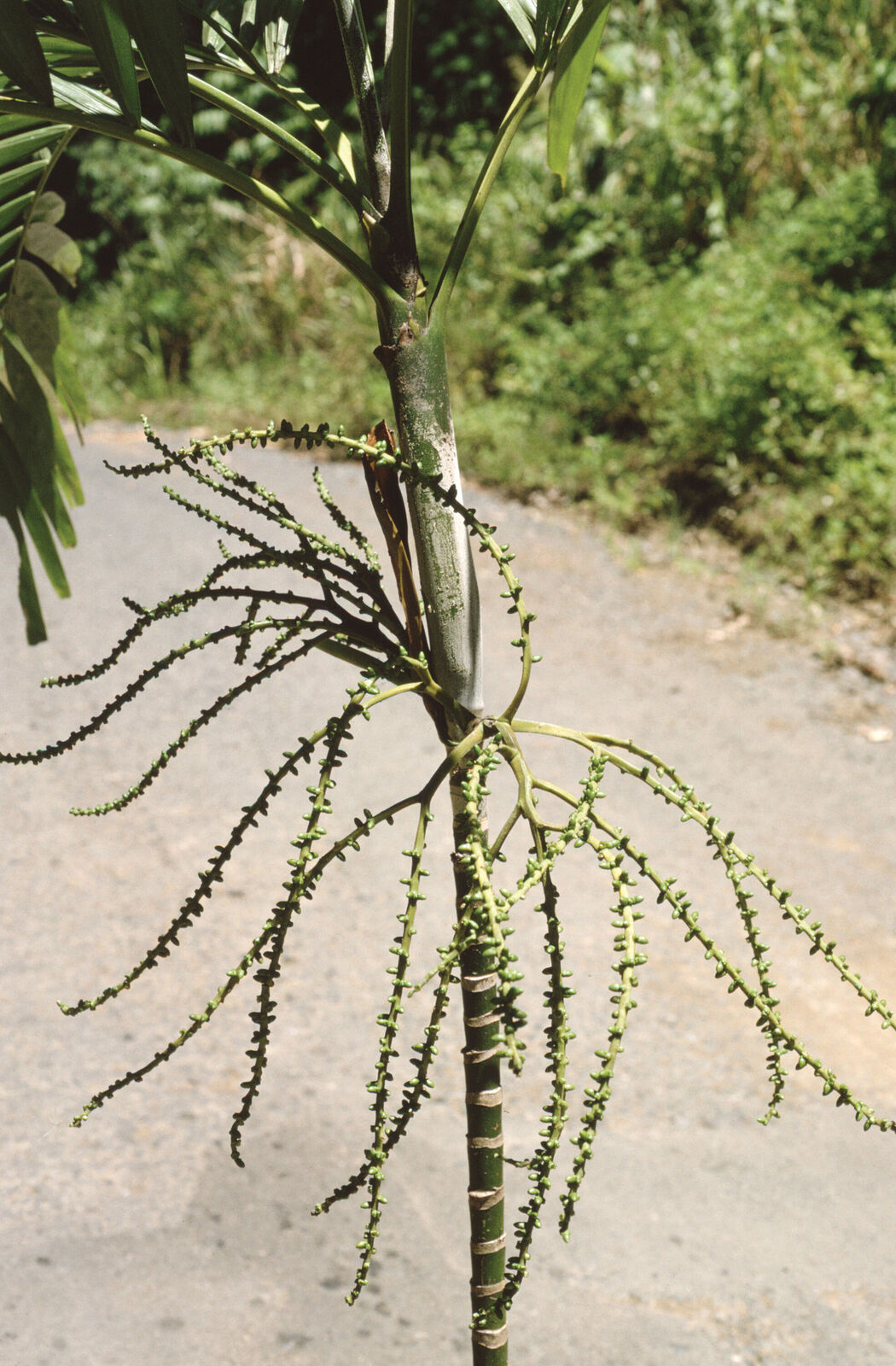
Ptychosperma
Ptychosperma is a genus of flowering plant in the family Arecaceae. Most are native to Australia and/or New Guinea, with a few in the Solomon Islands and in Maluku Province of eastern Indonesia. Some have been cultivated abroad as house or garden plants, and reportedly naturalized in certain regions (Caribbean, Polynesia, Fiji, Florida, Australia, New Guinea)
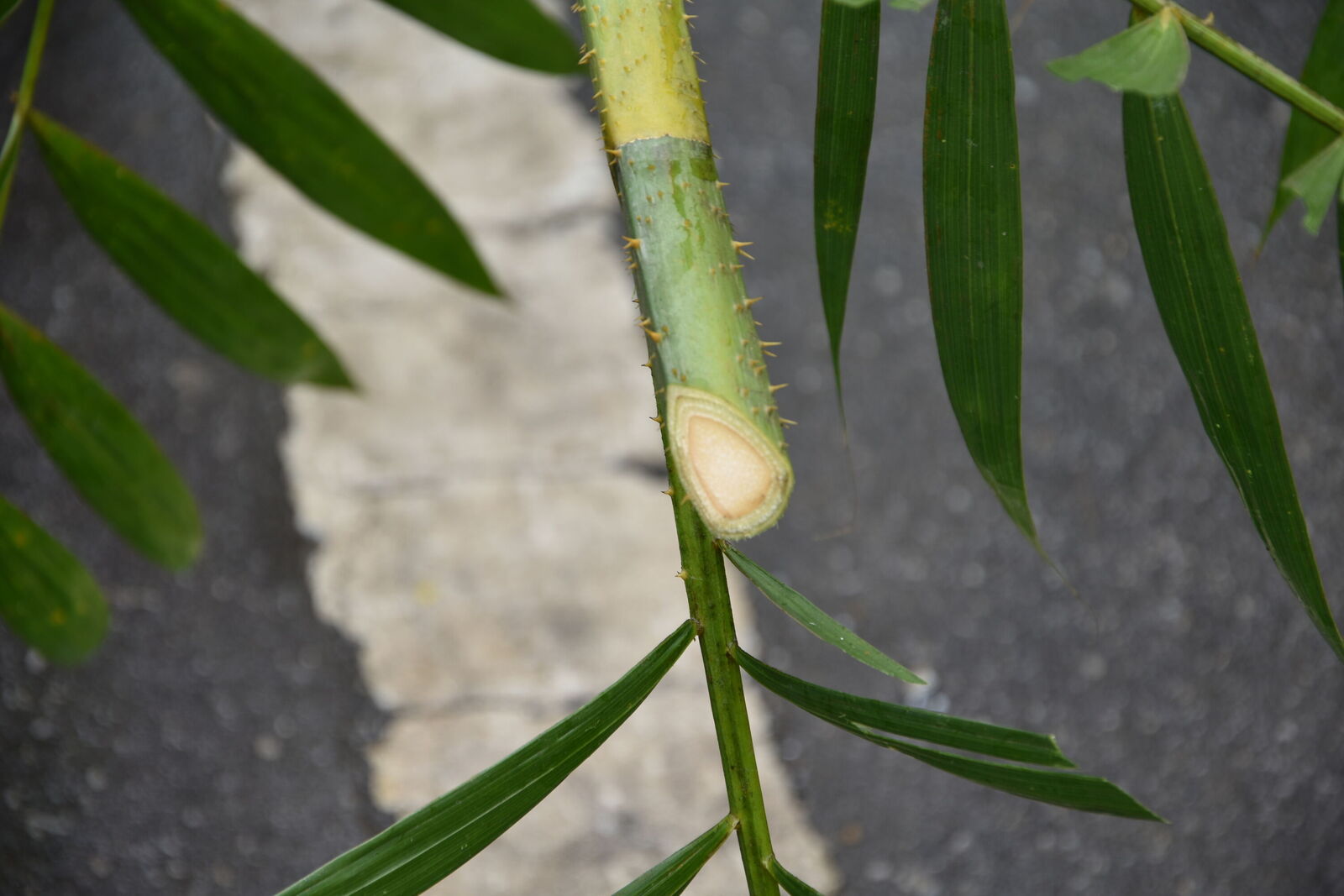
Plectocomiopsis
Plectocomiopsis is a dioecious genus of flowering plant in the palm family found in Indochina, Malaysia, Borneo and Sumatra. Hapaxanthic and armed with spines, they are a climbing rattan, closely related to the Myrialepis palms. The name is Greek for "similar to Plectocomia", another close relative.

Manicaria
thumb|Manicaria saccifera – MHNT

Cyphokentia
Cyphokentia is a genus of flowering plant in the palm family endemic to New Caledonia. the genus is named from two Greek words meaning "tumor" and "Kentia", a former palm genus, and the species name translates to "large" and "spike", describing the inflorescence. The genus has two known species and Its closest relative is Clinosperma, also endemic to New Caledonia, and the sole other genus of the subtribe Clinospermatinae.

Heterospathe
Heterospathe is a monoecious genus of flowering plant in the palm family found in Oceania, where it is called sagisi palm. With 39 species, Heterospathe is named from a Greek combination of "various" and "spathe", which describes the two distinct bract types.

Reinhardtia
Reinhardtia is a genus in the palm family native to the northern Neotropics. It is a primarily Central American genus with five species distributed between southern Mexico and the extreme north of Colombia, and one isolated species, Reinhardtia paiewonskiana in the southwest of the Dominican Republic.
==Species==
Reinhardtia elegans Liebm. - Mexico (Oaxaca, Chiapas), Honduras
Reinhardtia gracilis (H.Wendl.) Burret - Central America, Mexico (Oaxaca, Chiapas), Veracruz, Colombia
Reinhardtia koschnyana (H.Wendl. & Dammer) Burret - Honduras, Nicaragua, Costa Rica, Panama, Colombia
Reinhardtia
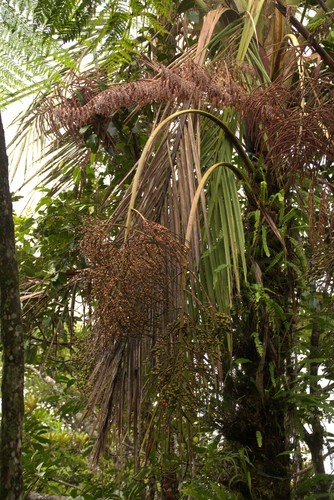
Cyphosperma
Cyphosperma is a genus of flowering plants in the family Arecaceae, native to various islands of the Pacific. It contains the following species:
Veitchia
Veitchia is a genus of flowering plant in the family Arecaceae.
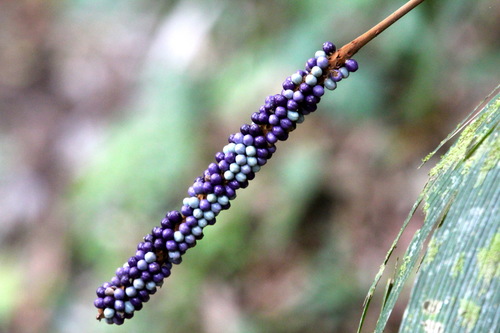
Calyptrogyne
Calyptrogyne is a genus in the palm family (Arecaceae). It is distributed across Central America, Colombia, and southern Mexico, with 11 of the 17 known species endemic to Panama. Calyptrogyne ghiesbreghtiana is the most widespread and best studied species in this genus.
==Species==
Calyptrogyne allenii (L.H.Bailey) de Nevers - Panama
Calyptrogyne anomala de Nevers & A.J.Hend. - Panama
Calyptrogyne baudensis A.J.Hend. - Colombia
Calyptrogyne coloradensis A.J.Hend. - Panama
Calyptrogyne condensata (L.H.Bailey) Wess.Boer - Panama, Costa Rica
Calyptrogyne costatifrons (L.H.Bailey) de Nevers

Desmoncus
Desmoncus is a genus of mostly climbing, spiny palms native to the Neotropics. The genus extends from Mexico in the north to Brazil and Bolivia in the south, with two species present in the southeastern Caribbean (Trinidad and the Windward Islands).
==Description==
Desmoncus is best known as a genus of climbing palms. Twenty-three of the 24 species recognised by Andrew Henderson in his revision of the genus are climbers; only one, D. stans is free-standing. Almost all Neotropical climbing palms belong to Desmoncus—the one exception being Chamaedorea elatior.
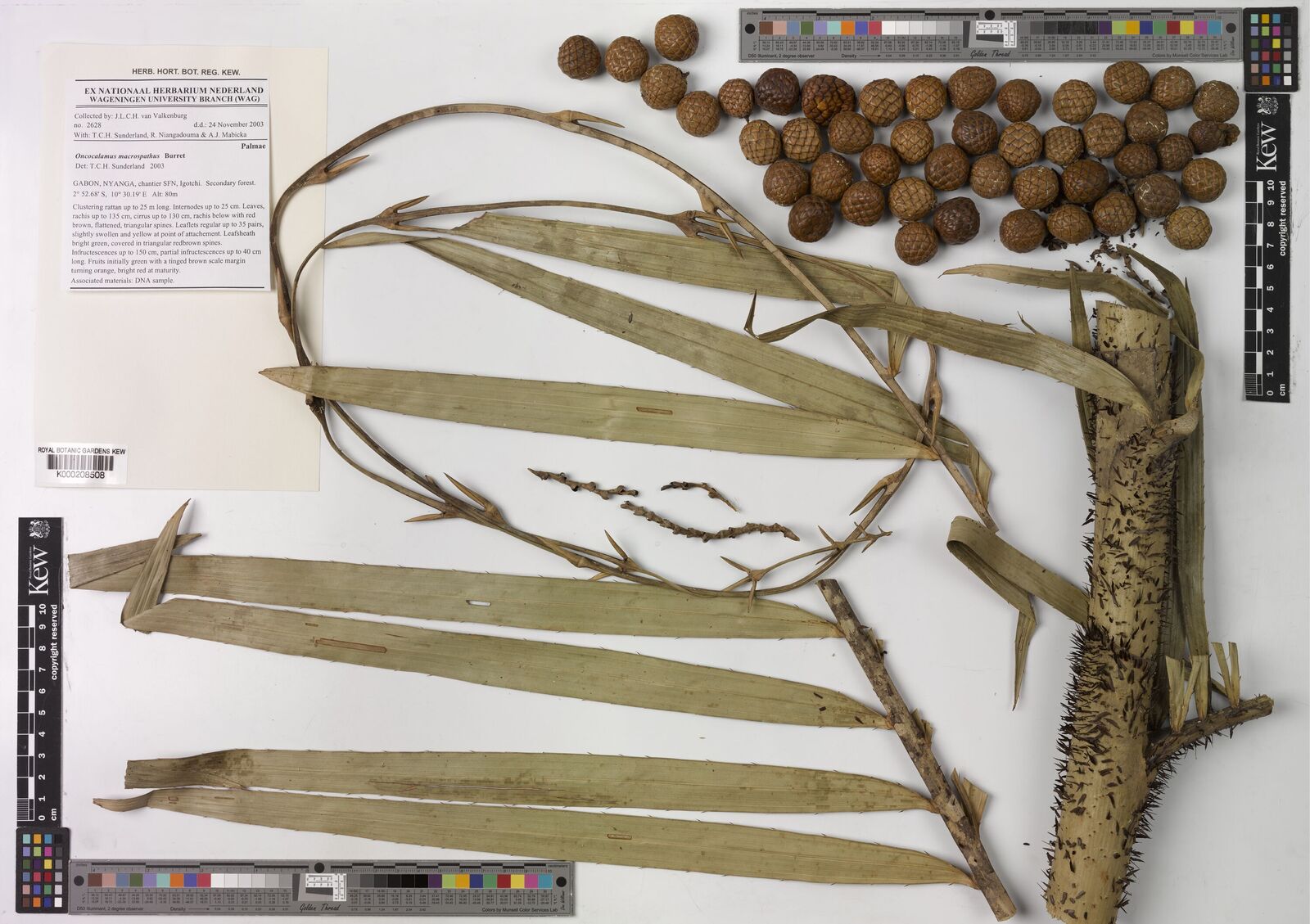
Oncocalamus
Oncocalamus is a monoecious genus of flowering plants in the palm family found in western Africa. The genus is the lone member of the Oncocalaminae; once placed with the vegetatively similar Eremospatha and Laccosperma in the Ancistrophyllinae, it is now isolated based on their unusual flowers and arrangement. Such a placement argues for a long and complex evolutionary process in the Calamoideae with heavy extinction rates. The Greek genus name combines "horn" and "capsule".
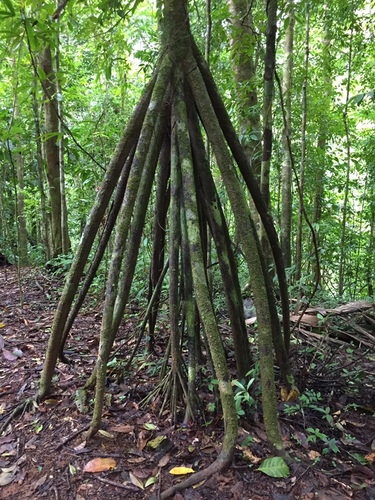
Socratea
Socratea is a genus of five species of palms found in tropical Central America and South America.

Ptychococcus
thumb|Ptychococcus paradoxus. Nong Nooch Tropical Garden, Thailand.
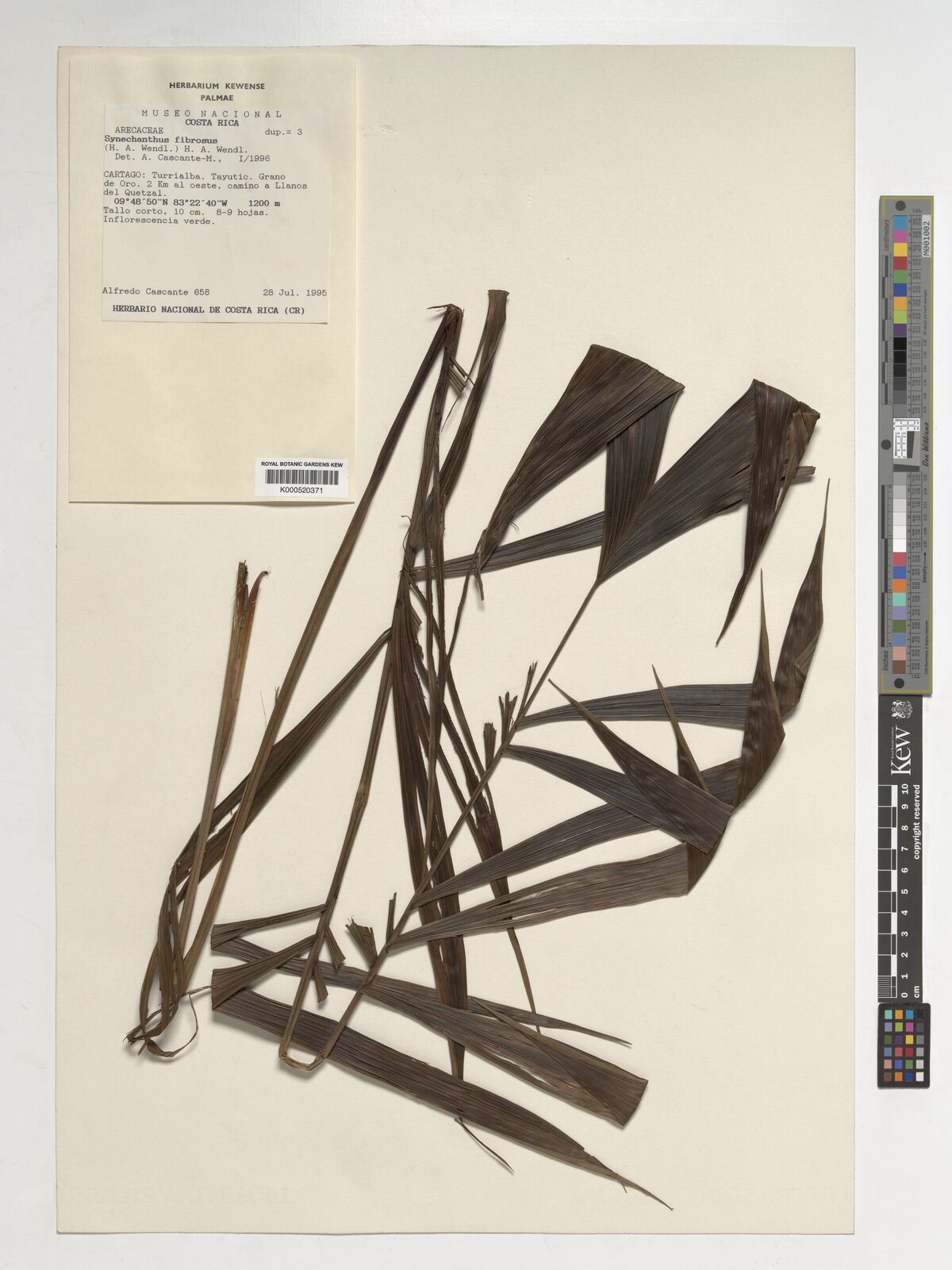
Synechanthus
Synechanthus is a monoecious genus of flowering plant in the palm family found in Mexico, Central and South America. Commonly called bola, palmilla, or jelly bean palm, they are closely related to members of Chamaedorea, only distinguished by their flower and fruit form. The Greek genus name is a combination of "united" and "flower".
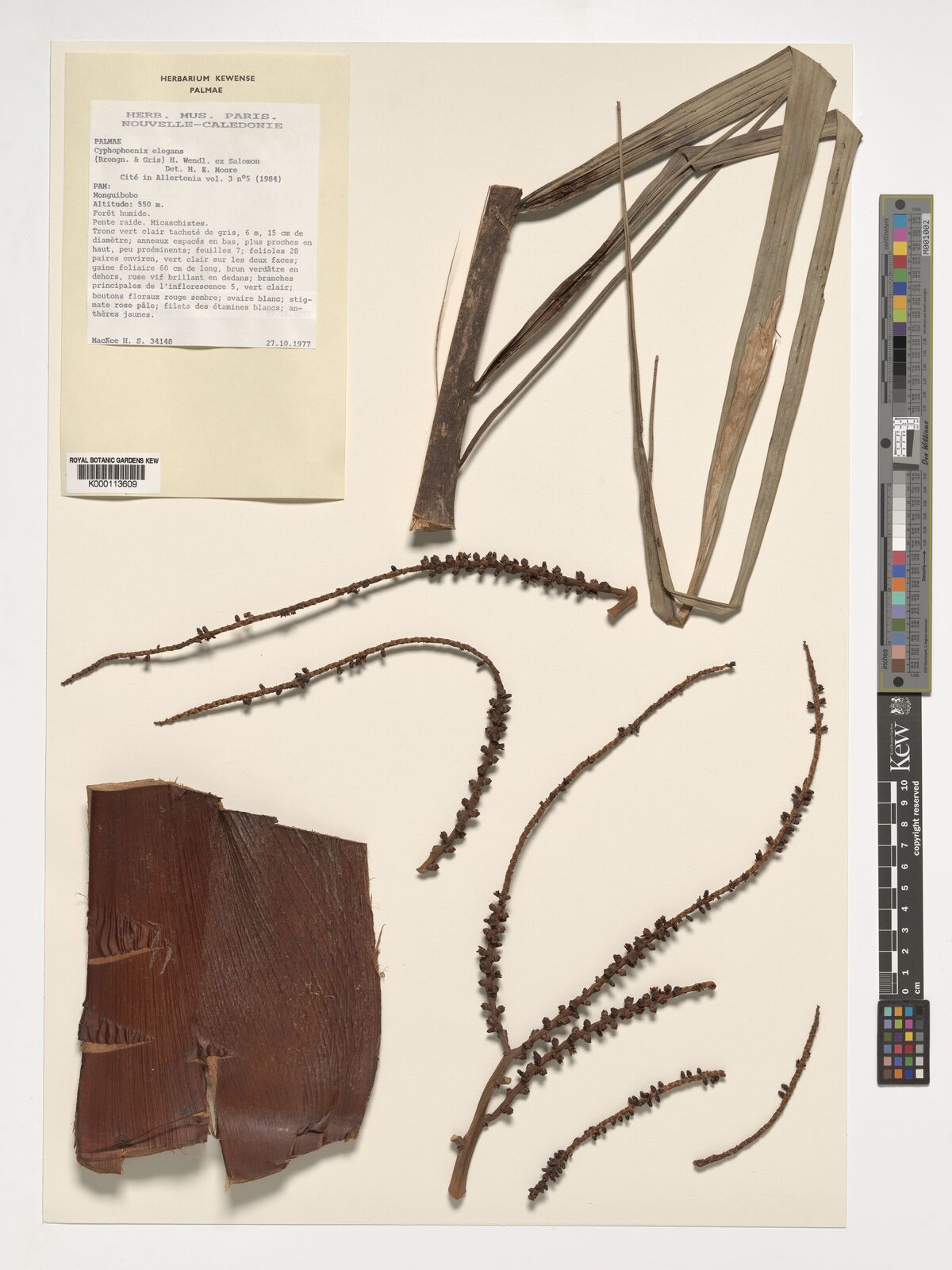
Cyphophoenix
Cyphophoenix is a genus of flowering plant in the family Arecaceae. It contains 4 known species, all endemic to New Caledonia. The relationships between Cyphophoenix and some other genera of the tribe Basseliniinae including Physokentia and the New Caledonia endemic Burretiokentia are not clear.

Adonidia
Adonidia is a genus of flowering plants in the family Arecaceae, native to the Philippines and Borneo.
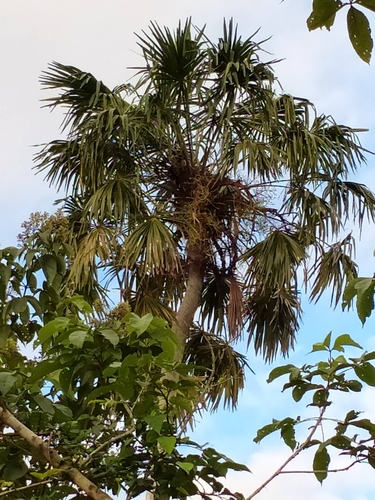
Pholidocarpus
Pholidocarpus is a genus of flowering plants in the family Arecaceae, native to Southeast Asia.
==Species==
The genus contains the following species:

Burretiokentia
thumb|right|250px|Burretiokentia vieillardii

Iriartella
Iriartella is a genus of two species of palms found in northern and northwestern South America (Guyana, Venezuela, Colombia, Peru, and western Brazil; particularly the Acre, Amazonas, Roraima, and Pará states). The Nukak people of Colombia use Iriartella setigera to fashion blowguns.
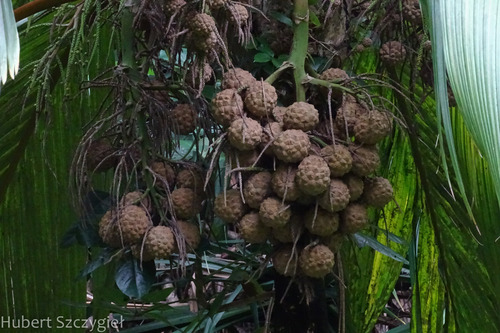
Pelagodoxa
Pelagodoxa is a genus of palm tree. It includes two species, P. henryana, which is native to the Marquesas Islands of French Polynesia, and P. mesocarpa, which is native to Vanuatu.
thumb | 220x124px | left | Mature P. mesocarpa fruit
Nenga
Nenga is a monoecious genus of flowering plant in the palm family. It is native to Southeast Asia and commonly called pinang palm. The genus name is based on a corruption of a Javanese term for a plant now classified within Pinanga.
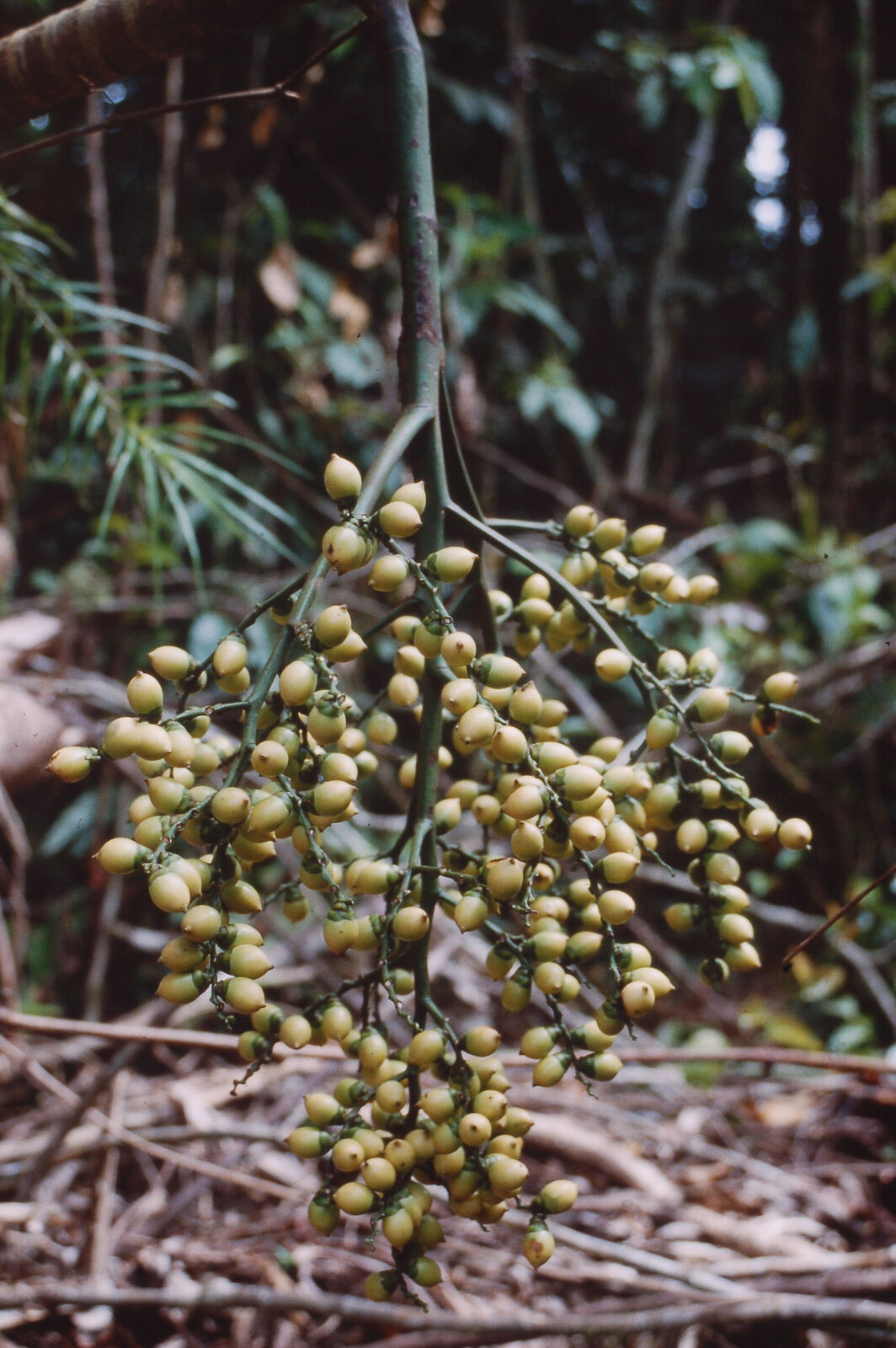
Ponapea
Ponapea is a genus of palms which is native to certain islands in the western Pacific. The genus consists of four species, and has often been considered to be part of the genus Ptychosperma. Three of the species are endemic to the Caroline Islands, the fourth to the Bismarck Archipelago.