Category
page 1Auriculariales

Auricularia auricula-judae
species of fungus

Auricularia
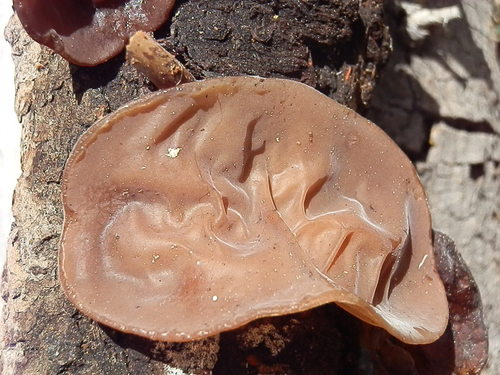
Auricularia is a genus of fungi in the family Auriculariaceae. Basidiocarps (fruit bodies) are typically gelatinous and ear-shaped, with a slightly downy to conspicuously hirsute upper surface and an under surface that is smooth, wrinkled or veined. All species grow on wood. Several Auricularia species are edible and commercially cultivated on a large scale in China and East Asia.
Pseudohydnum gelatinosum
species of fungus

Auricularia mesenterica
species of fungus
Auriculariales
The Auriculariales are an order of fungi in the class Agaricomycetes. Species within the order were formerly referred to the "heterobasidiomycetes" or "jelly fungi", since many have gelatinous basidiocarps (fruit bodies) that produce spores on septate basidia. Around 200 species are known worldwide, placed in six or more families, though the status of these families is currently uncertain. All species in the Auriculariales are believed to be saprotrophic, most growing on dead wood. Fruit bodies of several Auricularia species are cultivated for food on a commercial scale, especially in China.

Auriculariaceae
The Auriculariaceae are a family of fungi in the order Auriculariales. Species within the family were formerly referred to the "heterobasidiomycetes" or "jelly fungi", since many have gelatinous basidiocarps (fruit bodies) that produce spores on septate basidia. Around 100 species are known worldwide. All are believed to be saprotrophic, most growing on dead wood. Fruit bodies of several Auricularia species are cultivated for food on a commercial scale, especially in China.
Exidia glandulosa
species of fungus

Auricularia nigricans
species of fungus

Exidia
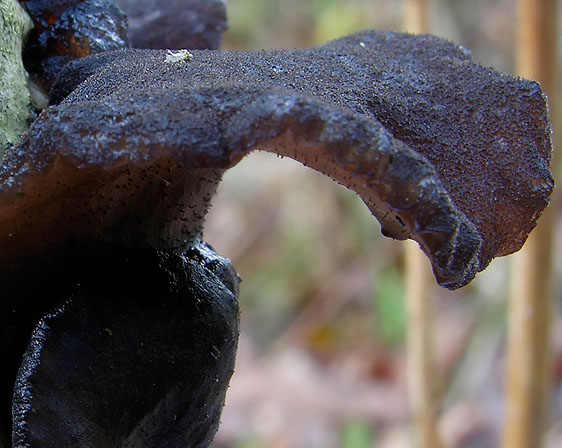
Exidia is a genus of fungi in the family Auriculariaceae. The species are saprotrophic, occurring in attached or recently fallen dead wood, and produce gelatinous basidiocarps (fruit bodies). The fruit bodies are diverse, pustular, lobed, button-shaped or cup-shaped. Several species, including the type species Exidia glandulosa, have sterile pegs or pimples on their spore-bearing surface. The genus has a cosmopolitan distribution and around 20 species are currently recognized worldwide. Initial molecular research indicates the genus is artificial.

Exidia recisa
species of fungus

Exidia nigricans
jelly fungus

Exidiopsis effusa
species of fungus

Auricularia cornea
species of fungus
Auricularia heimuer
species of fungus
Exidia saccharina
species of fungus

Exidia thuretiana
species of fungus
Exidiopsis
Exidiopsis is a genus of fungi in the family Auriculariaceae. The genus has a widespread distribution and contains around 30 species. One species, Exidiopsis effusa, is responsible for the formation of hair ice on dead wood.

Exidia repanda
species of fungus

Myxarium nucleatum
species of fungus
Hyaloriaceae
The Hyaloriaceae are a family of fungi in the order Auriculariales. Species within the family have gelatinous basidiocarps (fruit bodies) that produce spores on septate basidia and, as such, were formerly referred to the "heterobasidiomycetes" or "jelly fungi". All appear to be saprotrophic, growing on dead wood or plant remains. Less than 30 species are currently included within the Hyaloriaceae, but the family has not been extensively researched.
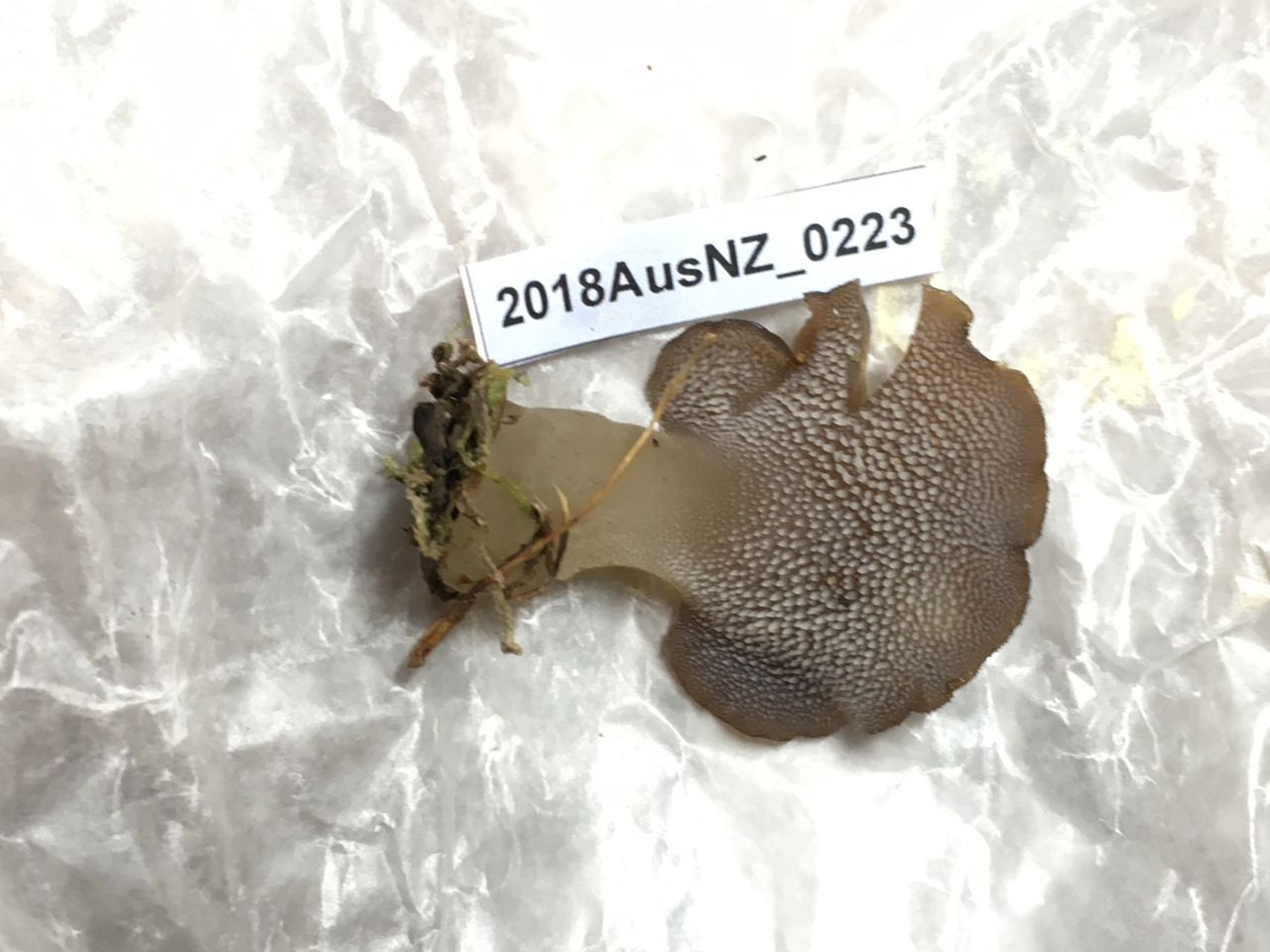
Pseudohydnum
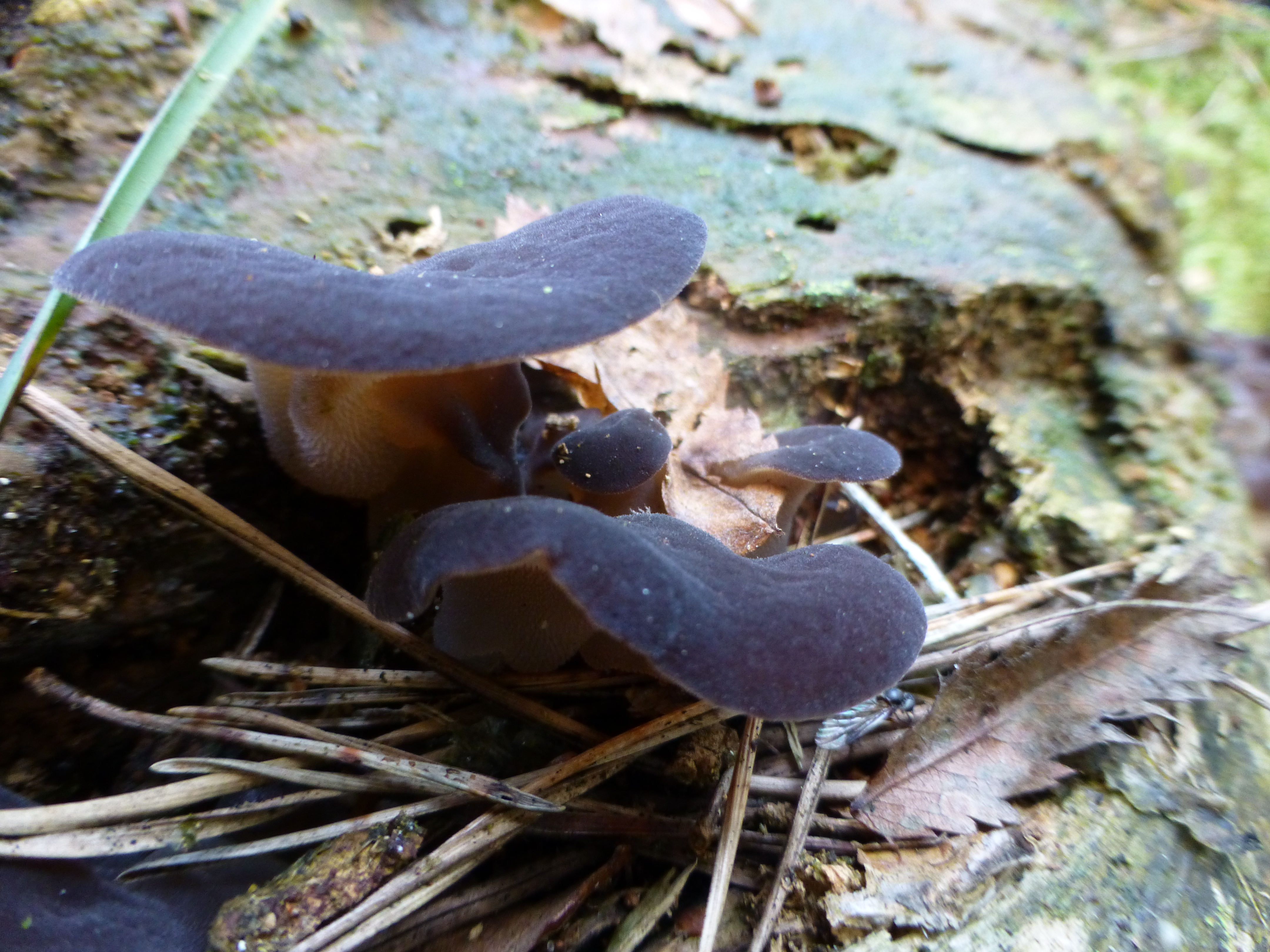
Pseudohydnum is a genus of fungi in the order Auriculariales. Basidiocarps (fruit bodies) are typically bracket-like and gelatinous, with or without a stipe, with a hydnoid (toothed) undersurface. The genus is widely distributed in both the northern and southern hemisphere, with thirteen species currently described and others awaiting description.
Myxarium
Myxarium is a genus of fungi in the family Hyaloriaceae. Basidiocarps (fruit bodies) are gelatinous and effused or pustular. The genus is cosmopolitan. All species grow on dead wood or dead herbaceous stems.
Auricularia americana
species of fungus
Guepinia
Guepinia is a genus of fungus in the Auriculariales order. It is a monotypic genus, containing the single species Guepinia helvelloides, commonly known as the apricot jelly or salmon salad. The fungus produces salmon-pink, ear-shaped, gelatinous fruit bodies that grow solitarily or in small tufted groups on soil, usually associated with buried rotting wood. The fruit bodies are up to tall and up to wide; the stalks are not well-differentiated from the cap. It has a white spore deposit, and the oblong to ellipsoid spores measure 9–11 by 5–6 micrometers.
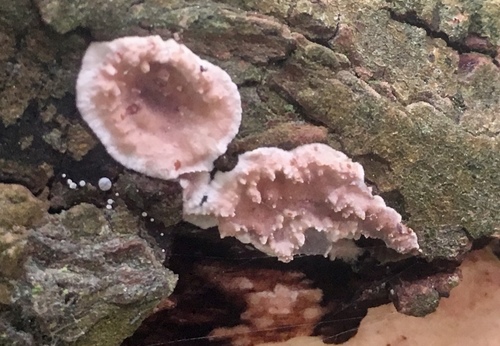
Eichleriella
Eichleriella is a genus of fungi in the order Auriculariales. Species produce effused or cupulate, waxy to leathery basidiocarps (fruit bodies) on wood, with a smooth to spiny surface. The genus currently contains more than 15 species.
Basidiodendron
Basidiodendron is a genus of fungi in the order Auriculariales. Basidiocarps (fruit bodies) are corticioid, thin, effused and are typically found on fallen wood. The genus is widespread in both temperate and tropical regions and contains over 30 species.
Endoperplexa
Endoperplexa is a genus of fungi of uncertain familial placement (incertae sedis) in the order Auriculariales. The Dictionary of the Fungi (10th edition, 2008) report four species, but an additional two species have since been described or transferred into the genus.

Protomerulius
Protomerulius is a genus of fungi in the order Auriculariales. Basidiocarps (fruit bodies) are formed on dead wood and have an effused, smooth, spiny, or poroid hymenium. The genus is cosmopolitan.
Ceratosebacina
Ceratosebacina is a genus of fungi in the order Auriculariales. The genus, which includes three species found in Europe, was circumscribed in 1993.
Heterorepetobasidium
Heterorepetobasidium is a genus of fungi of uncertain familial placement (incertae sedis) in the order Auriculariales. The genus is widespread, especially in tropical regions, and contains two Taiwanese species, H. ellipsoideum and H. subglobosum.

Auricularia fuscosuccinea
species of fungus
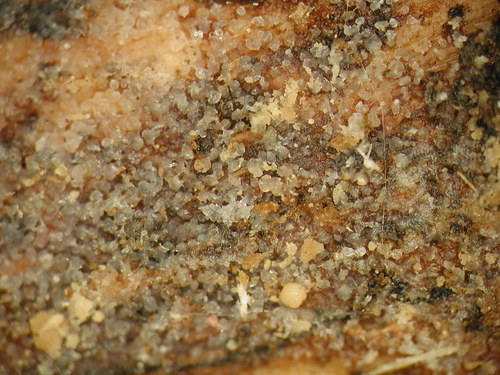
Protodontia
Protodontia is a genus of fungi in order Auriculariales.
Oliveoniaceae
The Oliveoniaceae are a family of fungi in the order Auriculariales. Species form thin, effused, corticioid basidiocarps (fruit bodies) with aseptate basidia producing basidiospores that give rise to secondary spores. All species are believed to be saprotrophic, most growing on dead wood.
Elmerina
Elmerina is a genus of fungi in the order Auriculariales. Basidiocarps (fruit bodies) are formed on dead wood and are either bracket-like with a poroid hymenium or densely clavarioid. Species are known from East Asia and Australia.
Oliveonia
Oliveonia is a genus of fungi in the order Auriculariales. Species form thin, effused, corticioid basidiocarps (fruit bodies) with microscopically prominent cystidia and aseptate basidia producing basidiospores that give rise to secondary spores. All species are believed to be saprotrophic, most growing on dead wood. The genus was originally published by American mycologist L.S. Olive in 1957 as Heteromyces, but this is an illegitimate later homonym of the lichen genus Heteromyces Müll.Arg. (1889). The genus was renamed Oliveonia by Dutch mycologist M.A. Donk in 1958.
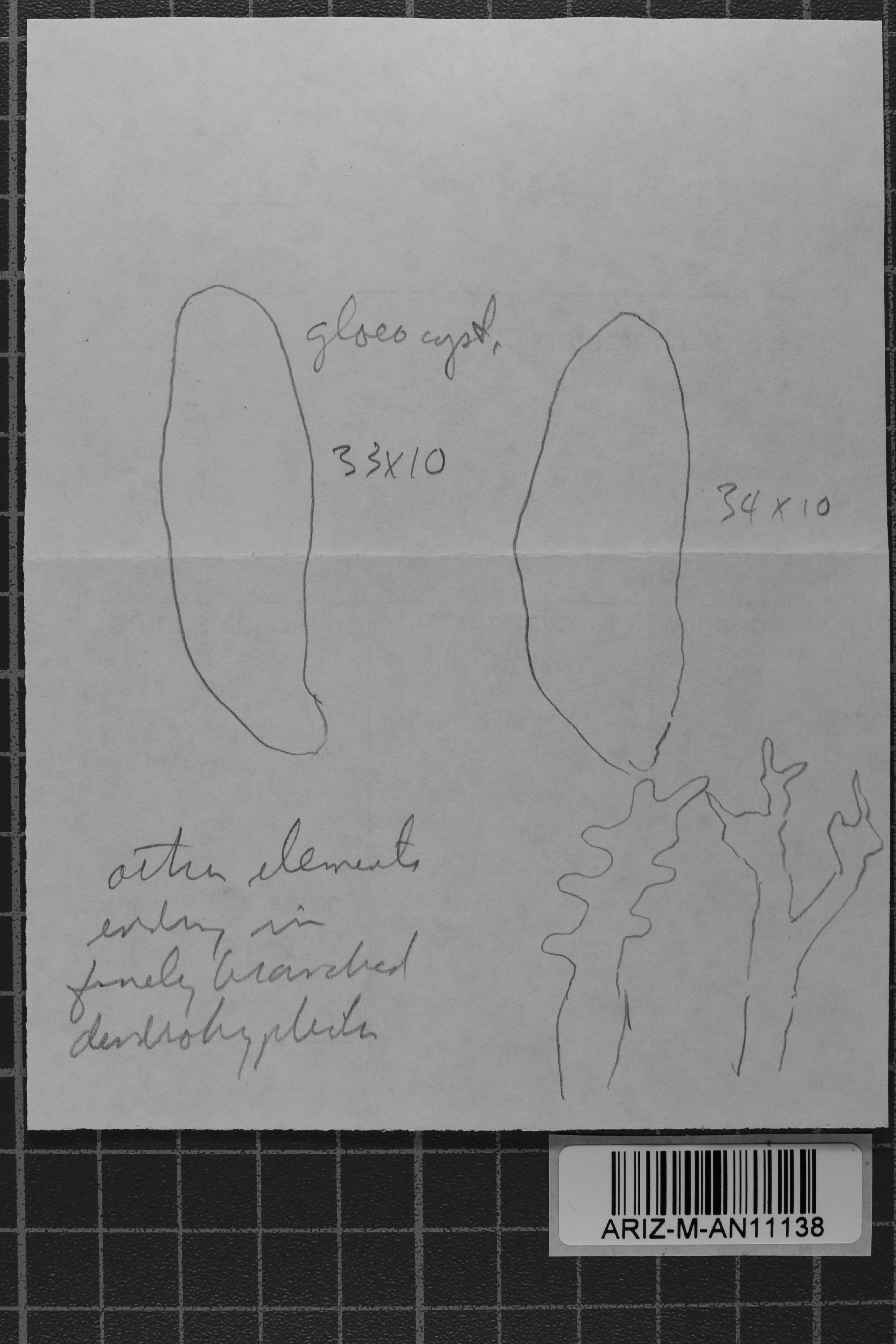
Heterochaete
Heterochaete is a genus of fungi in the order Auriculariales. Species produce effused, gelatinous, waxy, or leathery basidiocarps (fruit bodies) on wood, partly or wholly covered in small sterile spines or pegs. The presence of these sterile spines distinguishes the genus from Exidiopsis, species of which are microscopically similar but have smooth basidiocarps.
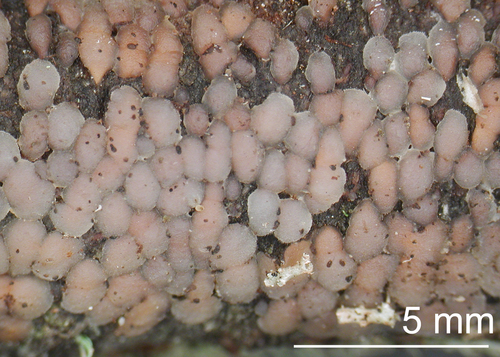
Exidia nothofagi
Species of fungus
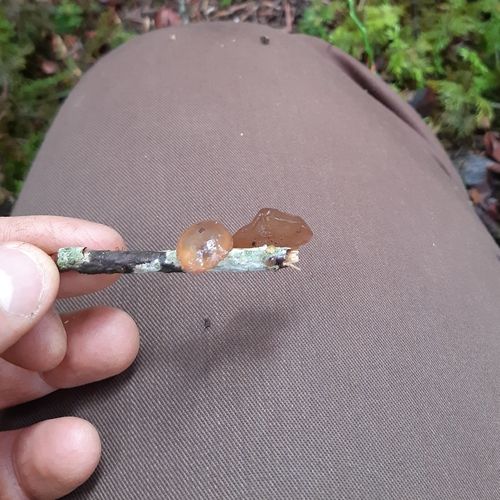
Exidia umbrinella
species of fungus
Aporpium
Aporpium is a genus of fungi in the order Auriculariales. Basidiocarps (fruit bodies) are formed on dead wood and have a poroid hymenium. Species were often formerly referred to the genera Elmerina or Protomerulius, but molecular research, based on cladistic analysis of DNA sequences, has shown that Aporpium is a distinct, mainly north temperate genus.
Heteroradulum
Heteroradulum is a genus of fungi in the order Auriculariales. Species produce effused, leathery basidiocarps (fruit bodies) on wood, often pinkish red and partly or wholly covered in small sterile spines. The genus was originally published in 1917 by American mycologist Curtis Gates Lloyd under the facetious pseudonym "McGinty", rendering the name invalid. It was validated a century later to accommodate a group of species formerly placed in the genera Eichleriella or Heterochaete, but not closely related to either.