Category
page 1Bee genera
.jpg)
Andrena
Andrena is a genus of bees in the family Andrenidae. With over 1,500 species, it is one of the largest genera of animals. It is a strongly monophyletic group that is difficult to split into more manageable divisions; currently, Andrena is organized into 104 subgenera. It is nearly worldwide in distribution, with the notable exceptions of Oceania and South America. Bees in this genus are commonly known as mining bees due to their ground-nesting lifestyle.
%20-%20Keila.jpg)
Megachile
thumb|Male Megachile
The genus Megachile is a cosmopolitan group of solitary bees, often called leafcutter bees or leafcutting bees; it also includes the resin bees and mortar bees. While other genera within the family Megachilidae may chew leaves or petals into fragments to build their nests, certain species within Megachile neatly cut pieces of leaves or petals, hence their common name. This is one of the largest genera of bees, with more than 1500 species in over 50 subgenera. The alfalfa leafcutter bee (Megachile rotundata) is managed on a commercial scale for crop pollination, and has bee
Anthophora
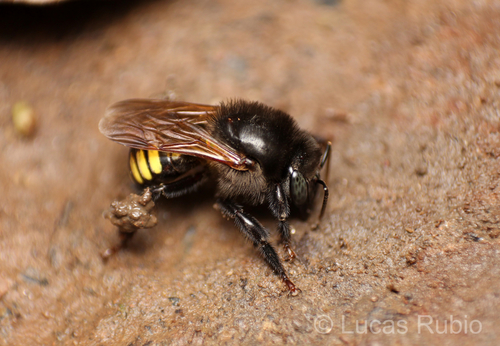
The bee genus Anthophora is one of the largest in the family Apidae, with over 450 species worldwide in 14 different subgenera. They are most abundant and diverse in the Holarctic and African biogeographic regions. All species are solitary, though many nest in large aggregations. Nearly all species make nests in the soil, either in banks or in flat ground; the larvae develop in cells with waterproof linings and do not spin cocoons. Males commonly have pale white or yellow facial markings, and/or peculiarly modified leg armature and hairs. Anthophora individuals can be distinguished from the ve
Melipona
Melipona is a genus of stingless bees, widespread in warm areas of the Neotropics, from Sinaloa and Tamaulipas (México) to Tucumán and Misiones (Argentina). About 70 species are known. The largest producer of honey from Melipona bees in Mexico is in the state of Yucatán where bees are studied at an interactive park called "Bee Planet" which is within the Cuxtal Ecological Reserve.
.jpg)
Nomada
With over 850 species, the genus Nomada is one of the largest genera in the family Apidae, and the largest genus of cuckoo bees. Cuckoo bees are so named because they enter the nests of a host and lay eggs there, stealing resources that the host has already collected. The name "Nomada" is derived from the Greek word nomas (νομάς), meaning "roaming" or "wandering."
Halictus
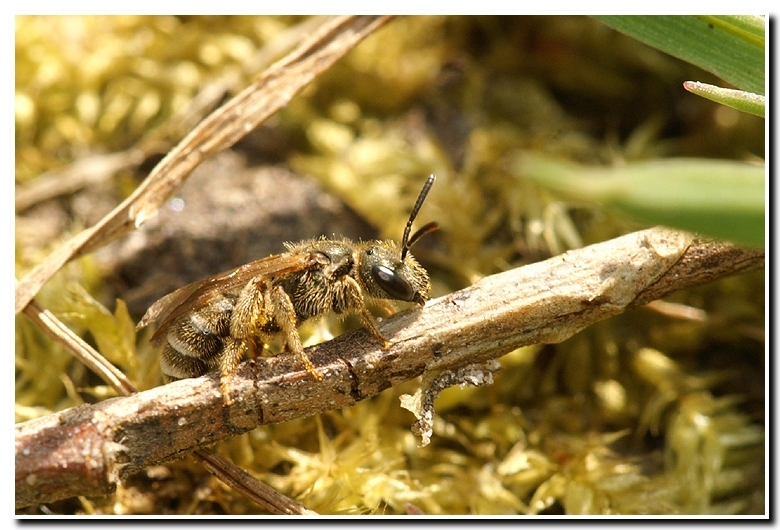
The genus Halictus is a large assemblage of bee species in the family Halictidae. The genus is divided into 15 subgenera, some of dubious monophyly, containing over 200 species, primarily in the Northern Hemisphere (a few species occur in South America, Asia and Africa). Most species are black or dark brown, sometimes metallic greenish-tinted, with apical whitish abdominal bands on the terga (the related genus Lasioglossum, which is otherwise often similar in appearance, has the abdominal hair bands located basally, not apically).
Anthidium
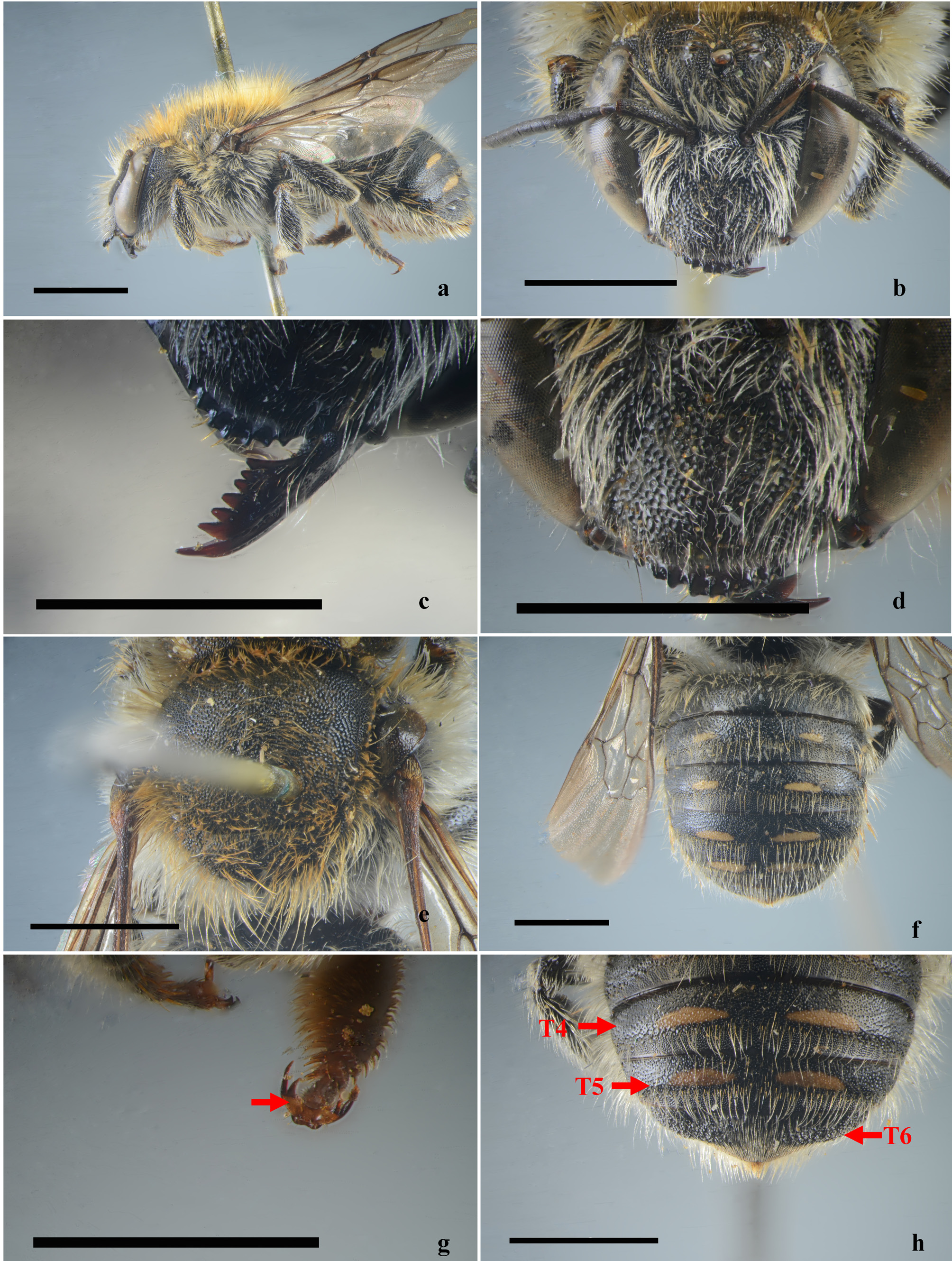
Anthidium is a genus of bees often called carder or potter bees, who do not cut leaves, but use conifer resin, plant hairs, mud, or a mix of them to build nests. Like other members of the family Megachilidae (most of which are called "leafcutter bees"), they are solitary bees with pollen-carrying scopa that are only located on the ventral surface of the abdomen (other bee families have pollen-carrying structures on the hind legs). The ~80 species are distributed primarily in the Northern Hemisphere, and South America.

Lasioglossum
%20Flores.jpg)
Trigona
thumb|Arboreal nest in Guatemala
Trigona is one of the largest genera of stingless bees, comprising about 32 species, exclusively occurring in the New World, and formerly including many more subgenera than the present assemblage; many of these former subgenera have been elevated to generic status.
%20quadrifasciata.jpg)
Amegilla
thumb|Amegilla quadrifasciata
thumb|Amegilla calceifera

Dasypoda
Dasypoda is a genus of bees in the family Melittidae.

Hylaeus
genus of insects

Euglossa
Euglossa is a genus of orchid bees (Euglossini). Like all their close relatives, they are native to the Neotropics; an introduced population exists in Florida. They are typically bright metallic blue, green, coppery, or golden.

Ceratina
The cosmopolitan bee genus Ceratina, often referred to as small carpenter bees, is the sole lineage of the tribe Ceratinini, and is not closely related to the more familiar carpenter bees. The genus presently contains over 300 species in 23 subgenera. They make nests in dead wood, stems, or pith. Although they were considered as mostly solitary in the past, there is growing evidence that many species are facultatively eusocial.

Eucera
Eucera is a genus of bees in the family Apidae, which comprises more than 100 species. These bees are commonly known as long-horned bees due to their characteristically long antennae, especially in males. Eucera species can be found in diverse habitats, including meadows, fields, and urban gardens, primarily in the Palearctic and Nearctic regions, covering parts of Europe, Asia, North Africa, and North America.
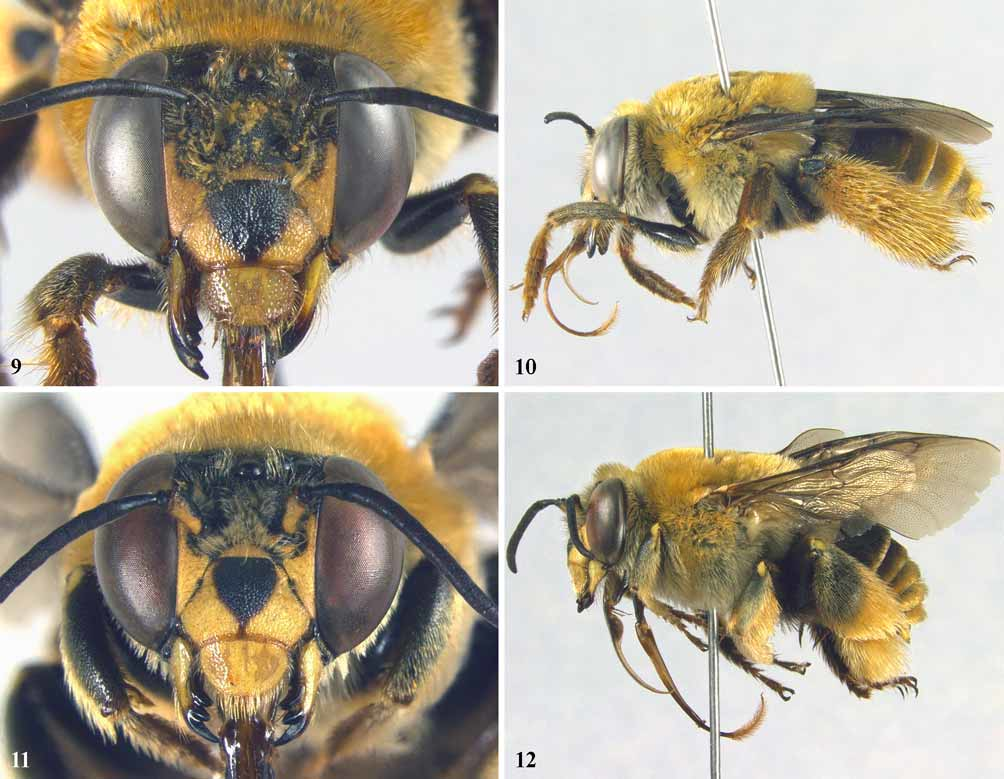
Centris
The genus Centris contains circa 250 species of large apid bees occurring in the Neotropical and Nearctic realms, from Kansas to Argentina. Most females of these bees possess adaptations for carrying floral oils rather than (or in addition to) pollen or nectar. They mainly visit plants of the family Malpighiaceae to collect oil, but also visit others such as Plantaginaceae, Calceolariaceae, and Krameriaceae. Recent studies have shown they are sister to the corbiculate bees, the most well-known and economically important group of bees.
%20Nests%20-%20Wyckoff%2C%20New%20Jersey%202023-04-11.jpg)
Colletes
Colletes (plasterer bees or cellophane bees) is a large genus of smallish and hairy ground-nesting bees of the short-tongued bee family Colletidae. They have an almost worldwide distribution, but occur primarily in the Northern Hemisphere where they are found almost everywhere up to the edge of the Arctic ice.

Chelostoma
Chelostoma is a genus of bees in the Osmiini tribe of the family Megachilidae. The genus is divided into 5 subgenera with at least 60 described species.
thumb|Chelostoma campanularum
thumb|Chelostoma philadelphi, male
thumb|Chelostoma rapunculi
.jpg)
Agapostemon
The genus Agapostemon (literally "stamen loving") is a common group of Western Hemisphere sweat bees.
Coelioxys
Coelioxys, common name leaf-cutting cuckoo bees or sharp-tailed bees, is a genus of solitary kleptoparasitic cuckoo bees belonging to the family Megachilidae.
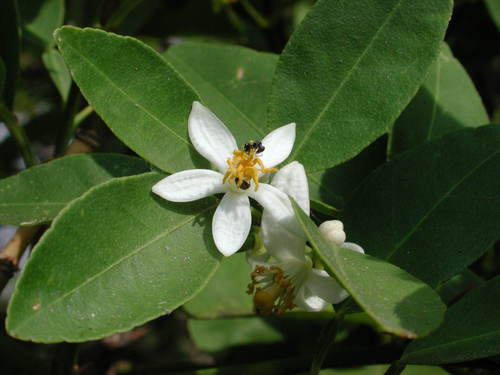
Trigonisca
Trigonisca is a genus of bees belonging to the family Apidae.

Paratrigona
thumb | right | Paratrigona Lineata (example).
Paratrigona is a genus of bees belonging to the family Apidae.

Eulaema
alt=Two large black and orange bees hover around a white flower. |thumb|Two Eulaema sp. visiting Spathiphyllum sp. plant.
Eulaema is a genus of large-bodied euglossine bees that occur primarily in the Neotropics. They are robust brown or black bees, hairy or velvety, and often striped with yellow or orange, typically resembling bumblebees. They lack metallic coloration as occurs in the related genus Eufriesea.

Sphecodes
Sphecodes is a genus of cuckoo bees from the family Halictidae, the majority of which are black and red in colour and are colloquially known as blood bees. Sphecodes bees are kleptoparasitic on ground-nesting bees, especially bees in the genera Lasioglossum, Halictus and Andrena. The adults consume nectar, but because they use other bees' provisions to feed their offspring they do not collect pollen.
Thyreus
Thyreus is an Old World genus of bees, one of many that are commonly known as cuckoo bees, or cloak-and-dagger bees, and are kleptoparasites of other species of bees, mostly in the genus Amegilla. They all have strongly contrasting patterns of coloration – three species from the Sydney region, Thyreus nitidulus, T. lugubris, and T. caeruleopunctatus are bright blue and black.
Frieseomelitta
Frieseomelitta is a stingless bee (Meliponini) genus in the family Apidae. It currently contains about 16 described species:
Frieseomelitta dispar
Frieseomelitta doederleini
Frieseomelitta flavicornis
Frieseomelitta francoi
Frieseomelitta freiremaiai
Frieseomelitta languida
Frieseomelitta lehmanni
Frieseomelitta longipes
Frieseomelitta meadewaldoi
Frieseomelitta nigra
Frieseomelitta paranigra
Frieseomelitta paupera
Frieseomelitta portoi
Frieseomelitta silvestrii
Frieseomelitta trichocerata
Frieseomelitta varia
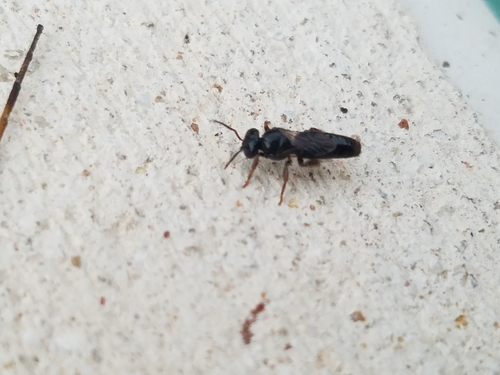
Lestrimelitta
Lestrimelitta is a genus of stingless bees found in the Neotropics, from Mexico to Brazil and Argentina, with about 20 known species. They are small, shining black species from 4 to 7 mm in length, with rounded heads and reduced pollen baskets. Unlike most eusocial bees, they do not gather their own pollen and nectar from flowers, thus are not pollinators, but instead they invade the colonies of other stingless bee species and rob their pollen and honey stores (a phenomenon called "cleptobiosis"). They do not initiate their own nests, but they will "evict" another stingless bee colony fro

Stelis
genus of kleptoparasitic bees

Perdita
genus of insects

Dufourea
Dufourea is a genus of sweat bees in the family Halictidae. There are at least 160 described species in Dufourea. The bees are very uncommon. The bases of their antennae are well below the middle of their face and are only separated from the clypeus on the bottom of the face by not much more than the diameter of an antennal socket. The clypeus is short and wide, and the labrum is nearly as long as the clypeus. The species features a pre-episternal groove.
thumb|Dufourea maura

Geotrigona
Geotrigona is a genus of bees belonging to the family Apidae.
Augochloropsis
Augochloropsis is a genus of brilliant metallic, often blue-green, sweat bees in the family Halictidae. There are at least 140 described species in Augochloropsis.
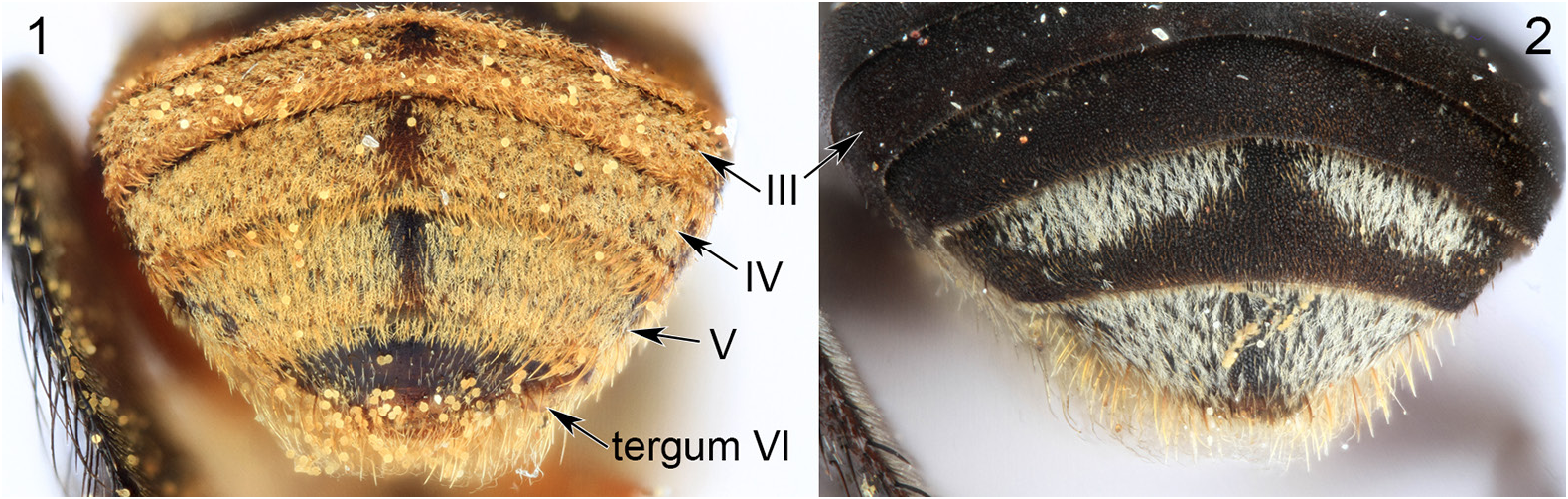
Scaptotrigona
Scaptotrigona is a genus of bees belonging to the family Apidae.

Melecta
thumb|Melecta albifrons
Melecta is a genus of cuckoo bees in the family Apidae. There are at least 50 described species in Melecta.

Triepeolus
Triepeolus is a genus of cuckoo bees in the family Apidae. There are at least 140 described species in the genus Triepeolus. The majority of species whose life history is known are kleptoparasitic in the nests of bees in the tribe Eucerini, especially the genera Melissodes and Svastra.
thumb|Triepeolus simplex

Tetralonia
Tetralonia is a genus of insects belonging to the family Apidae.
Tetragona
Tetragona is a genus of bees belonging to the family Apidae.

Hoplitis
Hoplitis is a genus of bees in the family Megachilidae. There are more than 380 described species in Hoplitis.
thumb
Nannotrigona
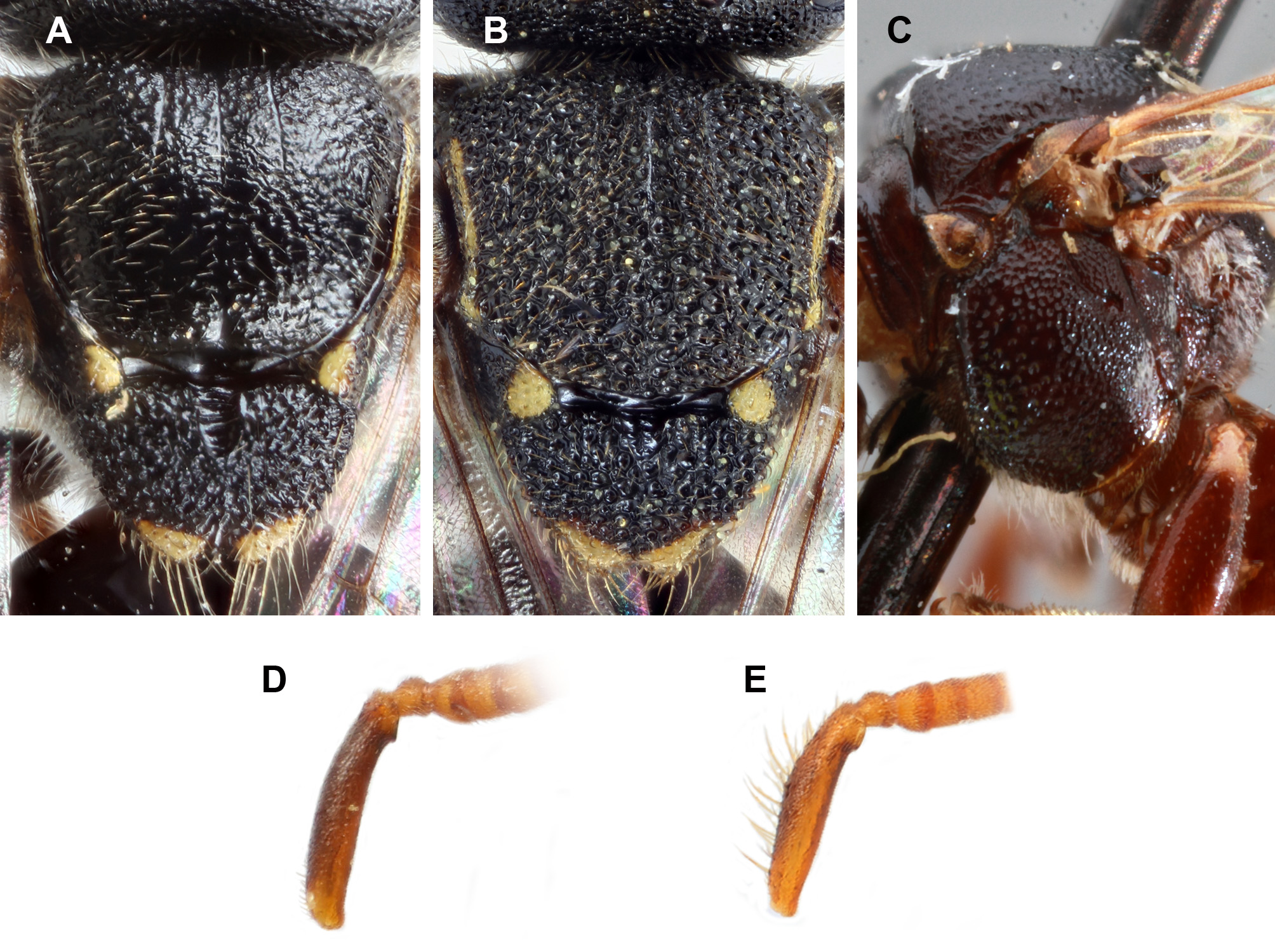
Nannotrigona is a genus of bees belonging to the family Apidae. The species of this genus are found in Central and South America.

Tetragonula
Tetragonula is a genus of stingless bees. In 1961, Brazilian bee expert J.S. Moure first proposed the genus name Tetragonula to improve the classification system by dividing the large genus Trigona stingless bees into 9 smaller groups. About 30 stingless bee species formerly placed in the genus Trigona are now placed in the genus Tetragonula. These bees are found in Oceania, in countries such as Australia, Indonesia, New Guinea, Malaysia, Thailand, the Philippines, India, Sri Lanka, and the Solomon Islands. The most recent tabulation of species listed 35 species.
Pseudoanthidium
Pseudoanthidium is a genus of bees belonging to the family Megachilidae. The species of this genus are found in Eurasia, Africa and Australia.

Epeolus
thumb|right|Epeolus tarsalis
Epeolus is a genus of cuckoo bees in the family Apidae. They are often known as variegated cuckoo-bees. The species is uncommon to rare, and has strong patterns of black and white on the thorax and abdomen. These patterns are made of tiny fat hairs lying flush with the integument or "skin" of the bee. Species of the genus are easily mistaken for those of the genus Triepeolus, but are often smaller.
Systropha
The genus Systropha comprises several species of Old World sweat bees, primarily specialist pollinators of plants in the genus Convolvulus. Males of the genus have unusual curled antennae, and females have pollen-carrying hairs covering almost the entire abdomen.

Panurgus
Panurgus is a genus of mining bees belonging to the family Andrenidae, subfamily Panurginae.

Eufriesea
Eufriesea is a genus of euglossine bees. Like all orchid bees, they are restricted to the Neotropics.

Partamona
Partamona is a genus of stingless bees in the family Apidae. Herbert Ferlando Schwarz in 1938 described the genus. The genus is found from Mexico to Brazil.
Ammobates
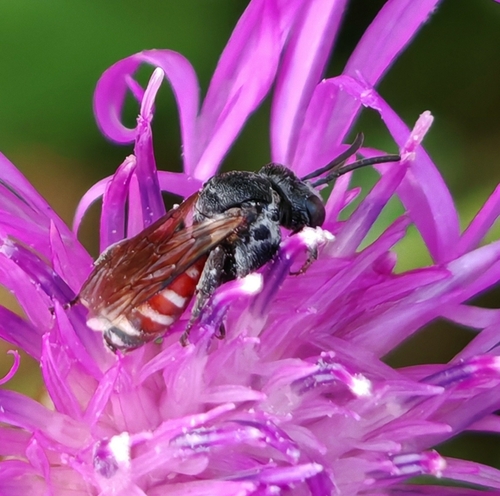
Ammobates is a genus of cuckoo bees belonging to the family Apidae.

Augochlora
Augochlora is a genus in the family Halictidae, with 127 valid species found across the Nearctic and Neotropic zones. The genus is known for its typical metallic greenish blue color and small size, with the greek for Augochloros meaning shining green.
Cephalotrigona
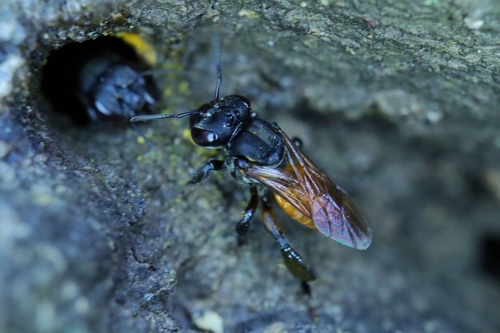
Cephalotrigona is a genus of bees belonging to the family Apidae. The species of this genus are found in Central and South America.
Oxytrigona
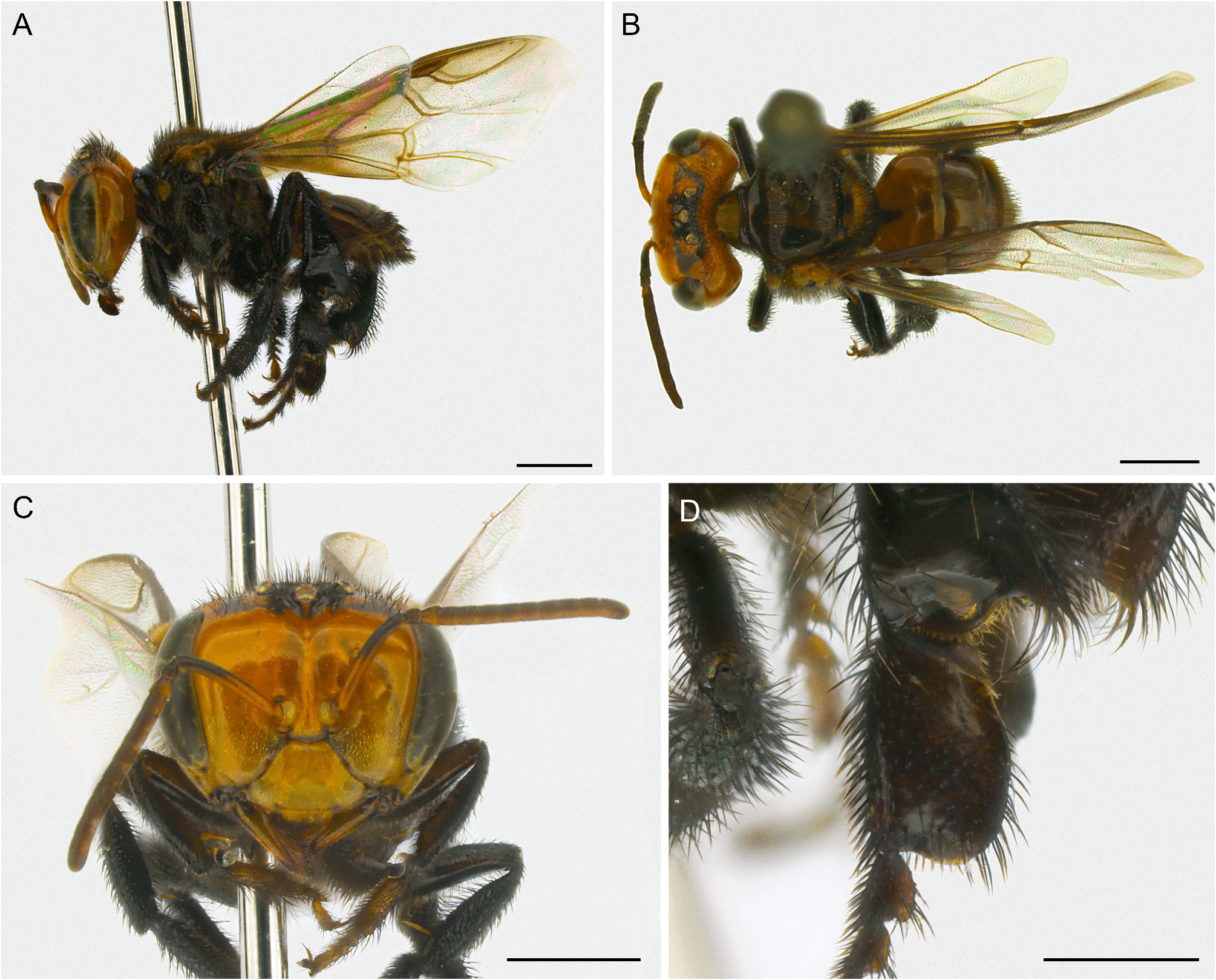
Oxytrigona is a genus of bees belonging to the family Apidae.
Q14457062
Afranthidium is a genus of bees belonging to the family Megachilidae. The species of this genus are found in Southern Asia, Africa and Australia.

Lithurgus
Lithurgus is a genus of bees in the family Megachilidae.

Ctenoplectra
Ctenoplectra is a genus of bees belonging to the family Apidae.
Tetragonisca
Tetragonisca is a genus of stingless bees in the family Apidae. There are at least four described species in Tetragonisca, found in Central and South America.

Plebeia
Plebeia is a genus of mostly small-bodied stingless bees, formerly included in the genus Trigona. Most of the ~45 species are placed in the subgenus (Plebeia) (s.s.), but there also are four species in the subgenus (Scaura). They differ in only minor structural details, primarily of the hind leg, from other genera that were formerly treated as constituents of Trigona. In some classifications, the genus Schwarziana is treated as a subgenus within Plebeia, but recent morphological analyses indicate that Schwarziana is a distinct lineage, while Plebeia is paraphyletic.

Megalopta
Megalopta is a widespread neotropical genus of bees in the tribe Augochlorini in family Halictidae, known as the sweat bees. They are the largest of the five nocturnal genera in Augochlorini. Most have pale integumentary pigmentation, and all have large ocelli, most likely a feature of their nocturnal behavior. They live in tropical Central America and the entirety of South America. The subgenus Noctoraptor is cleptoparasitic. They are not known from the fossil record.
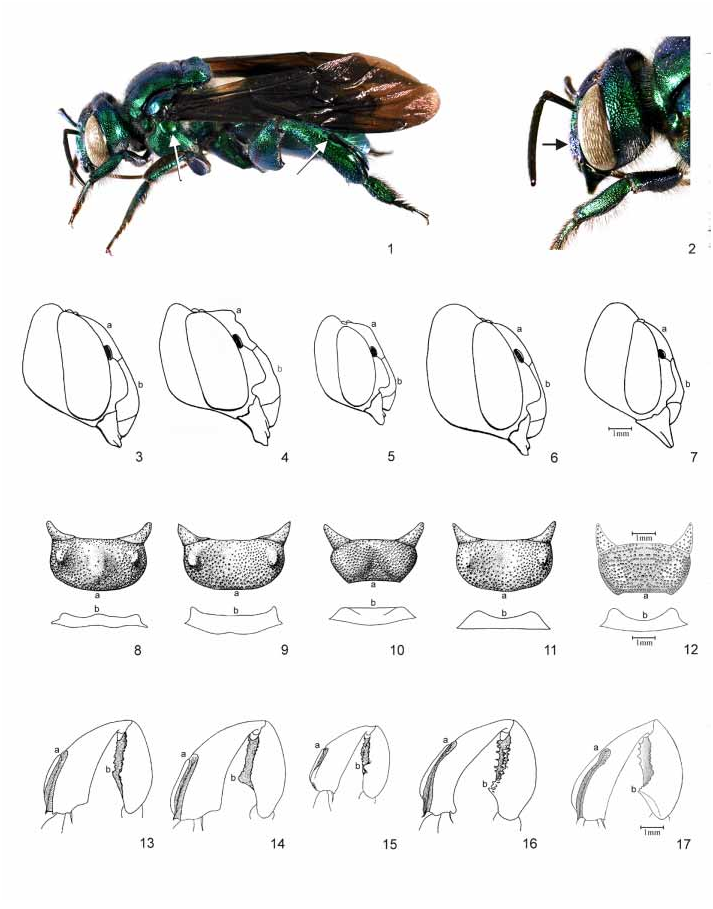
Exaerete
Exaerete is a genus of euglossine bees found from Mexico to northern Argentina. Like all orchid bees, they are restricted to the Neotropics. All but one species is metallic green, and they are cleptoparasites in the nests of other euglossines in the genera Eufriesea and Eulaema. It contains the following species:
left|thumb|181x181px|Exaerete smaragdina|E. smaragdina, [[Peru]]
Exaerete azteca Moure, 1964
Exaerete dentata (Linnaeus, 1758)
Exaerete fallaciosa Engel, 2018
Exaerete frontalis (Guérin-Méneville, 1845)
Exaerete kimseyae Oliviera, 2011
Exaerete lepeletieri Oliviera & Nemesio, 20
Melitta
genus of insects

Heriades
Heriades is a genus of solitary bees in the family Megachilidae, spanning eight subgenera: Amboheriades, Heriades, Michenerella, Neotrypetes, Pachyheriades, Rhopaloheriades, Toxeriades, and Tyttheriades. Heriades means "wool", and is likely a reference to the hairy patches found on the abdomen of several species.
Panurginus
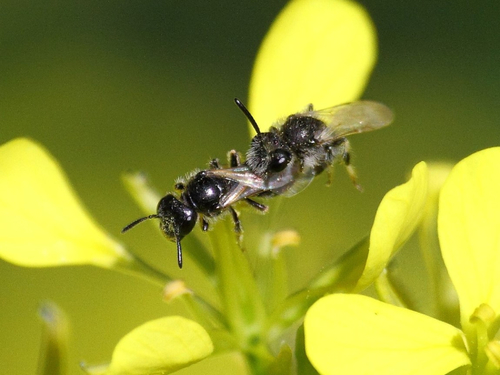
Panurginus is a genus of bees in the family Andrenidae. There are more than 50 described species in Panurginus.
thumb