Vivallo, Felipe;Melo, Gabriel A. R.
Centris
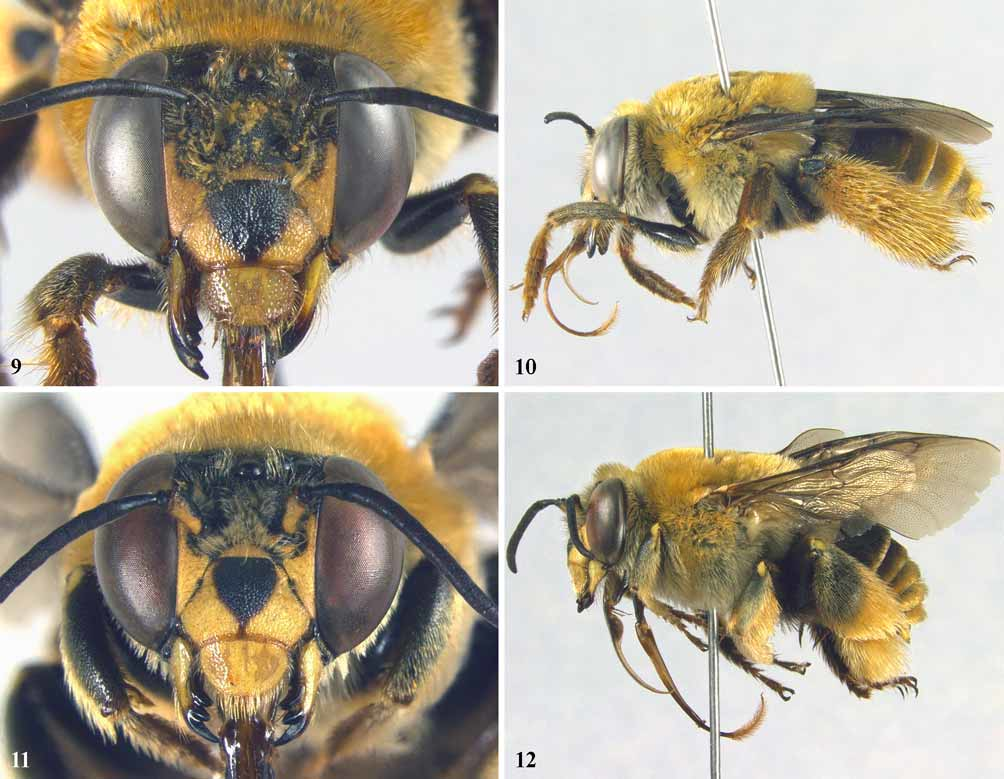
Sign in to saveThe genus Centris contains circa 250 species of large apid bees occurring in the Neotropical and Nearctic realms, from Kansas to Argentina. Most females of these bees possess adaptations for carrying floral oils rather than (or in addition to) pollen or nectar. They mainly visit plants of the family Malpighiaceae to collect oil, but also visit others such as Plantaginaceae, Calceolariaceae, and Krameriaceae. Recent studies have shown they are sister to the corbiculate bees, the most well-known and economically important group of bees.
Species
GENUS
- KingdomAnimalia
- PhylumArthropoda
- ClassInsecta
- OrderHymenoptera
- FamilyApidae
Centris es un género de abejas que contiene más de 200 especies que se encuentran desde Kansas hasta Argentina. Las hembras de un número de estas abejas (al igual que otros miembros de la tribu Centridini) poseen adaptaciones para llevar aceites florales en lugar de (o además de) polen o néctar. Son el taxón hermano de las abejas corbiculadas, el grupo mejor conocido de abejas apinas.[1] Son de tamaño grande (hasta 3 cm) y de vuelo rápido; se distinguen del género estrechamente relacionado Epicharis porque carecen de largas setas, en forma de látigo que se proyectan hacia atrás desde detrás de los ojos. Comúnmente se encuentran en los desiertos de América del Norte, y son activas a temperaturas ambiente muy altas cuando muchas otras especies permanecen inactivas. A menudo se pueden ver en grandes números en el sauce del desierto (Chilopsis) y flores de palo verde (Parkinsonia). Las abejas de este género son de cierta importancia económica en la polinización de cultivos como la nuez de Brasil (Bertholletia excelsa) y anacardo (Anacardium occidentale polinizada por C. tarsata entre otros). El sistema de apareamiento de una especie, C. pallida, ha sido especialmente bien investigado
via GBIF
Museum specimens
- Specimen records
- 4,284
- With media
- 423
- Family
- Apidae
- Collections
- CCBA-FMVZ-UADY, ECOSUR, IFIT-CP
- Recorded in
- Mexico
Wikidata facts
- Instance of
- taxon
- Parent taxon
- Centridini
- Image
- Centris lanosa, F, Side, FL, Torreya 2014-10-09-16.09.01 ZS PMax (15334561809).jpg
Show 5 more facts
- taxon name
- Centris
- taxon rank
- genus
- topic's main category
- Category:Centris
- Commons category
- Centris
- taxon common name
- Centris Bees
Sources (1)
via Wikidata · CC0
~2 min read
Encyclopedic overview
4 sectionsContents
- Selected species
- See also
- References
- External links
The genus Centris contains circa 250 species of large apid bees occurring in the Neotropical and Nearctic realms, from Kansas to Argentina. Most females of these bees possess adaptations for carrying floral oils rather than (or in addition to) pollen or nectar. They mainly visit plants of the family Malpighiaceae to collect oil, but also visit others such as Plantaginaceae, Calceolariaceae, and Krameriaceae. Recent studies have shown they are sister to the corbiculate bees, the most well-known and economically important group of bees.
They are large (up to 3 cm), fast-flying bees, distinguished from the closely related genus Epicharis by the absence of long, whip-like setae that project backwards from just behind the eyes. They are commonly encountered bees in American deserts, and are active at very high ambient temperatures when many other species are in hiding. They can often be seen in large numbers on desert-willow (Chilopsis) and palo verde (Parkinsonia) blossoms. Bees of this genus are of some economical significance in pollinating crops such as Brazil nuts (Bertholletia excelsa) and cashews (Anacardium occidentale, pollinated by C. tarsata among others).
Excerpted from Wikipedia’s “Centris” article, available under the CC BY-SA 4.0 licence.
Gallery (4)
Available in 14 languages
- Español
- Français
- 中文
- Русский
- Português
- Italiano
- العربية
- Bahasa Indonesia
- Cebuano
- Egyptian Arabic
- Nederlands
- Svenska
- Waray
via Wikidata sitelinks · CC0