Category
page 1Biomolecules

enzyme
thumb|400px|The enzyme glucosidase converts the sugar [[maltose into two glucose sugars. Active site residues in red, maltose substrate in black, and NAD cofactor in yellow. ()|alt=Ribbon diagram of glycosidase with an arrow showing the cleavage of the maltose sugar substrate into two glucose products.]]

vitamin C
nutrient found in citrus fruits and other foods

nucleic acids
large biomolecules essential to known life

bile
thumb|Bile (yellow material) in a liver [[biopsy stained with hematoxylin-eosin in a condition called cholestasis (setting of bile stasi)]]

vitamin A
vitamin, class of molecules with related biological function
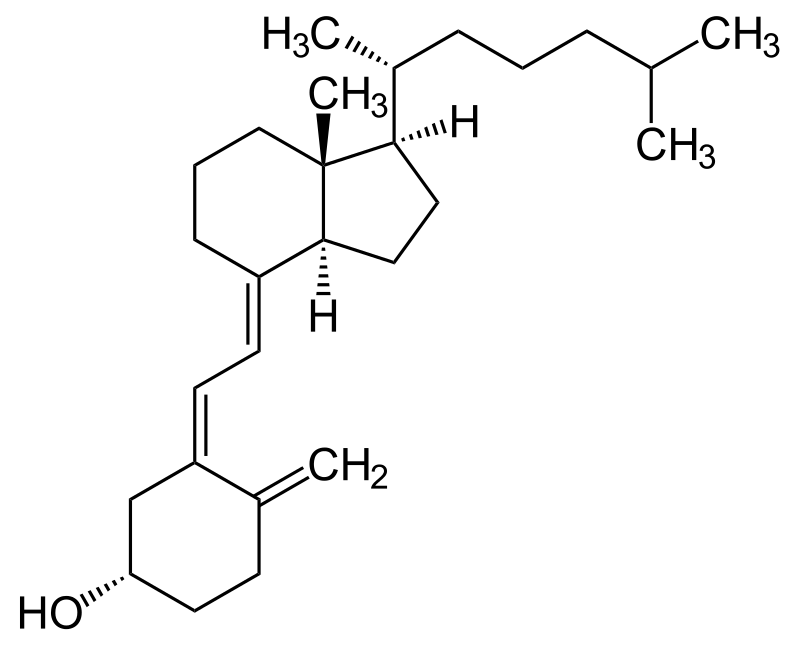
vitamin D
group of molecules used as vitamin

chitin
thumb|250px|right|Structure of the chitin molecule, showing two of the N-Acetylglucosamine|N-acetylglucosamine units that repeat to form long chains in β-(1→4)-linkage.
thumb|250px|right|Haworth projection of the chitin molecule.
thumb|A close-up of the wing of a leafhopper; the wing is composed of chitin.
thumb|right|A cicada emerges from its nymphal exoskeleton; the shed exoskeleton is mostly modified chitin ([[sclerotin) but the wings and much of the adult body are still unsclerotized chitin at this stage]]

antigen
thumb|255px|An illustration that shows how antigens induce the immune system response by interacting with an [[antibody that matches the molecular structure of an antigen]]

biomolecule
thumb|200px|A representation of the structure of myoglobin, showing alpha helices, represented by ribbons. This protein was the first to have its structure solved by [[X-ray crystallography by Max Perutz and John Kendrew in 1958, for which they received a Nobel Prize in Chemistry]]
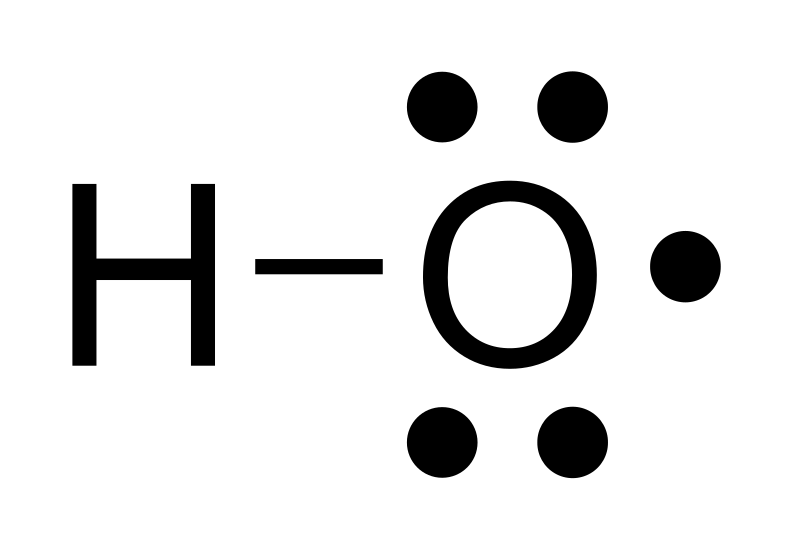
radical
atom, molecule, or ion that has an unpaired valence electron; typically highly reactive

pyrimidine
Pyrimidine (; ) is an aromatic, heterocyclic, organic compound similar to pyridine (). One of the three diazines (six-membered heterocyclics with two nitrogen atoms in the ring), it has nitrogen atoms at positions 1 and 3 in the ring. The other diazines are pyrazine (nitrogen atoms at the 1 and 4 positions) and pyridazine (nitrogen atoms at the 1 and 2 positions).

butyric acid
chemical compound

ribozyme
thumb|3D structure of a hammerhead ribozyme

fumaric acid
chemical compound

heme
class=skin-invert-image|thumb|420 px|Binding of oxygen to a heme prosthetic group
Heme (American English), or haem (Commonwealth English, both pronounced /hi:m/ ), is a ring-shaped iron-containing molecule that serves as a ligand of various proteins, especially as a component of hemoglobin, which carries oxygen in the bloodstream. It is composed of four pyrrole rings with two vinyl and two propionic acid side chains. Heme is biosynthesized in both the bone marrow and the liver.

biopolymer
Biopolymers are natural polymers produced by the cells of living organisms. Like other polymers, biopolymers consist of monomeric units that are covalently bonded in chains to form larger molecules. There are three main classes of biopolymers, classified according to the monomers used and the structure of the biopolymer formed: polynucleotides, polypeptides, and polysaccharides. The polynucleotides, RNA and DNA, are long polymers of nucleotides. Polypeptides include proteins and shorter polymers of amino acids; some major examples include collagen, actin, and fibrin. Polysaccharides are linear

porphyrins
thumb|right|class=skin-invert-image|Porphine, the parent of porphyrin
DL-ascorbic acid
group of chemical compounds

squalene
Squalene is an organic compound. It is a triterpene with the formula C30H50. It is a colourless oil, although impure samples appear yellow. It was originally obtained from shark liver oil (hence its name, as Squalus is a genus of sharks). An estimated 12% of bodily squalene in humans is found in sebum. Squalene has a role in topical skin lubrication and protection.
oxaloacetic acid
chemical compound

sphingosine
Sphingosine (2-amino-4-trans-octadecene-1,3-diol) is an 18-carbon amino alcohol with an unsaturated hydrocarbon chain, which forms a primary part of sphingolipids, a class of cell membrane lipids that include sphingomyelin, an important phospholipid.
anandamide
Anandamide (ANA), also referred to as '''N-arachidonoylethanolamine (AEA'), is a fatty acid neurotransmitter belonging to the fatty acid derivative group known as N-acylethanolamines (NAE). Anandamide takes its name from the Sanskrit word ananda'' (आनन्द), meaning "joy, bliss, delight," plus amide. Anandamide, the first discovered endocannabinoid, engages with the body's endocannabinoid system by binding to the same cannabinoid receptors that THC found in cannabis acts on. Anandamide can be found within tissues in a wide range of animals. It has also been found in plants, such as the cacao tre
ligand
substance that forms a complex with a biomolecule

biomaterial
A hip implant is an example of an application of biomaterials|thumb|right
A biomaterial is a substance that has been engineered to interact with biological systems for a medical purpose – either a therapeutic (treat, augment, repair, or replace a tissue function of the body) or a diagnostic one. The corresponding field of study is called biomaterials science or biomaterials engineering. It has experienced steady growth over its history, with many companies investing large amounts of money into the development of new products. Biomaterials science encompasses elements of medicine, biology, chem
shikimic acid
chemical compound
(RS)-3-phosphoglyceric acid
group of stereoisomers
dihydroxyacetone phosphate
chemical compound
reducing sugar
sugars that contain free OH group at the anomeric carbon atom
3-hydroxybutyric acid
pair of enantiomers
aminolevulinic acid
chemical compound
DL-glyceric acid 1,3-biphosphate
group of stereoisomers
miraculin
Miraculin is a taste modifier, a glycoprotein extracted from the fruit of Synsepalum dulcificum. The berry, also known as the miracle fruit, was documented by explorer Chevalier des Marchais, who searched for many different fruits during a 1725 excursion to its native West Africa.
corrin
Corrin is a heterocyclic compound. Although not known to exist on its own, the molecule is of interest as the parent macrocycle related to the cofactor and chromophore in vitamin B12. Its name reflects that it is the "core" of vitamin B12 (cobalamins). Compounds with a corrin core are known as "corrins".
mitogen
A mitogen is a small bioactive protein or peptide that induces a cell to begin cell division, or enhances the rate of division (mitosis). Mitogenesis is the induction (triggering) of mitosis, typically via a mitogen.

porphin
Porphine or porphin is an organic compound of empirical formula . It is heterocyclic and aromatic. The molecule is a flat macrocycle, consisting of four pyrrole-like rings joined by four methine bridges, which makes it the simplest of the tetrapyrroles.
pyruvate decarboxylation
Conversion of pyruvate into acetyl-CoA

siderophore
right|thumb|320 px|Structure of the siderophore triacetylfusarinine encapsulating iron(III) within a tris(hydroxamate) coordination sphere (color code: red = oxygen, gray = carbon, blue = nitrogen, dark blue = iron).

chlorin
In organic chemistry, chlorins are tetrapyrrole pigments that are partially hydrogenated porphyrins. The parent chlorin is an unstable compound which undergoes air oxidation to porphine. The name chlorin derives from chlorophyll. Chlorophylls are magnesium-containing chlorins and occur as photosynthetic pigments in chloroplasts. The term "chlorin" strictly speaking refers to only compounds with the same ring oxidation state as chlorophyll.

lipofuscin
thumb |Confocal microscopy|Confocal image of a spinal [[motor neuron showing stained lipofuscin granules in blue and yellow]]
thumb | Micrograph showing a cluster of lipofuscin particles (arrow) in a [[nerve cell of the brain; toluidine blue stain; scale bar = 10 microns (0.01 millimeters)]]
Lipofuscin is the name given to fine yellow-brown pigment granules composed of lipid-containing residues of lysosomal digestion. It is considered to be one of the aging or "wear-and-tear" pigments, found in the liver, kidney, heart muscle, retina, adrenals, nerve cells, and ganglion cells.
beta-hydroxy beta-methylbutyric acid
chemical compound

sporopollenin
thumb|right|270px|Scanning electron microscope (SEM) image of [[pollen grains]]
phosphatidic acid
class of lipid compounds
autacoids
Autacoids or autocoids are biological factors (molecules) which act like local hormones, have a brief duration, and act near their site of biosynthesis. The word autacoid comes from the Greek words "autos" (self) and "acos" (relief; i.e., drug). The effects of autacoids are primarily local, though large quantities can be produced and moved into circulation. Autacoids may thus have systemic effects by being transported via the circulation. These regulating molecules are also metabolized locally. In sum, these compounds typically are produced locally, act locally and are metabolized locally. Aut
advanced glycation end-product
proteins or lipids that become glycated as a result of exposure to sugars

glycosylamine
thumb|120px|Cyclic hemiaminal ether bond derived from an aldehyde
Glycosylamines are a class of biochemical compounds consisting of a glycosyl group attached to an amino group, -NR2. They are also known as N-glycosides, as they are a type of glycoside. Glycosyl groups can be derived from carbohydrates. The glycosyl group and amino group are connected with a β-N-glycosidic bond, forming a cyclic hemiaminal ether bond (α-aminoether).
bilins
class of chemical compound
heme B
chemical compound

glycosyl group
300px|right|thumb|The β-D-glucopyranosyl group which is obtained by the removal of the hemiacetal hydroxyl group (bottom right) from β-D-glucopyranose
heme A
chemical compound
ferroheme c
chemical compound
4'-phosphopantetheine
Phosphopantetheine, also known as '''4'-phosphopantetheine (4'-PP'''), is a prosthetic group of several acyl carrier proteins including the acyl carrier proteins (ACP) of fatty acid synthases, ACPs of polyketide synthases, the peptidyl carrier proteins (PCP), as well as aryl carrier proteins (ArCP) of nonribosomal peptide synthetases (NRPS). It is also present in formyltetrahydrofolate dehydrogenase.
heme O
chemical compound
crotonoyl-CoA
Crotonyl-coenzyme A is an intermediate in the fermentation of butyric acid, and in the metabolism of lysine and tryptophan. It is important in the metabolism of fatty acids and amino acids.
palmidrol
Palmitoylethanolamide (PEA) is an endogenous fatty acid amide, and lipid modulator.
ANG
Angiogenin (ANG) also known as ribonuclease 5 is a small 123 amino acid protein that in humans is encoded by the ANG gene. Angiogenin is a potent stimulator of new blood vessels through the process of angiogenesis. Ang hydrolyzes cellular RNA, resulting in modulated levels of protein synthesis and interacts with DNA causing a promoter-like increase in the expression of rRNA. Ang is associated with cancer and neurological disease through angiogenesis and through activating gene expression that suppresses apoptosis.

Hemozoin
thumb|250px|right|Plasmodium falciparum hemozoin crystals under [[polarised light.]]
thumb|Plasmodium ovale microgametocyte in Giemsa-stained thin blood film, with annotated [[Schüffner's dots and hemozoin pigment.]]
Haemozoin is a disposal product formed from the digestion of blood by some blood-feeding parasites. These hematophagous organisms such as malaria parasites (Plasmodium spp.), Rhodnius and Schistosoma digest haemoglobin and release high quantities of free heme, which is the non-protein component of haemoglobin. Heme is a prosthetic group consisting of an iron atom contained in the

Cooperativity
Cooperativity is a phenomenon displayed by systems involving identical or near-identical elements, which act dependently of each other, relative to a hypothetical standard non-interacting system in which the individual elements are acting independently. One manifestation of this is enzymes or receptors that have multiple binding sites where the affinity of the binding sites for a ligand is apparently increased, positive cooperativity, or decreased, negative cooperativity, upon the binding of a ligand to a binding site. For example, when an oxygen atom binds to one of hemoglobin's four binding
bromouracil
5-Bromouracil (5-BrU, 5BrUra, or br5Ura) is a brominated derivative of uracil that acts as an antimetabolite or base analog, substituting for thymine in DNA, and can induce DNA mutation in the same way as 2-aminopurine. It is used mainly as an experimental mutagen, but its deoxyriboside derivative (5-bromo-2-deoxy-uridine) is used to treat neoplasms.

list of biomolecules
Wikimedia list article
Template:Sphingolipids
Wikimedia template