Category
page 9Bird genera
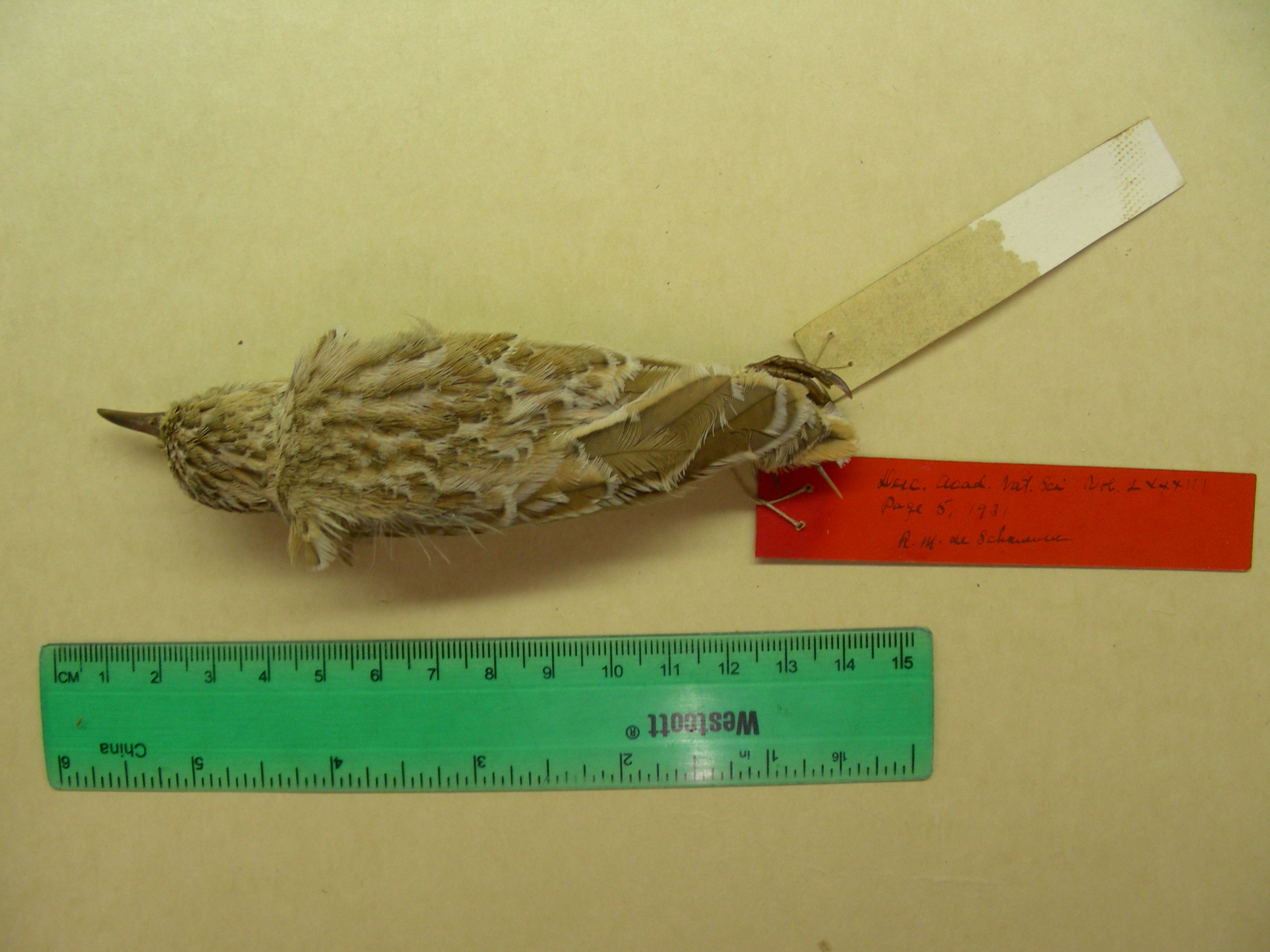
Certhilauda
Certhilauda is a genus of larks in the family Alaudidae living in the southern regions of Africa. The genus was formerly named Heterocorys.

Tanygnathus
Tanygnathus is a genus of parrots in the Psittaculini tribe, of the superfamily of Psittacoidea (true parrots).

Ptiloris
The genus Ptiloris consists of four allopatric species of birds in the family Paradisaeidae. These birds of paradise are commonly known as riflebirds, so named for the likeness of their black velvety plumage to the uniform of the Rifle Brigade. Alternatively, the bird's cry is similar to a rifle being fired and hitting its target but a call like this is not commonly reported (see Behaviour and Ecology). They are distributed in the rainforests of New Guinea and Eastern Australia.

Garrulax
Garrulax is a genus of passerine birds in the laughingthrush family Leiothrichidae.

Conirostrum
Typical conebills belong to the tanager genus Conirostrum. They are small tanagers (9–14 cm) found in the forests of South America. They feed in pairs or small flocks by gleaning insects from foliage.
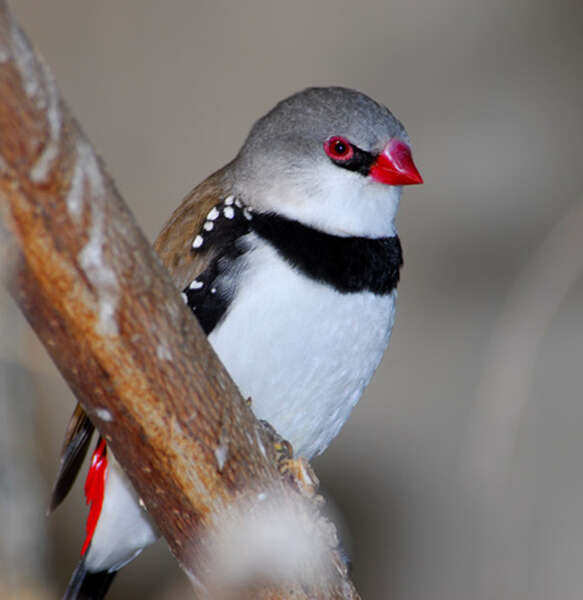
Stagonopleura
Stagonopleura is a genus of small seed-eating birds in the family Estrildidae that are native to Australia.

Bolborhynchus
Bolborhynchus is a genus of parrot in the family Psittacidae.

Myrmotherula
Myrmotherula is a genus of insectivorous passerine birds in the antbird family, Thamnophilidae. These are all small antbirds, measuring .

Dendragapus
The genus Dendragapus contains two closely related species of grouse that have often been treated as a single variable taxon (blue grouse). The two species are the dusky grouse (Dendragapus obscurus) and the sooty grouse (Dendragapus fuliginosus). In addition, the spruce grouse and Siberian grouse have been considered part of this genus.

Cyclopsitta
Cyclopsitta is a genus of parrots in the family Psittaculidae. Its four species are native to the island of New Guinea. There are also fig parrots in the genus Nannopsittacus.

Attila
genus of birds
Agelastes
Agelastes is a small genus of birds in the guineafowl family. It comprises two species:
White-breasted guineafowl, A. meleagrides
Black guineafowl, A. niger

Laniocera
Laniocera is a genus of passerine birds in the family Tityridae. It has traditionally been placed in the cotinga family, but evidence strongly suggest it is better placed in Tityridae, where now placed by SACC. They share the common name "mourner" with the species in the genera Schiffornis, Laniisoma and Rhytipterna.
Cercococcyx
Cercococcyx is a genus of cuckoos in the family Cuculidae, known as the long-tailed cuckoos.

Mino
genus of birds

Batrachostomus
Batrachostomus is a genus of frogmouths. They are found in South and Southeast Asia.

Paradoxornis
Paradoxornis is a genus of passerine birds in the parrotbill family Paradoxornithidae that are native to East, Southeast and South Asia.
Celeus
genus of birds
Blythipicus
Blythipicus is a genus of birds in the woodpecker family Picidae that are found in Southeast Asia.
.jpg)
Sheppardia
The akalats (stressed on the second syllable) are medium-sized insectivorous birds in the genus Sheppardia. They were formerly placed in the thrush family, Turdidae, but are more often now treated as part of the Old World flycatcher family, Muscicapidae.
Henicopernis
Henicopernis is a genus of bird of prey in the family Accipitridae.

Ampelion
Ampelion is a genus of passerine birds in the family Cotingidae. It contains the following species:

Myiobius
Myiobius is a genus of passerine birds in the family Onychorhynchidae. The genus was previously considered to belong to the Tyrannidae or Tityridae.
Phlogophilus
Phlogophilus, or the piedtails, are a small genus of hummingbirds. It contains two species.
Lanio
Lanio is the genus of shrike-tanagers in the family Thraupidae.
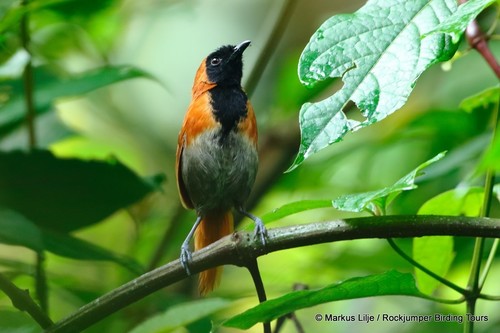
Bathmocercus
Bathmocercus is a genus of bird in the family Cisticolidae.
It contains the following species:
Black-headed rufous warbler (Bathmocercus cerviniventris)
Black-faced rufous warbler (Bathmocercus rufus)
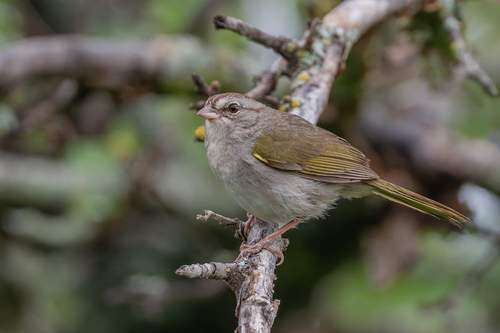
Arremonops
Arremonops is a genus of Neotropical birds in the family Passerellidae. All species are found in Central America, Mexico, and/or northern South America. The olive sparrow reaches southern Texas.
.jpg)
Meiglyptes
Meiglyptes is a genus of Southeast Asian birds in the woodpecker family Picidae.

Phacellodomus
Phacellodomus is the genus of thornbirds, birds in the family Furnariidae. They are found in woodlands, shrublands, and grasslands, often near water, in South America.
Gymnocrex
Gymnocrex is a genus of bird in the rail family, Rallidae.
Lichmera
Lichmera is a genus of birds in the honeyeater family Meliphagidae that are found in Southeast Asia.

Chauna
Chauna is a genus of birds in the screamer family. Its two members are found in wetlands of South America.
==Description==
They are large, bulky birds, with a small downy head, long legs and large feet which are only partially webbed. They have large spurs on their wings which are used in fights over mates and territorial disputes.
==Conservation==
The southern screamer is overall fairly common and sometimes considered a pest as it raids crops and competes with farm birds for food. In contrast, the northern screamer is relatively rare and therefore considered near threatened.
==Species==

Pternistis
Pternistis is a genus of galliform birds formerly classified in the spurfowl group of the partridge subfamily of the pheasant family. They are described as "partridge-francolins" in literature establishing their phylogenetic placement outside the monophyletic assemblage of true spurfowls. All species are endemic to Sub-Saharan Africa, excepted the double-spurred spurfowl (also present in Morocco). They are commonly known as spurfowls or francolins, but are closely related to jungle bush quail, Alectoris rock partridges, and Coturnix quail. The species are strictly monogamous, remaining mated i
.jpg)
Myiozetetes
Myiozetetes is a small genus of passerine birds in the tyrant flycatcher family. The four species occur in tropical Central and South America.

Grallina
Grallina is a genus of passerine bird native to Australia and New Guinea. It is a member of a group of birds termed monarch flycatchers.

Leptodon
Leptodon is a genus of birds of prey. Its two members are similar, with a grey head, black upperparts and white underparts.
Phaenicophaeus
Phaenicophaeus is a genus of seven species of cuckoos in the family Cuculidae that are found in South and Southeast Asia.

Spilopelia
Spilopelia is a genus of doves that are closely related to Streptopelia and Nesoenas, but distinguished from them by differences in morphology and genetics. Some authors had argued that Stigmatopelia is the valid name as it appears in an earlier line of the same work by the Swedish zoologist Carl Sundevall, but Richard Schodde and Ian J. Mason had earlier, in their 1999 zoological catalogue of Australian birds, chosen Spilopelia in treating these two names as applying to the same genus; their choice stands under clause 24(b) of the International Code of Zoological Nomenclature (ICZN) which sup

Antigone
genus of birds

Leiothrix
genus of birds
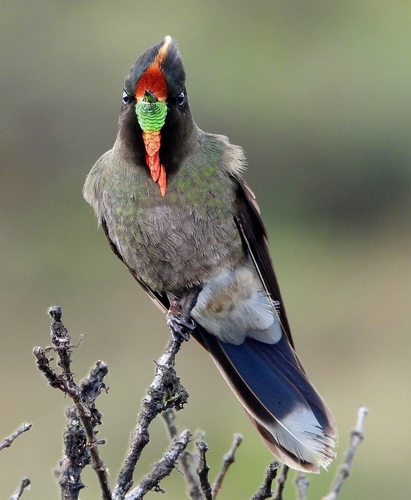
Chalcostigma
Chalcostigma is a genus of South American hummingbirds in the family Trochilidae.

Melaenornis
Melaenornis is a genus of small passerine birds in the large family Muscicapidae commonly known as the Old World flycatchers. They are restricted to sub-Saharan Africa.
Nesocharis
Nesocharis is a genus of small seed-eating birds in the family Estrildidae. They are found in Africa.

Reinwardtoena
Reinwardtoena is a small genus of doves in the family Columbidae. They are found on parts of Indonesia, Papua New Guinea and the Solomon Islands.
Loxigilla
Loxigilla is a genus of passerine birds in the tanager family Thraupidae. The two species are both endemic to the Lesser Antilles.
Moho
genus of birds

Eriocnemis
Eriocnemis is a genus of hummingbirds, which - together with the species in the genus Haplophaedia - are known as pufflegs. They occur in humid forest, woodland and shrub at elevations of 1000 to 4800 meters above sea level in the Andes of Argentina, Bolivia, Peru, Ecuador, Colombia, and Venezuela. The males have a colourful green, coppery or blue plumage, and the females are generally somewhat duller. The most striking feature of both sexes in the genus Eriocnemis are their dense snow-white leg-puffs which consist of feather tufts that resemble woolly panties. One species, the black-thighed p
%3B%20Rio%20Branco%2C%20Acre%2C%20Brazil.jpg)
Capito
Capito is a genus of birds in the family Capitonidae. They are found in humid forests in South America, with a single species extending into eastern Panama. Slightly larger than the members of the genus Eubucco, members of the genus Capito are all sexually dimorphic and thickset, and have stubby pale bills that often are tipped black. With the exception of the somewhat aberrant scarlet-crowned barbet, black, red, orange, yellow and white are the dominating colours in their plumage, and males have at least partially black backs. Typically seen singly or in pairs, they are primarily frugivorous,
%20with%20a%20Muntingia%20calabura%20(Singapur%20cherry)%20fruit%20W2%20IMG%208494.jpg)
Dicaeum
thumb|200px|Pale-billed flowerpecker Dicaeum erythrorhynchos with a [[Muntingia calabura berry (Hyderabad, India)]]
200px|thumb|Thick-billed flowerpecker Dicaeum agile on [[Helicteres isora ]]
Dicaeum is a genus of birds in the flowerpecker family Dicaeidae, a group of passerines tropical southern Asia and Australasia from India east to the Philippines and south to Australia. Within the family Dicaeidae the genus Dicaeum is sister to a clade containing the genera Prionochilus and Pachyglossa.
.jpg)
Melanodera
Melanodera is a genus of Patagonian seed-eating birds in the tanager family Thraupidae.

Pseudobulweria
__NOTOC__

Knipolegus
Knipolegus is a genus of South American birds, the black tyrants, in the tyrant flycatcher family Tyrannidae.

Herpsilochmus
Herpsilochmus is a genus of insectivorous passerine birds in the antbird family (Thamnophilidae). They are found in forest, woodland and shrub in South America, although a single species the rufous-winged antwren (H. rufimarginatus) also occurs in Panama. All are relatively small antbirds that are sexually dichromatic. In most (but not all) species males are essentially light grey with a black crown and black-and-white wings, while females are more buff or rufous with black-and-white crown.

Cotinga
genus of birds

Podargus
Podargus is a small genus of birds in the frogmouth family, Podargidae. All members of this genus are found in Australia, with some species being found in Papua New Guinea, Indonesia, and the Solomon Islands, as well.
It contains these species to date:
{| class="wikitable"
|-
! Image !! Scientific name !! Common name !!Distribution
|-
|120px||Podargus ocellatus ||Marbled frogmouth || Aru Islands, New Guinea and Queensland
|-
|120px||Podargus papuensis ||Papuan frogmouth ||Aru Islands, New Guinea, and Cape York Peninsula.
|-
|120px||Podargus strigoides ||Tawny frogmouth || Mainland Australia (

Tesia
The tesias are a genus, Tesia, of Old World warbler. Though once included in the large family Sylviidae, more recent research placed it within a new family, Cettiidae. The four species inhabit undergrowth of montane forest in South and Southeast Asia, where they are resident or short-range migrants. They have longish legs and appear tailless, with (seemingly) only 8 rectrices. Their simple songs are fairly loud, and their nests are typically ball-shaped. Their name is derived from Tisi, the Nepalese name for the grey-bellied tesia (Tesia cyaniventer).

Myrmecocichla
Myrmecocichla is a genus of passerine birds in the Old World chat and flycatcher family Muscicapidae.
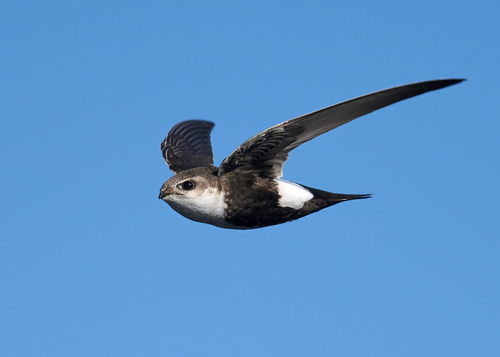
Aeronautes
Aeronautes is a genus of swifts in the family Apodidae.

Hierococcyx
Hierococcyx or hawk-cuckoos is a genus of birds in the cuckoo family Cuculidae. They are distributed in South, Southeast, and East Asia. The resemblance to hawks gives this group the generic name of hawk-cuckoos.

Tit-Tyrant
Anairetes is a genus containing the tit-tyrants, a group of small, mainly Andean birds, in the tyrant flycatcher family Tyrannidae. The group briefly included the genus Uromyias, which had been recognized based on syringeal and plumage characters, including a flatter crest and a longer tail, but was included within Anairetes due to genetic analysis. Recent analyses suggested splitting into Uromyias again.
Anairetes is believed to be most closely related to the genera Mecocerculus and Serpophaga; however, there is no definitive evidence supporting this claim.