Category
page 1Body fluids

urine
thumb|upright=0.5|Sample of human urine

tear
thumb|upright=1.15|Human tears
Tears (tear film) are a transparent fluid secreted primarily by the lacrimal glands (tear gland) found in the eyes of all land mammals. According to the mode of production, tears are classified into four types: basal, closed eye, emotional, and reflex. The basal rate of tear secretion is ~0.5–2.2 μL/min, and irritation can increase secretion by up to ~100-fold, reaching ~300 μL/min. Tears are made up of water, electrolytes, proteins, lipids, and mucins that form layers on the surface of eyes. The four types of tears differ significantly in their composition.
upr

semen
thumb|right|287px|spermatozoon|Spermatozoa, in this case human, are a primary component of normal semen, and the agents of fertilization of female ova.
.jpg)
sweat
Perspiration, also known as sweat, is the fluid secreted by sweat glands in the skin of mammals.

vomiting

saliva
thumb|Saliva on a baby's lips
Saliva (commonly referred to as spit, drool or slobber) is an extracellular fluid produced and secreted by salivary glands in the mouth. In humans, saliva is around 99% water, plus electrolytes, mucus, white blood cells, epithelial cells (from which DNA can be extracted), enzymes (such as lingual lipase and amylase), and antimicrobial agents (such as secretory IgA, and lysozymes).

bile
thumb|Bile (yellow material) in a liver [[biopsy stained with hematoxylin-eosin in a condition called cholestasis (setting of bile stasi)]]
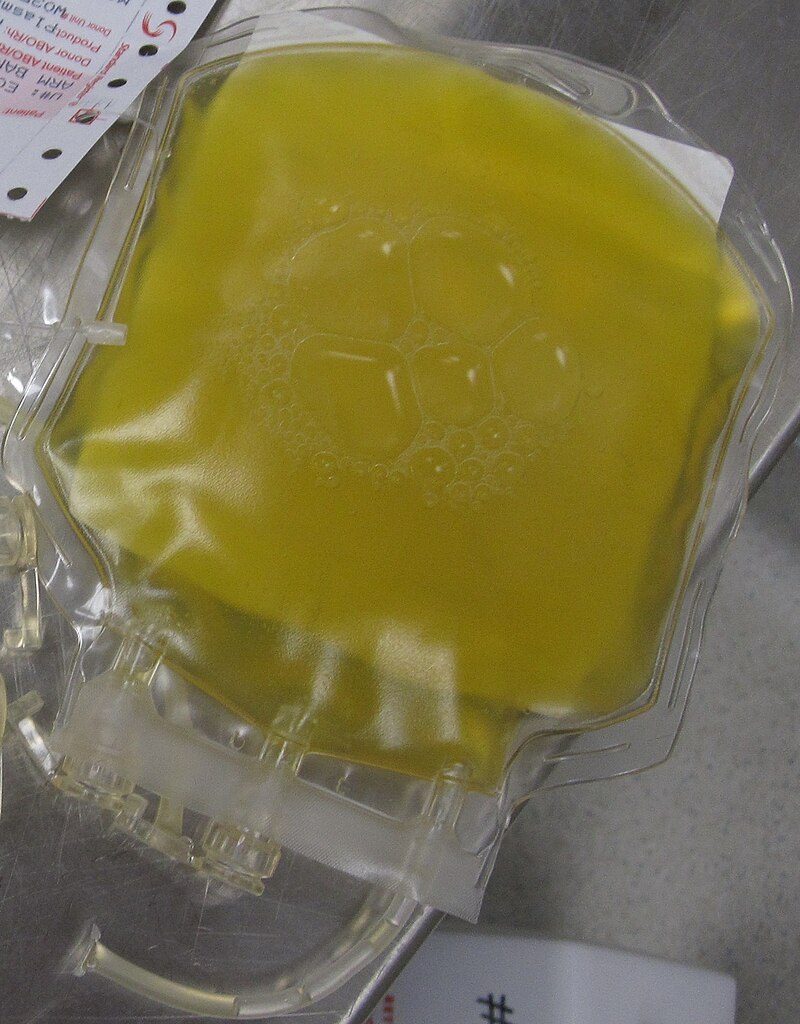
blood plasma
liquid component of blood

pus
Pus is an exudate, typically white-yellow, yellow, or yellow-brown, formed at the site of inflammation during infections, regardless of cause.

breast milk
milk produced by the mammary glands in the breast of a human female

lymph
Lymph () is the fluid that flows through the lymphatic system, a system composed of lymph vessels (channels) and intervening lymph nodes whose function, like the venous system, is to return fluid from the tissues to be recirculated. At the origin of the fluid-return process, interstitial fluid—the fluid between the cells in all body tissues—enters the lymph capillaries. This lymphatic fluid is then transported via progressively larger lymphatic vessels through lymph nodes, where substances are removed by tissue lymphocytes and circulating lymphocytes are added to the fluid, before emptying ult

mucus
thumb|Mucous cells of the stomach lining secrete mucus (pink) into the lumen
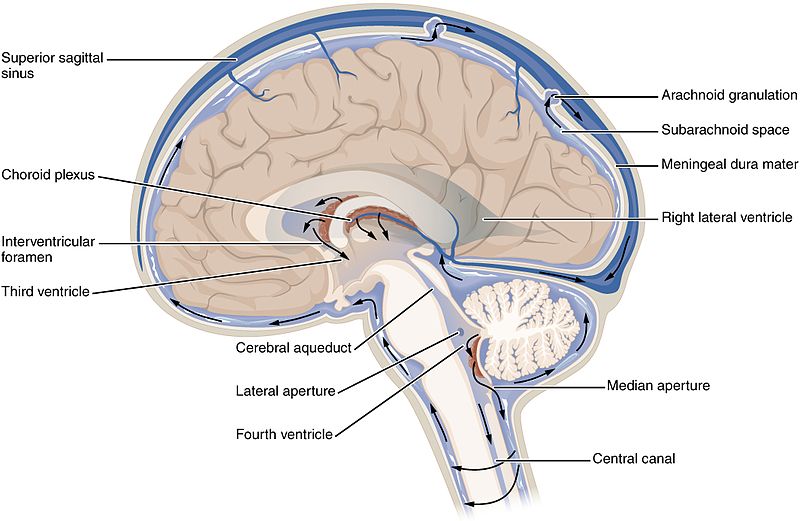
cerebrospinal fluid
clear colorless bodily fluid found in the brain and spine

female ejaculation
expulsion of fluid during or before an orgasm
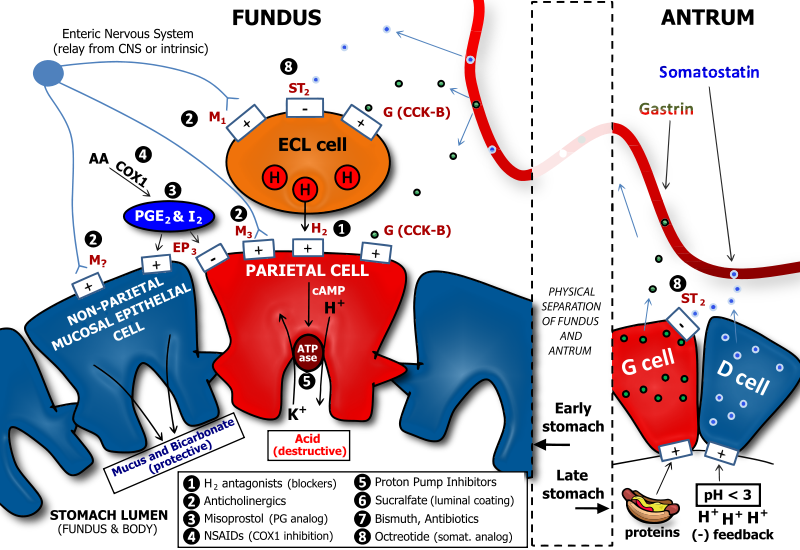
gastric acid
digestive fluid formed in the stomach

hemolymph
thumb|Collection of hemolymph from a worker honeybee.

vitreous humour
clear gel that fills the space between the lens and the retina of the eyeball

amniotic fluid
the fluid surrounding a fetus within the amnion
aqueous humour
transparent, watery, fluid similar to plasma, but containing low protein concentrations, secreted from the ciliary epithelium
body fluid
liquid originating from the inside of an organism, including fluids excreted or secreted, and body water that normally is not
exudate
An exudate is a fluid released by an organism through pores or a wound, a process known as exuding or exudation.
Exudate is derived from exude 'to ooze' from Latin 'to (ooze out) sweat' ('''' 'out' and '''' 'to sweat').
honeydew
liquid
interstitial fluid
the liquid outside of a cell
vaginal lubrication
naturally produced fluid that lubricates a vagina

rheum
thumb|right|Rheum from a cat's eyes
Rheum (; from Greek: ῥεῦμα rheuma 'a flowing, rheum') is a thin mucus naturally discharged from the eyes, nose, or mouth, often during sleep (contrast with mucopurulent discharge). Rheum dries and gathers as a crust in the corners of the eyes or the mouth, on the eyelids, or under the nose. It is formed by a combination of mucus (in the case of the eyes, consisting of mucin discharged from the cornea or the conjunctiva), nasal mucus, blood cells, skin cells, or dust.

phlegm
thumb|A substance of phlegm
Phlegm (; , phlégma, "inflammation", "humour caused by heat") is mucus produced by the respiratory system, excluding that produced by the throat and nose passages. It often refers to respiratory mucus expelled by coughing, otherwise known as sputum. Phlegm, and mucus as a whole, is in essence a water-based gel consisting of glycoproteins, immunoglobulins, lipids and other substances. Its composition varies depending on climate, genetics, and state of the immune system. Its color can vary from transparent to pale or dark yellow and green, from light to dark brown, an
synovial fluid
bodily fluid
amniotic sac
sac in which the fetus develops in amniotes
extracellular fluid
body fluid outside the cells of a multicellular organism
chyme
Chyme or chymus (; ) is the semi-fluid mass of partly digested food and digestive secretions that is formed in and expelled by the stomach, through the pyloric valve, into the duodenum (the beginning of the small intestine), where it is further transformed. Chyme also contains cells from the mouth and esophagus that slough off from the mechanical action of chewing and swallowing.
extracellular exosome
membrane-bound extracellular vesicles
transudate
Transudate is extravascular fluid with low protein content and a low specific gravity (< 1.012). It has low nucleated cell counts (less than 500 to 1000 per microliter) and the primary cell types are mononuclear cells: macrophages, lymphocytes and mesothelial cells. For instance, an ultrafiltrate of blood plasma is transudate. It results from increased fluid pressures or diminished colloid oncotic forces in the plasma.
perilymph
Perilymph is an extracellular fluid located within the inner ear. It is found within the scala tympani and scala vestibuli of the cochlea. The ionic composition of perilymph is comparable to that of plasma and cerebrospinal fluid. The major cation in perilymph is sodium, with the values of sodium and potassium concentration in the perilymph being 138 mM and 6.9 mM, respectively. It is also named Cotunnius' liquid and liquor cotunnii for Domenico Cotugno.
endolymph
Endolymph is the fluid contained in the membranous labyrinth of the inner ear. The major cation in endolymph is potassium, with the values of sodium and potassium concentration in the endolymph being 0.91 mM and 154 mM, respectively. It is also called ''Scarpa's fluid'', after Antonio Scarpa.
chyle
Chyle (; ) is a milky bodily fluid consisting of lymph and emulsified fats, or free fatty acids (FFAs). It is formed in the small intestine during digestion of fatty foods, and taken up by lymph vessels specifically known as lacteals. The lipids in the chyle are colloidally suspended in chylomicrons. Its principal role is to carry dietary fats and fat-soluble vitamins from the intestine into the venous circulation after digestion.
anhidrosis
Hypohidrosis is a medical condition in which a person exhibits diminished sweating in response to appropriate stimuli. In contrast with hyperhidrosis, which is a socially troubling yet often harmless condition, the consequences of untreated hypohidrosis include hyperthermia, heat stroke and death. An extreme case of hypohidrosis in which there is a complete absence of sweating and the skin is dry is termed anhidrosis. The condition is also known as adiaphoresis, ischidrosis, oligidria, oligohidrosis and sweating deficiency.
Haemolacria
Haemolacria or hemolacria is a physical condition that causes a person to produce tears that are partially composed of blood.
campaign for "santorum" neologism
campaign to create the neologism "santorum" started in 2003 by LGBT rights activist Dan Savage
serous fluid
transparent or pale-colored body fluid resembling serum
potassium:proton exchanging ATPase complex
class of transport proteins
pericardial fluid
heart
transcellular fluid
Saliva spittle
saliva particles involuntarily expelled from the mouth during speech
Simulated body fluid
medical product
cerebrospinal fluid rhinorrhoea
discharge of cerebrospinal fluid through the nose