Category
page 1Cactoideae genera

Schlumbergera
Schlumbergera is a small genus of cacti with six to nine species native to the coastal mountains of southeastern Brazil. These plants grow on trees or rocks in habitats that are generally shady with high humidity, and can be quite different in appearance from their desert-dwelling cousins. Most species of Schlumbergera have stems which resemble leaf-like pads joined one to the other and flowers which appear from areoles at the joints and tips of the stems. Two species have cylindrical stems more similar to other cacti.

Epiphyllum
Epiphyllum, ; from Ancient Greek ἐπι- (epi-), meaning "upon", and φύλλον (phúllon), meaning "leaf", is a genus of epiphytic plants in the cactus family (Cactaceae), native to Central America and South America. Common names for these species include climbing cacti, orchid cacti and leaf cacti, though the latter also refers to the genus Pereskia.

Ariocarpus
Ariocarpus is a small genus of succulent, subtropical plants of the family Cactaceae.

Astrophytum
Astrophytum is a genus of six species of cacti, native to North America.

Lophophora
Lophophora () is a genus of spineless, button-like cacti. Its native range covers Texas through Mexico to southwestern Mexico. The species are extremely slow growing, sometimes taking up to thirty years to reach flowering age (at the size of about a golf ball, excluding the root) in the wild. Cultivated specimens grow considerably faster, usually taking between three and ten years to reach from seedling to mature flowering adult. The slow rate of reproduction and over-harvesting by collectors render the species under threat in the wild.
.jpg)
Pachycereus
Pachycereus is a genus of large cacti native to Central America and Mexico. They form large shrubs or small trees up to 15 m tall, with stout stems up to 1 m in diameter. Pachycereus comes from the ancient Greek παχύς (pachys) meaning "thick" and the Latin cereus meaning "torch".

Parodia
Parodia is a genus of flowering plants in the family Cactaceae, native to the eastern slopes of the Andes in northwestern Argentina and southwestern Bolivia and in the lowland pampas regions of northeastern Argentina, southern Brazil, eastern Paraguay, and Uruguay. This genus has about 65 species, many of which have been transferred from Eriocactus, Notocactus and Wigginsia. They range from small globose plants to tall columnar cacti. All are deeply ribbed and spiny, with single flowers at or near the crown. Some species produce offsets at the base. They are popular in cultivation, but must be

Rhipsalis
Rhipsalis ( ) is a genus of epiphytic flowering plants in the cactus family, typically known as mistletoe cacti. They are found in parts of Central America, the Caribbean and northern regions of South America. One species, Rhipsalis baccifera also inhabits locations in Africa and Asia, and is the only cactus species naturally occurring in the Old World. This is the largest and most widely distributed genus of epiphytic cacti (those which live on other plants without damaging them).

Echinocactus
Echinocactus is a genus of cacti in the subfamily Cactoideae. The generic name derives from the Ancient Greek ἐχῖνος (echînos), meaning "spiny," and cactus. It and Ferocactus are the two genera of barrel cactus. Members of the genus usually have heavy spination and relatively small flowers. The fruits are copiously woolly, and this is one major distinction between Echinocactus and Ferocactus. Propagation is by seed.

Ferocactus
thumb|Ferocactus cylindraceus, [[Red Rock Canyon National Conservation Area, Nevada, USA]]
thumb|Ferocactus echidne
Ferocactus is a genus of large barrel-shaped cacti, mostly with large spines and small flowers. There are about 30 species included in the genus. They are found in the southwestern United States and northwestern Mexico.
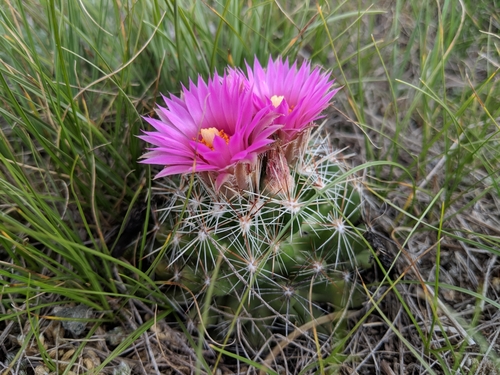
Mammillaria
Mammillaria is one of the largest genera in the cactus family (Cactaceae), with currently 200 known species and varieties recognized. Most of the mammillarias are native to Mexico, while some come from the Southwestern United States, the Caribbean, Colombia, Guatemala, Honduras and Venezuela. The common name "pincushion cactus" refers to this genus and the closely related Escobaria.

Copiapoa
Copiapoa is a genus of flowering plants in the cactus family Cactaceae, from the dry coastal deserts, particularly the Atacama Desert, of northern Chile.

Echinocereus
Echinocereus is a genus of ribbed, usually small to medium-sized, cylindrical shaped cacti, comprising about 70 species native to the southern United States and Mexico in very sunny, rocky places. Usually the flowers are large and the fruit edible.

Aztekium
The genus Aztekium contains two species of small globular cactus. Discovered in 1929 by F. Ritter, in Rayones, Nuevo León, Mexico, this genus was thought to be monotypic (with Aztekium ritteri) until a second species (Aztekium hintonii) was discovered by George S. Hinton, in Galeana, Nuevo León in 1991. A further possible species, Aztekium valdezii, was described in 2011, but is considered to be a synonym of A. ritteri.

Disocactus
Disocactus is a genus of epiphytic cacti in the tribe Hylocereeae found in Central America, the Caribbean and northern South America. It should not be confused with Discocactus, which is a different genus.

Cephalocereus
Cephalocereus is a genus of slow-growing, columnar-shaped, blue-green cacti. The genus is native to Mexico.

Frailea
Frailea is a genus of globular to short cylindrical cacti native to South America.
==Description==
They are characterized by low-growing, flattened-spherical to short-cylindrical stems that often form multiple shoots, though sometimes grow solitary. These stems have weakly developed ribs and tubercles, adorned with small spines. The short, funnel-shaped flowers emerge from the tip of the shoot. They are notable for their limited opening, often blooming only briefly during the day. A significant characteristic of most Frailea species are cleistogamous, where flowers self-pollinate and produce

Coryphantha
Coryphantha (from Greek, "flowering on the top"), or beehive cactus, is a genus of small to middle-sized, globose or columnar cacti. The genus is native to arid parts of Central America, Mexico, through Arizona, New Mexico, and western Texas and north into southwestern, central, and southeastern Montana. With its two subgenera, 57 species and 20 subspecies, it is one of the largest genera of cactus.
%20001.jpg)
Acanthocereus
Acanthocereus is a genus of cacti. Its species take the form of shrubs with arching or climbing stems up to several meters in height. The generic name is derived from the Greek word άκανθα (acantha), meaning spine, and the Latin word cereus, meaning candle. The genus is native to the mostly tropical Americas from Texas and the southern tip of Florida to the northern part of South America (Colombia and Venezuela), including islands of the Caribbean.

Hatiora
Hatiora is a small genus of epiphytic cacti which belongs to the tribe Rhipsalideae within the subfamily Cactoideae of the Cactaceae. Recent taxonomic studies have led to the three species formerly placed in subgenus Rhipsalidopsis being removed from the genus, including the well known and widely cultivated ornamental plants known as Easter cactus or Whitsun cactus (cultivars or hybrids of the former Hatiora gaertneri).

Turbinicarpus
Turbinicarpus is a genus of very small to medium-sized cacti, which inhabit the north-eastern regions of Mexico, in particular the states of San Luis Potosí, Guanajuato, Nuevo León, Querétaro, Hidalgo, Coahuila, Tamaulipas and Zacatecas.
.jpg)
Stenocereus
Stenocereus, from Ancient Greek στενός (stenós), meaning "narrow", and Latin cēreus, meaning "candle", is a genus of columnar or tree-like cacti from the Baja California Peninsula and other parts of Mexico, Arizona in the United States, Colombia, Costa Rica, Guatemala, Venezuela and the West Indies. The genus has been enlarged by the addition of species from several other genera. A close relative is the peculiar chinoa or chende cactus, Polaskia chende.

Armatocereus
Armatocereus (from Latin armatus, "armed" and cereus, "pliant/soft") is a genus of mostly tree-like cacti from South America (Ecuador and Peru). These species have a conspicuous constriction at the end of the annual growth. The flowers are mostly white, with a more or less spiny ovary. The fruits are mostly spiny.
.jpg)
Peniocereus
Peniocereus is a genus of vining cacti, comprising about 18 species, found from the southwestern United States and Mexico. They have a large underground tuber, thin and inconspicuous stems.
Its name comes from the prefix penio- (from the Latin penis, meaning ‘tail’) and Cereus, the large genus from which it was split.

Pediocactus
Pediocactus (Greek: πεδίον (pedion) means "plain", "flat", "field") is a genus of cacti native to the Western United States. The genus comprises between 6 and 11 species, depending upon the authority. Species of this genus are referred to as hedgehog cacti, though that name is also applied to plants from the genera Echinocereus and Echinopsis. Species may also be referred to as pincushion cacti, a common name which is also applied to other genera.

Pelecyphora
Pelecyphora, pincushion cactus or foxtail cactus is a genus of cacti, comprising 20 species. They originate from Mexico and the United States.

Myrtillocactus
Myrtillocactus (from Latin, "blueberry cactus") is a genus of cacti. The genus is found from Mexico to Guatemala. The genus is best known with Myrtillocactus geometrizans.

Eriosyce
Eriosyce is a genus of cacti native to Chile.

Thelocactus
thumb|Thelocactus leucacanthus
thumb|Thelocactus hexaedrophorus, by Charles Antoine Lemaire, circa 1845.
thumb|Time-lapse photography|Time-lapse video of Thelocactus bicolor blooming in response to sunlight.

Epithelantha
Epithelantha (button cactus) is a genus of cactus that is native to north-eastern Mexico, and the south-western United States from western Texas to Arizona. There are eight species recognised in the genus Epithelantha. The name Epithelantha refers to the flower position near the apex of the tubercles.
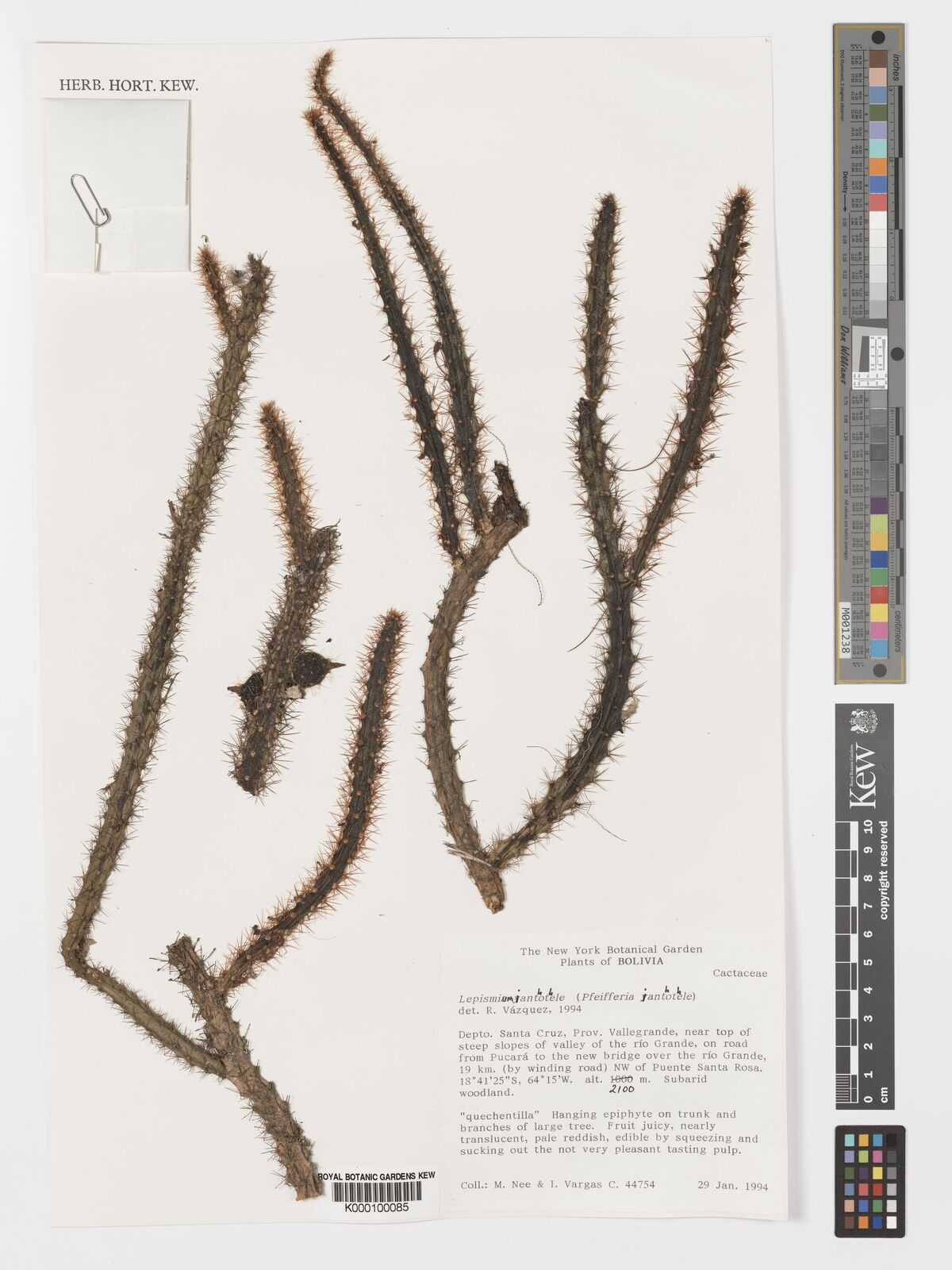
Lepismium
Lepismium is a genus of mostly epiphytic cacti, with seven species. They are found in tropical South America.

Leptocereus
Leptocereus is a genus of cacti that are native to the Greater Antilles. It has been placed in the tribe Leptocereeae or in a broadly defined Echinocereeae.
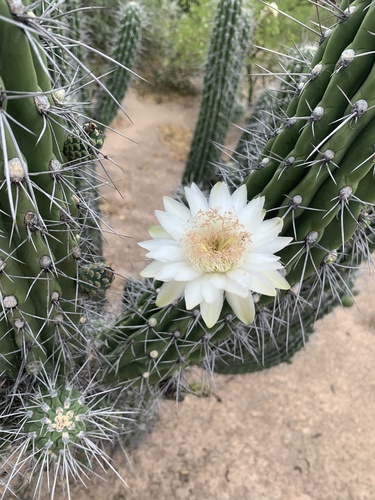
Stetsonia coryne
species of plant

Eulychnia
Eulychnia is a genus of candelabriform or arborescent cacti. It includes nine species native to Peru and northern Chile. These desert cacti can survive under very hot conditions—temperatures can reach up to 50 degrees Celsius. Furthermore, this breed of cacti can also survive in some of the driest places in the world such as the Atacama Desert, the driest desert in the world.
==Description==
Eulychnia species are shrubs or trees, often with abundant branching and sometimes a distinct trunk. Their stems are typically straight and ascending, or may lie decumbent, frequently forming a candelabra-

Neoraimondia
Neoraimondia is a genus of medium to large cacti from Peru. The genus is named after the Italian-born Peruvian explorer, naturalist, and scientist, Antonio Raimondi.
==Description==
The plants of the genus Neoraimondia are shrubby to tree-like, candelabra-like columnar cactus are branched from the base and reach a height of up to 15 meters. The upright, usually gray-green stems reach a diameter of up to 40 centimeters. Their 4 to 8 ribs are widely spaced. The large, round to elongated areoles are cone-like short shoots. These short shoots, viewed as condensed inflorescences, are among the lon

Corryocactus
Corryocactus is a genus of cacti found in Bolivia, Peru and northern Chile.
==Description==
These plants are characterized by profuse branching from their bases, with fibrous or sometimes tuberous root systems. Their stems, typically 2 to 5 cm thick, exhibit varied growth habits: smaller species are erect, while larger ones are prostrate with upright tips, climbing over vegetation, or initially erect before drooping. One notable species can form columns up to 5 meters tall with stems measuring 10 to 15 cm in diameter. The stems feature typically four to ten ribs that are swollen at the areole

Austrocactus
Austrocactus is a genus of cacti with ten species endemic of southern South America, in Argentina and Chile.

Weberocereus
Weberocereus is genus of cacti. It produces a green and white flower and is found mainly in Costa Rica and Nicaragua.
==Description==
The species of the genus Weberocereus grows climbing or hanging, epiphytic or lithophytic. Their shoots, which are round in cross-section, are angular or flattened. The 2 to 5 ribs have lobed or toothed margins on which are small, sparsely spined areoles. The spines are short and bristly or sometimes absent at all.

Acharagma
Acharagma is a genus of cactus from northern Mexico, comprising three species.

Sclerocactus
Sclerocactus ("hard cactus", from Greek; refers to the hard, dry fruit) is a genus of cacti. It comprises about 15 species, the exact number depending on the authority. These species are xerophytic. They are sometimes called 'fishhook cactus' or 'little barrels.'

Stenocactus
Stenocactus is a genus of cacti in the Cactaceae family.

Neolloydia
Neolloydia is a genus of cacti.
==Description==
These small, low-growing cacti are usually solitary or form loose cushions. They have spherical to cylindrical shoots that are typically yellowish-green with whitish, woolly tips. The plants measure 3 to 6 centimeters in diameter and 5 to 24 centimeters in height. They have weakly developed or absent ribs. Distinctive conical warts, 3 to 10 millimeters long and 6 to 10 millimeters wide, are prominent on the surface. The areoles are dimorphic, about 3 to 5 millimeters in diameter, spaced 8 to 12 millimeters apart, with a furrow. Central spines, w

Pseudorhipsalis
Pseudorhipsalis is genus of cacti. This genus is often included in Disocactus. It is epiphytic, many branched, and elongated with flattened, serrated cladodes. In its early life, it stands erect, but soon becomes prostrate. It produces numerous flowers.

Neowerdermannia
Neowerdermannia is a genus of South American cacti.
==Description==
The individual, low-growing species of the genus Neowerdermannia are spherical to pressed spherical and have a strong taproot. The approximately 16 usually spiral-shaped ribs are hardly distinguishable because they are broken up into warts. The areoles are often sunken and are located at the base of the top of the warts. Some of the thorns arising from it are curved or hooked.
.jpg)
Polaskia
Polaskia (named after American amateur Charles Polaski) is a genus of tree-like cacti reaching 4–5 m high, comprising 2 species. Both present primitive characteristics, but Polaskia chichipe is nearer to Myrtillocactus while Polaskia chende is nearer to Stenocereus. The genus is found in the Mexican states of Puebla and Oaxaca.
==Description==
The tree-like, highly branched species of the Polaskia genus reach heights of growth of between 4 and 5 meters and form dense crowns 3 to 4 meters above the ground. Its bright green shoots repeatedly fork and grow 1 to 2 meters long. The 7 to 12 ribs are
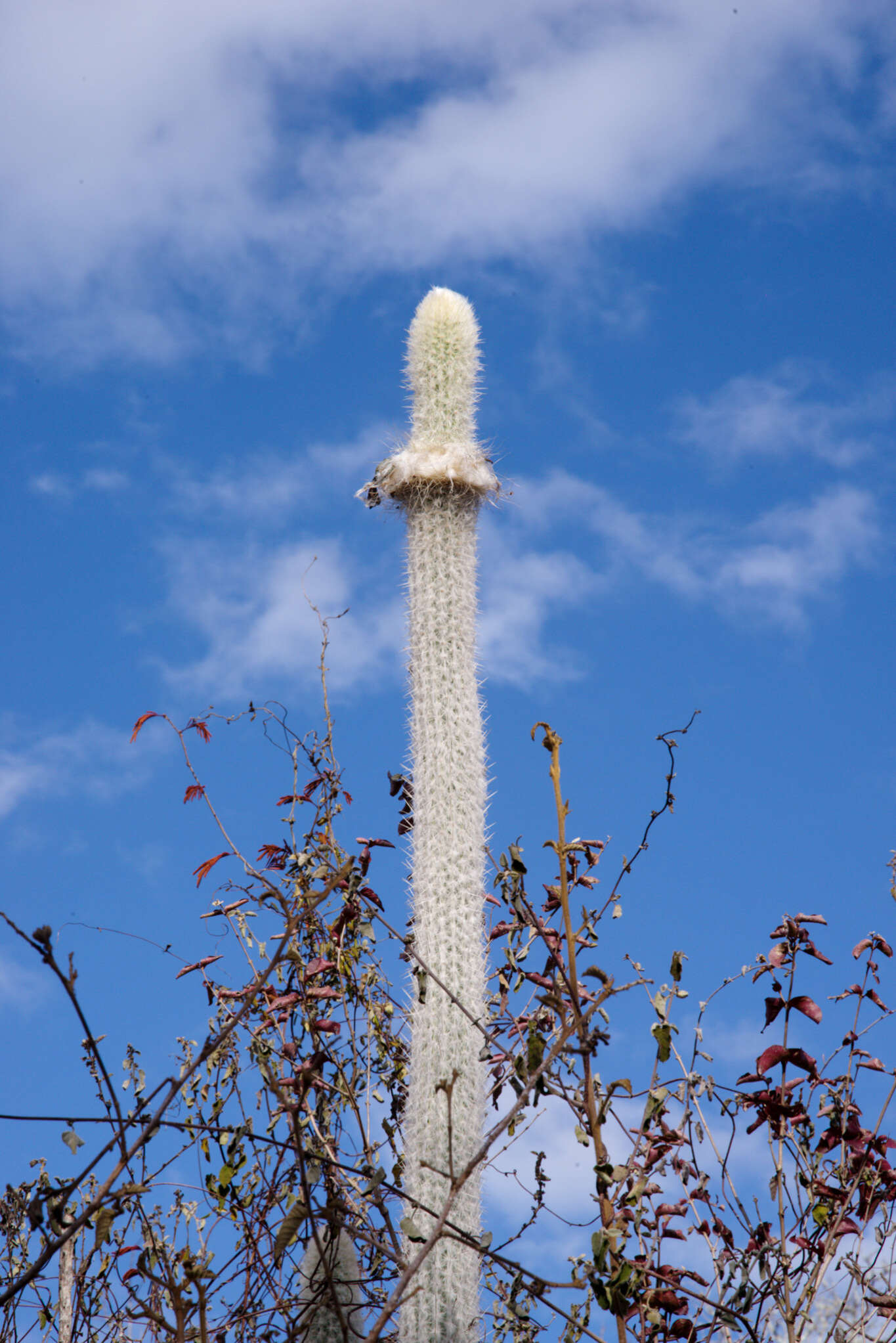
Stephanocereus
Stephanocereus is genus of cactus from Brazil, related to Arrojadoa. This genus is monotypic with the sole species Stephanocereus leucostele.
Obregonia
Obregonia, the artichoke cactus, is a monotypic genus of cacti, containing the species Obregonia denegrii. The species is endemic to the state of Tamaulipas in Mexico.
Bergerocactus
Bergerocactus emoryi is a species of cactus, known commonly as the golden-spined cereus, golden snake cactus, velvet cactus or golden club cactus. It is a relatively small cactus, but it can form dense thickets or colonies, with the dense yellow spines giving off a velvety appearance when backlit by the sun. From April to May, yellow, green-tinged flowers emerge, which transform into reddish, globular fruit. This species is native to the California Floristic Province, and is found in northwestern Baja California and a small part of California, in San Diego County and on the southern Channel Is
.jpg)
Jasminocereus
Jasminocereus (meaning "jasmine-like cereus", referring to the flowers) is a genus of cacti with only one species, Jasminocereus thouarsii, endemic to the Galápagos Islands, territorially a part of Ecuador. In English it is often called the candelabra cactus (a name used for other cacti with a similar appearance). At maturity it has a branched, treelike habit, and may be up to tall. The stems are made up of individual sections with constrictions between them. Its creamy white to greenish flowers open at night and are followed by greenish to reddish fruits.
Escontria
Escontria is a genus of cactus. The only species is Escontria chiotilla, the chiotilla or jiotilla.

Kimnachia ramulosa
Kimnachia is a monotypic genus of cacti. Its only species is Kimnachia ramulosa, synonym Pseudorhipsalis ramulosa, which is native from southern Mexico to northern South America and also found in Jamaica.

Pfeiffera
Pfeiffera is a genus of flowering plants in the family Cactaceae, found in Bolivia and northwest Argentina. There has been some debate about the circumscription of the genus. It is placed in the tribe Echinocereeae.
Yavia
Yavia cryptocarpa is a species of cactus (family Cactaceae) and the only species of the newly discovered genus Yavia. The genus is named after Argentina's department Yavi, Jujuy Province, where the plant is endemic to sparsely vegetated rocky slopes. The plant is also sometimes put in the tribe Notocacteae.
The specific epithet cryptocarpa refers to the plant being a cryptocarp. This means that the fruits are formed inside the plant's body, thus being only visible when the plant shrinks in the drought period.
==Description==
The species, with very tuberous roots, has a subglobular stem, has a

Strophocactus
Strophocactus is a genus of cacti in the subfamily Cactoideae. Its status and circumscription remain somewhat uncertain, with the genus containing one to three species (not always the same ones). Molecular phylogenetic data suggest that it consists of three species, including two formerly comprising the genus Pseudoacanthocereus. With this circumscription, the species have different growth habits, but share similarities in their flowers, which are white and open at night.

Cochemiea
Cochemiea is a genus of cactus. The group was previously synonymized with Mammillaria, until molecular phylogenetic studies determined that—when broadly circumscribed—Mammillaria is not monophyletic; thus, Cochemiea has been accepted as a distinct genus.
Calymmanthium
Calymmanthium is a monotypic genus of primitive tree-like cacti from northern Peru. The only species is Calymmanthium substerile (also known as C. fertile). It belongs to the tribe Lymanbensonieae. The young flowers of Calymmanthium are completely encased within the plant's pedicel until it is fully developed, at which time the growing yellow flower swells until it cracks the pedicel open, allowing pollinators access. The plant has an upright trunk, but many of the branches sprawl on the ground.
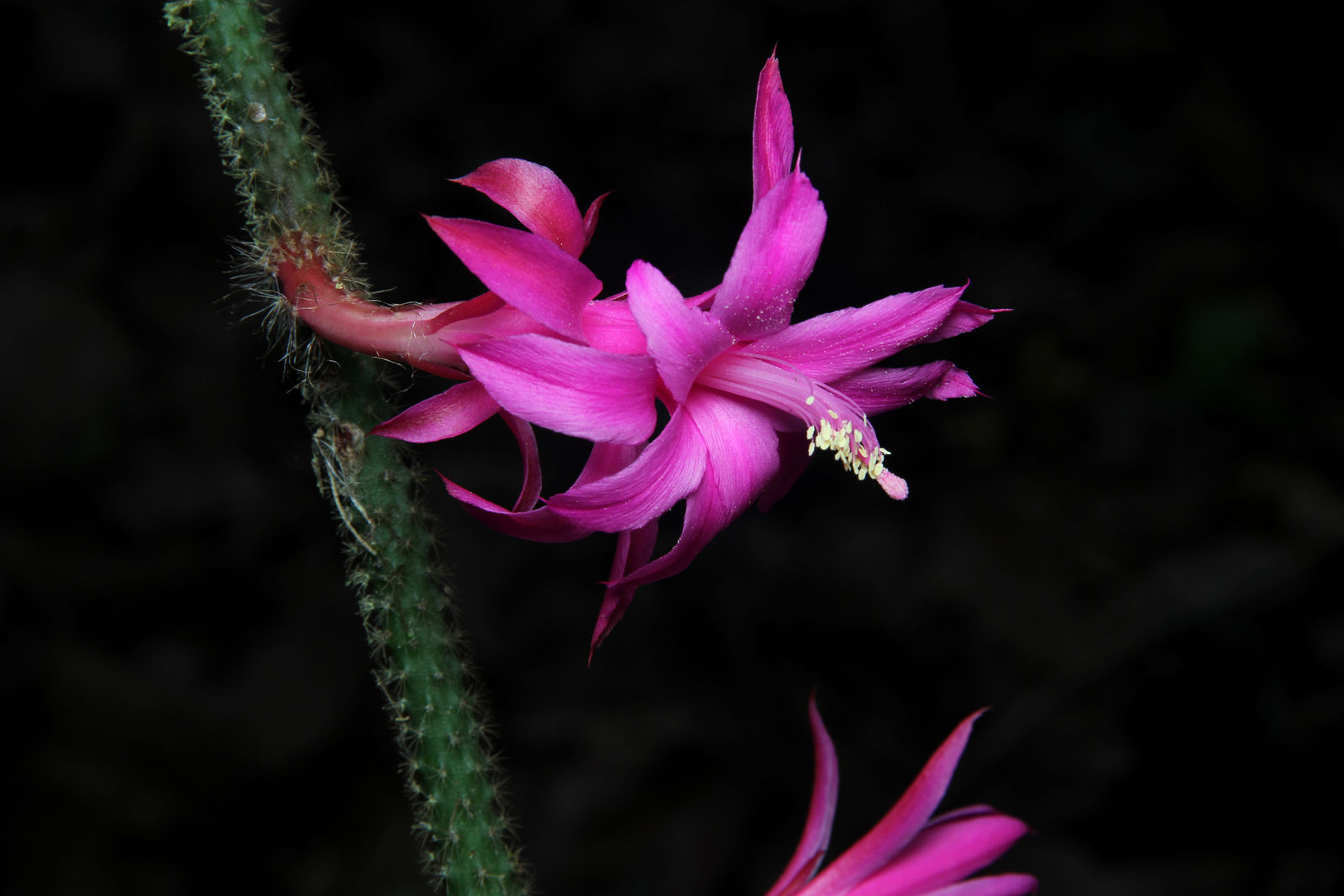
Aporocactus
Aporocactus is a genus of cacti in the tribe Hylocereeae native to Mexico. It used to be classified as a subgenus in Disocactus, but according to molecular evidence, it should be excluded from Disocactus and treated as a separate genus.
Cremnocereus
Cremnocereus is a monotypic genus of flowering plants belonging to the family Cactaceae with the sole species Cremnocereus albipilosus.
Deamia
Deamia is a genus of cacti. Its species are native from south Mexico through Central America to Nicaragua. Its species have been placed in Selenicereus and Strophocactus.
×Haagespostoa
nothogenus of plants