Category
page 1Cavies

guinea pig
domesticated rodent from South America

Capybara
The capybara or greater capybara (Hydrochoerus hydrochaeris) is the largest living rodent, native to all countries in South America except Chile. It is a semiaquatic herbivore that inhabits savannas and dense forests, living near and in bodies of water and feeding mainly on grasses and aquatic plants.
.jpg)
Caviidae
Caviidae, the cavy family, is composed of rodents native to South America and includes the domestic guinea pig, wild cavies, and the largest living rodent, the capybara. They are found across South America in open areas from moist savanna to thorn forests or scrub desert. This family of rodents has fewer members than most other rodent families, with 19 species in seven genera in three subfamilies.

Guinea pig
Cavia is a genus in the subfamily Caviinae that contains the rodents commonly known as the guinea pigs or cavies. The best-known species in this genus is the domestic guinea pig, Cavia porcellus, a meat animal in South America and a common household pet outside that continent.

Patagonian mara
species of herbivore

Dolichotis
Dolichotis is a genus of the cavy family of rodents. These large relatives of guinea pigs are common in the Patagonian steppes of Argentina, but also live in Paraguay and elsewhere in South America. It contains a single extant species, the Patagonian mara, which is one of the largest rodents in the world after the two species each of capybaras and beavers, and the large species of porcupines, reaching about in height.

Hydrochoerus
The genus Hydrochoerus contains two living (the lesser and greater capybaras) and three extinct species of rodents from South America, the Caribbean island of Grenada, California and Panama. Capybaras are the largest living rodents. The name of the genus is derived from Ancient Greek ὕδωρ (húdor), meaning "water", and χοῖρος (khoîros), meaning "pig".
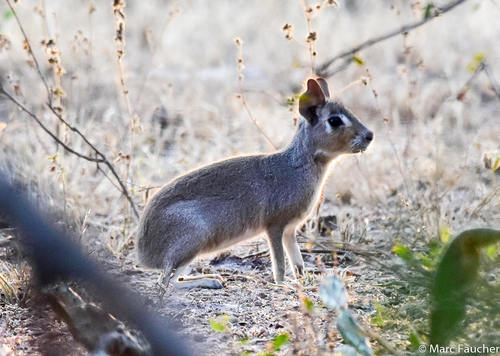
Chacoan mara
species of mammal

Lesser capybara
species of mammal
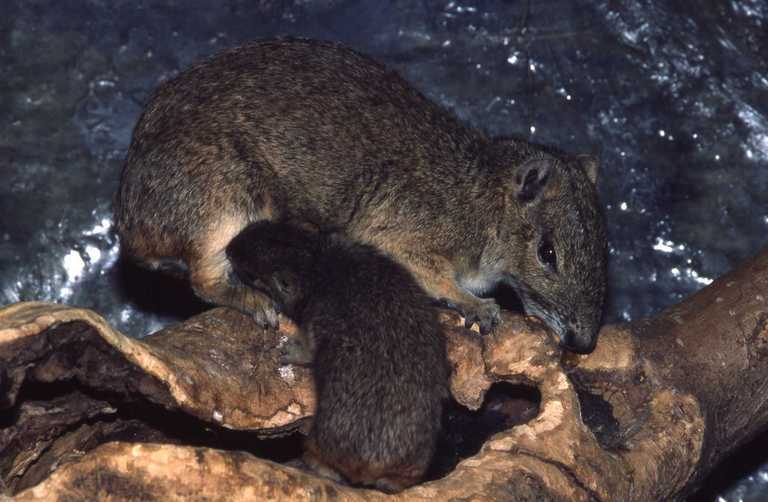
rock cavy
species of rodent

Cavia tschudii
species of rodents
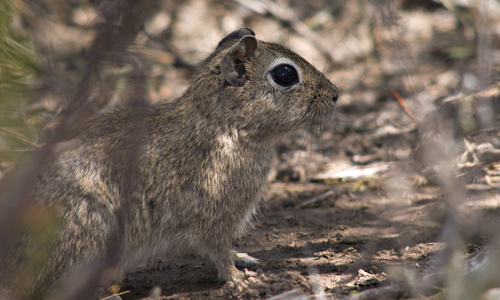
Microcavia
Microcavia (mountain cavies) is a genus of rodents in the family Caviidae. They are unique within their family in that their premolar teeth do not grow and replace the original deciduous cheek teeth until after the animal is born; in other genera this occurs in the womb.

Galea
genus of mammals

Southern mountain cavy
rodent relative of the guinea pig

Andean mountain cavy
species of mammal

Brazilian yellow-toothed cavy
species of mammal

Common yellow-toothed cavy
species of mammal

Shipton's mountain cavy
species of mammal
Kerodon
The genus Kerodon (vernacular name mocos; rock cavies) contains two species of South American cavies, the rock cavy and the acrobatic cavy. They are found in the semiarid regions of northeast Brazil known as the Caatinga. This area has a rocky terrain with large granite boulders that contain rifts and hollows where Kerodon species primarily live. They are related to capybaras and guinea pigs.

Spix's yellow-toothed cavy
species of mammal

Acrobatic cavy
species of mammal

Caviinae
Caviinae is a subfamily uniting all living members of the family Caviidae with the exception of the maras, capybaras, and Kerodon. The subfamily traditionally contained the guinea pig or cavy-like forms along with the cursorially adapted (running) Kerodon. Molecular results suggest the Caviinae as so defined would be paraphyletic and Kerodon is more closely related to maras and capybaras than to other caviines. This led Woods and Kilpatrick (2005) to unite Kerodon and capybaras into the subfamily Hydrochoerinae within the Caviidae. These studies also suggest Microcavia and Cavia are more close
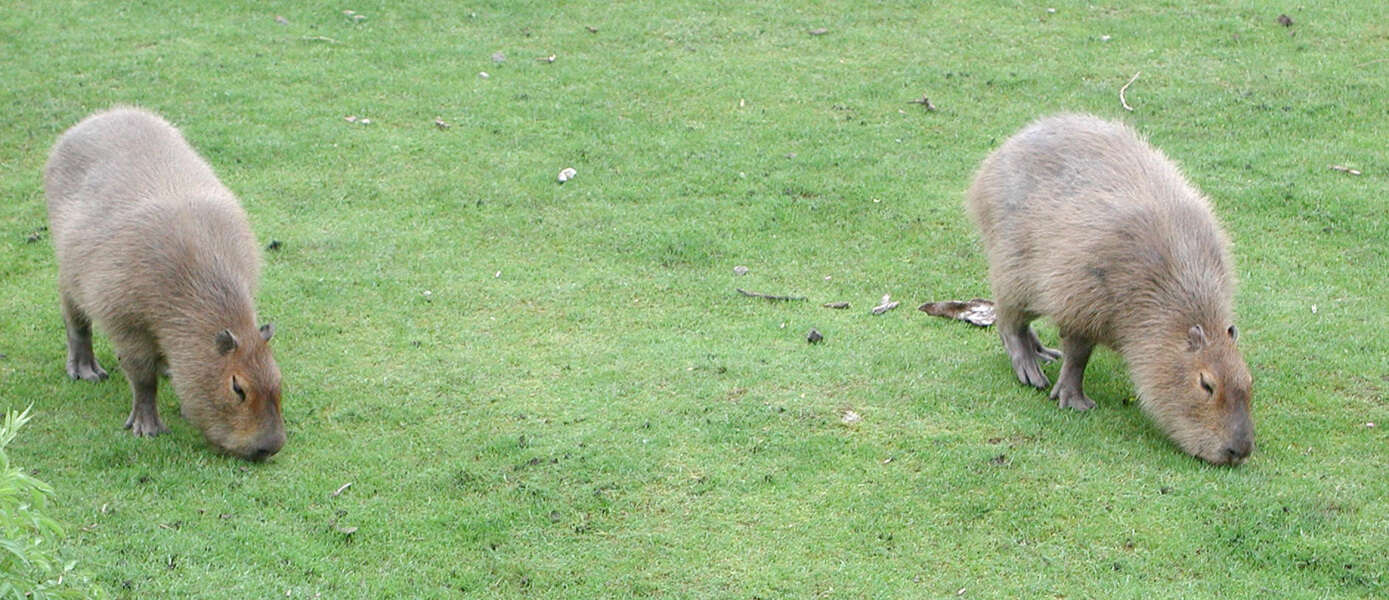
Hydrochoerinae
Hydrochoerinae (from Ancient Greek ὕδωρ (húdor), meaning "water", and χοίρος (khoíros), meaning "pig") is a subfamily of Caviidae, consisting of two living genera, Hydrochoerus, the capybaras, and Kerodon, the rock cavies. In addition, a number of extinct genera related to capybaras should also be placed in this subfamily. The taxonomy of Hydrochoerinae is confused because, until 2005, living capybaras and their extinct relatives were placed in their own family, Hydrochoeridae. Recent molecular phylogenetic studies recognize a close relationship between Hydrochoerus and Kerodon, supporting pla

Muenster yellow-toothed cavy
species of mammal

Neochoerus
thumb|left|Paleoart of Neochoerus pinckneyi.
Dolichotinae
subfamily of rodents
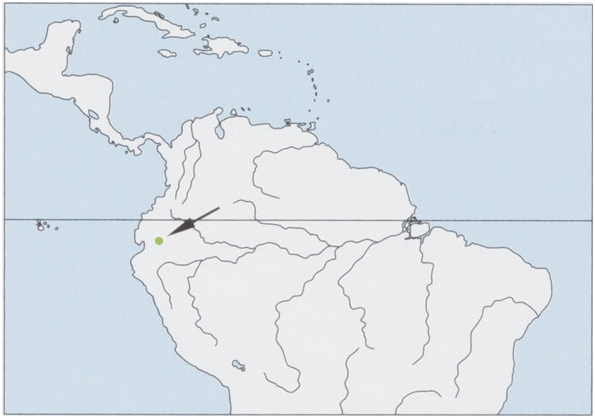
Cavia patzelti
species of rodent
Hydrochoerus gaylordi
species of mammal (fossil)

Galea leucoblephara
species of mammal
Kurloff cells
cells found in the blood and organs of guinea pigs and capybara