Category
page 1Centipede genera

Scolopendra
Scolopendra (from Ancient Greek σκόλοψ (skólops), meaning "thorn", and ἔντερον (énteron), meaning "earthworm") is a species-rich genus of large tropical centipedes of the family Scolopendridae.
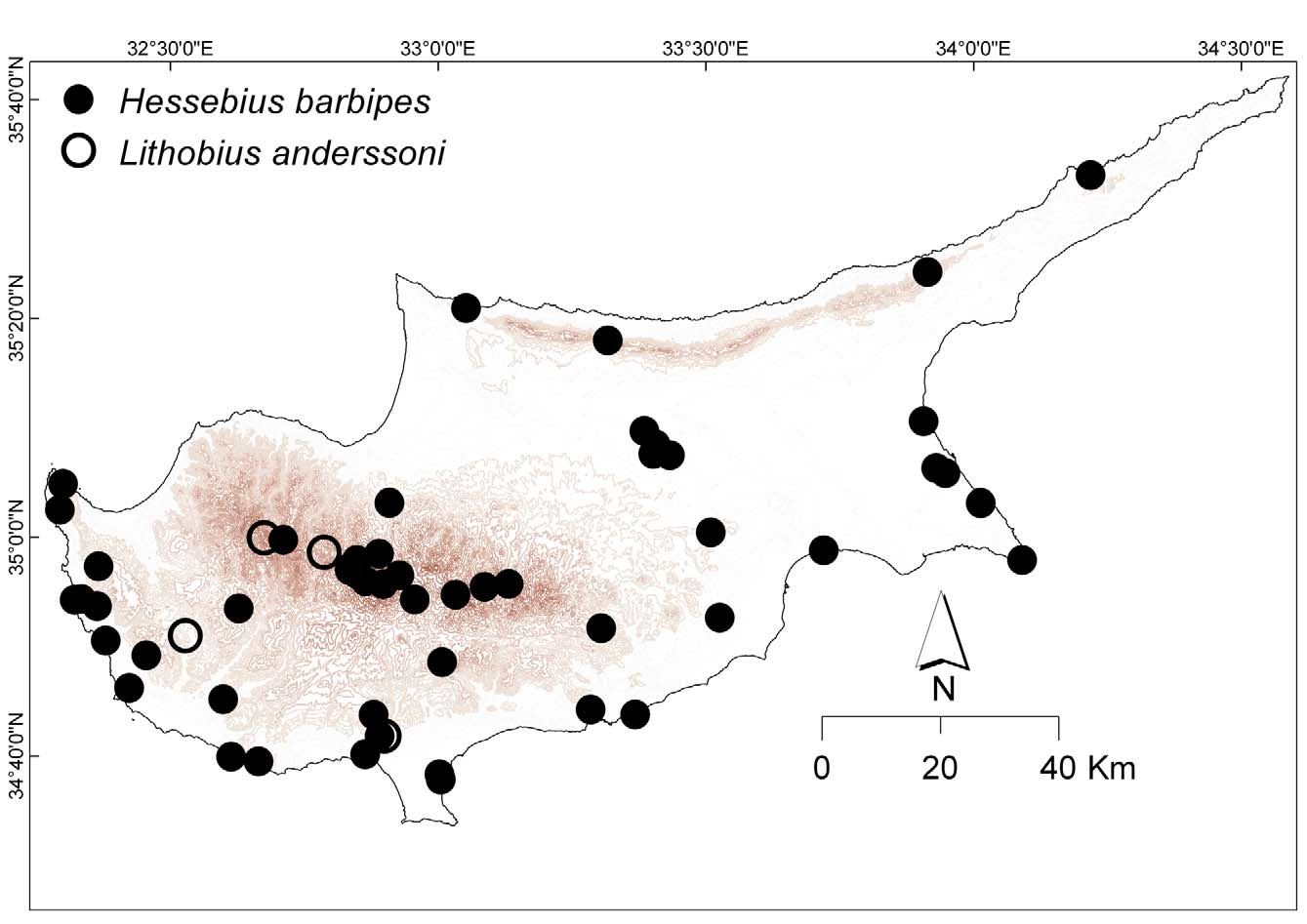
Lithobius
Lithobius is a large genus of centipedes in the family Lithobiidae, commonly called stone centipedes, common centipedes or brown centipedes.
Geophilus
Geophilus (from Ancient Greek γεω- (geo-), meaning "earth", and φίλος (phílos), meaning "lover") is a large, heterogeneous genus of soil centipedes in the family Geophilidae largely considered to be synonymous with Brachygeophilus. The generic name first appeared in Brewster's Edinburgh Encyclopaedia in 1814 as Geophilus electricus. This genus has a Holarctic distribution.
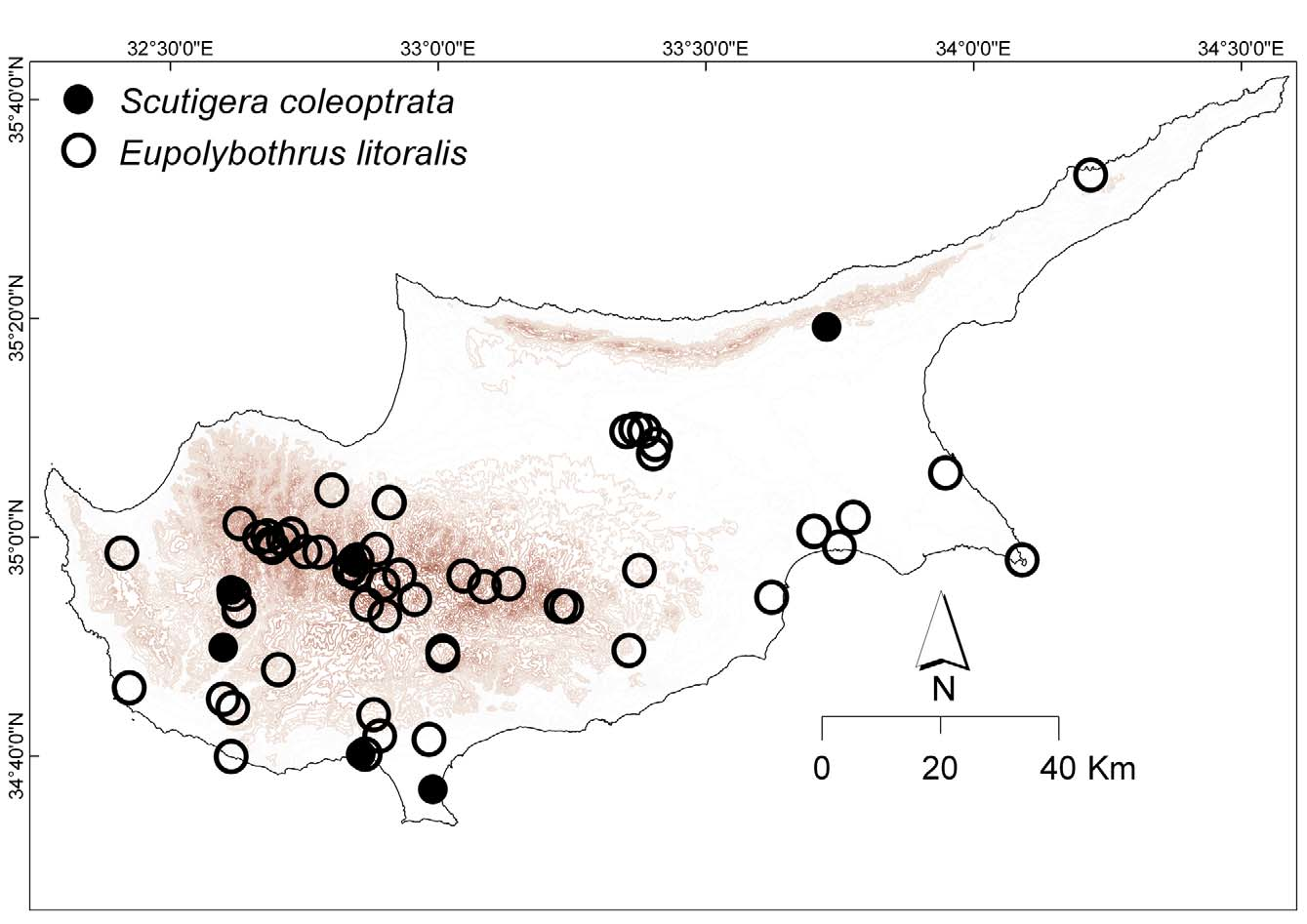
Scutigera
Scutigera is a centipede genus in the scutigeromorph (house centipede) family Scutigeridae, a group of centipedes with long limbs and true compound eyes (which were once thought to be secondary, re-evolved "pseudofacetted eyes"). It is composed of more than 30 species, including the most common and well-studied species, Scutigera coleoptrata.
Cormocephalus
Cormocephalus is a genus of centipedes of the family Scolopendridae, containing the following species:

Allothereua
Allothereua is a genus of scutigeromorph centipedes containing 9 species ranging from Central Asia (Kazakhstan and Nepal) to the Philippines to Australia, where at least six species are found. A 2009 study of scutigeromorph phylogeny found Allothereua to be polyphyletic; some species were more closely related to Parascutigera.
Ballophilus
Ballophilus is the largest genus of centipedes in the clade Ballophilidae. Species in this genus are found in tropical and subtropical regions, mainly in Africa and southeast Asia.
Australobius
Australobius is a genus of centipedes in the family Lithobiidae. It was described by American biologist Ralph Vary Chamberlin in 1920.
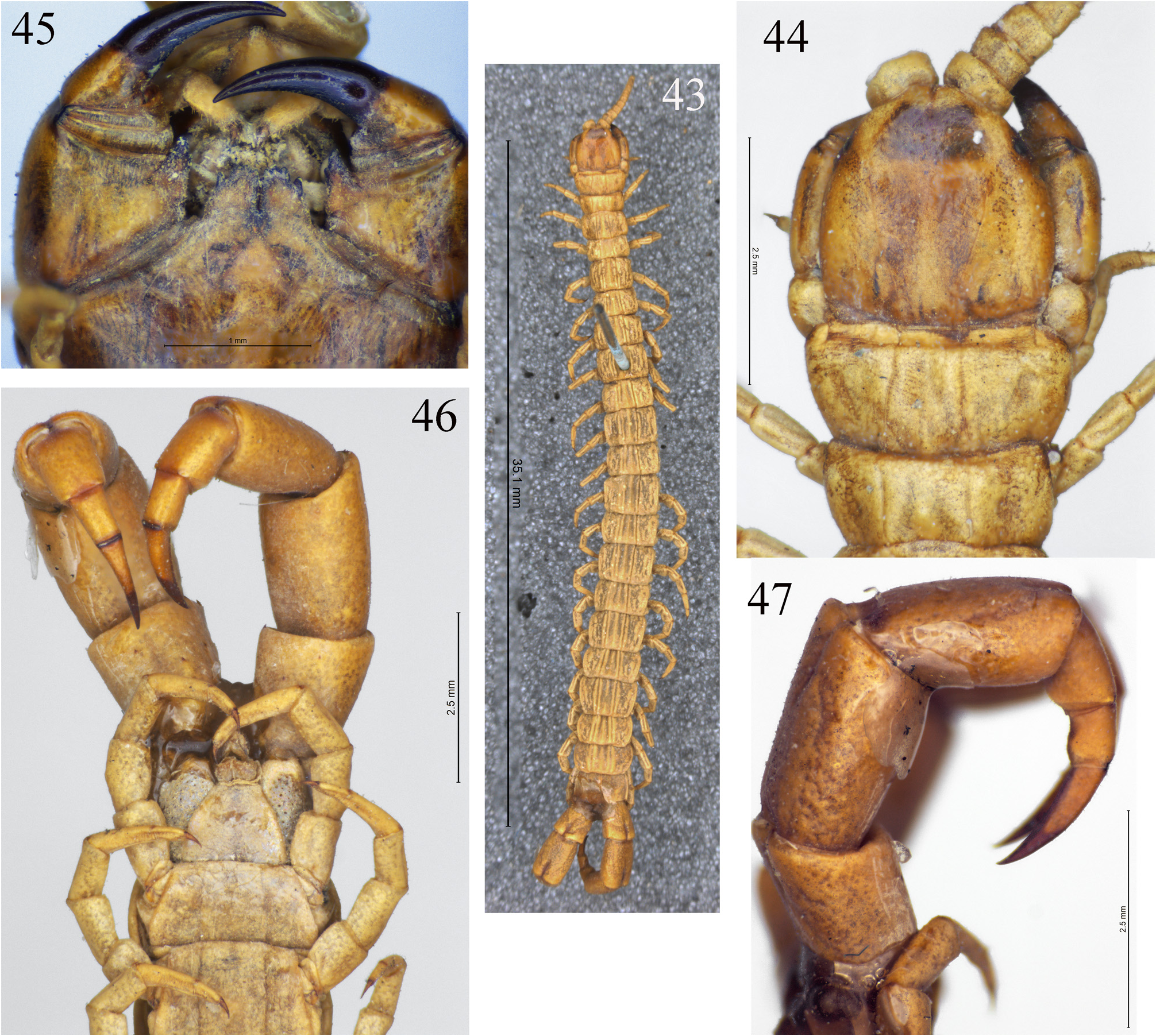
Eupolybothrus
Eupolybothrus is a genus of centipedes in the family Lithobiidae.
Thereuopoda
Thereuopoda is a genus of centipedes in the family Scutigeridae.

Bothropolys
Bothropolys is a genus of centipedes in the family Lithobiidae.
Craterostigmus
Craterostigmus is a genus of centipedes belonging to the Craterostigmidae family. The species are found in Australasia.
Craterostigmus species, especially C. tasmanianus, are an evolutionarily important group of centipedes known for their unique genetic, sensory, and ecological adaptations. Their distinct phylogenetic position highlights their independent evolutionary history within myriapods, underscoring their significance in studies of centipede evolution and the biodiversity of Tasmania. They have elliptical, bipartite eye, which is located fronto-laterally on either side of their head and
Pachymerium
Pachymerium is a genus of soil centipedes in the family Geophilidae. This genus contains more than 20 species. These centipedes are found mainly in the west Palearctic region and in south Africa.
Parascutigera
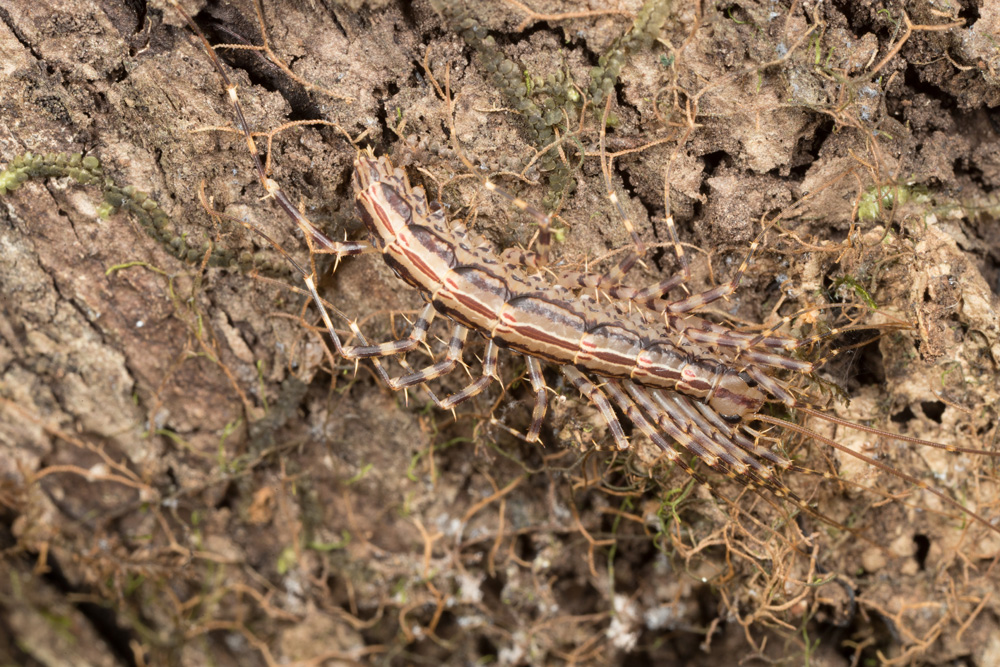
Parascutigera is a genus of centipedes in the family Scutigeridae. It was described by German myriapodologist Karl Wilhelm Verhoeff in 1904.
Easonobius
Easonobius is a genus of centipedes in the family Henicopidae. The name honours British myriapodologist Edward Holt Eason. It was described by palaeontologist Gregory Edgecombe in 2003.
Alloschizotaenia
Alloschizotaenia is a genus of soil centipedes in the family Geophilidae. This genus contains only three valid species. Centipedes in this genus are found in central and east Africa.
Pectiniunguis
Pectiniunguis is a genus of centipedes in the family Schendylidae. This genus was described by American naturalist Charles Harvey Bollman in 1889. Centipedes in this genus feature second maxillae with claws fringed by two rows of filaments, transversally elliptical sternal pore-fields on almost all trunk segments, two pores on each coxopleuron, and ultimate legs without claws.
Acanthogeophilus
Acanthogeophilus is a genus of soil centipedes in the family Geophilidae, found in the centro-west part of the Mediterranean region. The species in this genus are slender, 2-3 centimeters long, with 67 to 71 pairs of stout legs, peculiar spine-like processes on the ultimate legs, a claw-like pretarsus, complete coxo-pleural sutures, incomplete chitin-lines, absence of a carpophagous pit, possession of only basal denticles, and a transverse band porefield with scattered, anterior pores on the coxopleuron.
Aphilodon
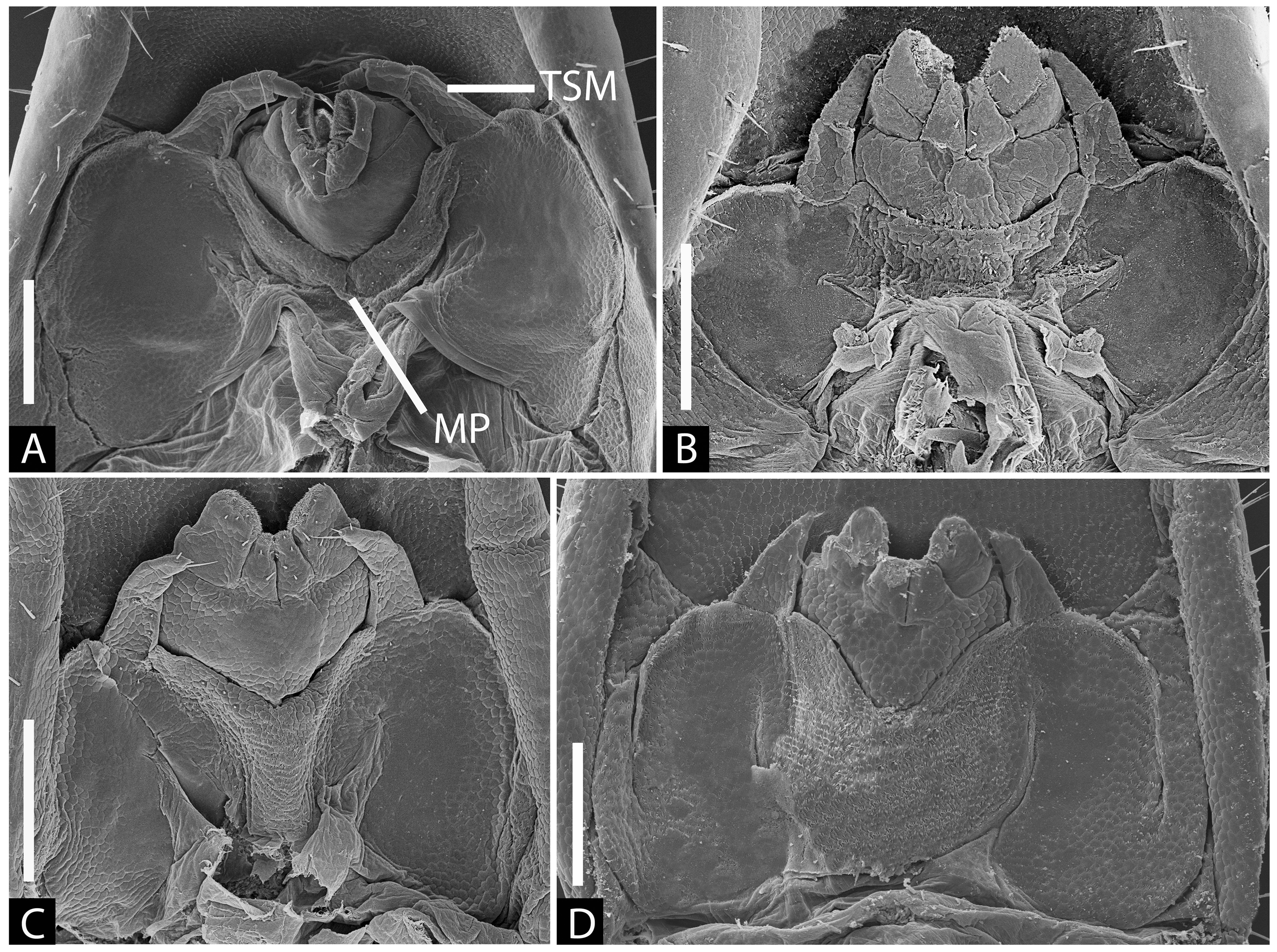
Aphilodon is a genus of soil centipedes in the subfamily Aphilodontinae, a clade formerly known as the family Aphilodontidae but now deemed a subfamily within the family Geophilidae. These centipedes are found in South America. This genus includes sixteen species and is the most diverse of the Neotropical genera in the subfamily Aphilodontinae.

Schendylops
Schendylops is the largest genus of centipedes in the family Schendylidae, containing more than 60 species. Most species in this genus are found in the Neotropical region, but a dozen species are found in Africa and Madagascar. These species live in diverse habitats, ranging from sea level (e.g., in the Caribbean region) to high elevations, e.g., at in the Andes mountains. This genus was first proposed by the American biologist Orator F. Cook in 1899 for the type species originally named Schendyla grandidieri in 1897.
Ribautia
Ribautia is a genus of centipedes in the family Geophilidae. This genus was described by French myriapodologist Henry Wilfred Brolemann in 1909. Centipedes in this genus are found in South America, tropical Africa, Madagascar, the Arabian peninsula, Australia, New Zealand, and Melanesia.

Stenotaenia
genus of myriapods
Himantarium
Himantarium is a genus of centipedes in the family Himantariidae. Centipedes in this genus feature a swollen trunk that is posteriorly stout, subcircular sternal pore-fields on almost all trunk segments, much inflated coxapleura completely covered with scattered pores, and a very small metasternite on the ultimate leg-bearing segment; each mandible has a robust dentate lamella and few pectinate lamellae. These centipedes range from 10 cm to 20 cm in length, have from 87 to 179 pairs of legs, and are found in the Mediterranean region. Both the minimum (87 pairs) and the maximum (179 p
Tuoba
genus of myriapods
Geoperingueyia
Geoperingueyia is a genus of soil centipedes in the family Geophildae. These centipedes are found in southern Africa and Argentina. This genus contains ten species, including the type species G. conjungens.
Australoschendyla
Australoschendyla is a genus of soil centipedes in the family Schendylidae. This genus was described by the English myriapodologist Richard E. Jones in 1996. Centipedes in this genus feature claws on the second maxillae fringed by a single row of filaments, short forcipules, nearly circular fields of pores on the sternites, one or two pores on the basal element of each of the ultimate legs, and ultimate legs without claws. These centipedes range from 1 cm to 2 cm in length, have 41 to 47 pairs of legs, and are found in west Australia.
Ityphilus
Ityphilus is a genus of soil centipedes in the clade once accepted as the family Ballophilidae, but now regarded as a possible subfamily (Ballophilinae) in the family Schendylidae. This genus includes 28 species. These centipedes are found mostly in tropical and subtropical parts of the Americas but also on islands in Seychelles, East Asia, and the Pacific Ocean.
Lamyctes
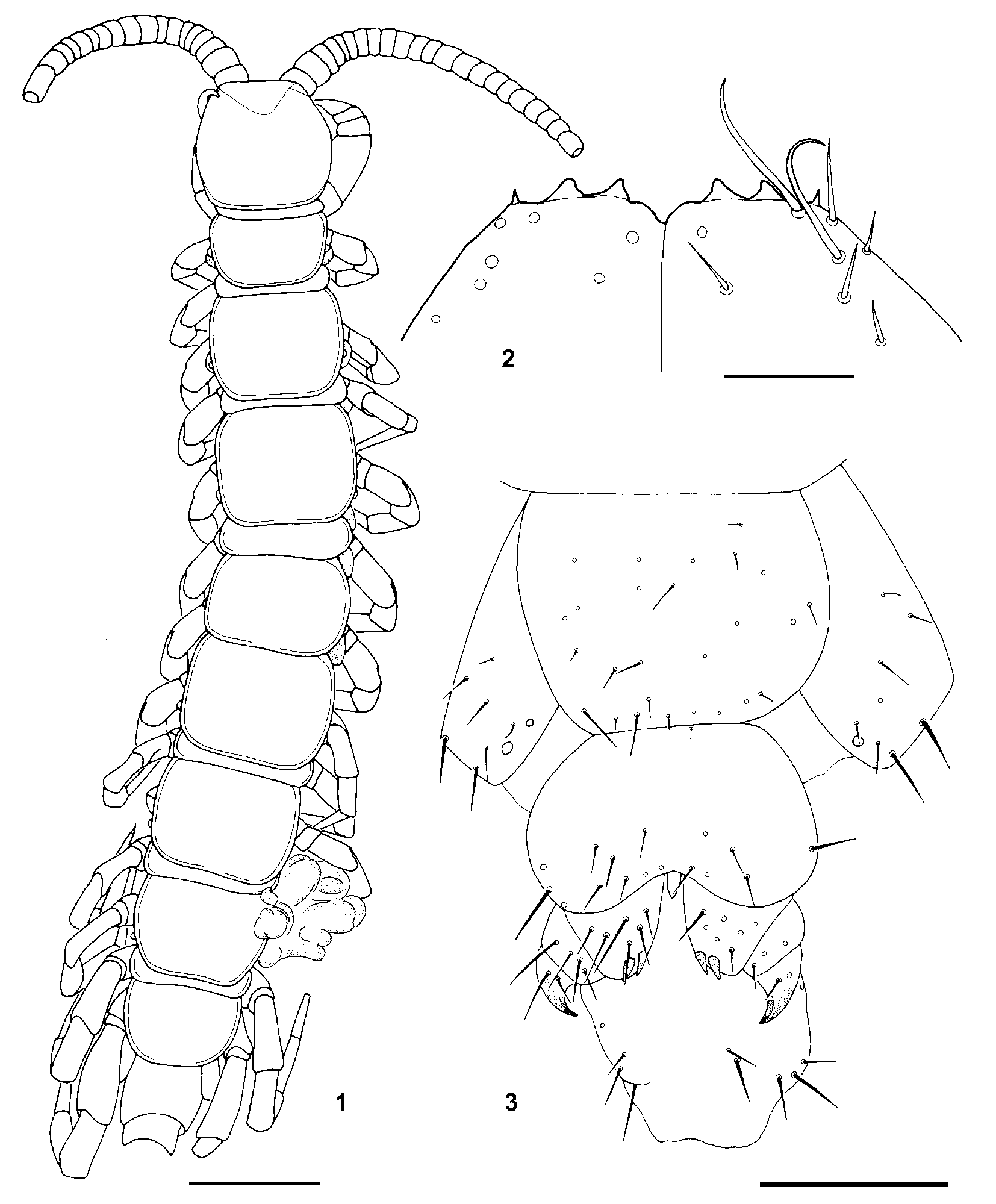
Lamyctes is a genus of centipedes in the family Henicopidae. It was described by Danish entomologist Frederik Vilhelm August Meinert in 1868.
Otostigmus
Otostigmus is a genus of centipedes in the family Scolopendridae. It was first described by Swedish naturalist Carl Oscar von Porat in 1876. The genus as a whole comprises around 157 species, found primarily in the Neotropics.
Ethmostigmus
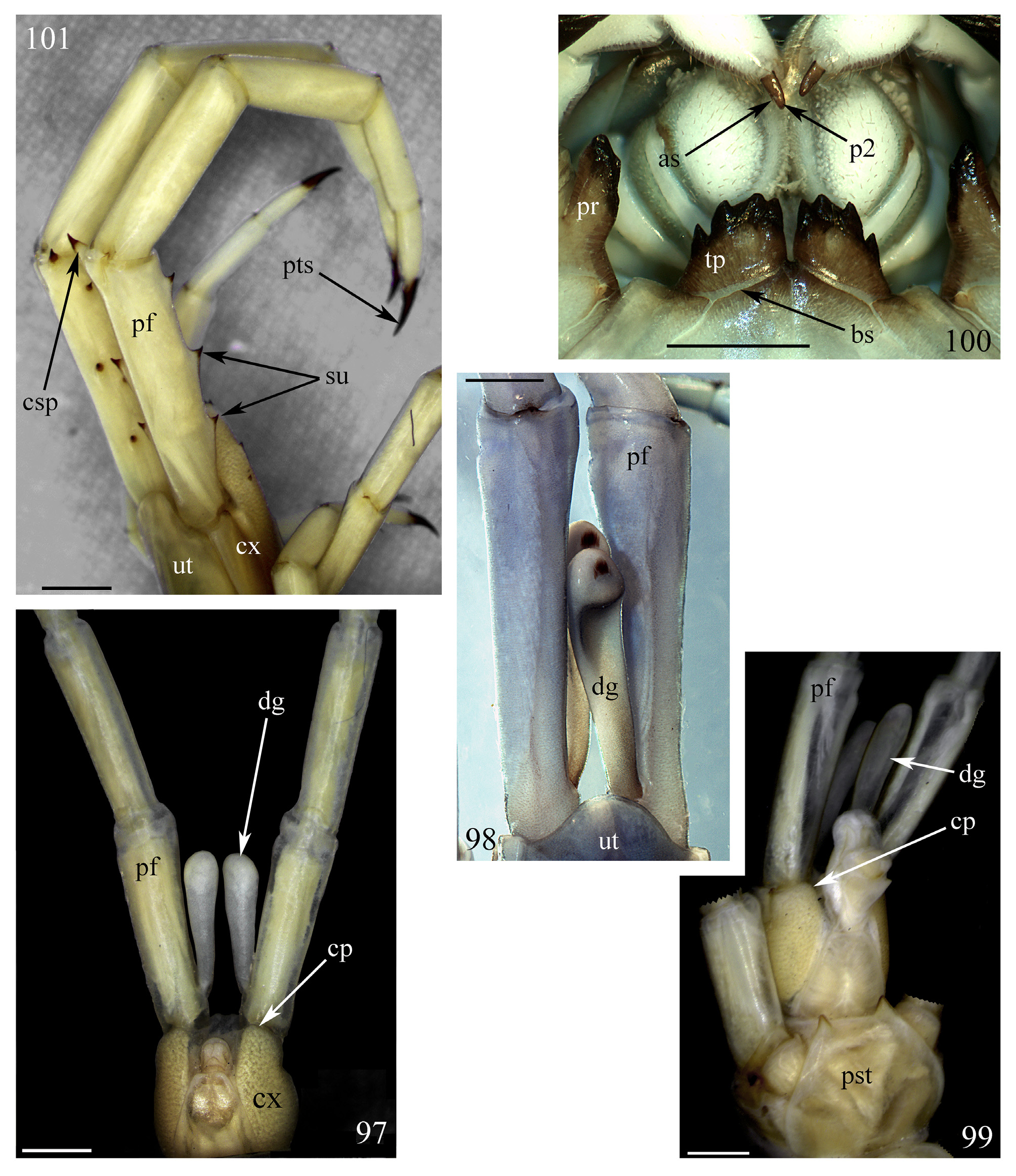
Ethmostigmus is a genus of centipedes in the family Scolopendridae found in Africa, Asia, and Oceania that is characterised by its large, rounded spiracles.
Arctogeophilus
Arctogeophilus is a genus of soil centipedes in the family Geophildae. These centipedes are found in subarctic and temperate regions of Asia, North America, and western Europe. This genus includes fourteen species.

Paralamyctes
Paralamyctes is a genus of centipedes in the family Henicopidae. It was described by British zoologist Reginald Innes Pocock in 1901.
Dinogeophilus
Dinogeophilus is a genus of soil centipedes in the family Schendylidae. This genus contains only two species, Dinogeophilus pauropus and D. oligopodus, which range from in length. These species are notable as the smallest not only in the order Geophilomorpha but also in any epimorphic order of centipedes. The species D. oligopodus is also notable as one of only six species of soil centipedes to feature only 29 pairs of legs and one of only two species to include females with only 29 pairs, the minimum number recorded for females in the order Geophilomorpha.
Afrotaenia
Afrotaenia is a monotypic genus of centipedes with only one species, Afrotaenia machadoi, found in Angola. This species features trunk metasternites without patterned pore-fields, only scattered pores, and claws on the ultimate legs. The original description of this species is based on two rust-colored specimens, including a female measuring about 20 mm in length with 59 pairs of legs.
Strigamia
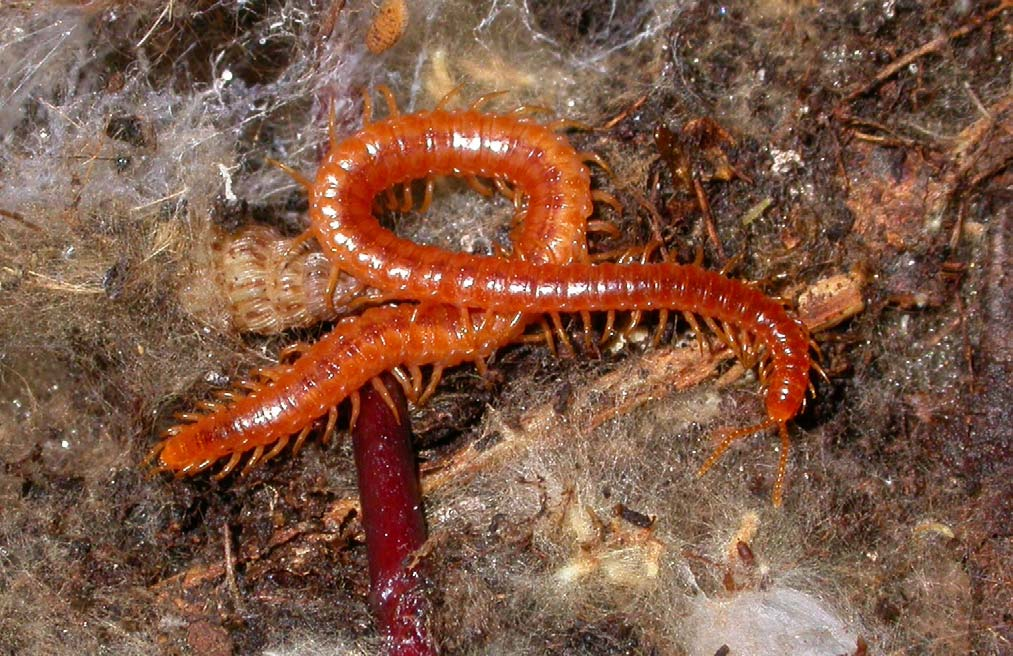
Strigamia is a genus of soil centipedes in the subfamily Linotaeniinae, a clade formerly known as the family Linotaeniidae, but now deemed a subfamily within the family Geophilidae. This genus is among the most widespread genera in the order Geophilomorpha. These centipedes are found in temperate parts of the Holarctic region, including much of North America and Eurasia.
Thereuonema
Thereuonema is a centipede genus in the family Scutigeridae.
Henicops
Henicops is a genus of centipedes in the family Henicopidae. It was described by British entomologist George Newport in 1845.
Eucratonyx
Eucratonyx is a genus of centipedes in the family Gonibregmatidae. This genus was described in 1898 by British zoologist Reginald Innes Pocock. Centipedes in this genus are found from the Andaman Islands to New Britain.
Scutigerina
Scutigerina is a genus of centipedes in the family Scutigerinidae. It was described in 1904 by Italian myriapodologist Filippo Silvestri.
Escaryus
Escaryus is a genus of soil centipedes in the family Schendylidae. These centipedes are notable as schendylids adapted to colder temperatures and restricted to cool climates and high latitudes. With more than 30 species, this genus is easily the largest group of such centipedes in the family Schendylidae. Most schendylids are limited to tropical or subtropical regions.
Sepedonophilus
Sepedonophilus is a genus of three species of centipedes in the family Geophilidae. This genus is endemic to Australia, and was first described by Austrian myriapodologist Carl Attems in 1909. Centipedes in this genus feature scattered coxal pores and have no sternal pores; the lateral parts of the labrum almost touch medially, and the intermediate part is inconspicuous; the coxosternite of the second maxillae have peculiar anterior projections. These centipedes range from about 2 cm to 5 cm in length and have 49 to 79 pairs of legs. The smallest species in this genus, Sepedonophilus
Steneurytion
Steneurytion is a genus of centipedes in the family Geophilidae. This genus was first described by Austrian myriapodologist Carl Attems in 1909. These centipedes are found in Australia, New Zealand, and Hawaii.
Gonibregmatus
Gonibregmatus is a genus of soil centipedes in the family Gonibregmatidae. This genus was described by British entomologist George Newport in 1843. These centipedes are found from the Philippines and the Malay archipelago to Fiji.
Schendyla
Schendyla is a genus of soil centipedes in the family Schendylidae. These centipedes are found in the west Palearctic region. This genus was described by Danish entomologists Vilhelm Bergsøe and Frederik Vilhelm August Meinert in 1866. This genus now includes more than 20 species.
Pachymerinus
Pachymerinus is a genus of centipedes in the family Geophilidae. It was described by Italian entomologist Filippo Silvestri in 1905. Centipedes in this genus feature elongate heads, elongate forcipules with denticles, scattered coxal pores, and few sternal pores, if any; the intermediate part of the labrum is narrow and has no denticles. These centipedes range from about 3 cm to 8 cm in length, have 47 to 81 pairs of legs, and are found in Chile and southeast Australia. The Australian species Pachymerinus froggatti is notable for its relatively small size, measuring only 28 mm i
Proterotaiwanella
Proterotaiwanella is a genus of centipedes in the family Mecistocephalidae. This genus includes only two species, the type species P. tanabei and the species P. sculptulata. The species P. sculptulata features 49 pairs of legs and is found in Taiwan, whereas the species P. tanabei features 45 leg pairs and is found in the Ryukyu Islands of Japan.
Orya
genus of myriapods
Mecophilus
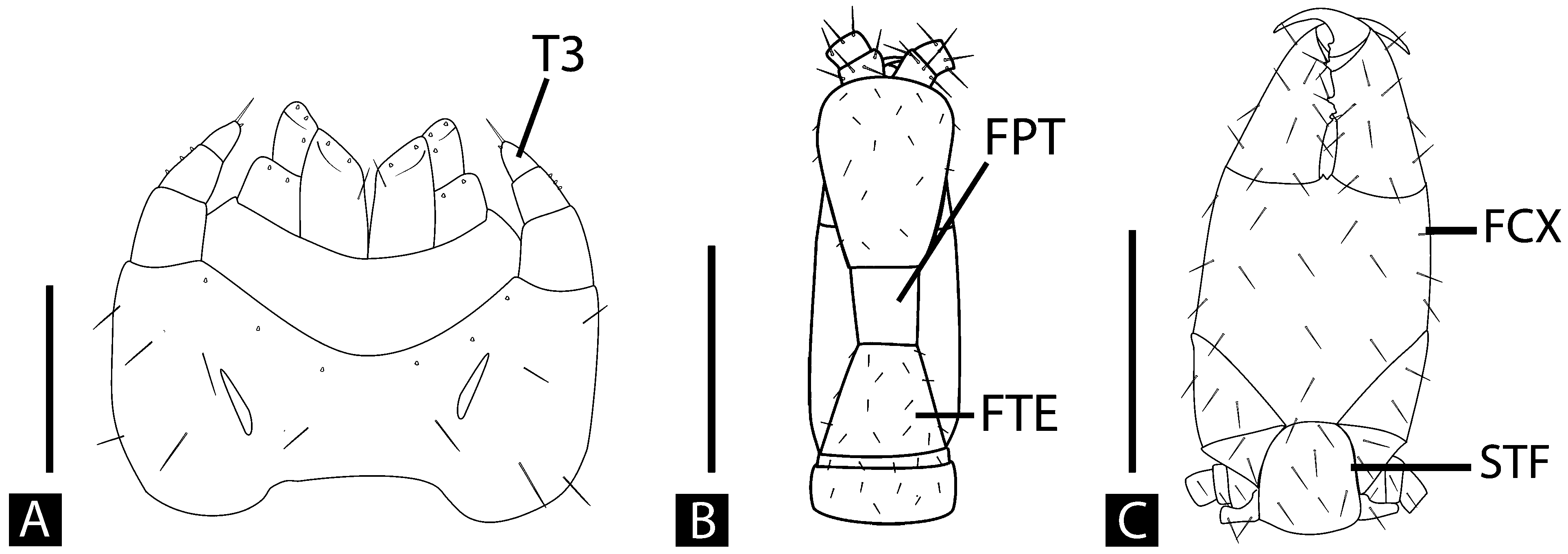
Mecophilus is a genus of soil centipedes in the subfamily Aphilodontinae, a clade formerly known as the family Aphilodontidae but now deemed a subfamily within the family Geophilidae. The species in this genus are among the smallest centipedes in the order Geophilomorpha, reaching only 8 mm in length. This genus is also notable for featuring the fewest legs (only 33 or 35 pairs) in the subfamily Aphilodontinae. The species in this genus are found in the Atlantic Forest in south and southeastern Brazil.
Mesoschendyla
Mesoschendyla is a genus of soil centipedes in the family Schendylidae. These centipedes are found in Africa, Madagascar, Java, and Borneo. The Austrian myriapodologist Carl Attems originally proposed Mesoschendyla in 1909 as a subgenus within the genus Schendyla. The genus Mesochendyla is relatively small, containing only eight species. These centipedes resemble their close relatives in the genera Schendylops and Orygmadyla.
Campylostigmus
Campylostigmus is a genus of centipedes in the family Scolopendridae. It was described by French entomologist Henri Ribaut in 1923.
Gonethina
Gonethina is a genus of centipedes in the family Pselliodidae. It was described by American myriapodologist Ralph Vary Chamberlin in 1918.
Portoricona
Portoricona is a genus of soil centipedes in the family Geophilidae. This genus includes only three species. These centipedes are found in Puerto Rico and Martinique.
Marsikomerus
Marsikomerus is a genus of centipedes in the family Schendylidae. This genus was described by Austrian myriapodologist Carl Attems in 1938. Species in this genus are found in Mexico and in the United States (in Arkansas, Texas, and Hawaii).
Dicellophilus
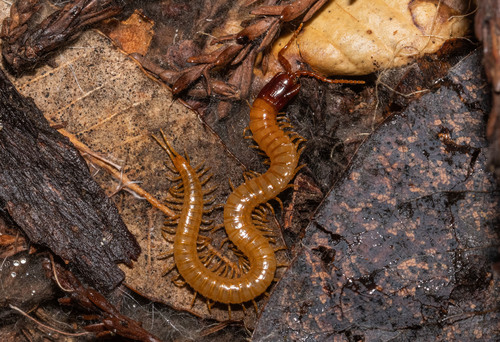
Dicellophilus is a genus of soil centipedes in the family Mecistocephalidae. This genus was introduced by the American biologist Orator F. Cook in 1896 to contain the species D. limatus, which he explicitly designated as the type species. This genus contains five species and is notable for their highly disjunct geographic distribution.
Orphnaeus
Orphnaeus is a genus of centipedes in the family Oryidae. This genus was described by Danish entomologist Frederik Vilhelm August Meinert in 1870. Centipedes in this genus are found in tropical regions.
Macronicophilus
Macronicophilus is a genus of soil centipedes in the family Geophilidae. This genus contains only four species. These centipedes exhibit traits so unusual that authorities once placed this genus in its own family, Macronicophilidae. In 2014, however, authorities deemed Macronicophilidae to be a junior synonym of Geophilidae, and references now place this genus in the family Geophilidae instead. These centipedes are found in the northern Andes and the Amazon basin in South America.
Tasmanophilus
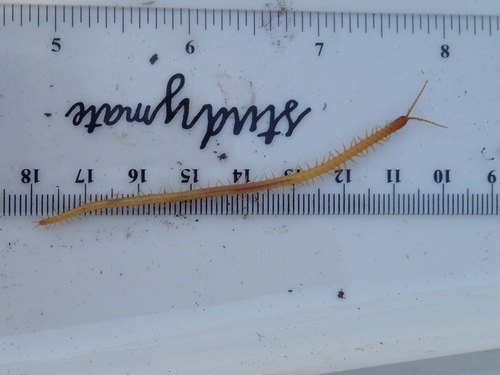
Tasmanophilus is a genus of centipedes in the family Zelanophilidae. This genus was described by American biologist Ralph Vary Chamberlin in 1920. Centipedes in this genus are found in Australia and New Zealand. This genus contains only two species.
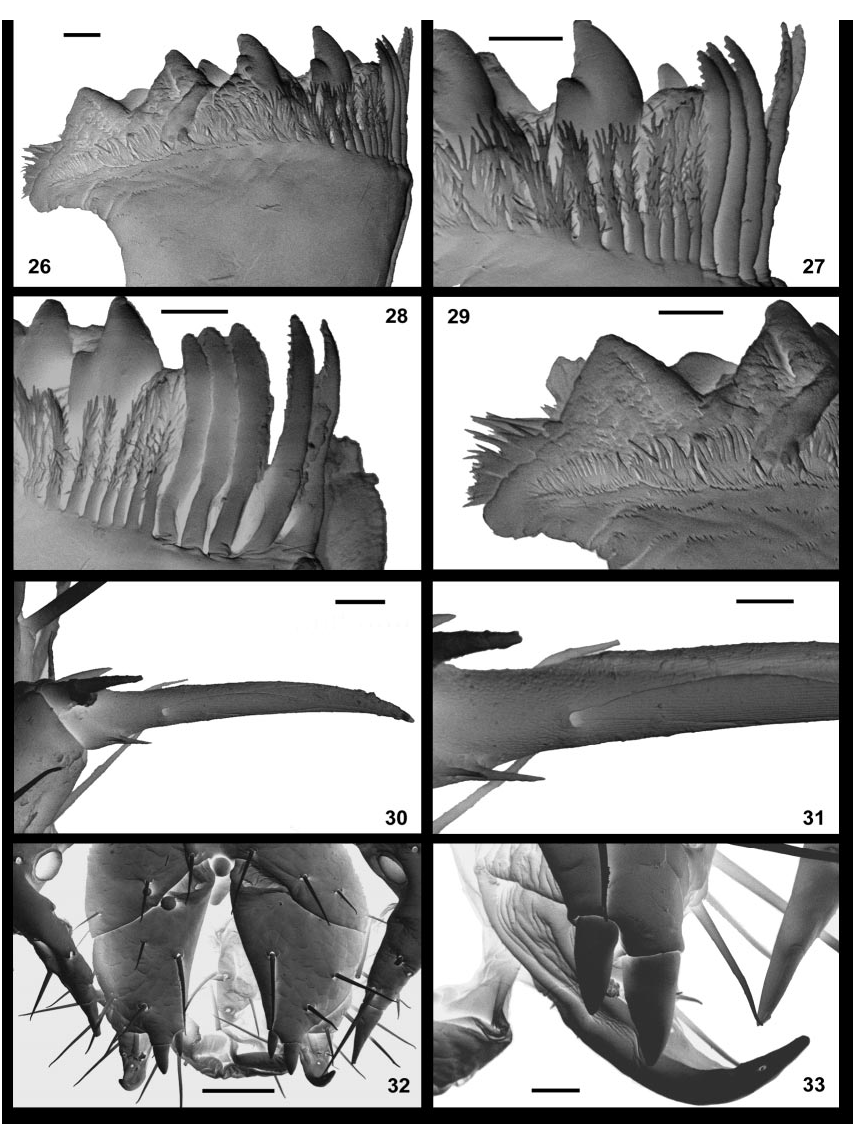
Anopsobius
Anopsobius is a genus of centipedes in the family Henicopidae. It was described by Italian entomologist Filippo Silvestri in 1899.
Thereuopodina
Thereuopodina is a genus of centipedes in the family Scutigeridae. It was described by German myriapodologist Karl Wilhelm Verhoeff in 1905.
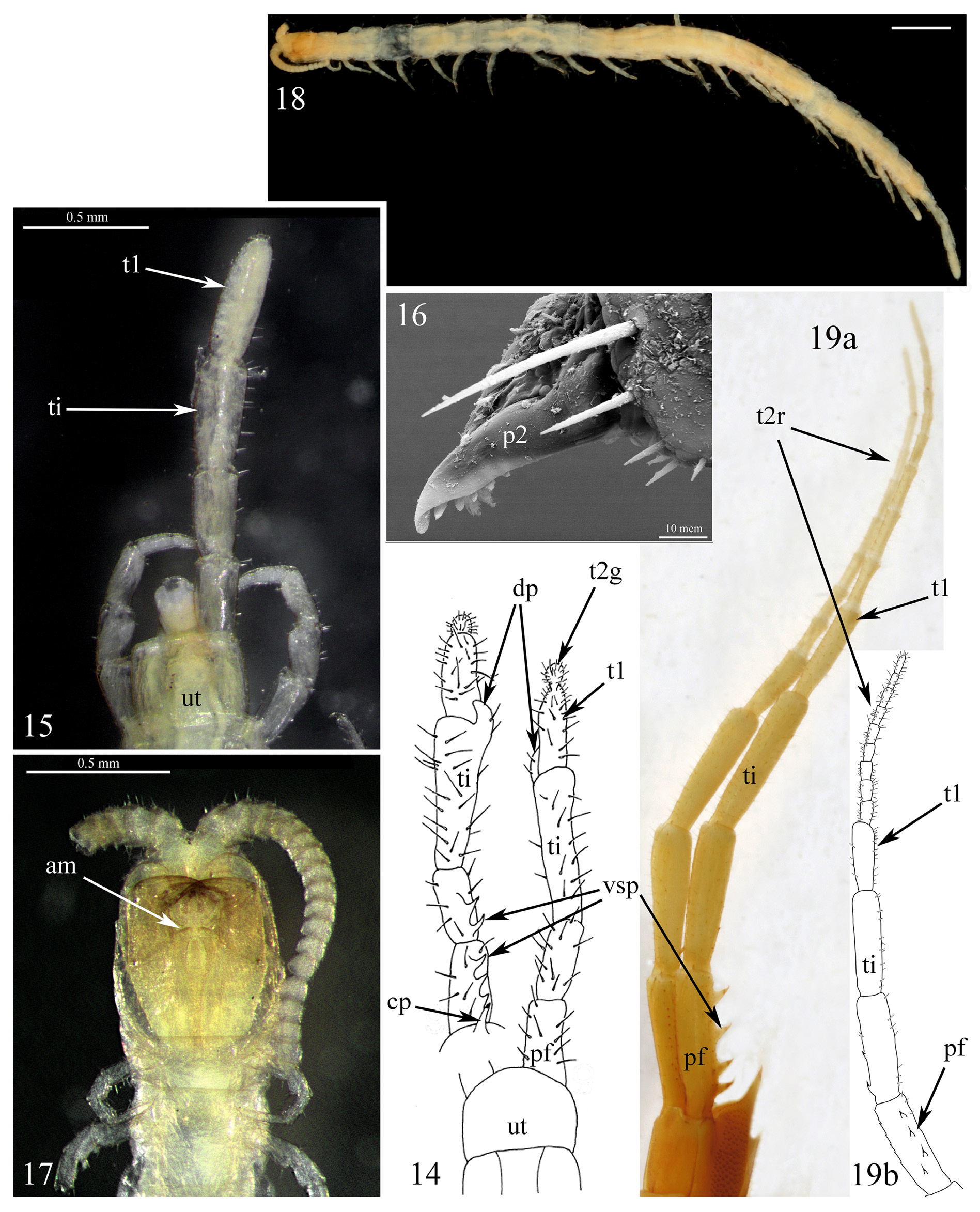
Newportia
Newportia is a genus of scolopocryptopid centipedes. It has around 50 described species to date.