Category
page 1Chemical reactions

chemical reaction
process that results in the interconversion of chemical species

combustion
thumb|The flames caused as a result of a [[fuel undergoing combustion (burning)]]
thumb|Regenerative thermal oxidiser|Air pollution abatement equipment provides combustion control for [[industrial processes.]]
Combustion, or burning, is a high-temperature exothermic redox chemical reaction between a fuel (the reductant) and an oxidant, usually atmospheric oxygen, that produces oxidized, often gaseous products, in a mixture termed as smoke. Combustion does not always result in fire, because a flame is only visible when substances undergoing combustion vaporize, but when it does, a flame is a ch

redox
upright=1.6|class=skin-invert-image|thumb|right|Sodium "gives" one outer electron to [[fluorine, bonding them to form sodium fluoride. The sodium atom is oxidized, and fluorine is reduced.]]
thumb|right|upright=1.25|When a few drops of glycerol (mild reducing agent) are added to powdered [[potassium permanganate (strong oxidizing agent), a violent redox reaction accompanied by self-ignition starts.]]

hydrolysis
thumb|upright=1.7|Generic hydrolysis reaction. (The 2-way yield symbol indicates a chemical equilibrium in which hydrolysis and condensation are reversible.)
Hydrolysis (; ) is any chemical reaction in which a molecule of water breaks one or more chemical bonds. The term is used broadly for substitution and elimination reactions in which water is the nucleophile.

acid–base reaction
chemical reaction

chemical reagent
thumb|Reagents, such as sulfur (pictured), are the starting materials used in chemical reactions.

neutralization
chemical reaction
endothermic reaction
chemical reaction that requires or absorbs energy from surroundings
substrate
molecule upon which an enzyme acts
reducing agent
element or compound that loses (or "donates") an electron to another chemical species in a redox chemical reaction; losing electrons,oxidized,"reduces" (are "oxidized" by) oxidizers (oxidizing agents)
disproportionation
In chemistry, disproportionation, sometimes called dismutation (the French word), is a redox reaction in which one compound of intermediate oxidation state converts to two compounds, one of higher and one of lower oxidation state. The reverse of disproportionation, such as when a compound in an intermediate oxidation state is formed from precursors of lower and higher oxidation states, is called comproportionation, also known as symproportionation.
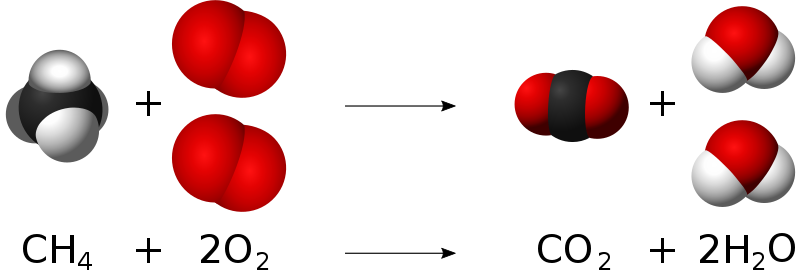
product
substance (species) formed from a chemical reaction
photodissociation
Photodissociation, photolysis, photodecomposition, or photofragmentation is a chemical reaction in which molecules of a chemical compound are broken down by absorption of light (photons). It is defined as the interaction of one or more photons with one target molecule that dissociates into two fragments.
chemical decomposition
breakdown of a single entity (normal molecule, reaction intermediate, etc.) into two or more fragments; opposite or reverse process of a synthesis reaction
reaction mechanism
any model explaining a chemical reaction
protonation
In chemistry, protonation (or hydronation) is the adding of a proton (or hydron, or hydrogen cation), usually denoted by H+, to an atom, molecule, or ion, forming a conjugate acid. (The complementary process, when a proton is removed from a Brønsted–Lowry acid, is deprotonation.) Some examples include
The protonation of water by sulfuric acid:
H2SO4 + H2O H3O+ +
The protonation of isobutene in the formation of a carbocation:
(CH3)2C=CH2 + HBF4 (CH3)3C+ +
The protonation of ammonia in the formation of ammonium chloride from ammonia and hydrogen chloride:
NH3(g) + HCl(g) → NH4Cl(s)
thermal decomposition
chemical decomposition caused by heat
adduct
In chemistry, an adduct (; alternatively, a contraction of "addition product") is a product of a direct addition of two or more distinct molecules, resulting in a single reaction product containing all atoms of all components. The resultant is considered a distinct molecular species. Examples include the addition of sodium bisulfite to an aldehyde to give a sulfonate. It can be considered as a single product resulting from the direct combination of different molecules which comprises all atoms of the reactant molecules.

isomerization
In chemistry, isomerization or isomerisation is the process in which a molecule, polyatomic ion or molecular fragment is transformed into an isomer with a different chemical structure. Enolization is an example of isomerization, as is tautomerization.
reaction intermediate
molecular entity that is formed from the reactants (or preceding intermediates) and reacts further to give the directly observed products of a chemical reaction
reaction yield
any of several relative and absolute measures of the amount of desired product obtained in a chemical reaction

deprotonation
thumb|300x300px|Deprotonation of acetic acid by a hydroxide ion
Deprotonation (or dehydronation) is the removal (transfer) of a proton (or hydron, or hydrogen cation), (H+) from a Brønsted–Lowry acid in an acid–base reaction. The species formed is the conjugate base of that acid. The complementary process, when a proton is added (transferred) to a Brønsted–Lowry base, is protonation (or hydronation). The species formed is the conjugate acid of that base.
Homolysis
chemical bond dissociation of a neutral molecule generating two free radicals
Heterolysis
chemical reaction in which both of the electrons involved in the original bond remain with only one of the fragment species
radiolysis
Radiolysis is the dissociation of molecules caused by ionizing radiation. The high-energy flux results in cleavage of one or more chemical bonds. Radiolysis is distinguished from other dissociations by the type of radiation involved: it is not photodissociation using lower-energy ranges of the electromagnetic spectrum or other high-energy processes such as an electric discharge. The chemistry of concentrated solutions under ionizing radiation is extremely complex. Radiolysis can locally modify redox conditions, and therefore the speciation and the solubility of the compounds.

carbonylation
In chemistry, carbonylation refers to reactions that introduce carbon monoxide (CO) into organic and inorganic substrates. Carbon monoxide is abundantly available and conveniently reactive, so it is widely used as a reactant in industrial chemistry. The term carbonylation also refers to oxidation of protein side chains.
homogeneity and heterogeneity
concepts relating to the uniformity of properties of a material
auxochrome
In organic chemistry, an auxochrome () is a group of atoms attached to a chromophore which modifies the ability of that chromophore to absorb light. They themselves fail to produce the colour, but instead intensify the colour of the chromogen when present along with the chromophores in an organic compound. Examples include the hydroxyl (), amino (), aldehyde (), and methyl mercaptan groups ().
oxidative addition
type of reaction in organometallic chemistry
cross-reactivity
Cross-reactivity, in a general sense, is the reactivity of an observed agent which initiates reactions outside the main reaction expected. This has implications for any kind of test or assay, including diagnostic tests in medicine, and can be a cause of false positives. In immunology, the definition of cross-reactivity refers specifically to the reaction of the immune system to antigens. There can be cross-reactivity between the immune system and the antigens of two different pathogens, or between one pathogen and proteins on non-pathogens, which in some cases can be the cause of allergies.

racemization
In chemistry, racemization is a conversion, by heat or by chemical reaction, of an optically active compound into a racemic (optically inactive) form. This creates a 1:1 molar ratio of enantiomers and is referred to as a racemic mixture (i.e. contain equal amount of (+) and (−) forms). Plus and minus forms are called dextrorotation and levorotation. The D and L enantiomers are present in equal quantities, the resulting sample is described as a racemic mixture or a racemate. Racemization can proceed through a number of different mechanisms, and it has particular significance in pharmacology in

comproportionation
Comproportionation or symproportionation is a chemical reaction where two reactants containing the same element but with different oxidation numbers, form a compound having an intermediate oxidation number. It is the opposite of disproportionation.
Gilchrist–Thomas process
metallurgical process
activation
In chemistry and biology, activation is the process whereby something is prepared or excited for a subsequent reaction.
single displacement reaction
chemical reaction concerning the exchange of ions

ammoxidation
thumb|150px|right|Acrylonitrile is produced on an industrial scale by the ammoxidation of [[propylene.]]

chemoselectivity
Chemoselectivity is the preferential reaction of a chemical reagent with one of two or more different functional groups.

photodegradation
thumb|A plastic bucket used as an open-air flowerpot photodegraded after some years.
Photodegradation is the alteration of materials by light. Commonly, the term is used loosely to refer to the combined action of sunlight and air, which cause oxidation and hydrolysis. Often photodegradation is intentionally avoided, since it destroys paintings and other artifacts. It is, however, partly responsible for remineralization of biomass and is used intentionally in some disinfection technologies. Photodegradation does not apply to how materials may be aged or degraded via infrared light or heat, but
limiting reagent
reactant introduced in insufficient quantity, totally consumed and stopping the chemical reaction
carbothermic reaction
redox reaction using elemental carbon as reducing agent
combination reaction
reactions that involve combination of two different substances to form a single substance

lability
Lability refers to the degree that something is likely to undergo change. It is the opposite (antonym) of stability.
nitrosation
process of converting organic compounds into nitroso derivatives
Liesegang rings
annular figures or bands formed by chemical precipitation
Thermodynamic versus kinetic reaction control
proton transfer
chemical reaction
barking dog reaction
Combustion reaction, known for making a sound like a barking dog
reductive elimination
Inorganic chemistry
photoelectrochemical process
electrochemical processes involving photons and the emission or absorption of light
decarbonylation
In chemistry, decarbonylation is a type of organic reaction that involves the loss of carbon monoxide (CO). It is often an undesirable reaction, since it represents a degradation. In the chemistry of metal carbonyls, decarbonylation describes a substitution process, whereby a CO ligand is replaced by another ligand.
TaqMan
TaqMan probes are hydrolysis probes that are designed to increase the specificity of quantitative PCR. The method was first reported in 1991 by researcher David Gefland at Cetus Corporation, and the technology was subsequently developed by Hoffmann-La Roche for diagnostic assays and by Applied Biosystems (now part of Thermo Fisher Scientific) for research applications.
Copper–chlorine cycle
thermochemical Cycle to produce Hydrogen from Water
diffusion-controlled reaction
reaction rate equals rate of transport
Jacobi coordinates
simplification of coordinates for an n-body system
hybrid sulfur cycle
water-splitting process
photoisomerization
thumb|300px|Photoisomerization of azobenzene
In chemistry, photoisomerization is a form of isomerization induced by photoexcitation. Both reversible and irreversible photoisomerizations are known for photoswitchable compounds. The term "photoisomerization" usually, however, refers to a reversible process.
chemical oscillator
non-equilibrium chemical reaction in which concentrations of components oscillate
hydrogen atom abstraction
class of chemical reaction in which a neutral hydrogen is abstracted from a substrate
screaming jelly babies
classical chemical demonstration
tarnish
thumb|upright=1.3|Tungsten rods with evaporated crystals, partially oxidized with colorful tarnish
Tarnish is a thin layer of corrosion that forms over copper, brass, aluminum, magnesium, neodymium and other similar metals as their outermost layer undergoes a chemical reaction. Tarnish does not always result from the sole effects of oxygen in the air. For example, silver needs hydrogen sulfide to tarnish, although it may tarnish with oxygen over time. It often appears as a dull, gray or black film or coating over metal. Tarnish is a surface phenomenon that is self-limiting, unlike rust. Only t