Category
page 1Copernican Revolution

Galileo Galilei
Italian polymath (1564-1642)
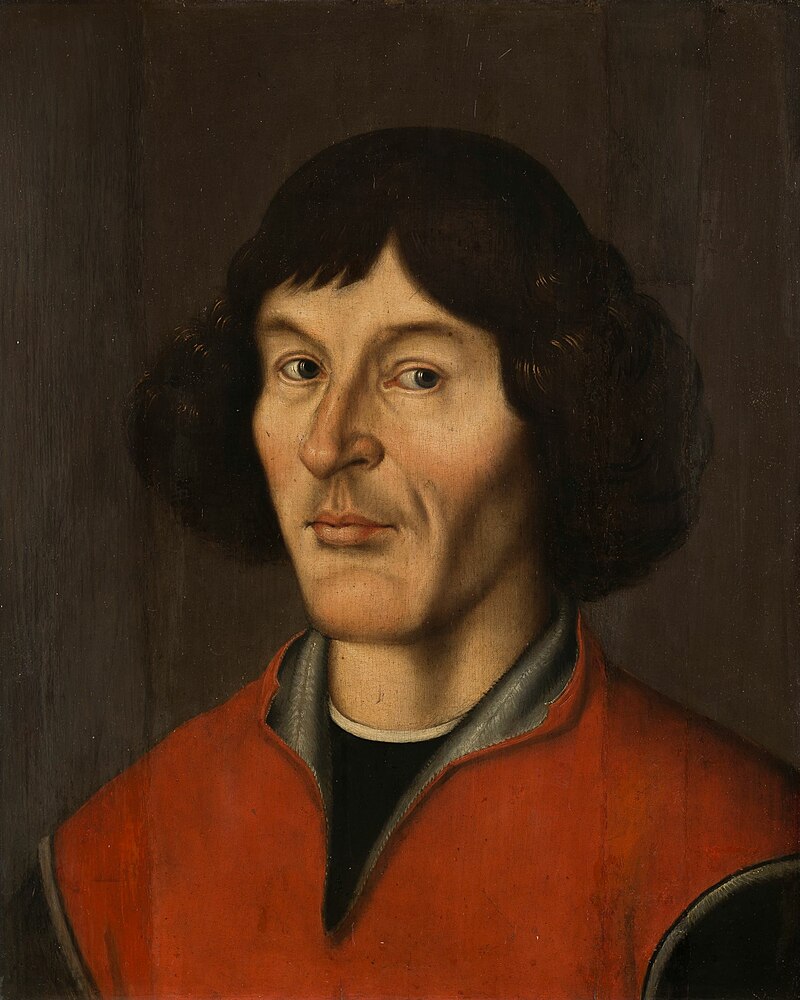
Nicolaus Copernicus
Polish mathematician and astronomer (1473-1543)

Johannes Kepler
German mathematician and astronomer (1571–1630)

Newton's laws of motion
classical formulation of Mechanics by Isaac Newton

Tycho Brahe
Danish astronomer and alchemist, 1546–1601

Kepler's laws of planetary motion
scientific laws describing motion of planets around the Sun

geocentric model
thumb|upright=1.35|Figure of the heavenly bodies – An illustration of a Ptolemaic geocentric system by Portuguese cosmographer and cartographer Bartolomeu Velho, 1568 (Bibliothèque Nationale, Paris)

Philosophiæ Naturalis Principia Mathematica
1687 work by Isaac Newton describing his laws of motion and gravitation

Galilean moons
four largest moons of Jupiter

Hans Lippershay
(1571-1619) German-Dutch spectacle-maker
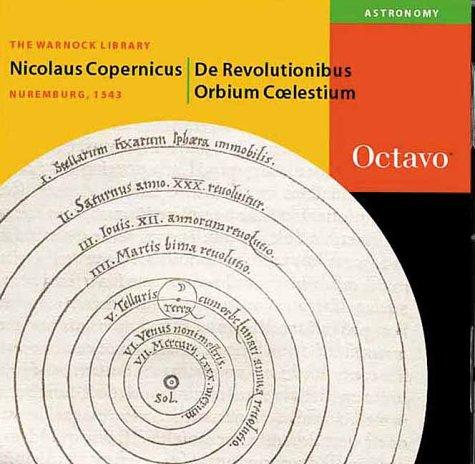
De revolutionibus orbium coelestium
book by Copernicus
and yet it moves
phrase attributed to Galileo Galilei on being forced to recant his scientific view
Copernican principle
model in cosmology
Copernican Revolution
Belief, initiated by Copernicus, that planets orbit the sun
Sidereus Nuncius
astronomical treatise of Galileo
Thomas Digges
English mathematician and astronomer (c.1546–1595)
Galileo affair
17th century conflict between Galileo Galilei and the Roman Catholic Church
Copernican heliocentrism
concept that the Earth rotates around the Sun
Tychonic system
model of the Solar System proposed in 1588 by the Danish astronomer Tycho Brahe
history of the telescope
aspect of history
Lodovico delle Colombe
Italian philosopher (1565-1616)
David Friesenhausen
Hungarian maskil, rabbi, and astronomer