
File:Porträtt_av_Tycho_Brahe_-_Skoklosters_slott_-_90153.tif · Wikimedia Commons · See Wikimedia Commons
Tycho Brahe was a Danish astronomer and alchemist who lived from 1546 to 1601 and made detailed observations of the night sky during the Renaissance. His precise astronomical measurements and records became foundational for understanding how planets and stars move, helping to advance scientific knowledge during a pivotal period in the history of astronomy.
AI-generated from the Wikipedia summary — may contain errors.
Wikidata facts
- Instance of
- human
- Given name
- Tycho
- Gender
- male
- Citizenship
- Danish Realm
- Place of birth
- Knutstorp Castle
- Place of death
- Prague
- Father
- Otte Brahe
- Mother
- Beate Clausdatter Bille
- Occupation
- writer
- Educated at
- University of Rostock
- Employer
- Uraniborg
- Languages spoken
- Danish
- Religion
- Lutheranism
- Doctoral advisor
- Caspar Peucer
- Field of work
- astronomy
- Image
- Porträtt av Tycho Brahe - Skoklosters slott - 90153.tif
- Number of children
- 9
- Work location
- Prague
- Residence
- Sweden
Show 17 more facts
- Commons category
- Tycho Brahe
- Commons gallery
- Tycho Brahe
- date of birth
- 1546-01-01
- date of death
- 1601-01-01
- cause of death
- kidney failure
- Commons Creator page
- Tycho Brahe
- topic's main category
- Category:Tycho Brahe
- name in native language
- Tyge Ottesen Brahe
- manner of death
- natural causes
- place of burial
- Church of Our Lady before Týn
- student
- Paul Wittich
- sponsor
- Frederick II of Denmark
- on focus list of Wikimedia project
- Wikipedia:Vital articles/Level/4
- personal library at
- National Library of the Czech Republic
- different from
- Tycho Brahe
- P8168
- Mario Garbuglia
- maintained by WikiProject
- WikiProject Mathematics
Sources (7)
via Wikidata · CC0
Works in European collections
23 objects attributed to Tycho Brahe, held across European museums, libraries & archives · via Europeana
Motuum coelestium ephemerides ab anno AE. V. MDCLXVI ad MDCLXXX ex observationibus correctis nobilissimorum Tychonis Brahei, & Ioh. Kepleri hypothesibus physicis, Tabulisque Rudolphinis
Epistolarum astronomicarum libri...
Astronomiae instauratae progymnasmata... : quorum haec prima pars de restitutione motuum Solis & Lunae, Stellarumque inerrantium tractat et praeterea de admiranda nova stella anno 1572
Tabulae Frisicae Lunae-Solares quadruplices; è fontibus cl. Ptolemaei, Regis Alfonsi, Nic. Copernici, & Tychonis Brahe, recens constructae
Ephemerides annorum L iuxta Tychonis Hypotheses, et accuraté e coele deductas observationis ab anno 1630 ad annum 1680
Institutio astronomica iuxta hypotheseis tam veterum, quam Copernici et Tychonis
Tychonis Brahei, equitis dani, astronomorum coryphaei, vita... accessit Nicolai Copernici, Giorgii Peurbahcii, & Joannis Regiomontani astronomorum celebrium vita
Tychonis Brahei, equitis dani, astronomorum coryphaei, vita... accessit Nicolai Copernici, Georgii Peurbachii, & Joannis Regiomontani, astronomorum celebrium, vita
Ephemerides exactissime caelestium motuum ad Longitudine Almae Urbis, et Tychonis Brahe Hypotheses ac deductas è Caelo accuratè observationes ab Anno MDCXLI ad Annum MDCC...
Landkarten von Norwegen
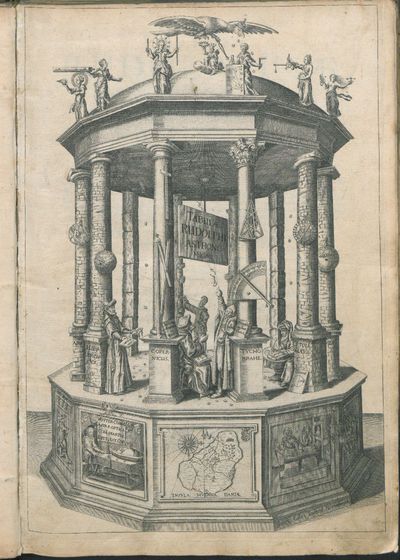
Untitled
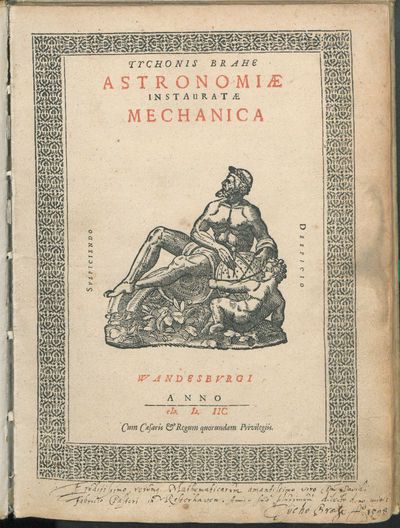
Untitled

Untitled

Untitled

Untitled

Untitled

Untitled

Untitled

Untitled

Untitled

Untitled

Untitled

Untitled
~40 min read
Encyclopedic overview
Tycho Brahe (/ˈtaɪkoʊ ˈbrɑː(h)i, - ˈbrɑː(hə)/ TY-koh BRAH-(h)ee, - BRAH(-hə); Danish: [ˈtsʰykʰo ˈpʁɑːə] ; born Tyge Ottesen Brahe, Danish: [ˈtsʰyːjə ˈʌtəsn̩ ˈpʁɑːə]; 14 December 1546 – 24 October 1601), generally called Tycho for short, was a Danish astronomer known for his comprehensive and unprecedentedly accurate astronomical observations which helped to turn astronomy into the first modern science and launch the Scientific Revolution. He was known during his lifetime as an astronomer, astrologer, and alchemist. He was the last major astronomer before the invention of the telescope and has been described as the greatest pre-telescopic astronomer.
In 1572, Tycho noticed a completely new star that was brighter than any star or planet. Astonished by the existence of a star that ought not to have been there, he devoted himself to the creation of ever more accurate instruments of measurement over the next fifteen years (1576–1591). King Frederick II granted Tycho an estate on the island of Hven and the money to build Uraniborg, the first large observatory in Christian Europe. He later worked underground at Stjerneborg, where he realised that his instruments in Uraniborg were not sufficiently steady.
Excerpted from Wikipedia’s “Tycho Brahe” article, available under the CC BY-SA 4.0 licence.
Gallery (12)
Available in 105 languages
- Español
- Français
- Deutsch
- 中文
- 日本語
- Русский
- Português
- Italiano
- العربية
- हिन्दी
- Afrikaans
- Aragonese
- Armenian
- Asturian
- Azerbaijani
- Bahasa Indonesia
- Bangla
- Basque
Show 86 more
- bat_smg
- be_x_old
- Belarusian
- Bhojpuri
- Bosnian
- Breton
- Bulgarian
- Catalan
- Central Kurdish
- Cornish
- Croatian
- Czech
- Danish
- Egyptian Arabic
- Esperanto
- Estonian
- Filipino
- Finnish
- Galician
- Georgian
- Greek
- Hausa
- Hebrew
- Hungarian
- Icelandic
- Ido
- Interlingua
- Irish
- Javanese
- Kabyle
- Kazakh
- Kyrgyz
- Latin
- Latvian
- Ligurian
- Lithuanian
- Low German
- Luxembourgish
- Macedonian
- Malagasy
- Malayalam
- Marathi
- Mingrelian
- Mongolian
- Nederlands
- Newari
- Northern Frisian
- Norwegian
- Norwegian Nynorsk
- Occitan
- Pampanga
- Pashto
- Piedmontese
- Polski
- Punjabi
- Romanian
- Sanskrit
- Scots
- Serbian
- Serbian (Latin)
- Sicilian
- simple
- Slovak
- Slovenian
- Svenska
- Swahili
- Tamil
- Tatar
- Tiếng Việt
- Türkçe
- Ukrainian
- Uzbek
- Volapük
- Waray
- Welsh
- Western Frisian
- Western Panjabi
- Wu Chinese
- Yakut
- Yiddish
- Zaza
- zh_min_nan
- zh_yue
- فارسی
- ไทย
- 한국어
via Wikidata sitelinks · CC0