Category
page 1Crustacean orders

Decapoda
A decapod is a crustacean in the large order of Decapoda (from Ancient Greek δεκάς (dekás), meaning "ten", and πούς (poús), meaning "foot"), within the class Malacostraca, including crabs, lobsters, crayfish, shrimp, and prawns. Most decapods are scavengers. The order is estimated to contain nearly 15,000 extant species in around 2,700 genera, with around 3,300 fossil species. Nearly half of these species are crabs, with the shrimp (about 3,000 species) and Anomura including hermit crabs, king crabs, porcelain crabs, squat lobsters (about 2500 species) making up the bulk of the remainder. The
.jpg)
Isopoda
Isopoda is an order of crustaceans. Members of this group are collectively called isopods and include both aquatic species such as gribbles and terrestrial species such as woodlice. All have rigid, segmented exoskeletons, two pairs of antennae, seven pairs of jointed limbs on the thorax, and five pairs of branching appendages on the abdomen that are used in respiration. Females brood their young in a pouch under their thorax called the marsupium.

Amphipoda
Amphipoda () is an order of malacostracan crustaceans with no carapace and generally with laterally compressed bodies. Amphipods () range in size from 1 to 340 millimetres (0.039 to 13 in) and are mostly detritivores or scavengers. More than 10,700 amphipod species are currently recognized. They are mostly marine animals but are found in almost all aquatic environments. Some 2,250 species live in fresh water, and the order also includes the terrestrial sandhoppers, such as Talitrus saltator and Arcitalitrus sylvaticus.

Anostraca
Anostraca is one of the four orders of crustaceans in the class Branchiopoda; its members are referred to as fairy shrimp. They live in vernal pools and hypersaline lakes across the world, and they have even been found in deserts, ice-covered mountain lakes, and Antarctic ice. They are usually long (exceptionally up to ). Most species have 20 body segments, bearing 11 pairs of leaf-like phyllopodia (swimming legs), and the body lacks a carapace. They swim "upside-down" and feed by filtering organic particles from the water or by scraping algae from surfaces, with the exception of Branchinecta

Notostraca
The order Notostraca, containing the single family Triopsidae, is a group of crustaceans known as tadpole shrimp or shield shrimp. The two genera, Triops and Lepidurus, are considered living fossils, with similar forms having existed since the end of the Devonian, around 360 million years ago. They have a broad, flat carapace, which conceals the head and bears a single pair of compound eyes. The abdomen is long, appears to be segmented and bears numerous pairs of flattened legs. The telson is flanked by a pair of long, thin caudal rami. Phenotypic plasticity within taxa makes species-level ide
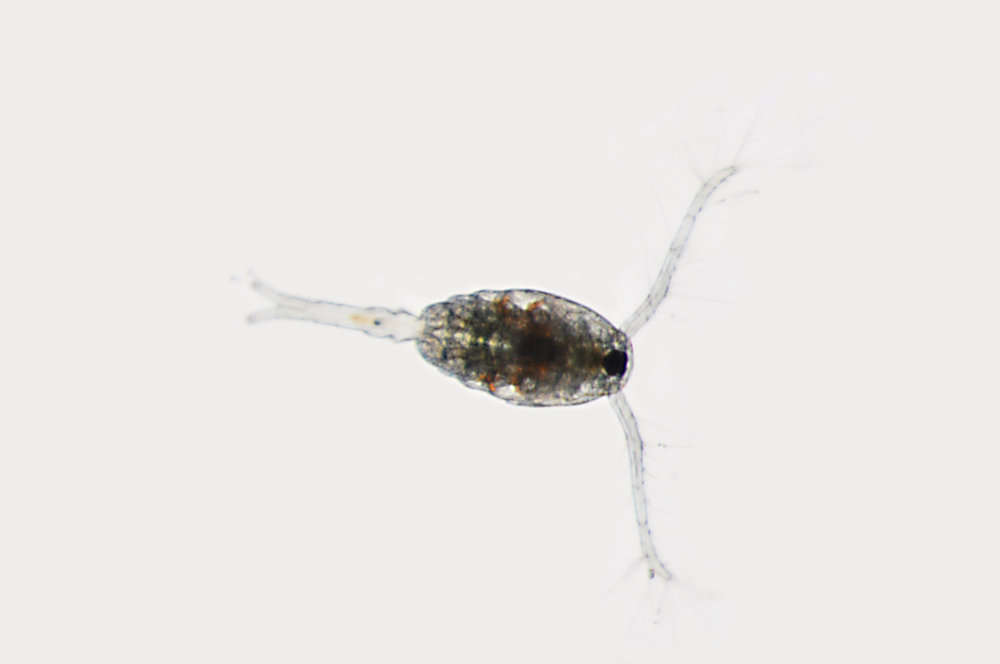
Cyclopoida
The Cyclopoida are an order of small crustaceans from the class Copepoda. Like many other copepods, members of Cyclopoida are small, planktonic animals living both in the sea and in freshwater habitats. They are capable of rapid movement. Their larval development is metamorphic, and the embryos are carried in paired or single sacs attached to first abdominal somite.

Cumacea
Cumacea is an order of small marine crustaceans of the superorder Peracarida, occasionally called hooded shrimp or comma shrimp. Their unique appearance and uniform body plan makes them easy to distinguish from other crustaceans. They live in soft-bottoms such as mud and sand, mostly in the marine environment. There are more than 1,500 species of cumaceans formally described. The species diversity of Cumacea increases with depth.

Calanoida
Calanoida is an order of copepods, a group of arthropods commonly found as zooplankton. The order includes around 46 families with about 1800 species of both marine and freshwater copepods between them.

Leptostraca
Leptostraca (from the Greek words for thin and shell) is an order of small, marine crustaceans. Its members, including the well-studied Nebalia, occur throughout the world's oceans and are usually considered to be filter-feeders. It is the only extant order in the subclass Phyllocarida. They are believed to represent the most primitive members of their class, the Malacostraca, and first appear in the fossil record during the Cambrian period.

Mysida
Mysida is an order of small, shrimp-like crustaceans in the malacostracan superorder Peracarida. Their common name opossum shrimps stems from the presence of a brood pouch or "marsupium" in females. The fact that the larvae are reared in this pouch and are not free-swimming characterises the order. The mysid's head bears a pair of stalked eyes and two pairs of antennae. The thorax consists of eight segments each bearing branching limbs, the whole concealed beneath a protective carapace and the abdomen has six segments and usually further small limbs.
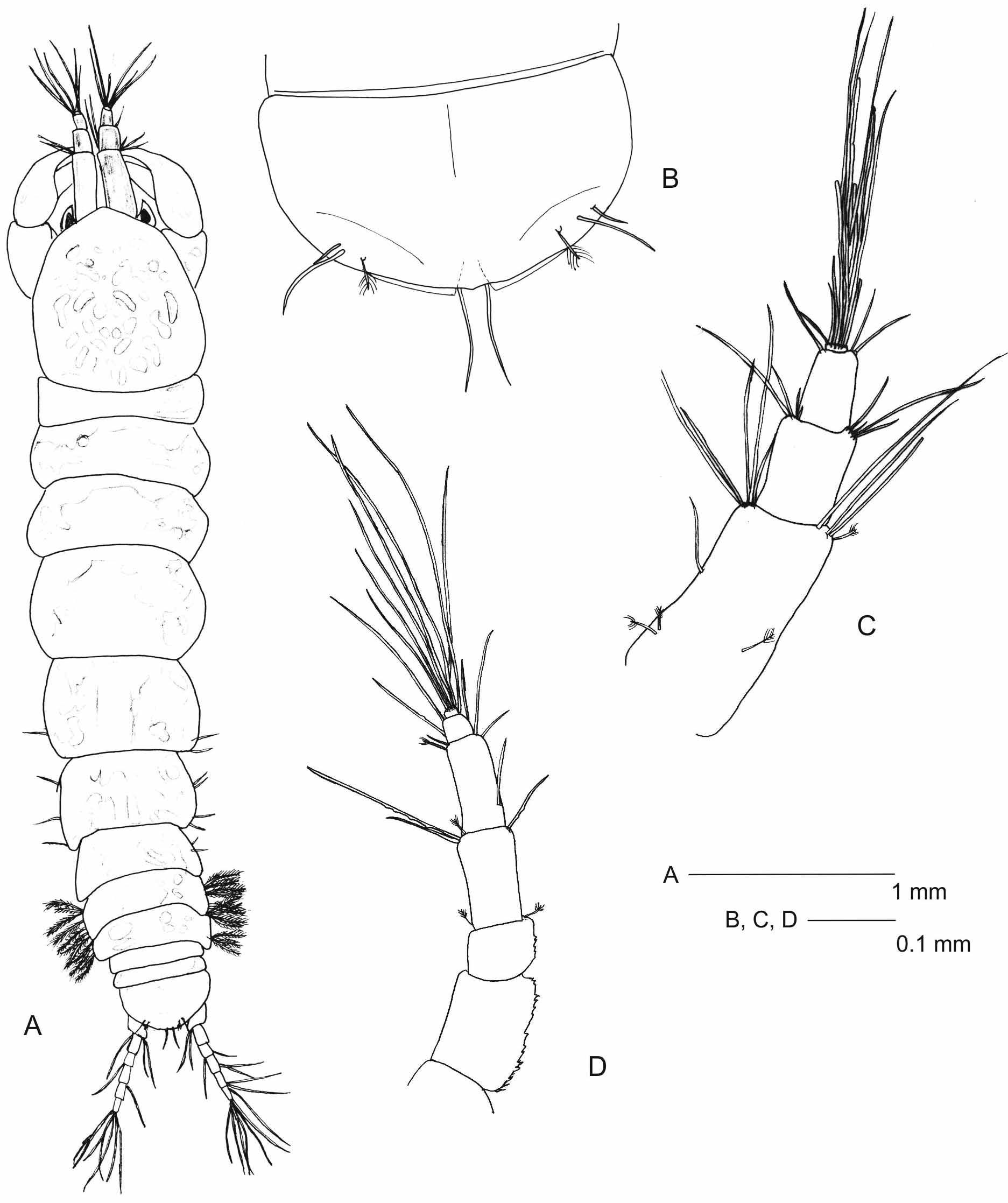
Tanaidacea
The crustacean order Tanaidacea (known as tanaids) make up a minor group within the class Malacostraca. There are about 940 species in this order.
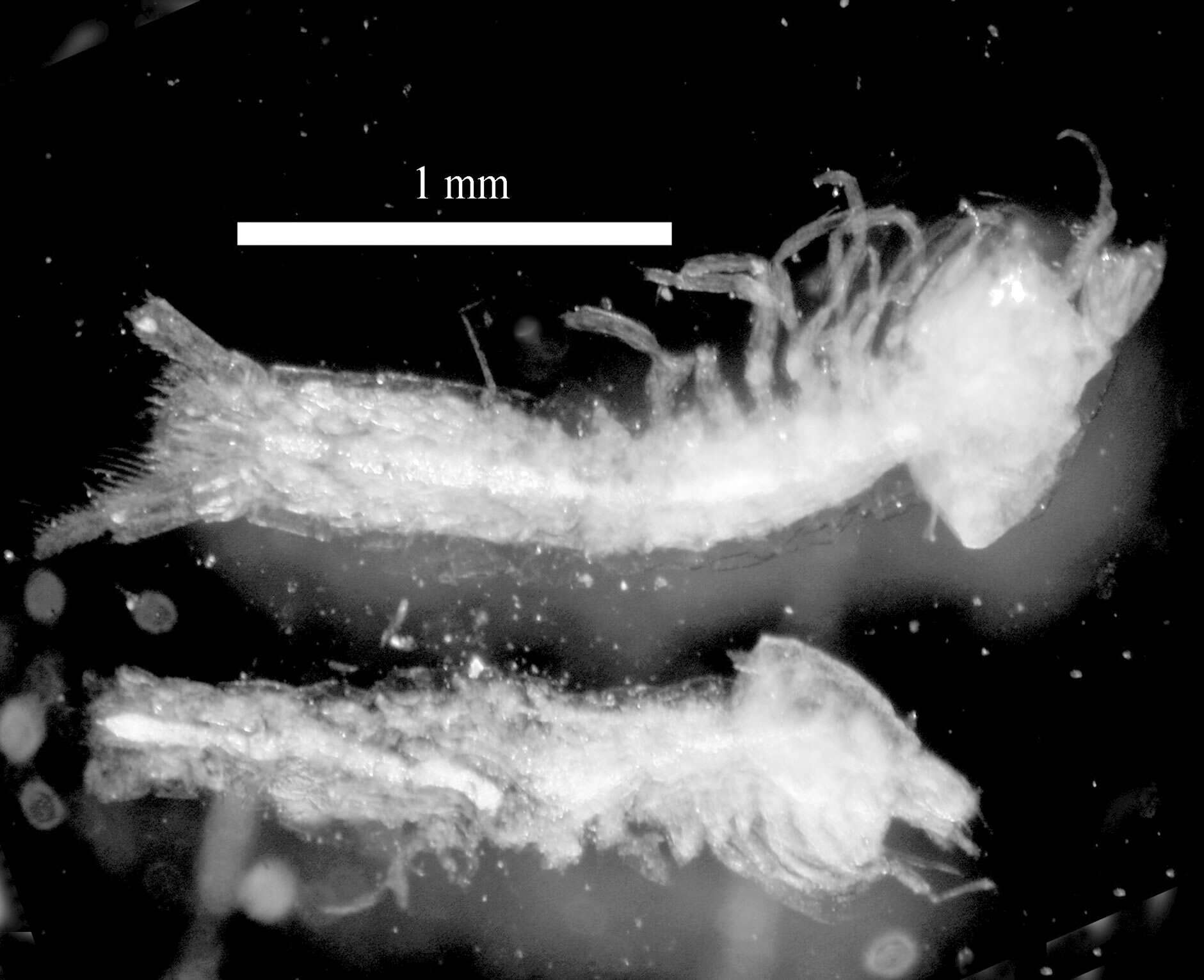
Thermosbaenacea
Thermosbaenacea is a group of crustaceans that live in thermal springs in fresh water, brackish water and anchialine habitats. They have occasionally been treated as a distinct superorder (Pancarida), but are generally considered to belong to the Peracarida. Due to their troglobitic lifestyle, thermosbaenaceans lack visual pigments and are therefore blind.

Harpacticoida
Harpacticoida is an order of copepods, in the subphylum Crustacea. This order comprises 463 genera and about 3,000 species; its members are benthic copepods found throughout the world in the marine environment (most families) and in fresh water (essentially the Ameiridae, Parastenocarididae and the Canthocamptidae). A few of them are planktonic or live in association with other organisms. Harpacticoida represents the second-largest meiofaunal group in marine sediments, after nematodes. In Arctic and Antarctic seas, Harpacticoida are common inhabitants of sea ice. The name Harpacticoida comes f

Sessilia
Sessilia is an unranked clade of barnacles, comprising the barnacles without stalks, or acorn barnacles. They form a monophyletic group and are probably derived from stalked or goose barnacles. Sessilia is divided into two orders. The Verrucomorpha contain two families, Verrucidae and Neoverrucidae, and the remaining 14 families are in the order Balanomorpha.
Siphonostomatoida
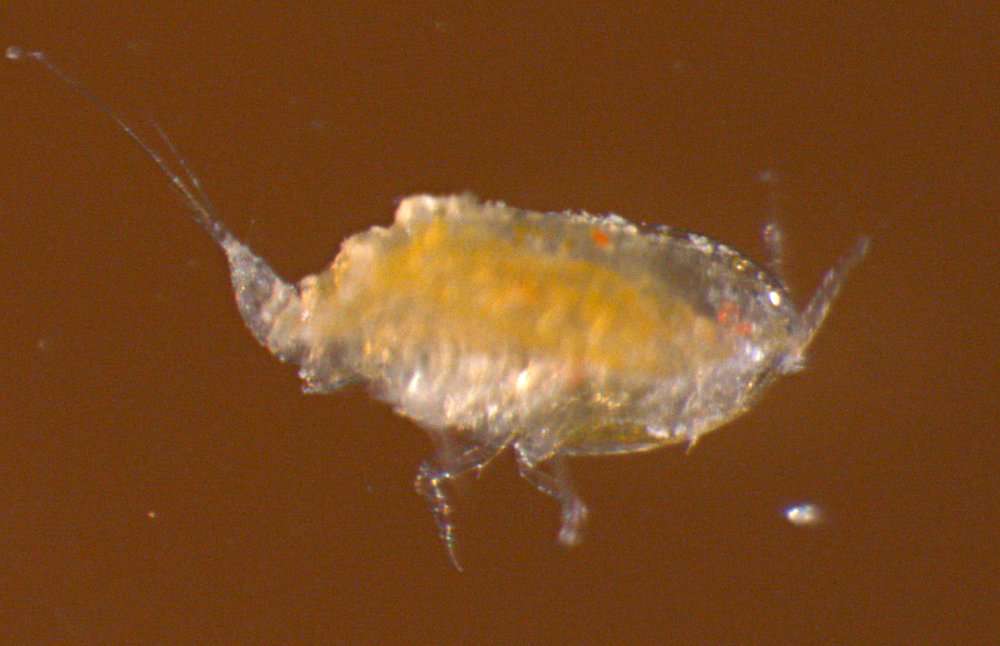
Siphonostomatoida is an order of copepods, containing around 75% of all the copepods that parasitise fishes. Their success has been linked to their possession of siphon-like mandibles and of a "frontal filament" to aid attachment to their hosts. Most are marine, but a few live in fresh water. There are 40 recognised families:

Diplostraca
The Diplostraca or Cladocera, commonly known as water fleas, is a superorder of small, mostly freshwater crustaceans, most of which feed on microscopic chunks of organic matter, though some forms are predatory.
Lophogastrida
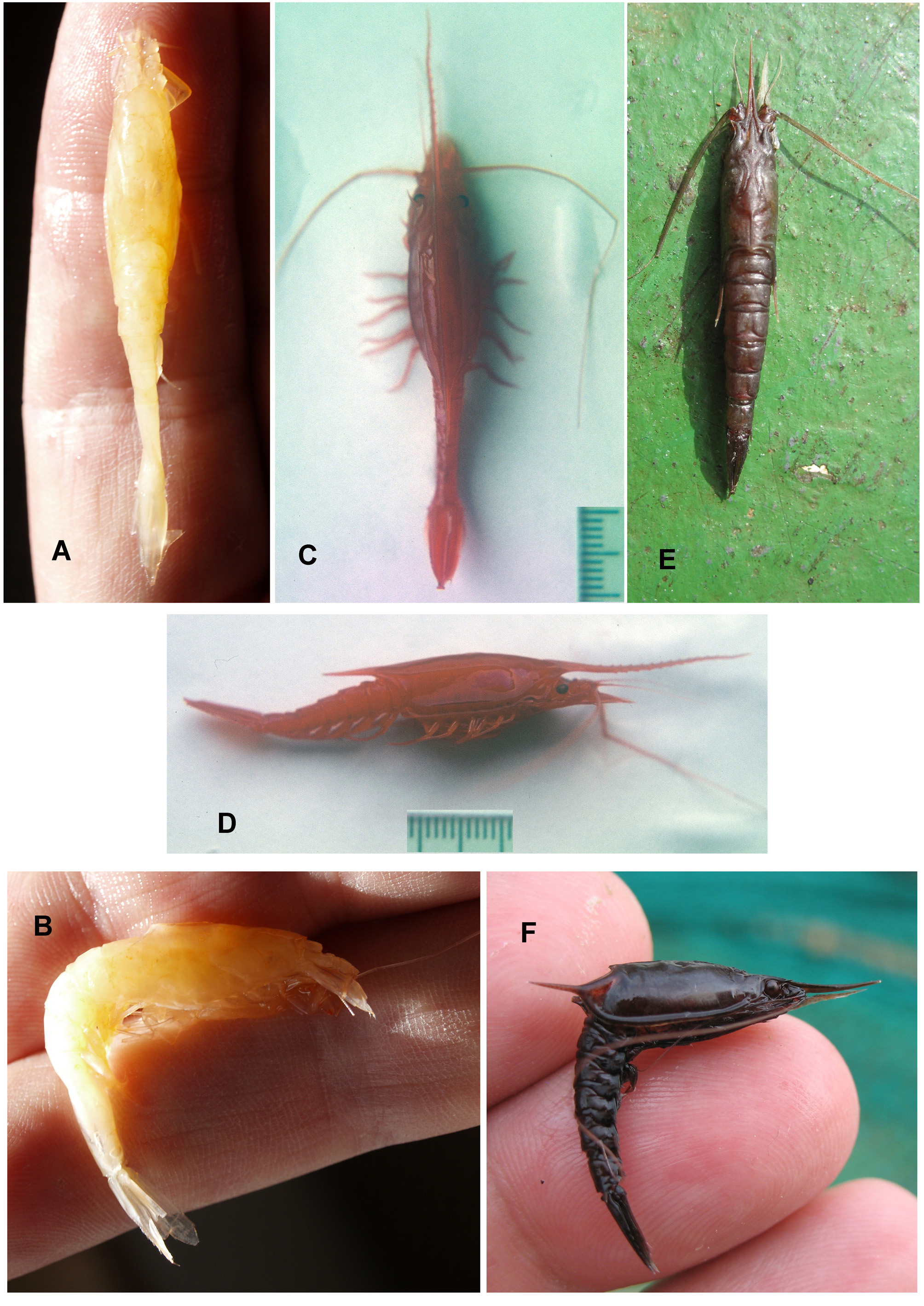
Lophogastrida is an order of malacostracan crustaceans in the superorder Peracarida, comprising shrimp-like animals that mostly inhabit the relatively deep pelagic waters of the oceans throughout the world.
Bathynellacea
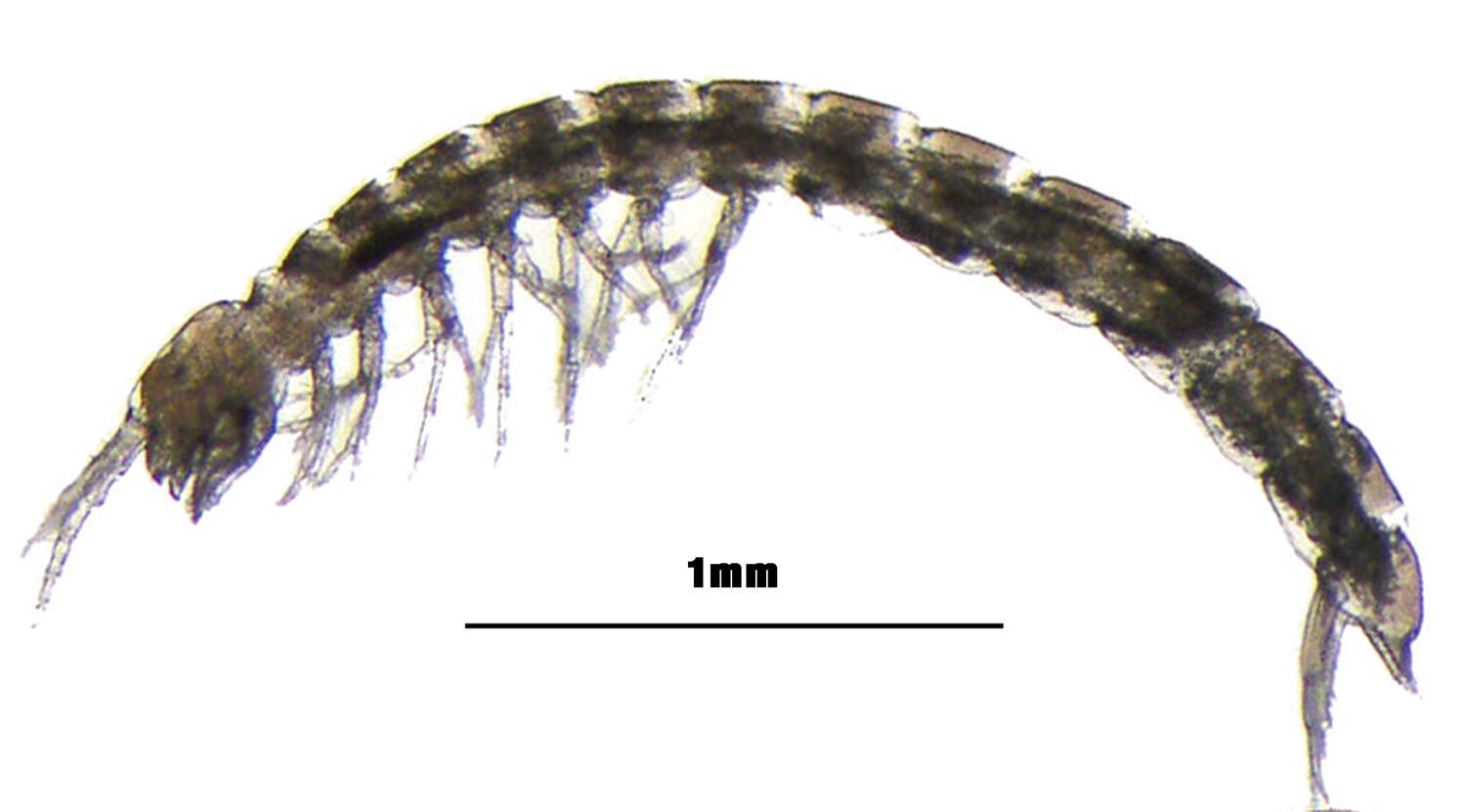
Bathynellacea is an order of crustaceans which live interstitially in groundwater. Some species can tolerate low salt concentrations, and at least one African species is a thermophile, living in hot springs and tolerating temperatures up to . Bathynellaceans are minute, blind, worm-like animals with short, weak legs, reaching a maximum size of . They are found on every continent except Antarctica, although they are missing from some islands, including Fiji, New Caledonia and the Caribbean islands. There are two families, Bathynellidae and Parabathynellidae; a third family, "Leptobathynellidae"
Podocopida
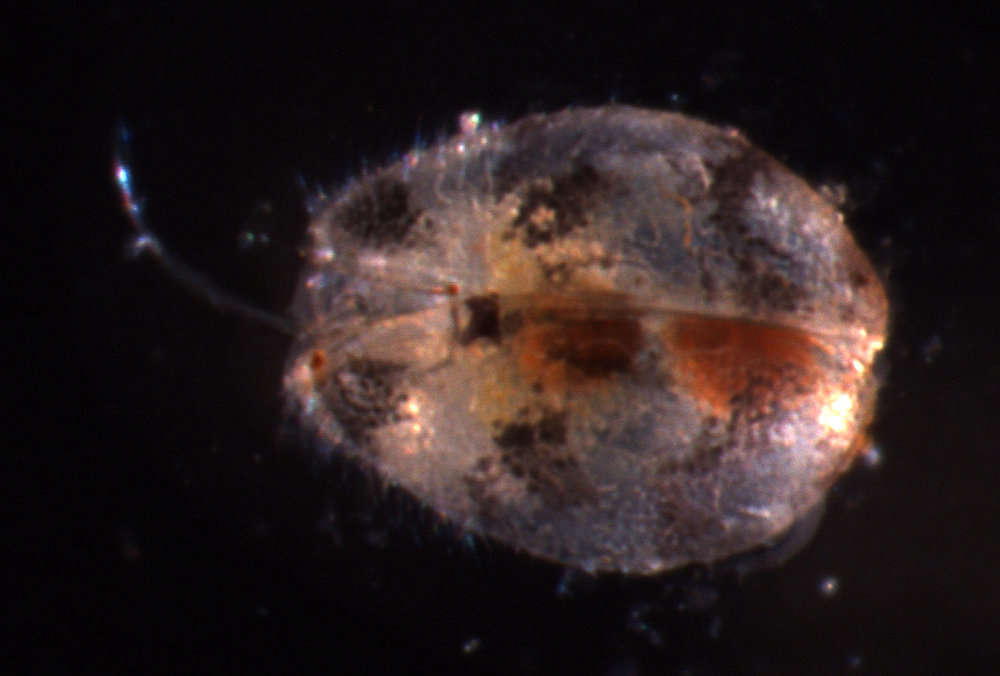
The Podocopida are an order of ostracods in the subclass Podocopa. It is the most diverse of the five orders of ostracods, and the only one with freshwater species. The group also has a rich fossil record.
Myodocopida
The Myodocopida is one of the two orders within the Myodocopa, in turn a subclass of the Ostracoda. The Myodocopida are distinguished by a worm-like seventh limb, and, usually, a rostrum above an incisure (notch) from which the antennae can protrude. Unlike other ostracods, many species of the Myodocopida have lateral compound eyes Research on the cypridinid species Macrocypridina castanea have shown that the ‘window’ above its eyes—a transparent area on the shell—contains a nanostructure that transmits an unusually high 99% of blue light (350–630 nm)—the predominant light in its environment—a

Anaspidacea
Anaspidacea is an order of crustaceans, comprising eleven genera in four families. Species in the family Anaspidesidae vary from being strict stygobionts (only living underground) to species living in lakes, streams and moorland pools, and are found only in Tasmania. Koonungidae is found in Tasmania and the south-eastern part of the Australian mainland, where they live in the burrows made by crayfish and in caves. The families Psammaspididae and Stygocarididae are both restricted to caves, but Stygocarididae has a much wider distribution than the other families, with Parastygocaris having spec

Balanomorpha
The Balanomorpha are an order of barnacles, containing familiar sessile shelled acorn barnacles of the seashore. The order contains these families:

Halocyprida
The Halocyprida is one of the two orders within the Myodocopa, in turn a subclass of the ostracods. Like their relatives in the order Myodocopida, they have a long exopod on the second antenna. However, unlike myodocopids, their fifth appendage is leg-like rather than modified for feeding, their seventh limb is reduced or absent, and they have no lateral eyes. The group is primarily planktonic. There are two suborders: Halocypridina and Cladocopina.
Spelaeogriphacea
Spelaeogriphacea is an order of crustaceans that grow to no more than . Little is known about the ecology of the order.
Monstrilloida
REDIRECT Monstrillidae
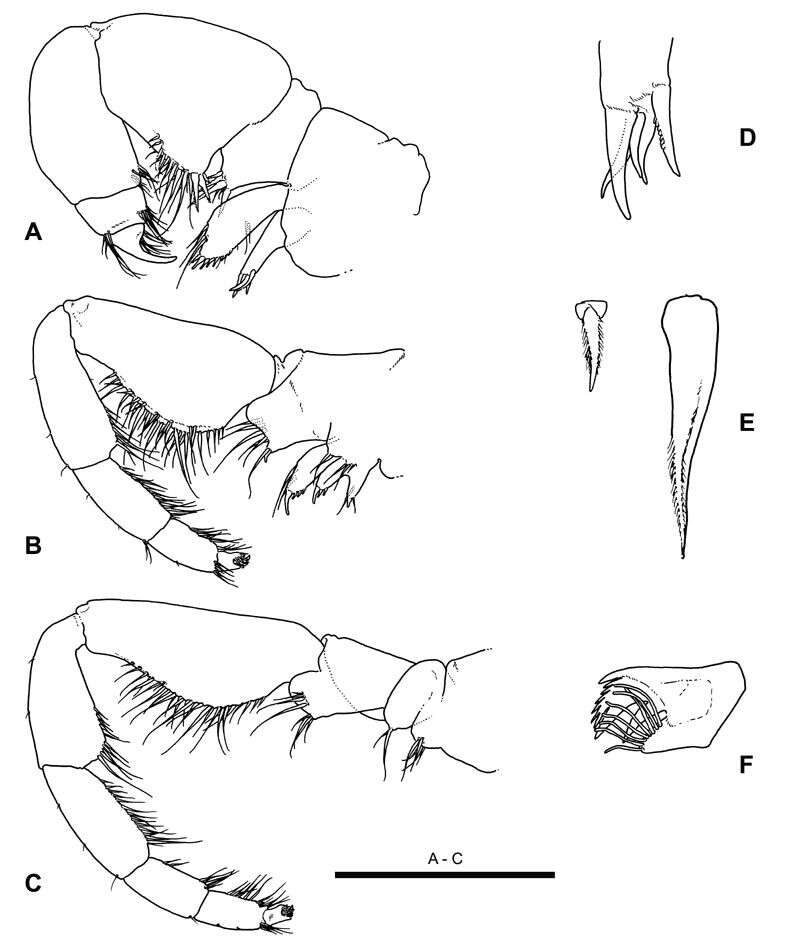
Nectiopoda
Nectiopoda is one of the two orders of remipedes (members of the class Remipedia), the other being the extinct, monotypic order Enantiopoda.
Mictacea
Mictacea is a monotypic order of crustaceans. It was originally erected for three species of small shrimp-like animals of the deep sea and anchialine caves. They were placed in two families, the Mictocarididae and Hirsutiidae, but Hirsutiidae is now placed in order Bochusacea, leaving Mictacea with a single species, Mictocaris halope.

Dendrogastrida
Dendrogastrida is an order of crustaceans belonging to the subclass Ascothoracida.
Porocephalida
Porocephalida is an order of tongue worms. Some species in this order, such as Armillifer grandis, have been found in vipers, with some found in vipers from bushmeat markets. At least one species within this order, Subtriquetra subtriquetra, has a free-living larval stage.
Amphionidacea
REDIRECT Amphionides
Cephalobaenida
REDIRECT Cephalobaena
Scalpellomorpha
Scalpellomorpha is an order of barnacles in the class Thecostraca. There are about 11 families in 3 superfamilies and more than 450 described species in Scalpellomorpha.
Misophrioida
Misophrioida is an order of copepods, containing the following families:
Misophriidae Boxshall & Jaume, 2000
Palpophriidae Boxshall & Jaume, 2000
Speleophriidae Boxshall & Jaume, 2000
Pygocephalomorpha
The order Pygocephalomorpha is an extinct group of peracarid crustaceans. Pygocephalomorpha appeared in the Late Devonian, were abundant from the Carboniferous era until their extinction in the Early Permian era.
Enantiopoda
REDIRECT Tesnusocarididae
Palaeocopida
Palaeocopida is an order of ostracods in the subclass Podocopa. Most species in the suborder are extinct, and only the genera Manawa, Promanawa, and Puncia in the family Punciidae are extant. The members of the family live in high-energy shallow marine environments of New Zealand.
Laurida
Laurida is an order of crustacean in the infraclass Ascothoracida. It consists of the following families and genera:
Lauridae
Baccalaureus
Laura
Polymarsypus
Zoanthoecus
Petrarcidae
Introcornia
Petrarca
Zibrowia
Synagogidae
Cardomanica
Flatsia
Gorgonolaureus
Isidascus
Sesillogoga
Synagoga
Thalassomembracis
Waginella
Cyclida
Cyclida (formerly Cycloidea, and so sometimes known as cycloids) is an extinct order of crab-like fossil arthropods that lived from the Carboniferous to the Jurassic and possibly Cretaceous. Their classification is uncertain, but they are generally interpreted as crustaceans, likely belonging to the superclass Multicrustacea.
Stygiomysida
Stygiomysida is a small order of malacostracan crustaceans in the superorder Peracarida. It has traditionally been considered part of the order Mysida (opossum shrimps), but was separated from it on phylogenetic grounds.
Mormonilloida
REDIRECT Mormonillidae
Platycopioida
REDIRECT Platycopiidae
Gelyelloida
REDIRECT Gelyella
Lepadiformes
Lepadiformes is an order of crustaceans belonging to the class Maxillopoda.
Aeschronectida
Aeschronectida is an extinct order of mantis shrimp-like crustaceans which lived in the Mississippian subperiod in what is now Montana. They exclusively lived in the Carboniferous, or the age of amphibians. They have been found mostly in the U.S. and in the British Isles, in 1979 species were found in the Madera Formation in New Mexico. Aeschronectida was first identified appearing in Continental Europe in around 2014. While sharing similar characteristics to Stomatopoda, they lack certain physical characteristics of that taxon. The first species of Aeschronectida is accredited to Frederick R.