Category
page 1Energy conversion

nuclear power
power generated from nuclear reactions

solar energy
radiant light and heat from the Sun that is harnessed using a range of technologies

steam engine
heat engine that performs mechanical work using steam as its working fluid

nuclear fusion
nuclear reaction in which atomic nuclei combine

electric motor
electromechanical device

recycling
thumb|The three chasing arrows of the universal recycling symbol
thumb|Municipal waste recycling rate (%), 2015
Recycling is the process of converting waste materials into new materials and objects. This concept often includes the recovery of energy from waste materials. The recyclability of a material depends on its ability to reacquire the properties it had in its original state. It is an alternative to "conventional" waste disposal that can save material and help lower greenhouse gas emissions. It can also prevent the waste of potentially useful materials and reduce the consumption of fresh

nuclear reactor
device to initiate and control a sustained nuclear chain reaction

photoelectric effect
emission of electrons when light hits a material
.jpg)
hydropower
thumb|upright=1.3|The Three Gorges Dam in China; the hydroelectric dam is the world's largest power station by [[installed capacity.]]
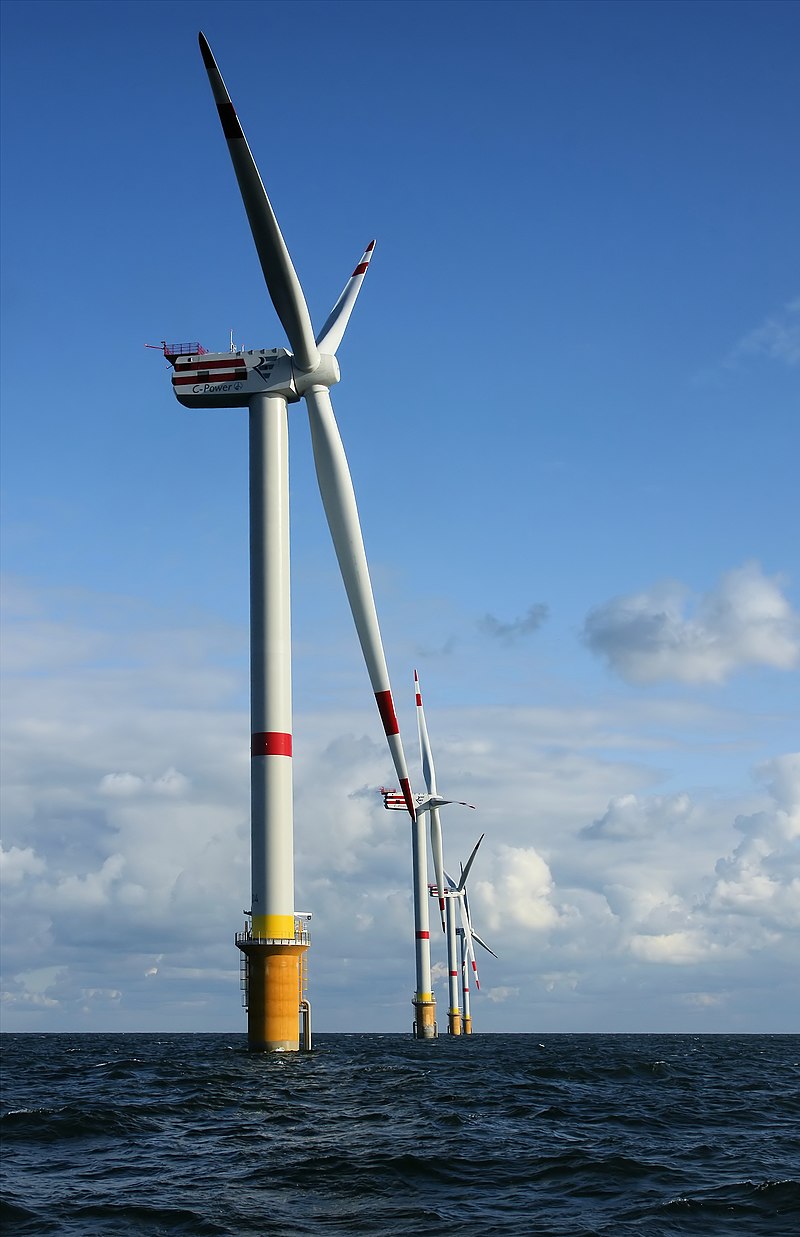
wind turbine
device that converts wind energy into electrical energy

jet engine
reaction engine which generates thrust by jet propulsion

solar cell
electrical device that converts the energy of light directly into electricity by the photovoltaic effect

heat engine
system that performs the conversion of heat or thermal energy to mechanical work
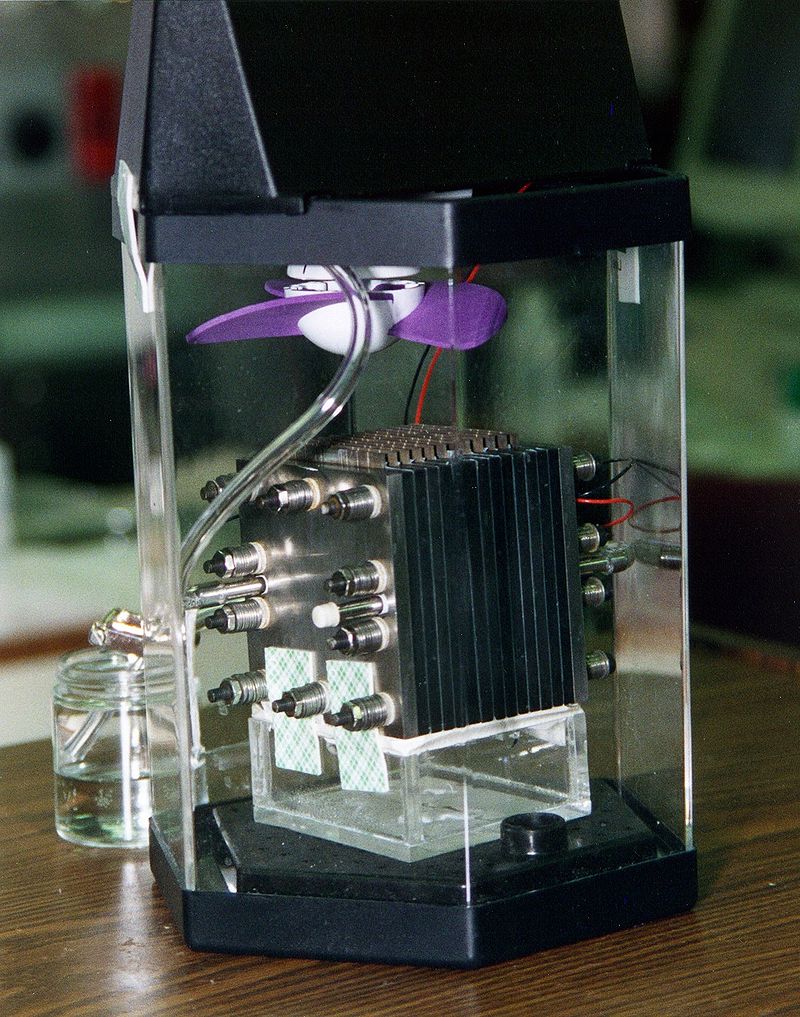
fuel cell
electrochemical cell that converts chemical energy into electricity by oxidizing a fuel

thermal power station
facility where heat is converted to electric power

heat pump
device that transfers thermal energy in the opposite direction of spontaneous heat transfer

piezoelectricity
thumb|upright=1.1|Piezoelectric balance presented by Pierre Curie to [[Lord Kelvin, Hunterian Museum, Glasgow]]

photovoltaics
thumb|The Solar Settlement, a sustainable housing community project in [[Freiburg, Germany|upright=1.2]]
thumb|Charging station in France that provides energy for electric cars using solar energy|upright=1.2
thumb|Solar panels on the International Space Station|upright=1.2Photovoltaics (PV) is the conversion of light into electricity using semiconducting materials that exhibit the photovoltaic effect, a phenomenon studied in physics, photochemistry, and electrochemistry. The photovoltaic effect is commercially used for electricity generation and as photosensors.

battery charger
circuit or device that controls charging of batteries

solar power
conversion of energy from sunlight into electricity

wave power
transport of energy by wind waves, and the capture of that energy to do useful work
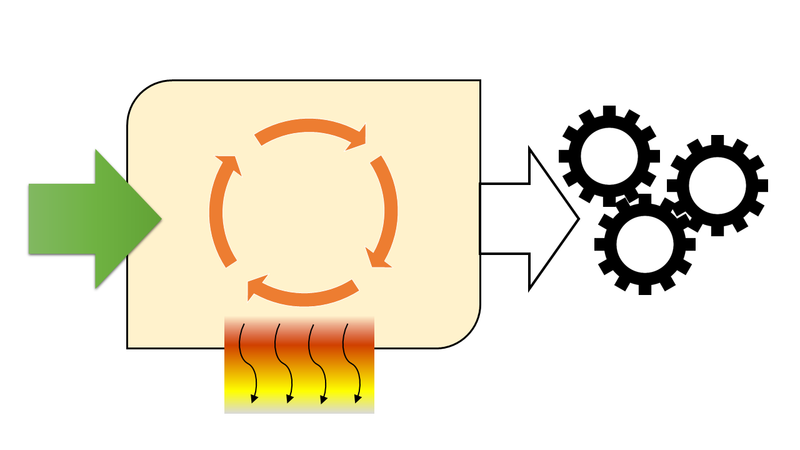
energy efficiency
ratio between the useful energy output and the input of a machine

thermionic emission
thermally induced flow of charge carriers from a surface
thermoelectric effect
direct conversion of temperature differences to electric voltage and vice versa

cogeneration
thumb|400px|Diagram comparing losses from conventional generation vs. cogeneration

alternator
thumb|right|200px|Alternators made in 1909 by Ganz Works in the power generating hall of a Russian [[hydroelectric station (photograph by Prokudin-Gorsky, 1911).]]

solar thermal energy
technology using solar energy to heat something

soil salinization
Soil salinization happens when the salt content in soil increases above normal, naturally occurring levels

supercapacitor
A supercapacitor (SC), also called an ultracapacitor, is a high-capacity capacitor, with a capacitance value much higher than solid-state capacitors but with lower voltage limits. It bridges the gap between electrolytic capacitors and rechargeable batteries. It typically stores 10 to 100 times more energy per unit mass or energy per unit volume than electrolytic capacitors, can accept and deliver charge much faster than batteries, and tolerates many more charge and discharge cycles than rechargeable batteries.
ocean thermal energy conversion
renewable energy technology

pyroelectricity
thumb|Internals of a pyroelectric sensor
Pyroelectricity (from Greek: pyr (πυρ), "fire" and electricity) is a property of certain crystals which are naturally electrically polarized and as a result contain large electric fields. Pyroelectricity can be described as the ability of certain materials to generate a temporary voltage when they are heated or cooled. The change in temperature modifies the positions of the atoms slightly within the crystal structure, so that the polarization of the material changes. This polarization change gives rise to a voltage across the crystal. If the temperature
photovoltaic effect
electric current generation from light

gasification
Gasification is a process that converts biomass- or fossil fuel-based carbonaceous materials into gases, including as the largest fractions: dinitrogen (N2), carbon monoxide (CO), dihydrogen (H2), and carbon dioxide (). This is achieved by reacting the feedstock material at high temperatures (typically >700 °C), without combustion, via controlling the amount of oxygen and/or steam present in the reaction. The resulting gas mixture is called syngas (from synthesis gas) or producer gas and is itself a fuel due to the flammability of the H2 and CO of which the gas is largely composed. Power
osmotic power
energy available from the difference in the salt concentration between seawater and river water
thermal efficiency
performance measure of a device that uses thermal energy, expressed as the ratio of work done over thermal energy used
Crookes radiometer
device that rotates under influence of light
waste heat
Waste heat is by necessity produced both by machines that do work and in other processes that use energy, for example in a refrigerator warming the room air or a combustion engine releasing heat into the environment.
magnetohydrodynamic generator
magnetohydrodynamic converter that utilizes a Brayton cycle to transform thermal energy and kinetic energy directly into electricity
pressure–volume diagram
diagram in thermodynamics, ploting pressure versus volume, typically used for thermodynamic processes
energy transformation
process of changing energy from one of its forms into another

economizer
Economizers (US and Oxford spelling), or economisers (UK), are mechanical devices intended to reduce energy consumption, or to perform useful function such as preheating a fluid. The term economizer is used for other purposes as well. Boiler, power plant, heating, refrigeration, ventilating, and air conditioning (HVAC) may all use economizers. In simple terms, an economizer is a heat exchanger.
solar updraft tower
thermal convection power plant
integrated gasification combined cycle
thermodynamic cycle
space-based solar power
technology that enables capturing and wireless sending of solar energy to Earth
nameplate capacity
intended full-load sustained output of a facility
synchronous condenser
machinery use to to adjust conditions on the electric power transmission grid
Homogeneous Charge Compression Ignition
form of internal combustion

waste-to-energy
thumb|right|upright=1.5|, with its distinct Friedensreich Hundertwasser|Hundertwasser facade, is providing [[combined heat and power in Vienna.]]
energy development
methods of energy production from various sources
photoelectrochemical cell
sources of electricity or hydrogen via electrolysis

Power to gas
Power-to-gas (often abbreviated P2G) is a technology that uses electric power to produce a gaseous fuel.
battery management system
electronic system that manages a rechargeable battery (cell or battery pack)
geothermal heating
methods of heating and cooling a building using underground heat
wave power station
installment of one or several wave power devices in one place

thermoacoustics
Thermoacoustics is the interaction between temperature, density and pressure variations of acoustic waves. Thermoacoustic heat engines can readily be driven using solar energy or waste heat and they can be controlled using proportional control. They can use heat available at low temperatures which makes it ideal for heat recovery and low power applications. The components included in thermoacoustic engines are usually very simple compared to conventional engines. The device can easily be controlled and maintained.
solar power tower
technology used in concentrated solar power stations
Shockley–Queisser limit
theoretical limit of solar panels using p–n junctions efficiency
geothermal heat pump
heating and/or cooling system that transfers heat to or from the ground
electrohydrodynamics
Electrohydrodynamics (EHD), also known as electro-fluid-dynamics (EFD) or electrokinetics, is the study of the dynamics of electrically charged fluids. Electrohydrodynamics (EHD) is a joint domain of electrodynamics and fluid dynamics mainly focused on the fluid motion induced by electric fields. EHD, in its simplest form, involves the application of an electric field to a fluid medium, resulting in fluid flow, form, or properties manipulation. These mechanisms arise from the interaction between the electric fields and charged particles or polarization effects within the fluid. The generation

fluidized bed combustion
technology used to burn solid fuels