Category
page 1Epiphytes

dragon fruit
frameless|right|alt=Ripe, longitudinal section
thumb|Dragon fruit sold in a market in Chiayi, Taiwan|alt=Market stall in [[Taiwan]]

Ficus religiosa
species of fig

epiphyte
thumb|right|Tillandsia bourgaei growing on an oak tree in Mexico

Ficus elastica
species of plant

Monstera deliciosa
species of plant

Philodendron
Philodendron is a large genus of flowering plants in the family Araceae. , the Plants of the World Online accepted 625 species; other sources accept different numbers. Regardless of number of species, the genus is the second-largest member of the family Araceae, after genus Anthurium. Taxonomically, the genus Philodendron is still poorly known, with many undescribed species. Many are grown as ornamental and indoor plants. The name derives from the Greek words philo- 'love, affection' and dendron 'tree'. The generic name, Philodendron, is often used as the English name.

Polypodiaceae
Polypodiaceae is a family of ferns. In the Pteridophyte Phylogeny Group classification of 2016 (PPG I), the family includes around 65 genera and an estimated 1,650 species and is placed in the order Polypodiales, suborder Polypodiineae. A broader circumscription has also been used, in which the family includes other families kept separate in PPG I. Nearly all species are epiphytes, but some are terrestrial.

banyan
alt=The biggest tree|thumb|A banyan tree at the Naples, Florida Preserve

Asplenium
Asplenium is a genus of about 700 species of ferns, often treated as the only genus in the family Aspleniaceae, though other authors consider Hymenasplenium separate, based on molecular phylogenetic analysis of DNA sequences, a different chromosome count, and structural differences in the rhizomes. The type species for the genus is Asplenium marinum.

Tillandsia
Tillandsia is a genus of around 650 species of evergreen, perennial flowering plants in the family Bromeliaceae, native to the forests, mountains and deserts of the Neotropics, from northern Mexico and the southeastern United States to Mesoamerica and the Caribbean to central Argentina. Their leaves, more or less silvery in color, are covered with specialized cells (trichomes) capable of rapidly absorbing water that gathers on them.

Schlumbergera
Schlumbergera is a small genus of cacti with six to nine species native to the coastal mountains of southeastern Brazil. These plants grow on trees or rocks in habitats that are generally shady with high humidity, and can be quite different in appearance from their desert-dwelling cousins. Most species of Schlumbergera have stems which resemble leaf-like pads joined one to the other and flowers which appear from areoles at the joints and tips of the stems. Two species have cylindrical stems more similar to other cacti.

Polypodium
Polypodium is a genus of ferns in the family Polypodiaceae, subfamily Polypodioideae, according to the Pteridophyte Phylogeny Group classification of 2016 (PPG I). The genus is widely distributed throughout the world, with the highest species diversity in the tropics. The name is derived from Ancient Greek poly ("many") + podion ("little foot"), on account of the foot-like appearance of the rhizome and its branches. They are commonly called polypodies or rockcap ferns, but for many species unique vernacular names exist.

Tillandsia usneoides
species of plant

Liparis
genus of plants

Peperomia
Peperomia is one of the two large genera of the family Piperaceae. It is estimated that there are over 1,000 species, occurring in all tropical and subtropical regions of the world. They are concentrated in South and Central America, but may also be found in southern North America, the Caribbean islands, Africa, Oceania, and southern and eastern parts of Asia. The exact number of species is difficult to determine, as some plants have been recorded several times with different names, and new species continue to be discovered. Peperomias have adapted to many different environments and their appe

Epiphyllum
Epiphyllum, ; from Ancient Greek ἐπι- (epi-), meaning "upon", and φύλλον (phúllon), meaning "leaf", is a genus of epiphytic plants in the cactus family (Cactaceae), native to Central America and South America. Common names for these species include climbing cacti, orchid cacti and leaf cacti, though the latter also refers to the genus Pereskia.

Platycerium
Platycerium is a genus of about 18 fern species in the polypod family, Polypodiaceae. Ferns in this genus are widely known as staghorn or elkhorn ferns due to their uniquely shaped fronds. This genus is epiphytic and is native to tropical and temperate areas of South America, Africa, Southeast Asia, Australia, and New Guinea.

Guzmania
Guzmania (tufted airplant) is a genus of over 120 species of flowering plants in the botanical family Bromeliaceae, subfamily Tillandsioideae. They are mainly stemless, evergreen, epiphytic perennials native to Brazil, southern Mexico, Central America, and northern and western South America. They are found at altitudes of up to in the Andean rainforests.

Epiphyllum oxypetalum
night-blooming cactus
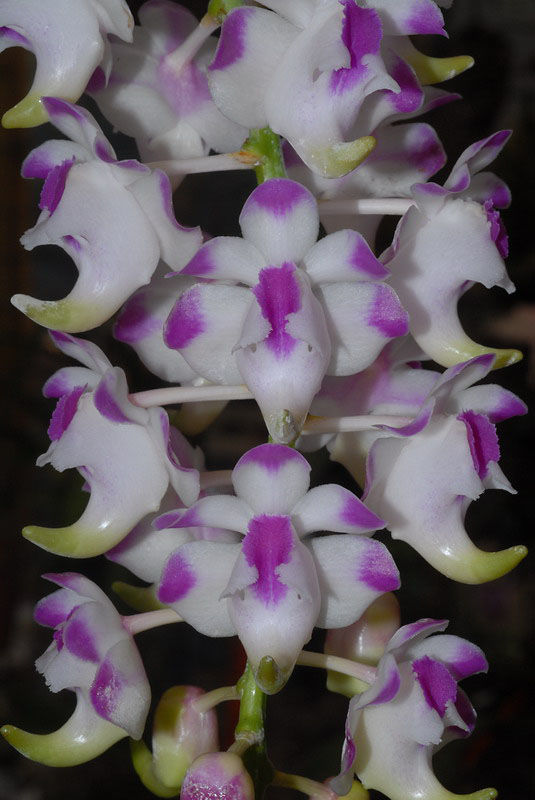
Aerides
Aerides, known commonly as '''cat's-tail orchids and fox brush orchids''', is a genus belonging to the orchid family (Orchidaceae, subfamily Epidendroideae, tribe Vandeae, subtribe Aeridinae). It is a group of tropical epiphyte orchids that grow mainly in the warm lowlands of tropical Asia from India to southern China to New Guinea. They are valued in horticulture for their racemes of showy, fragrant, colorful flowers.

Rhipsalis
Rhipsalis ( ) is a genus of epiphytic flowering plants in the cactus family, typically known as mistletoe cacti. They are found in parts of Central America, the Caribbean and northern regions of South America. One species, Rhipsalis baccifera also inhabits locations in Africa and Asia, and is the only cactus species naturally occurring in the Old World. This is the largest and most widely distributed genus of epiphytic cacti (those which live on other plants without damaging them).

Aeschynanthus
Aeschynanthus is a genus of about 150 species of evergreen subtropical and tropical plants in the family Gesneriaceae. They are usually trailing epiphytes with brightly colored flowers that are pollinated by sunbirds. The genus name comes from a contraction of aischuno (to be ashamed) and anthos (flower). The common name for some species is lipstick plant, which comes from the appearance of the developing buds emerging from the calyces.

Ficus virens
species of plant

Selenicereus undatus
species of cactus

Asplenium nidus
species of fern in the family Aspleniaceae

Vriesea
Vriesea is a genus of flowering plants in the botanical family Bromeliaceae, subfamily Tillandsioideae. The genus is named after the Dutch botanist and physician Willem Hendrik de Vriese (1806–1862). Its species are widespread over Mexico, Central America, South America and the West Indies.

Selenicereus grandiflorus
species of plant

Disocactus
Disocactus is a genus of epiphytic cacti in the tribe Hylocereeae found in Central America, the Caribbean and northern South America. It should not be confused with Discocactus, which is a different genus.

Aechmea fasciata
Wild and cultivated plant species
%20(14782664024).jpg)
Myrmecodia
thumb|An illustration of the inner chambers of a Myrmecodia plant

Hatiora
Hatiora is a small genus of epiphytic cacti which belongs to the tribe Rhipsalideae within the subfamily Cactoideae of the Cactaceae. Recent taxonomic studies have led to the three species formerly placed in subgenus Rhipsalidopsis being removed from the genus, including the well known and widely cultivated ornamental plants known as Easter cactus or Whitsun cactus (cultivars or hybrids of the former Hatiora gaertneri).

Selenicereus megalanthus
species of plant

Dischidia
Dischidia is a genus of plants in the "dog-bane" family Apocynaceae, collectively known as the "milkweeds" (true perennial milkweeds in the Apocynaceae are found in the genus Asclepias). They are epiphytes, native to tropical areas of China, India as well as Bhutan’s southern borders, wherever minimal frost occurs. Additionally, they are known from most areas of Mainland Southeast Asia, including forested areas of Myanmar, Thailand, Vietnam, Cambodia, Laos, and some parts of Indonesia, Malaysia and Singapore. Several species are also native to Papua New Guinea, northeastern Australia, Mariana

Lobaria pulmonaria
species of lichenized fungus
.jpg)
Columnea
Columnea is a genus of around 200 species of epiphytic herbs and shrubs in the family Gesneriaceae, native to the tropics of the Americas and the Caribbean. The tubular or oddly shaped flowers are usually large and brightly colored – usually red, yellow, or orange – sometimes resembling a fish in shape. A common name is flying goldfish plants (see also the related Nematanthus) due to the unusual flower shape.

Moreton Bay fig
species of plant

Thaumatophyllum bipinnatifidum
species of plant

Psilotum nudum
species of plant

Platycerium bifurcatum
species of fern in the family Polypodiaceae

Ficus aurea
species of plant

Rhipsalis baccifera
species of plant
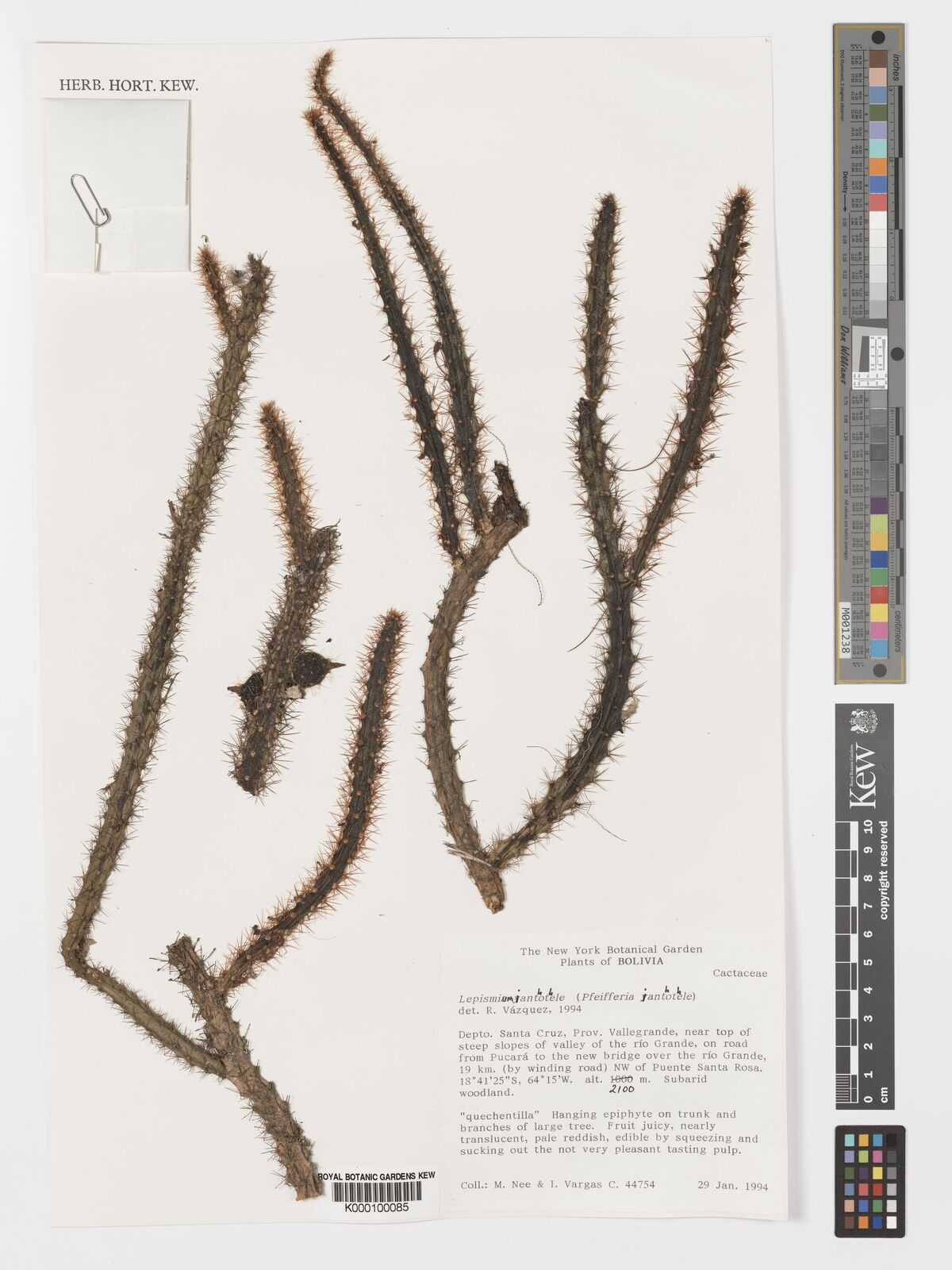
Lepismium
Lepismium is a genus of mostly epiphytic cacti, with seven species. They are found in tropical South America.

Nepenthes lowii
species of plant

Arceuthobium
The genus Arceuthobium, commonly called dwarf mistletoes, is a genus of 42 species of parasitic plants that parasitize members of Pinaceae and Cupressaceae in North America, Central America, Asia, Europe, and Africa. Of the 42 species that have been recognized, 39 and 21 of these are endemic to North America and the United States, respectively. They all have very reduced shoots and leaves (mostly reduced to scales) with the bulk of the plant living under the host's bark. Recently the number of species within the genus has been reduced to 26 as a result of more detailed genetic analysis.
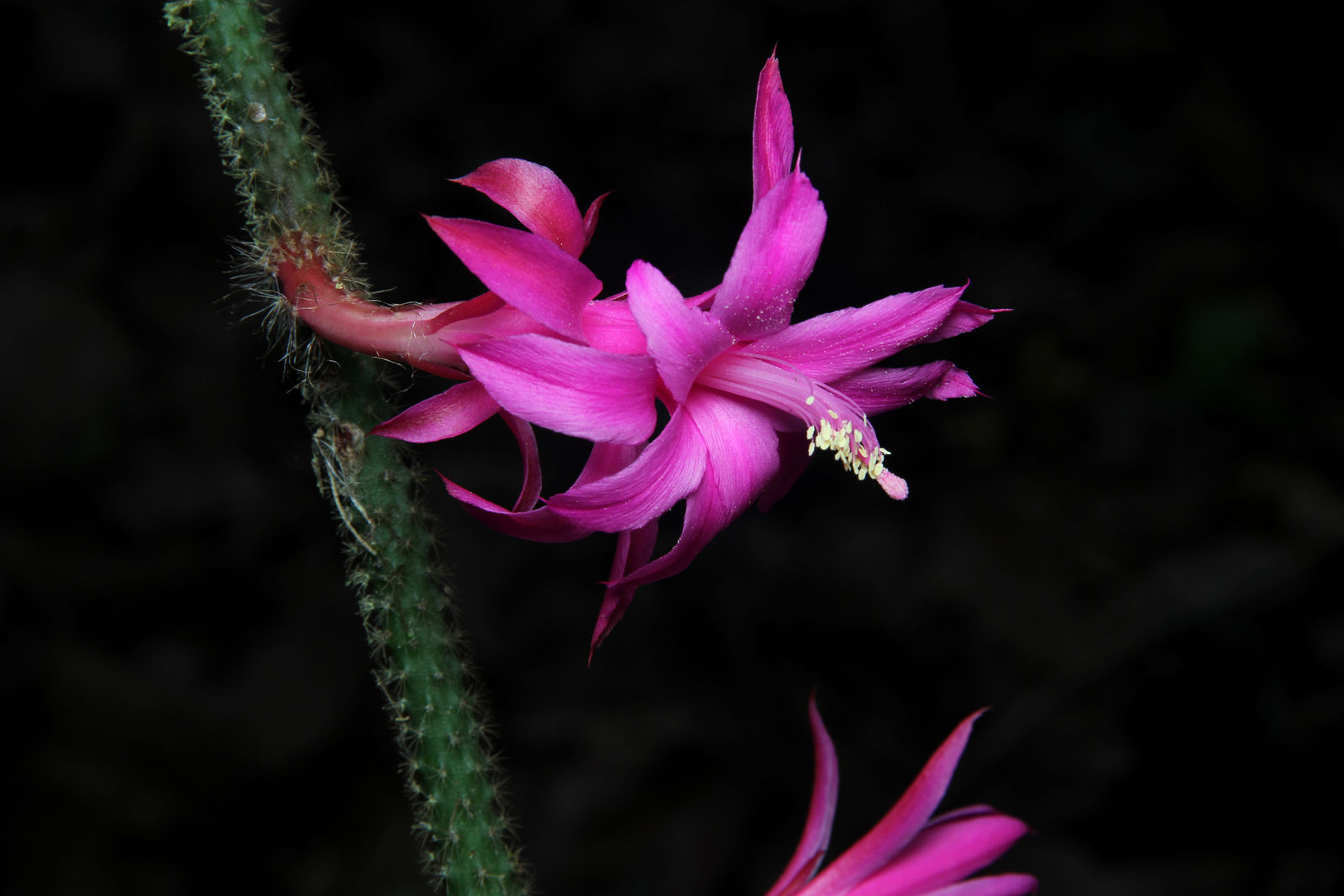
Aporocactus flagelliformis
species of plant

Disocactus anguliger
species of cactus

Arceuthobium oxycedri
species of plant
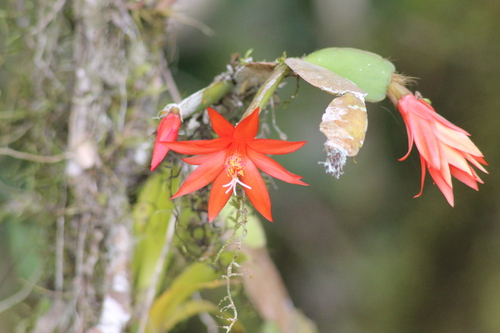
Rhipsalidopsis gaertneri
species of cactus
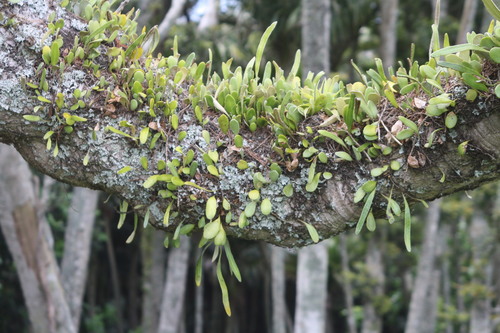
Pyrrosia
Pyrrosia is a genus of about 100 fern species in the polypod family, Polypodiaceae. Like other species in Polypodiaceae, the species of Pyrrosia are generally epiphytic on trees or rocks, a few species are terrestrial. The Latin name of Pyrrosia comes from the Greek pyrrhos (red), which refers to its leaves that are red due to the sporangia.
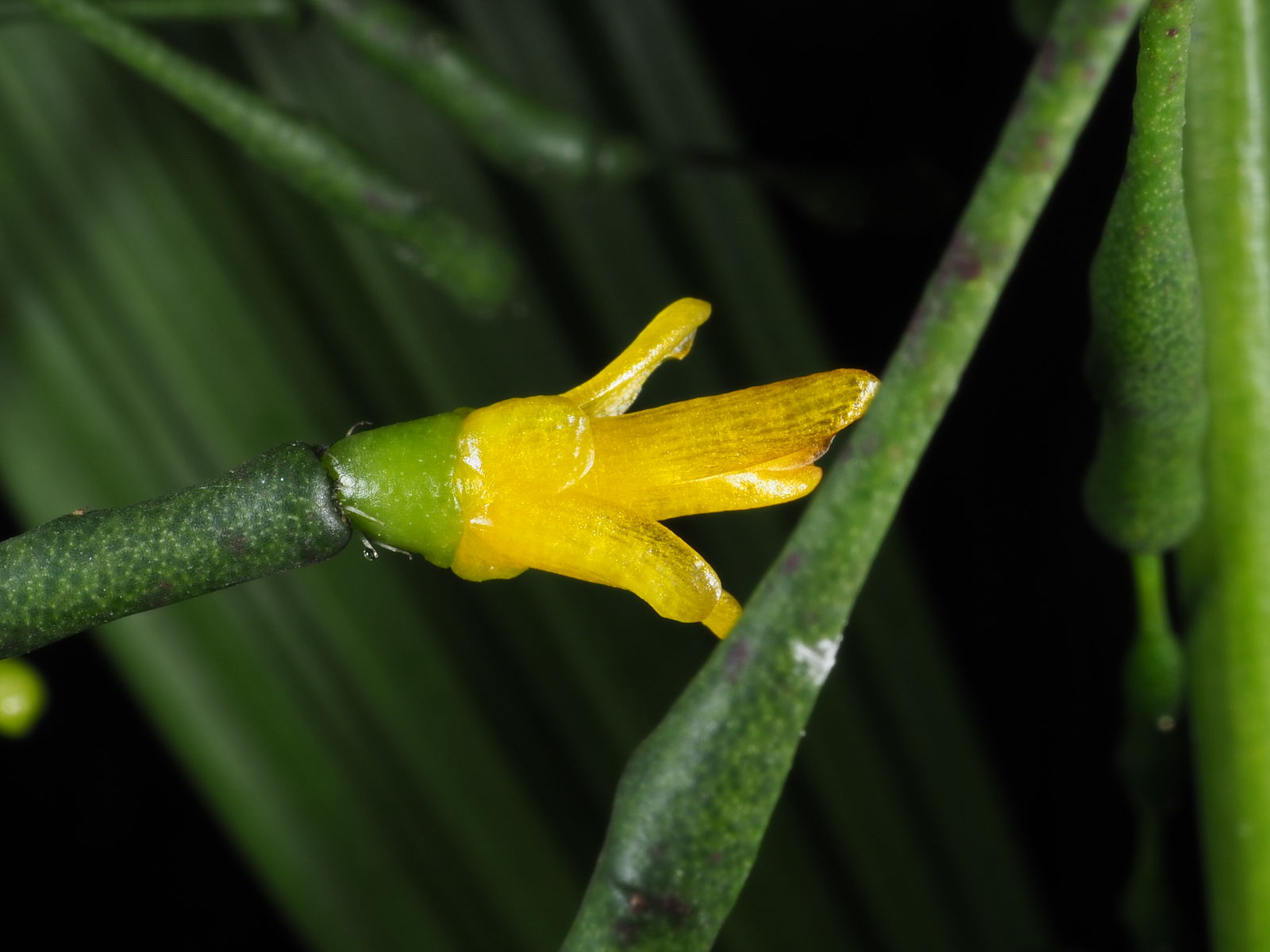
Hatiora salicornoides
species of plant
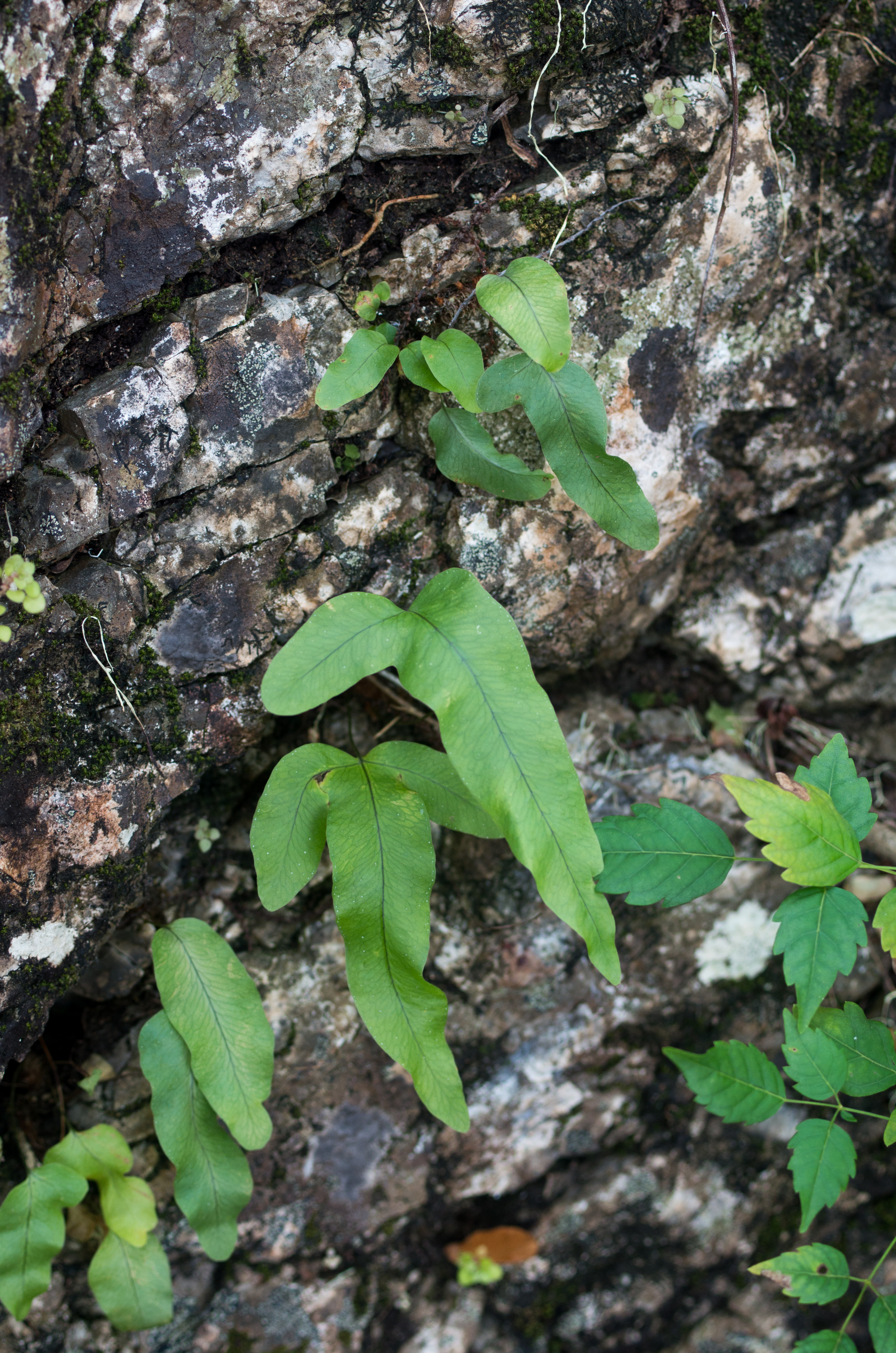
Phlebodium aureum
species of fern

Grimmia pulvinata
species of plant
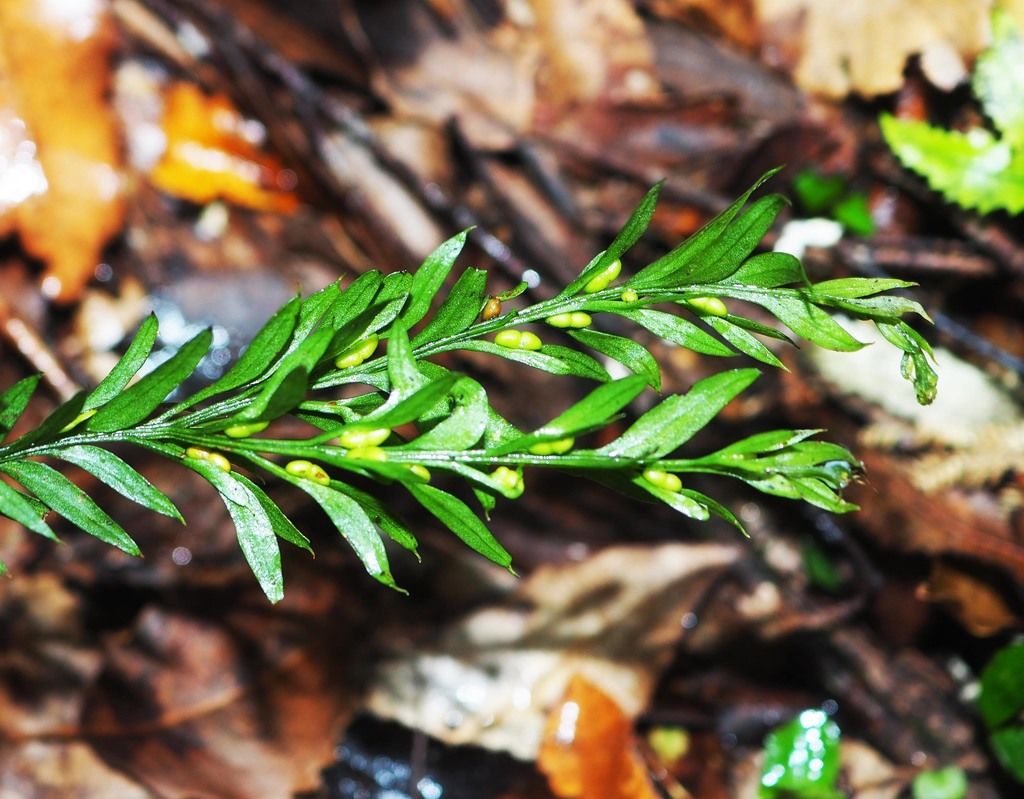
Tmesipteris
Tmesipteris, the hanging fork ferns, is a genus of ferns, one of two genera in the family Psilotaceae, order Psilotales (the other being Psilotum).
Tmesipteris is restricted to certain lands in the Southern Pacific, notably Australia, New Zealand and New Caledonia.
In New Zealand this hanging epiphyte is common in the warm temperate rain forests of both main islands, where it can normally be found as short spiky dark-green fronds (10–15 cm long), often with lighter bag-like sporangia at the bases of some of its "leaves". The plant possesses no true leaves; what appear to be leaves are fla

Nepenthes inermis
species of plant

Clusia
thumb|Clusia grandiflora - MHNT

Billbergia nutans
species of plant

Davallia
thumb|right|245px|Davallia solida var. pyxidata|"Hare's Foot" on sandstone, [[Ku-ring-gai Chase National Park, Australia]]
thumb|245px|Davallia canariensis showing the rhizomes

Metrosideros robusta
species of plant

Nematanthus
Nematanthus is a genus of flowering plants in the family Gesneriaceae. All of its species are endemic to Brazil. Compared to other gesneriads, Nematanthus has leaves that are small, succulent, and hard-surfaced. The plant has a trailing, branching, and spreading habit; it is generally an epiphyte in nature and a hanging-basket plant in cultivation. The flower has fused petals. In some species, the flower has a "pouch" at the bottom. The fancied resemblance of such flowers to a goldfish gives these plants the common name goldfish plant or guppy plant.

Nepenthes edwardsiana
species of plant