Category
page 1Extant Chattian first appearances
Felidae
Felidae ( ) is the family of mammals in the order Carnivora colloquially referred to as cats. A member of this family is also called a felid ( ).

pelican
Pelicans (genus Pelecanus) are a genus of large water birds that make up the family Pelecanidae. They are characterized by a long beak and a large throat pouch used for catching prey and draining water from the scooped-up contents before swallowing. They have predominantly pale plumage, except for the brown and Peruvian pelicans. The bills, pouches, and bare facial skin of all pelicans become brightly coloured before the breeding season.

Pinnipedia
Pinnipeds (pronounced ), commonly known as seals, are a widely distributed and diverse clade of carnivorous, fin-footed, semiaquatic, mostly marine mammals. They comprise the extant families Odobenidae (whose only living member is the walrus), Otariidae (the eared seals: sea lions and fur seals), and Phocidae (the earless seals, or true seals), with 34 extant species and more than 50 extinct species described from fossils. While seals were historically thought to have descended from two ancestral lines, molecular evidence supports them as a monophyletic group (descended from one ancestor). Pin

Narcissus
genus of plants in family Amaryllidaceae
.jpg)
Hominoidea
Apes, collectively Hominoidea (; hominoids), are a superfamily of Old World simians native to sub-Saharan Africa and Southeast Asia. They were more widespread in Africa, Asia, and Europe in prehistory, and, including humans, are found globally. Apes are more closely related to Old World monkeys (family Cercopithecidae) than to the New World monkeys (Platyrrhini), with both Old World monkeys and apes placed in the clade Catarrhini. Apes do not have tails due to a mutation of the TBXT gene. In traditional and non-scientific use, the term ape can include tailless primates taxonomically considered

Podicipedidae
Grebes () are aquatic diving birds in the order Podicipediformes (). Grebes are widely distributed freshwater birds, with some species also found in marine habitats during migration and winter. Most grebes fly, although some flightless species exist, most notably in stable lakes. The order contains a single family, the Podicipedidae, which includes 22 species in six extant genera.

Delphinidae
family of marine mammals
.jpg)
tench
The tench or doctor fish (Tinca tinca) is a fresh- and brackish-water fish of the order Cypriniformes found throughout Eurasia from Western Europe including Britain and Ireland east into Asia as far as the Ob and Yenisei Rivers. It is also found in Lake Baikal. It normally inhabits slow-moving freshwater habitats, particularly lakes and lowland rivers.

Macropodidae
Macropodidae is a family of marsupials that includes kangaroos, wallabies, tree-kangaroos, wallaroos, pademelons, the quokka, and several other groups. These genera are allied to the suborder Macropodiformes, containing other macropods, and are native to the Australian continent (the mainland and Tasmania), New Guinea and nearby islands. there are 63 recognised living species in this family.
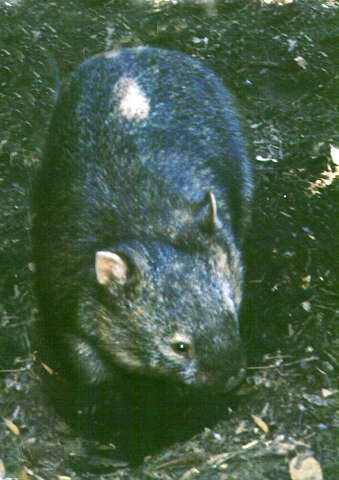
Diprotodontia
Diprotodontia () is the largest extant order of marsupials, with about 155 species, including the kangaroos, wallabies, possums, koala, wombats, and many others. Extinct diprotodonts include the hippopotamus-sized Diprotodon, and Thylacoleo, the so-called "marsupial lion".

Turaco
The turacos make up the bird family Musophagidae ( "banana-eaters"), which includes plantain-eaters and go-away-birds. In southern Africa both turacos and go-away-birds are commonly known as loeries. They are semi-zygodactylous: the fourth (outer) toe can be switched back and forth. The second and third toes, which always point forward, are conjoined in some species. Musophagids often have prominent crests and long tails; the turacos are noted for peculiar and unique pigments giving them their bright green and red feathers.
.jpg)
Lacertidae
thumb|Troodos lizardPhoenicolacerta troodica
thumb|Terminology and scalation of lacertids
The Lacertidae are the family of the wall lizards, true lizards, or sometimes simply lacertas, which are native to Afro-Eurasia. It is a diverse family with at about 360 species in 39 genera. They represent the dominant group of reptiles found in Europe.

Dasyuromorphia
Dasyuromorphia () is an order comprising most of the Australian carnivorous marsupials. The order contains four families: Myrmecobiidae, with just a single living species, the numbat (Myrmecobius fasciatus), Thylacinidae, with one recently extinct species, the thylacine (Thylacinus cynocephalus) and several fossil species, Dasyuridae, with 73 extant species, including quolls, dunnarts, and the Tasmanian devil, and the extinct fossil family Malleodectidae with one genus.
Ptilonorhynchidae
Bowerbirds () make up the bird family Ptilonorhynchidae. They are renowned for their unique courtship behaviour, where males build a structure and decorate it with sticks and brightly coloured objects in an attempt to attract a mate.

Peramelemorphia
The order Peramelemorphia includes the bandicoots and bilbies. All members of the order are endemic to Australia-New Guinea and most have the characteristic bandicoot shape: a plump, arch-backed body with a long, delicately tapering snout, very large upright ears, relatively long, thin legs, and a thin tail. Their size varies from about 140 grams up to 4 kilograms, but most species are about one kilogram.

New World porcupine
family of mammals
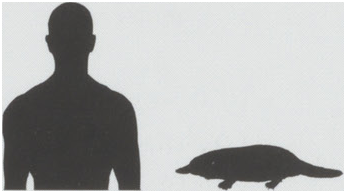
Ornithorhynchidae
The Ornithorhynchidae are one of the two extant families in the order Monotremata, and contain only the platypus and its extinct relatives. The other family is the Tachyglossidae, or echidnas.

Eupleridae
Eupleridae is a family of carnivorans endemic to Madagascar and comprising 10 known living species in seven genera, commonly known as euplerids or Malagasy carnivorans. The best known species is the fossa (Cryptoprocta ferox), in the subfamily Euplerinae. All species of Euplerinae were formerly classified as viverrids, while all species in the subfamily Galidiinae were classified as mongooses.

Chinchillidae
The family Chinchillidae is in the order Rodentia and consists of the chinchillas, the viscachas, and their fossil relatives. This family is restricted to southern and western South America, mostly living in mountainous regions of the Andes, except one species living on plains. They are medium to large-sized rodents, weighing from to , with strong hind legs and large ears and a bushy tail. All species have thick, soft fur, which is considered valuable in some cultures.
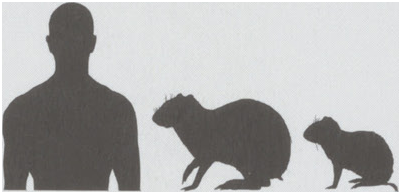
Dasyproctidae
Dasyproctidae, from Ancient Greek δασύς (dasús), meaning "hair", and πρωκτός (prōktós), meaning "anus", is a family of large South American rodents, comprising the agoutis and acouchis. Their fur is a reddish or dark colour above, with a paler underside. They are herbivorous, often feeding on ripe fruit that falls from trees. They live in burrows, and, like squirrels, will bury some of their food for later use.

Potoroidae
Potoroidae is a family of marsupials, small Australian animals known as bettongs, potoroos, and rat-kangaroos. All are rabbit-sized, brown, jumping marsupials and resemble a large rodent or a very small wallaby.
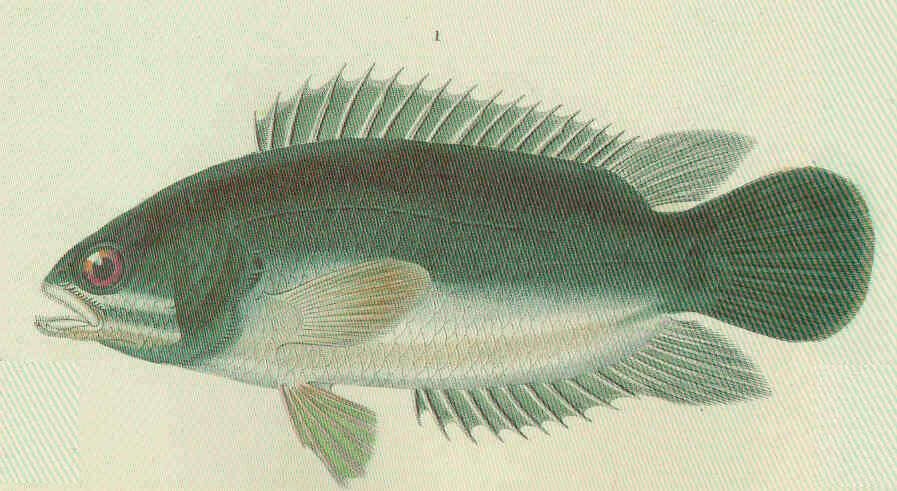
Anabantidae
family of fishes
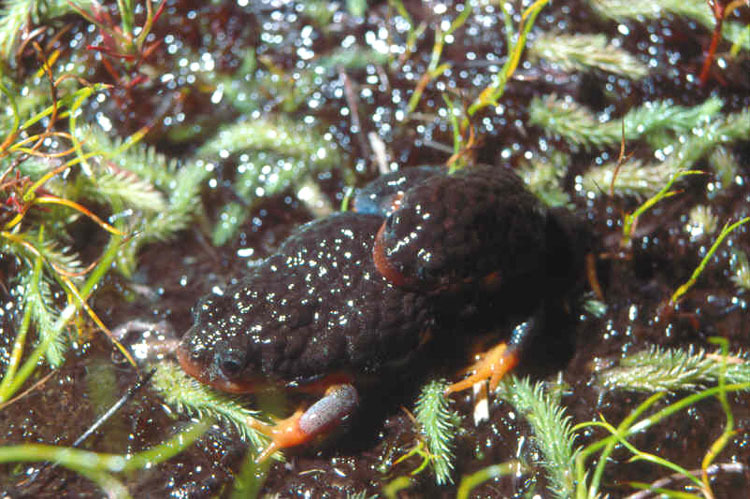
Myobatrachidae
Myobatrachidae, commonly known as Australian ground frogs or Australian water frogs, is a family of frogs found in Australia and New Guinea. Members of this family vary greatly in size, from species less than long, to the second-largest frog in Australia, the giant barred frog (Mixophyes iteratus), at in length. The entire family is either terrestrial or aquatic frogs, with no arboreal species.

Echimyidae
thumb|right|Armored rat, Hoplomys gymnurus
thumb|right|White-tailed olalla rat, Olallamys albicauda
thumb|right|Red-crested tree rat, Santamartamys rufodorsalis

Pseudocheiridae
Pseudocheiridae is a family of arboreal marsupials containing 17 extant species of ringtailed possums and close relatives. They are found in forested areas and shrublands throughout Australia and New Guinea.

Mugil
Mugil is a genus of mullet in the family Mugilidae found worldwide in tropical and temperate coastal marine waters, but also entering estuaries and rivers.

Phascolarctidae
The Phascolarctidae (φάσκωλος (phaskolos) - pouch or bag, ἄρκτος (arktos) - bear, from the Greek phascolos + arctos meaning pouched bear) is a family of marsupials of the order Diprotodontia, consisting of only one extant species, the koala, and six well-known fossil species, with another six less well known fossil species, and two fossil species of the genus Koobor, whose taxonomy is debatable but are placed in this group. The closest relatives of the Phascolarctidae are the wombats, which comprise the family Vombatidae.
Cetotheriidae
Cetotheriidae is a family of baleen whales (parvorder Mysticeti). The family is known to have existed from the Late Oligocene to the Early Pleistocene before going extinct. Although some phylogenetic studies conducted by recovered the living pygmy right whale as a member of Cetotheriidae, making the pygmy right whale the only living cetotheriid, other authors either dispute this placement or recover Neobalaenidae as a sister group to Cetotheriidae.
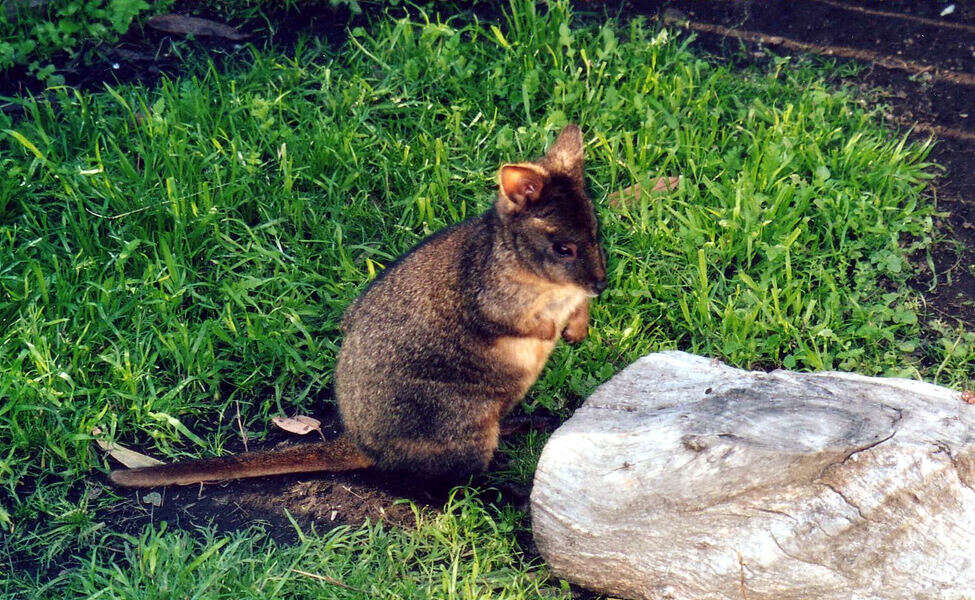
Macropodiformes
The Macropodiformes (), also known as macropods, are one of the three suborders of the large marsupial order Diprotodontia. They may in fact be nested within one of the suborders, Phalangeriformes. Kangaroos, wallabies and allies, bettongs, potoroos and rat kangaroos are all members of this suborder.

Balistes
Balistes is a genus of marine ray-finned fishes belonging to the family Balistidae, the triggerfishes. The triggerfishes in this genus are found in the Atlantic and eastern Pacific Ocean.

Physeteroidea
Physeteroidea is a superfamily that includes three extant species of whales: the sperm whale, in the genus Physeter, and the pygmy sperm whale and dwarf sperm whale, in the genus Kogia. In the past, these genera have sometimes been united in a single family, the Physeteridae, with the two Kogia species in the subfamily Kogiinae; however, recent practice is to allocate the genus Kogia to its own family, the Kogiidae, leaving the Physeteridae as a monotypic (single extant species) family, although additional fossil representatives of both families are known.
Hypsiprymnodontidae
The Hypsiprymnodontidae are a family of macropods, one of two families containing animals commonly referred to as rat-kangaroos. The single known extant genus and species in this family, the musky rat-kangaroo, Hypsiprymnodon moschatus, occurs in northern Australia. During the Pleistocene, this family included the megafauna genus Propleopus.
Tolypeutinae
Tolypeutinae is a subfamily of armadillos in the family Chlamyphoridae, consisting of the giant, three-banded and naked-tailed armadillos.

Argyropelecus
Argyropelecus is an oceanic ray-finned fish genus in the deep sea hatchetfish family Sternoptychidae. A collective name is "silver hatchetfishes", but this can also refer to a species of the freshwater hatchetfishes which are not particularly closely related to this. The large pupils of these marine hatchetfishes enable them to see dim objects in the deep sea, where light barely penetrates.
Hypomesus
Hypomesus is a genus of smelts (Osmeridae), consisting of five species found in the northern hemisphere.

Latonia
genus of amphibians
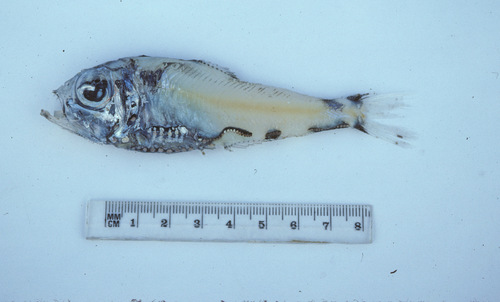
Argyripnus
Argyripnus is an oceanic ray-finned fish genus in the marine hatchetfish family Sternoptychidae. They are commonly known as bristle-mouth fishes, but that may also refer to the related bristlemouth family (Gonostomatidae). A. iridescens is called "pearlside", which usually refers to the closely related genus Maurolicus.
Hypsiprymnodon
Hypsiprymnodon is a genus of macropods. The sole extant species is Hypsiprymnodon moschatus, the musky rat-kangaroo. The genus includes four known fossil species.
Oxyurini
The Oxyurini are a tribe of the duck subfamily of birds, the Anatinae. It has been subject of considerable debate about its validity and circumscription. Some taxonomic authorities place the group in its own subfamily, the Oxyurinae. Most of its members have long, stiff tail feathers which are erected when the bird is at rest, and relatively large, swollen bills. Though their relationships are still enigmatic, they appear to be closer to swans and true geese than to the typical ducks. The highest diversity is found in the warmer parts of the Americas, but at least one species occurs in a major

Kuphus
Kuphus is a genus of shipworms, marine bivalve molluscs in the family Teredinidae. While there are four extinct species in the genus, the only extant species is Kuphus polythalamius (also incorrectly spelled as Kuphus polythalamia). It is the longest bivalve mollusc in the world, where the only known permanent natural habitat is Kalamansig, Sultan Kudarat in the Philippines.